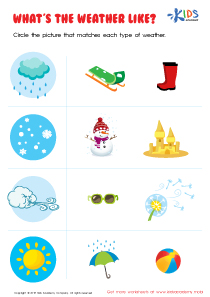
Logical Reasoning World Around Us Worksheets for Ages 3-8
5 filtered results
-
From - To
Discover our engaging "Logical Reasoning World Around Us Worksheets" designed for children ages 3-8! These worksheets provide a fun and interactive way for young learners to develop essential cognitive skills through intriguing activities that encourage critical thinking and problem-solving. Each worksheet is crafted to connect everyday experiences with logical reasoning, helping children to analyze situations, identify patterns, and make decisions. Ideal for classroom use or at-home learning, these resources promote active engagement and curiosity about the world. Strengthen your child’s logical reasoning skills and foster a love for learning with our thoughtfully designed worksheets today!
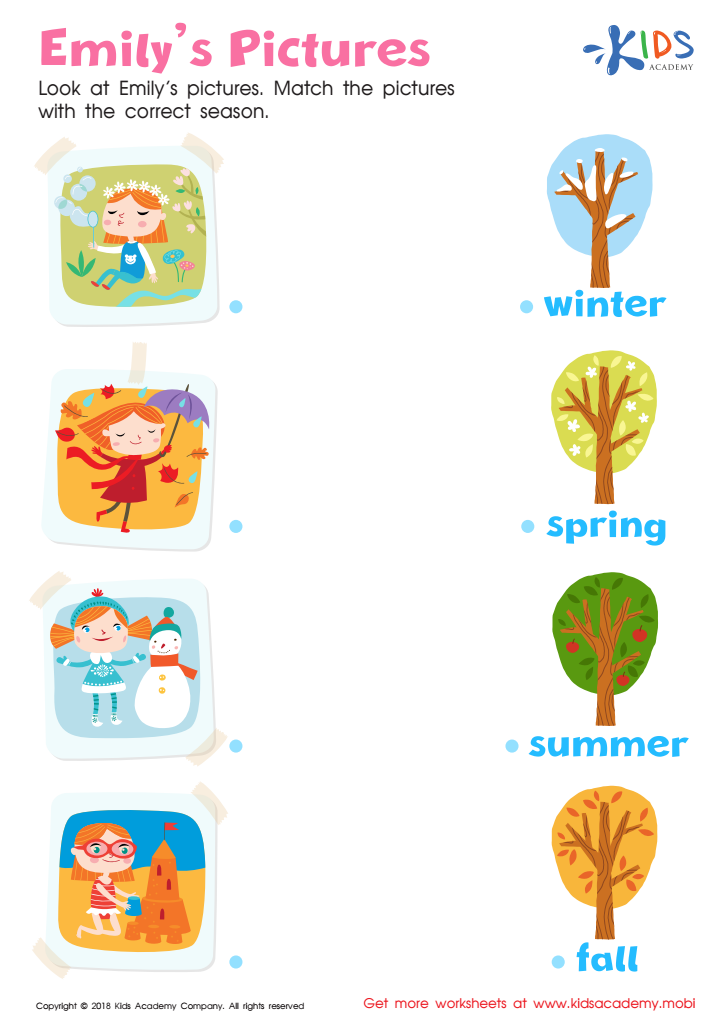
Emily's Pictures Worksheet
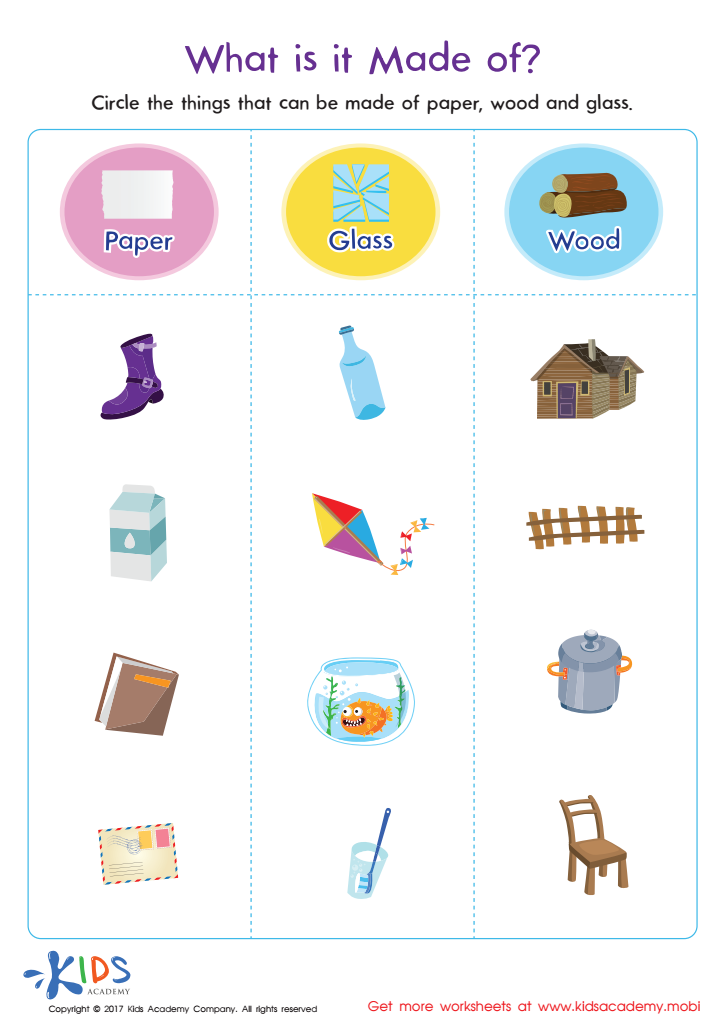
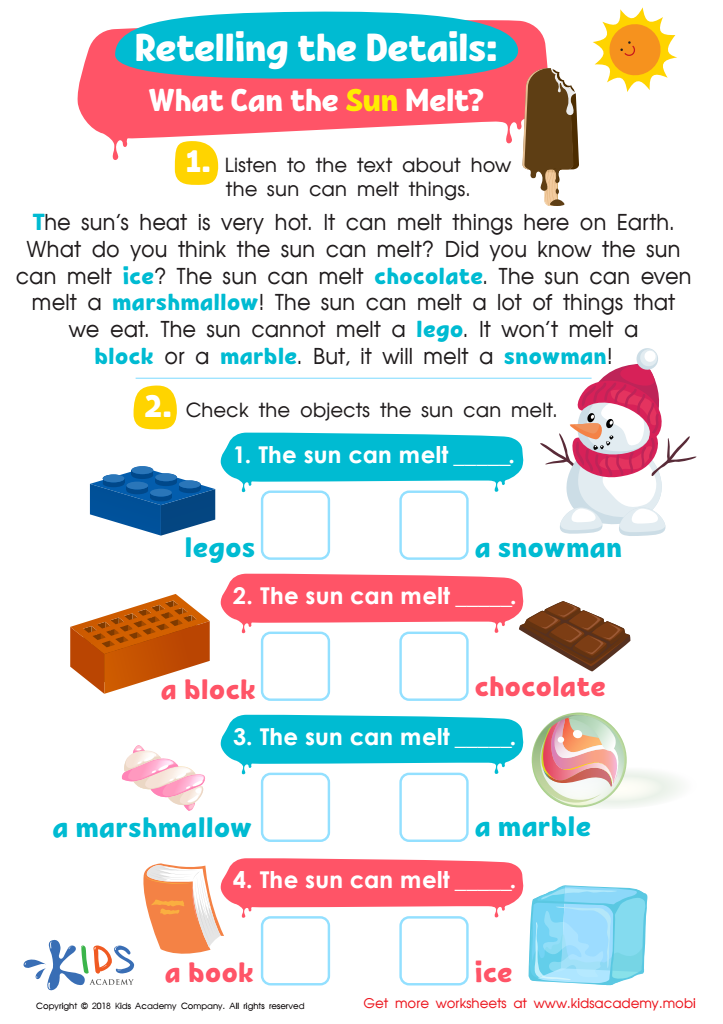
Retelling the Details: What Can the Sun Melt? Worksheet
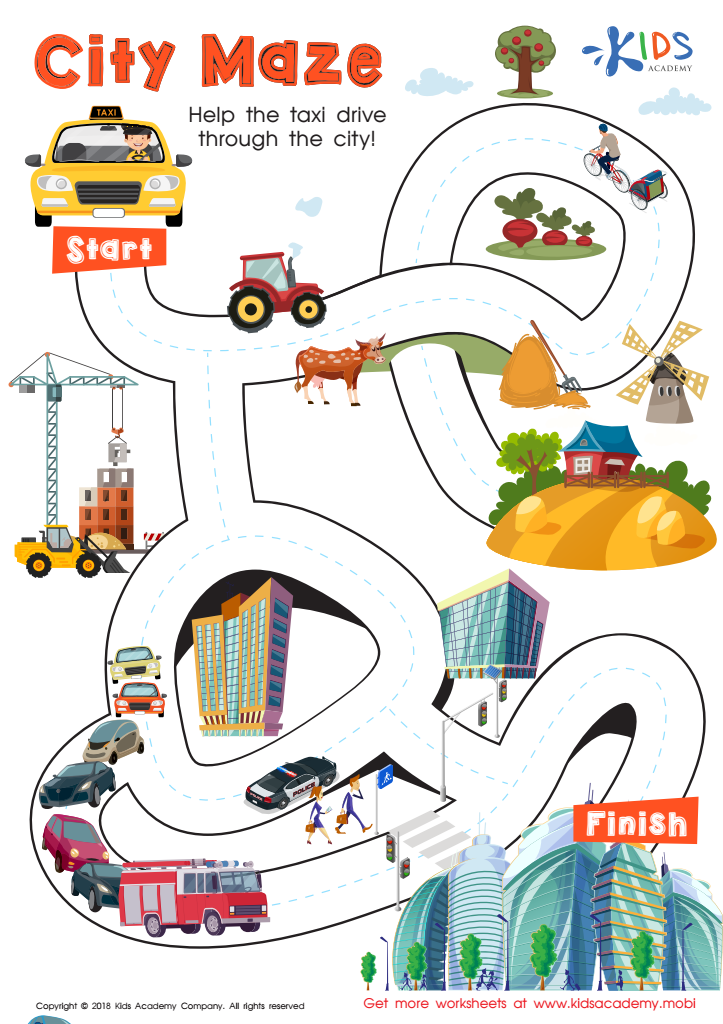
City Maze Worksheet

Summer and Winter Worksheet
 Assign to My Students


.jpg)





Parents and teachers should prioritize Logical Reasoning for children aged 3-8 because it lays the groundwork for critical thinking and problem-solving skills essential in today’s complex world. At this young age, children are highly curious and naturally inclined to ask questions about the world around them. Introducing concepts of logical reasoning sharpens their ability to analyze situations, make connections, and interpret information effectively.
Engaging children in activities that promote logical reasoning helps develop their cognitive flexibility and enhances their decision-making abilities. Activities such as puzzles, pattern recognition, and simple coding games can stimulate their analytical thinking. This cognitive development aids in academic success across subjects, particularly in mathematics and science, where logical reasoning is integral.
Additionally, fostering these skills early on prepares children for future challenges both personally and socially. They learn to evaluate scenarios, consider consequences, and approach problem-solving systematically—skills that contribute to social-emotional learning and relational dynamics.
By investing time in logical reasoning, parents and teachers can empower children to navigate challenges confidently. Equipping them with these tools ensures they grow into resilient, thoughtful individuals capable of contributing positively to society. Ultimately, nurturing these skills prepares children to thrive amidst the demands of our rapidly changing world.