Cursive writing practice Cursive Letters Worksheets for Ages 3-8
11 filtered results
-
From - To
Enhance your child's handwriting skills with our "Cursive Writing Practice - Cursive Letters Worksheets for Ages 3-8." Specifically designed for young learners, these worksheets provide engaging, age-appropriate exercises that promote the development of cursive writing abilities. Each printable sheet focuses on individual letters, allowing kids to practice both uppercase and lowercase forms with guided, traceable lines. Improve their fine motor skills, hand-eye coordination, and writing fluency in a fun and educational way. Perfect for homeschoolers, teachers, and parents looking to give their children a head start in cursive writing. Download now from Kids Academy!
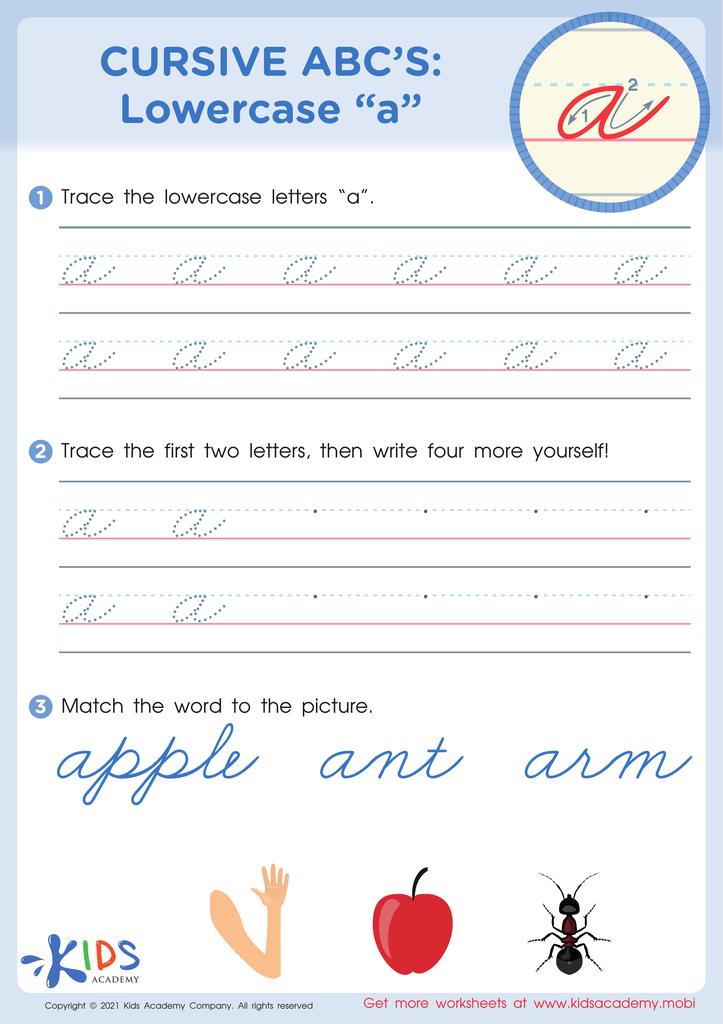
Cursive ABCs: Lowercase a
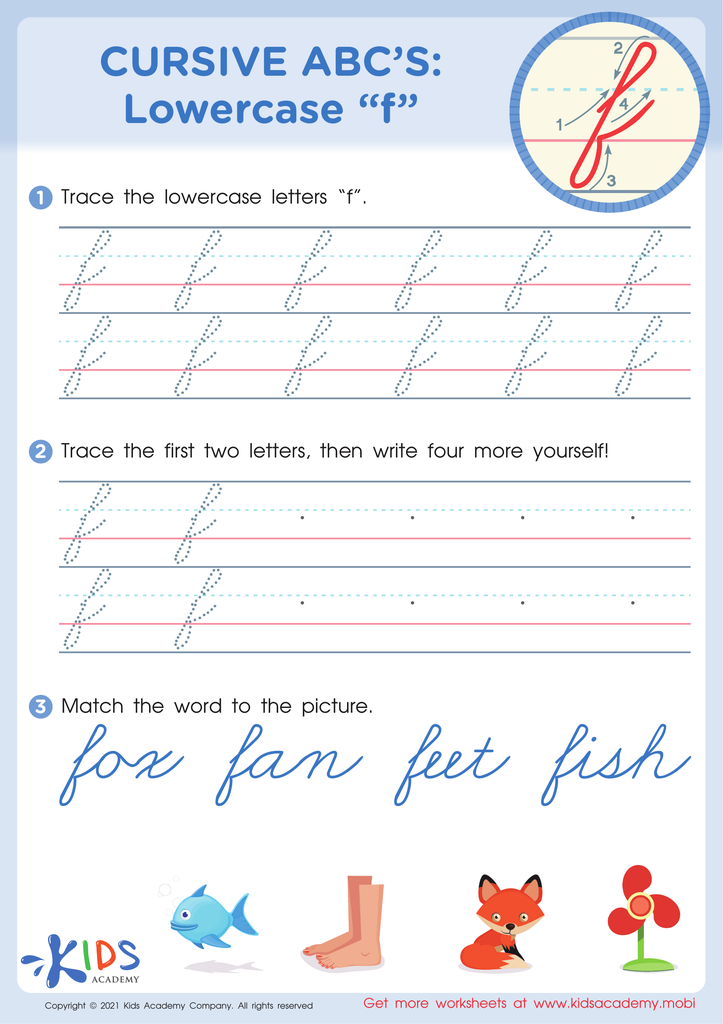
Cursive ABCs: Lowercase f
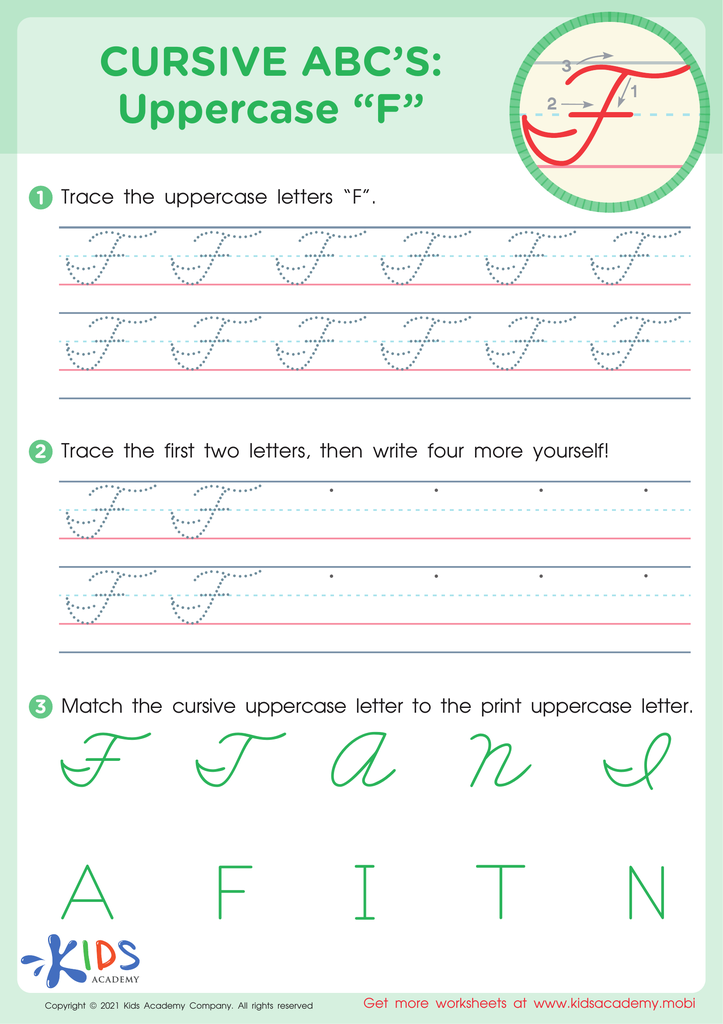
Cursive ABCs: Uppercase F
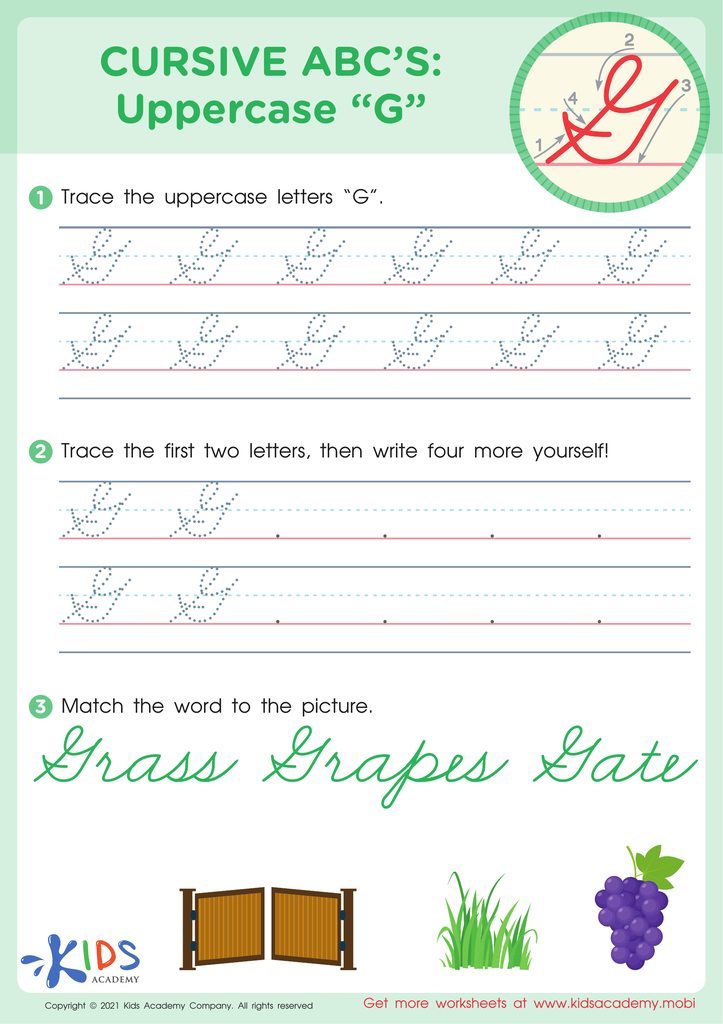
Cursive ABCs: Uppercase G
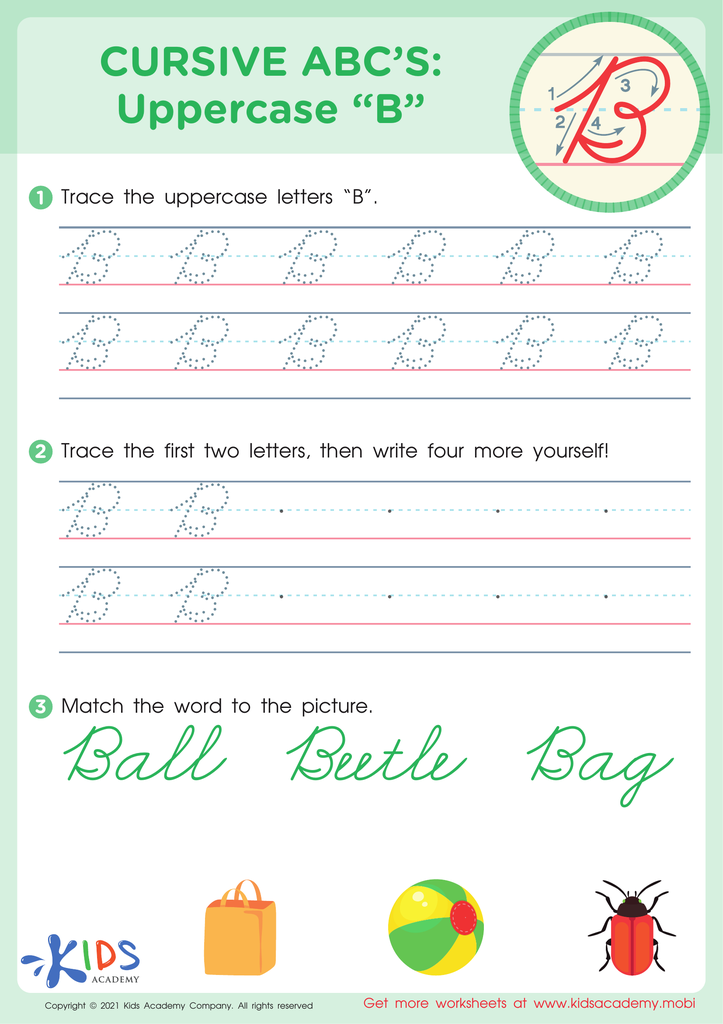
Cursive ABCs: Uppercase B
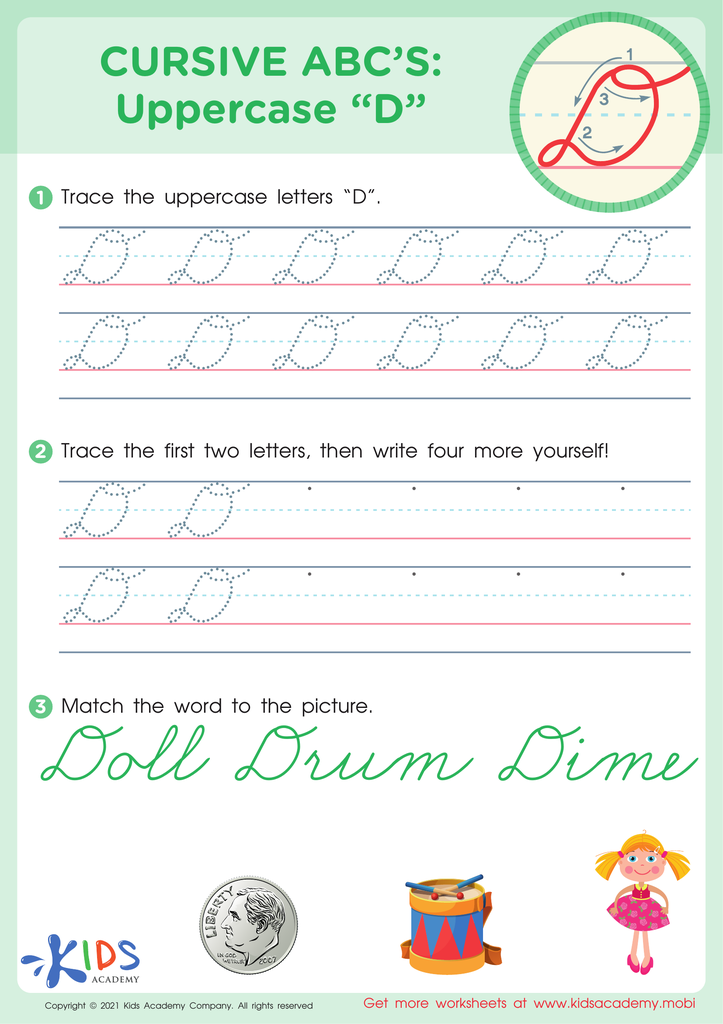
Cursive ABCs: Uppercase D
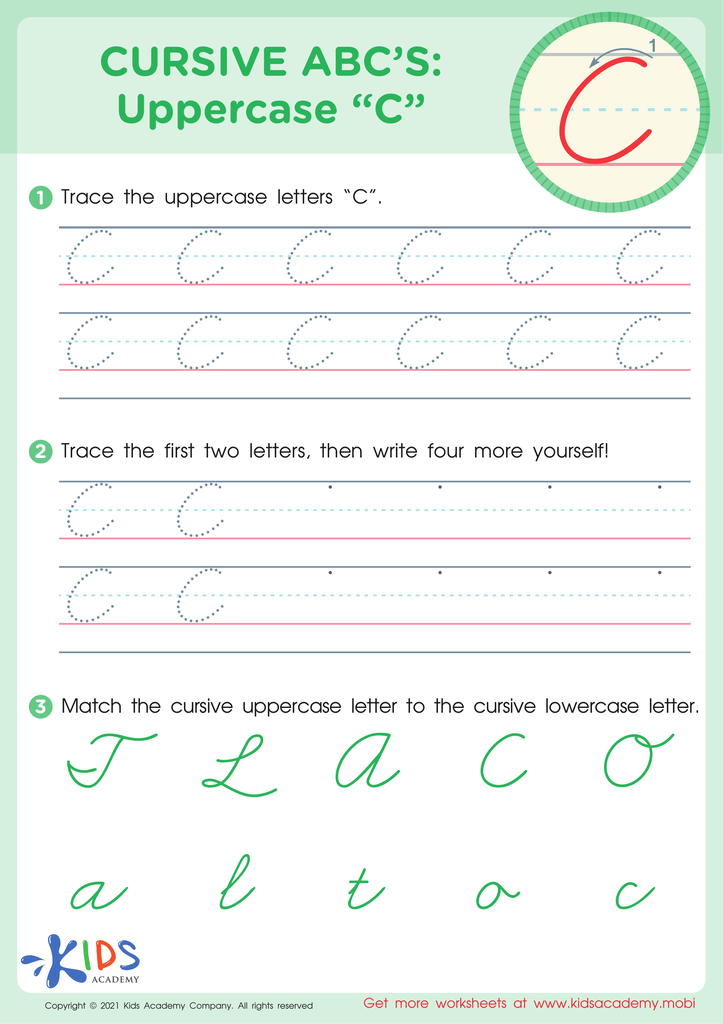
Cursive ABCs: Uppercase C
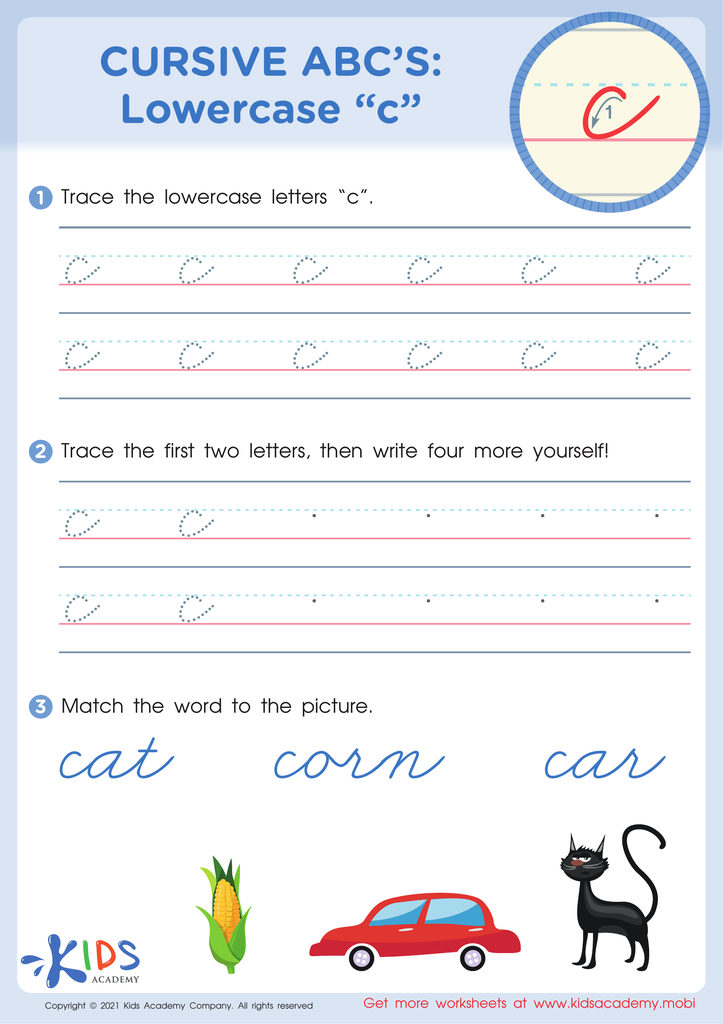
Cursive ABCs: Lowercase c
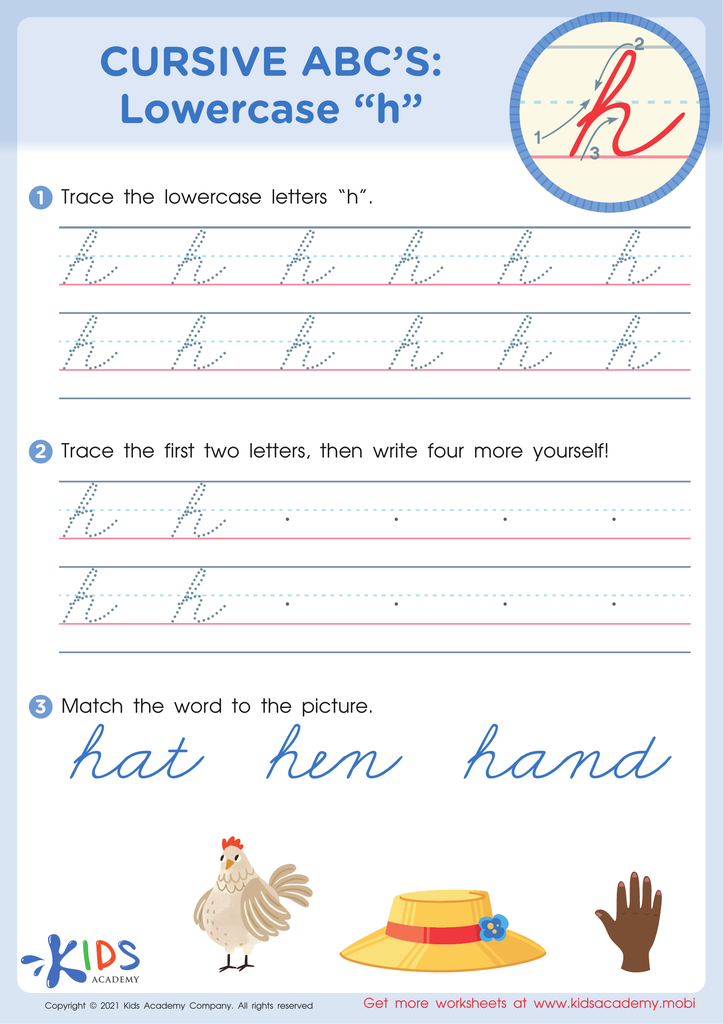
Cursive ABCs: Lowercase h
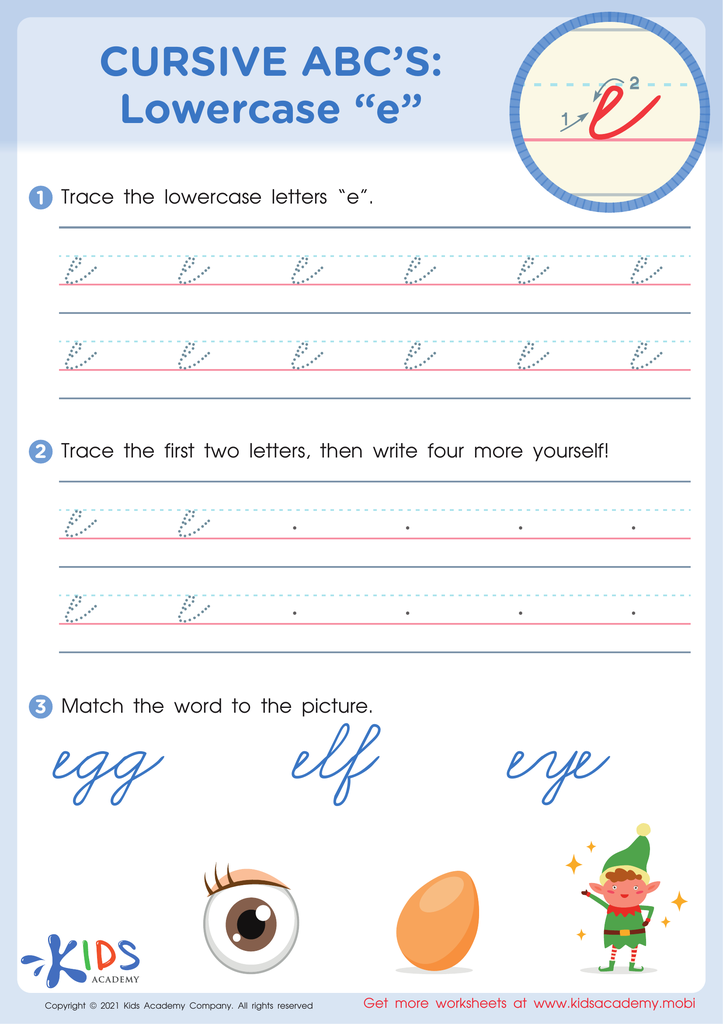
Cursive ABCs: Lowercase e
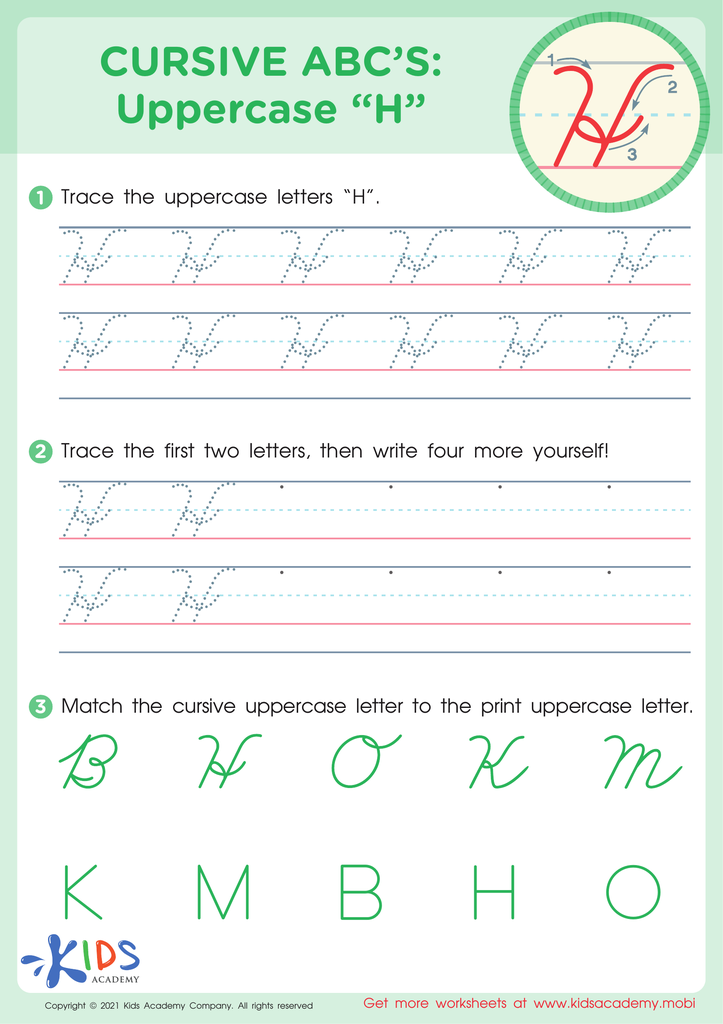
Cursive ABCs: Uppercase H







Cursive writing, although it may seem old-fashioned in the digital age, offers numerous developmental benefits for young children, specifically those aged 3-8. Handwriting practice enhances fine motor skills, crucial for various everyday tasks. The fluid and connected strokes in cursive contribute to hand-eye coordination and finger dexterity, promoting overall motor development. Furthermore, mastering cursive writing fosters better cognitive skills; the act of learning to write in cursive activates neural connections that support reading, writing fluency, and comprehension.
For young children, seeing and producing different scripts supports visual perception abilities and strengthens their ability to recognize letter shapes. Additionally, research indicates that children who practice cursive often exhibit improved retention and a deeper understanding of material, as the kinesthetic movement of writing engages sensory feedback that aids memory and learning.
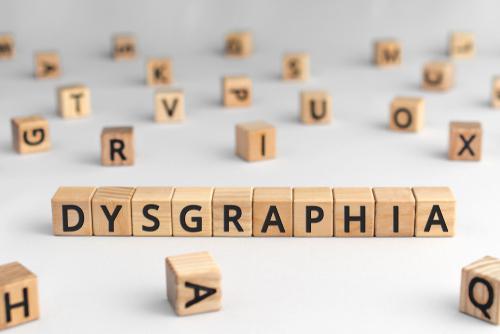
From a pedagogical perspective, teaching cursive writing encourages patience and attention to detail. It can be particularly advantageous for children with dysgraphia or other learning differences, providing an alternative that might bypass some challenges presented by print writing.
In essence, the practice of cursive writing is an invaluable tool in early education, fostering physical development, cognitive growth, visual identification skills, and academic competencies, creating a foundation for lifelong learning and success.







