Alphabet Recognition Cursive Writing Worksheets for Ages 3-8
7 filtered results
-
From - To
Enhance your child's handwriting skills with our engaging Alphabet Recognition Cursive Writing Worksheets, designed specifically for ages 3-8. These printable worksheets help young learners recognize letters while practicing cursive writing. With fun activities and colorful illustrations, kids will joyfully master the cursive alphabet, enhancing their fine motor skills, concentration, and memory retention. Each worksheet encourages creativity and makes learning enjoyable, laying the foundation for effective writing. Ideal for homeschooling or classroom use, our carefully curated resources support early literacy development in a user-friendly format. Start your child's journey to confident cursive writing today and watch them shine!
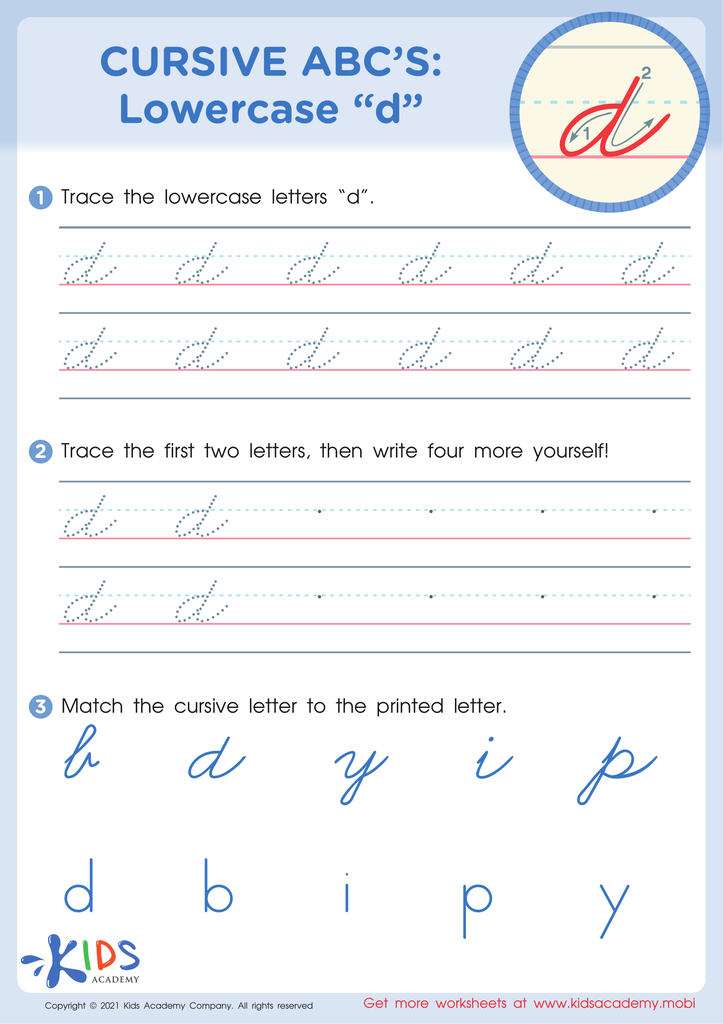
Cursive ABCs: Lowercase d
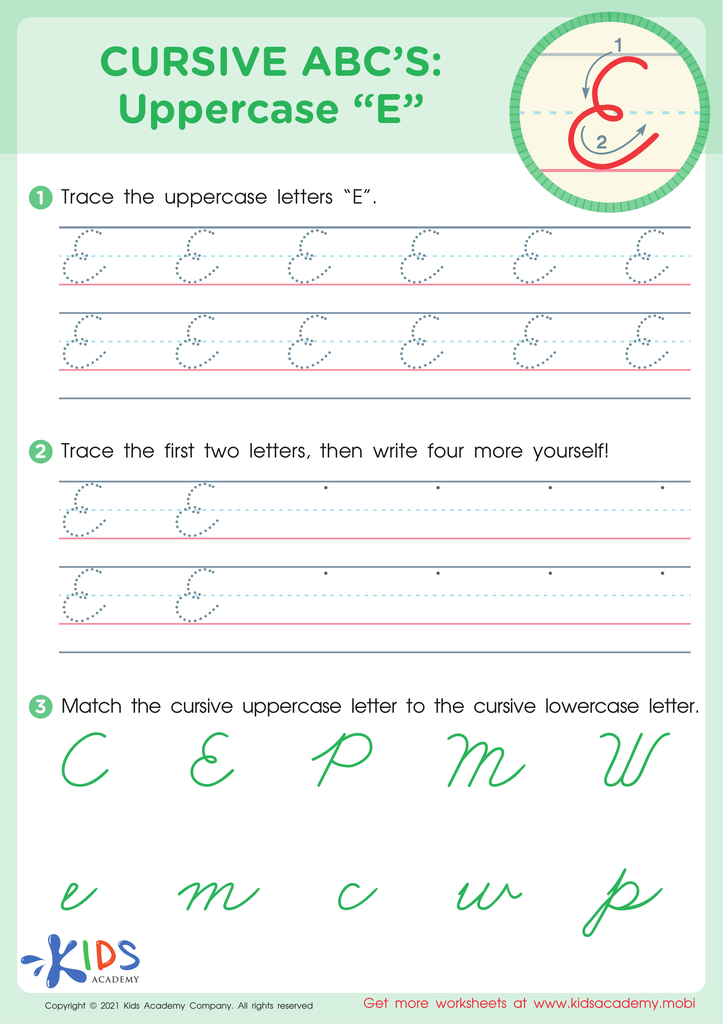
Cursive ABCs: Uppercase E
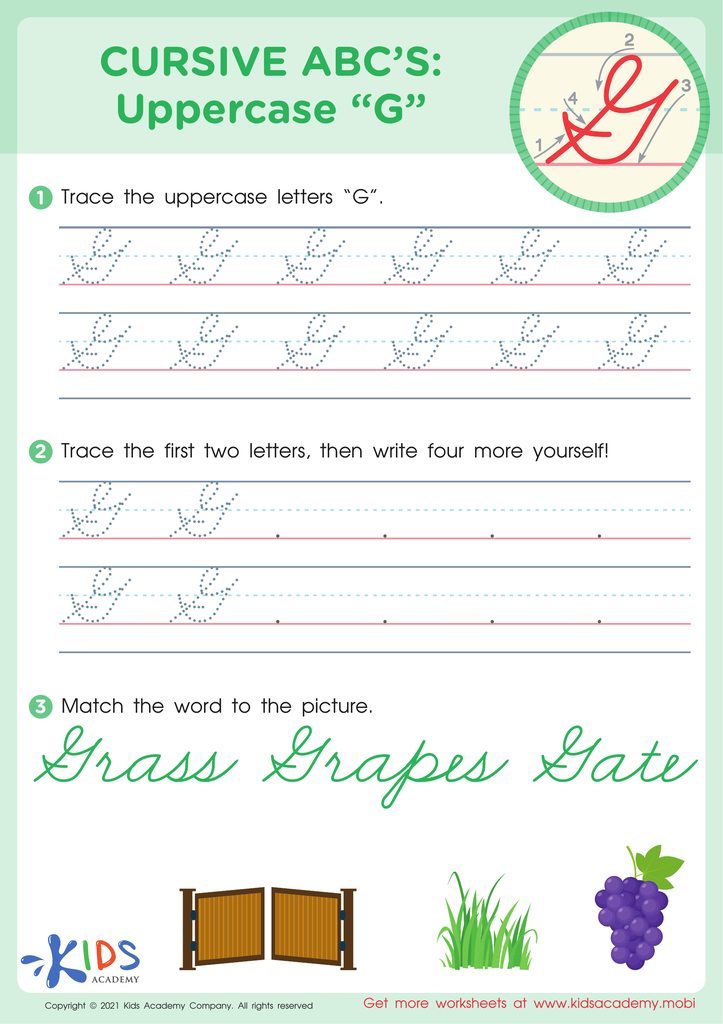
Cursive ABCs: Uppercase G
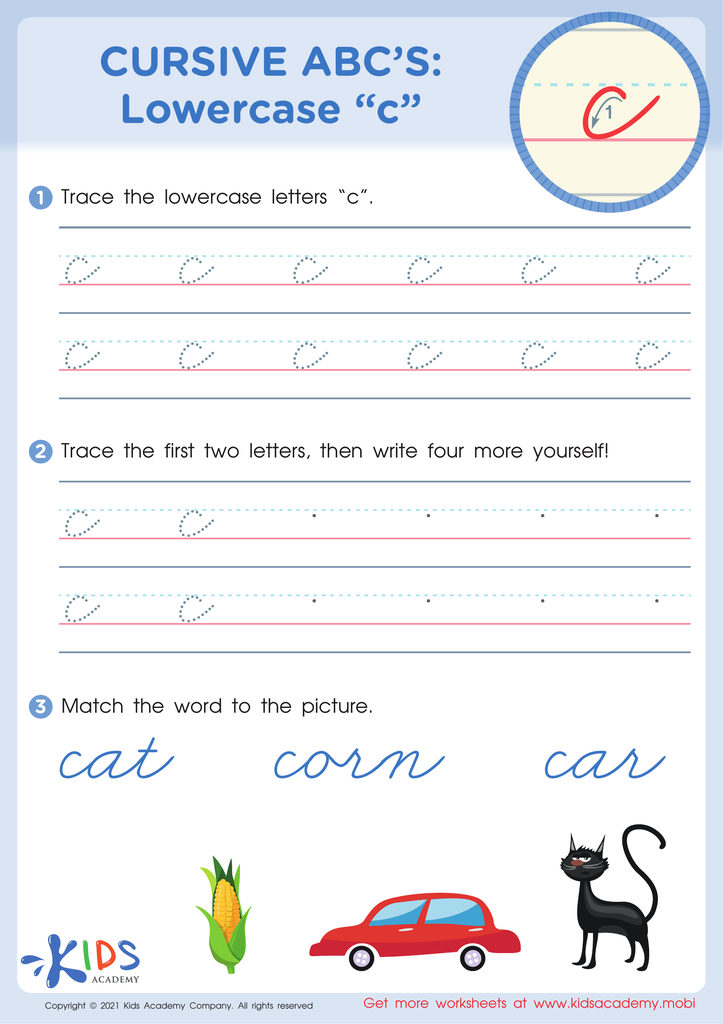
Cursive ABCs: Lowercase c
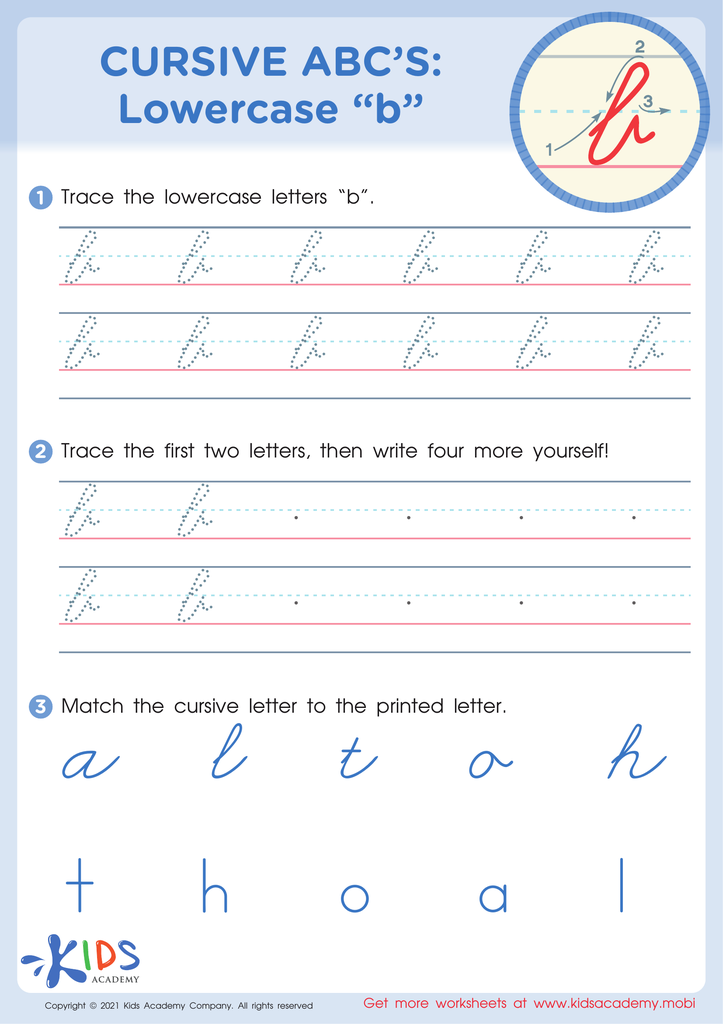
Cursive ABCs: Lowercase b
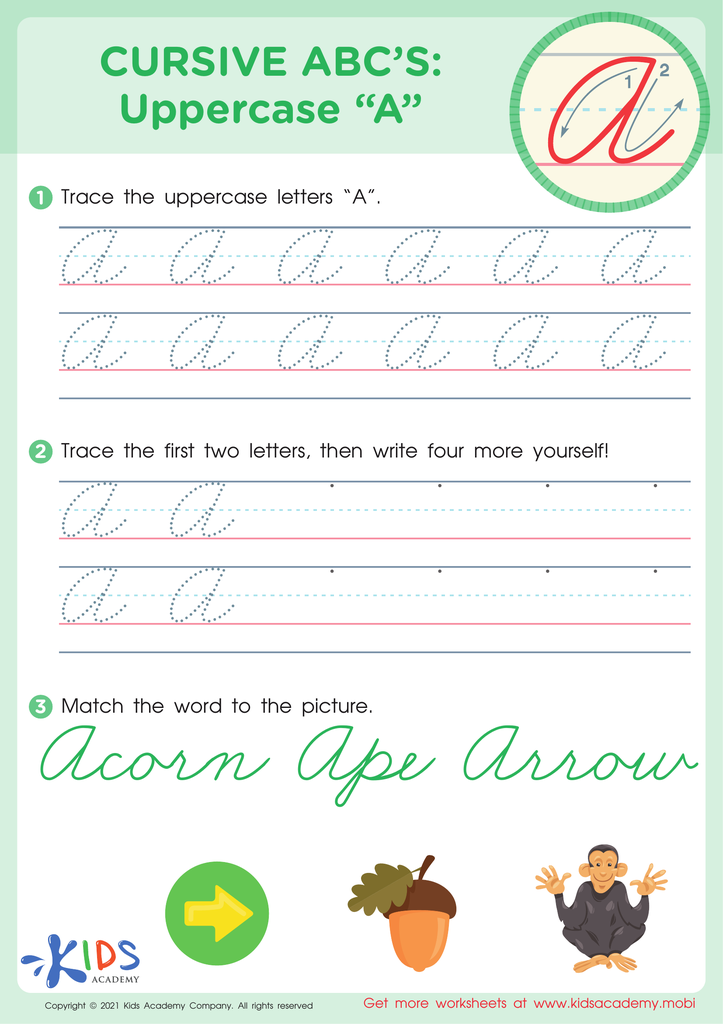
Cursive ABCs: Uppercase A
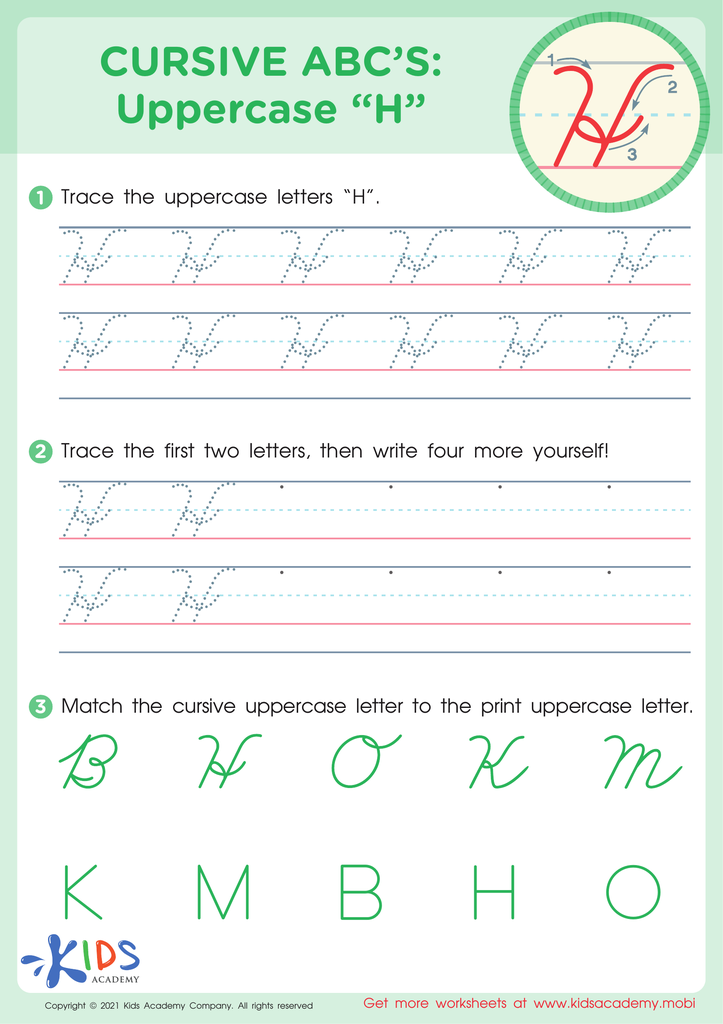
Cursive ABCs: Uppercase H







Alphabet recognition and cursive writing are crucial developmental skills for children aged 3-8, as they lay the foundation for effective literacy and communication. First, recognizing letters helps children understand the connection between spoken and written language, which is essential for early reading. Familiarity with letters boosts their confidence in expressing themselves through writing.
Cursive writing further enhances fine motor skills, as it involves fluid wrist and hand movements that develop hand-eye coordination. This form of writing can promote faster writing speeds, allowing children to better capture their thoughts during lessons and assessments. Moreover, cursive writing can aid in reading fluency, as it encourages the recognition of words as whole units rather than individual letters.
Incorporating alphabet recognition and cursive writing into educational settings nurtures creativity and self-expression, helping children articulate their ideas and emotional experiences. It also supports the cognitive development associated with learning and memory retention. As such, both parents and teachers should prioritize these skills, ensuring children are equipped for future academic success and effective communication in an increasingly interconnected world. Encouraging practice with engaging, age-appropriate activities can make the learning process enjoyable and impactful.








