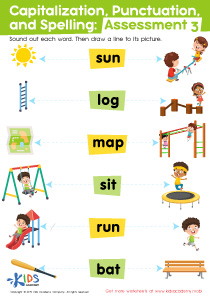
Phonics skills improvement Grammar Worksheets for Ages 3-8
3 filtered results
-
From - To
Enhance your child's phonics skills with our engaging grammar worksheets designed for ages 3-8. These carefully crafted resources encourage young learners to improve their reading and writing abilities through fun, interactive exercises. Each worksheet focuses on essential phonics concepts, helping children recognize sounds, blend letters, and decode words effectively. Suitable for both classroom and home learning, our materials empower kids to develop confidence in their literacy skills. With colorful illustrations and age-appropriate activities, our phonics worksheets make learning enjoyable and effective. Start your child's journey to success in reading and writing today with our phonics skills improvement resources!
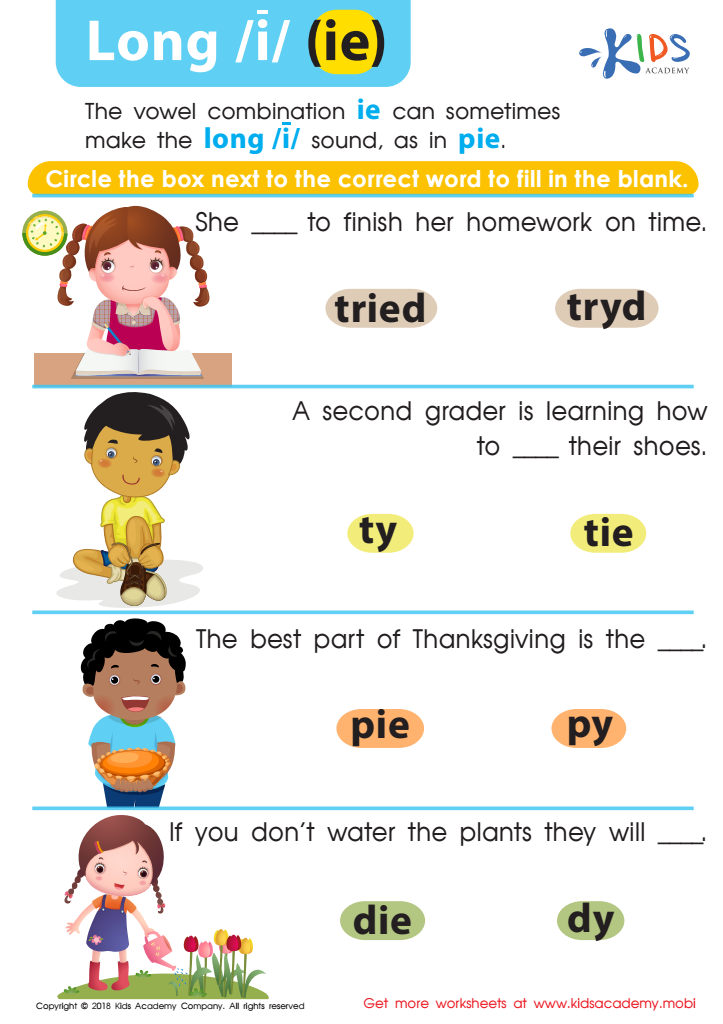
Reading: Long I and IE Worksheet
 Assign to My Students
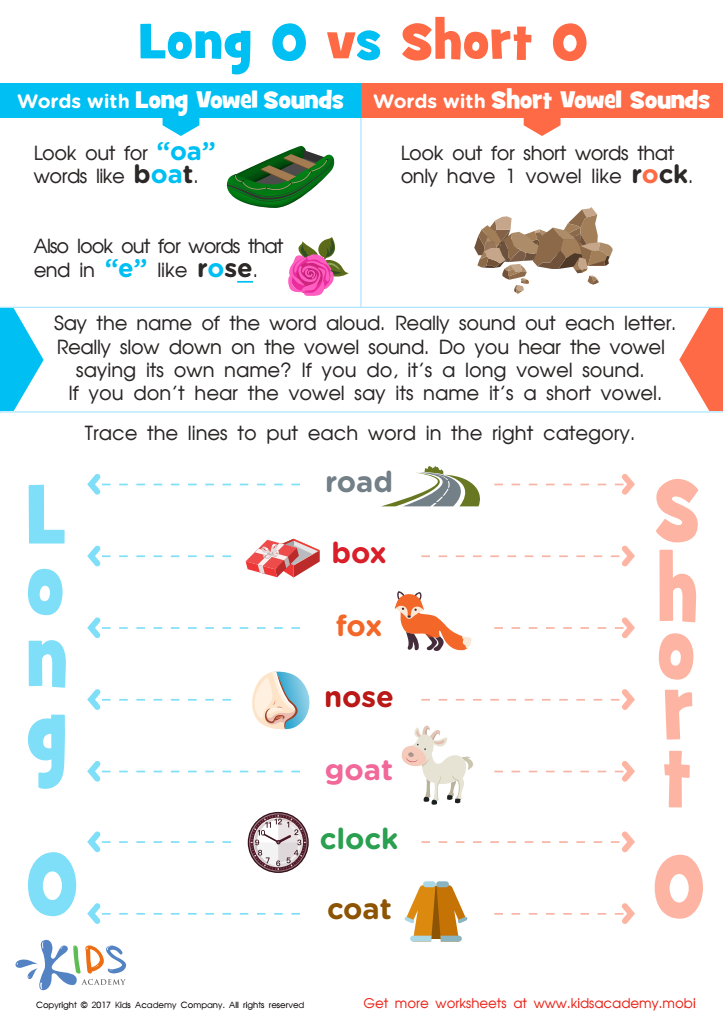
Long and Short Vowel O Spelling Worksheet
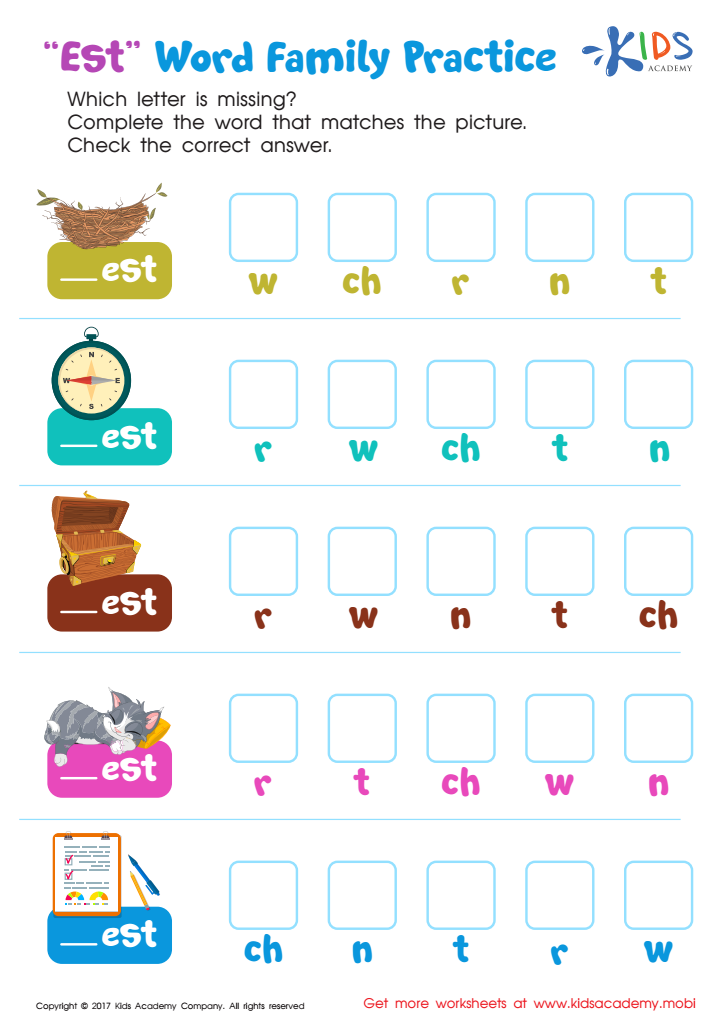
Words Family "est" Spelling Worksheet






Phonics skills are crucial for early literacy development in children aged 3 to 8. Parents and teachers should prioritize phonics because it lays the foundational block for reading and writing. Phonics involves understanding the relationship between letters and their corresponding sounds, which is essential for decoding words. Strong phonics skills enable children to sound out unfamiliar words, promoting independent reading.
Moreover, early phonics instruction enhances vocabulary development and comprehension. As children learn to decode words, they gain the confidence to explore diverse texts, enriching their language skills and critical thinking abilities. This is vital in nurturing a lifelong love for reading.
Additionally, mastering phonics fosters better grammar skills early on. Children who can read proficiently are more likely to engage with complex sentence structures and varied punctuation in their writing, leading to improved grammatical understanding.
Teachers can create interactive phonics activities and parents can reinforce these lessons at home. By emphasizing phonics, both parties support children in becoming proficient readers and communicators. This early investment in literacy not only prepares children for future academic success but also equips them with skills necessary for effective communication in daily life. Engaged early support instills confidence, curiosity, and a positive attitude towards learning.