Reading Improvement Grammar Worksheets for Ages 3-8
4 filtered results
-
From - To
Introducing our "Reading Improvement Grammar Worksheets for Ages 3-8" at Kids Academy – designed to enhance young learners' reading and grammar skills. Our engaging worksheets combine age-appropriate, interactive exercises with colorful illustrations, making learning fun and effective. These worksheets help children develop sentence structure, punctuation, and vocabulary while fostering a love for reading. Ideal for parents and educators looking to give their kids an early advantage in literacy, our resources offer structured, step-by-step guidance to ensure steady progress. Strengthen your child's reading foundation early with our expertly crafted grammar worksheets today!
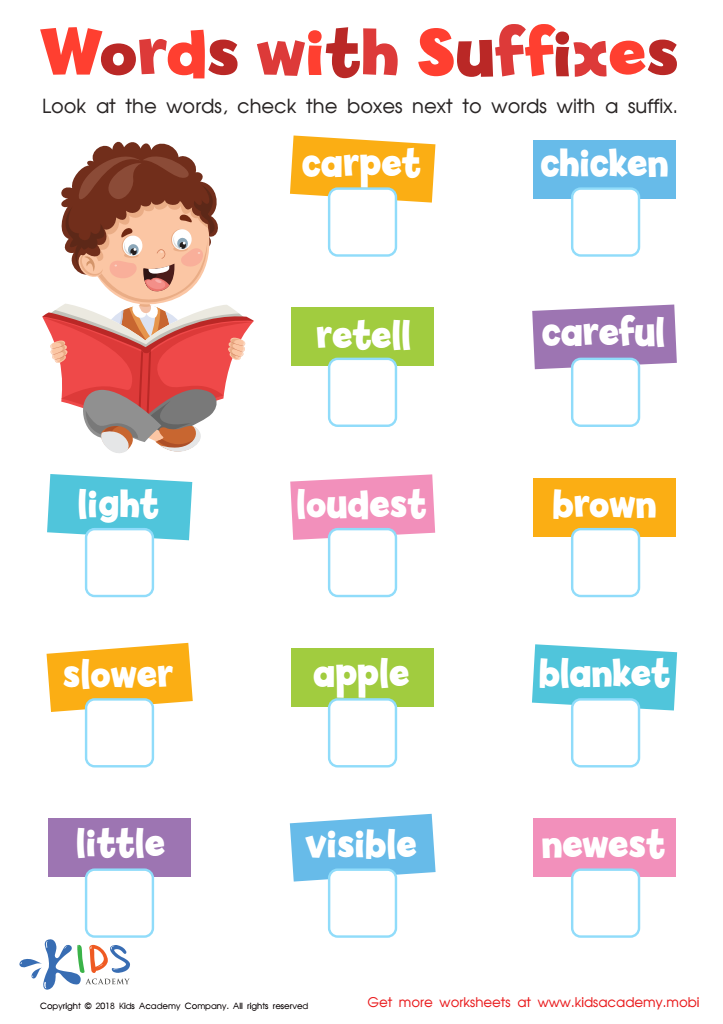
Reading: Words With Suffixes Worksheet
 Assign to My Students
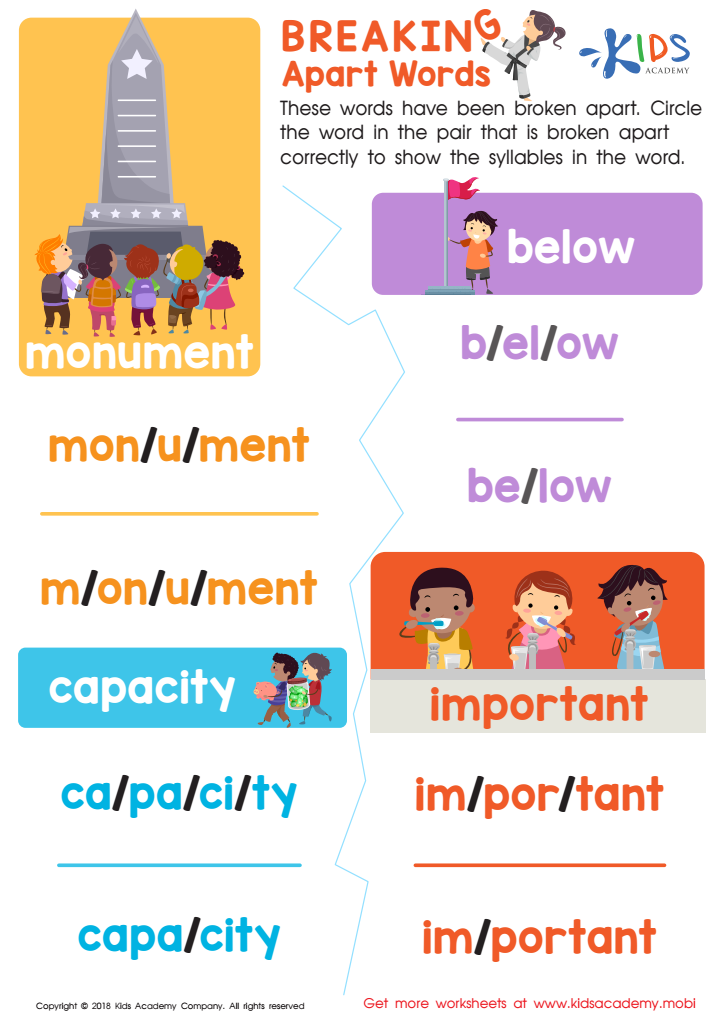
Breaking Apart Words Worksheet
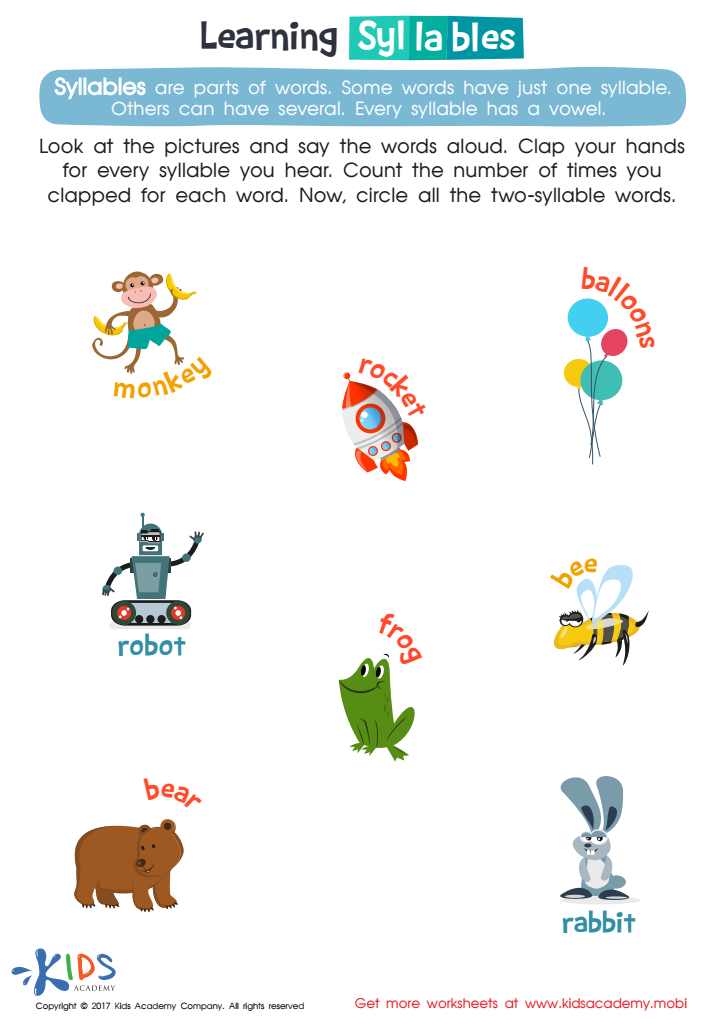
Learning Syllables Word Structure Worksheet
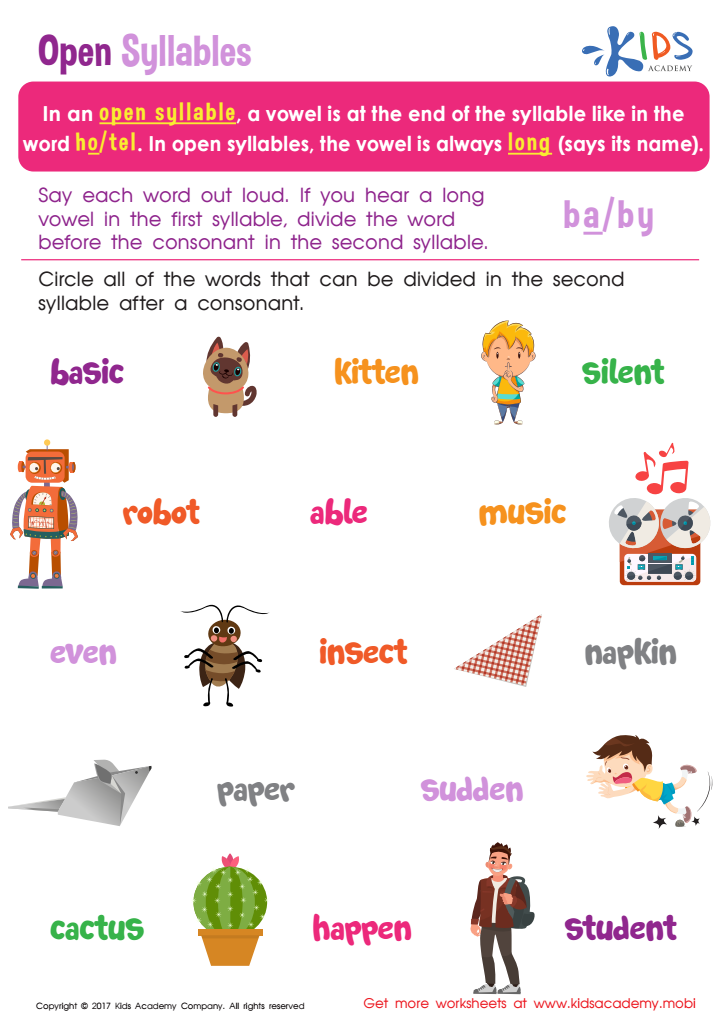
Open Syllable Printable Worksheet


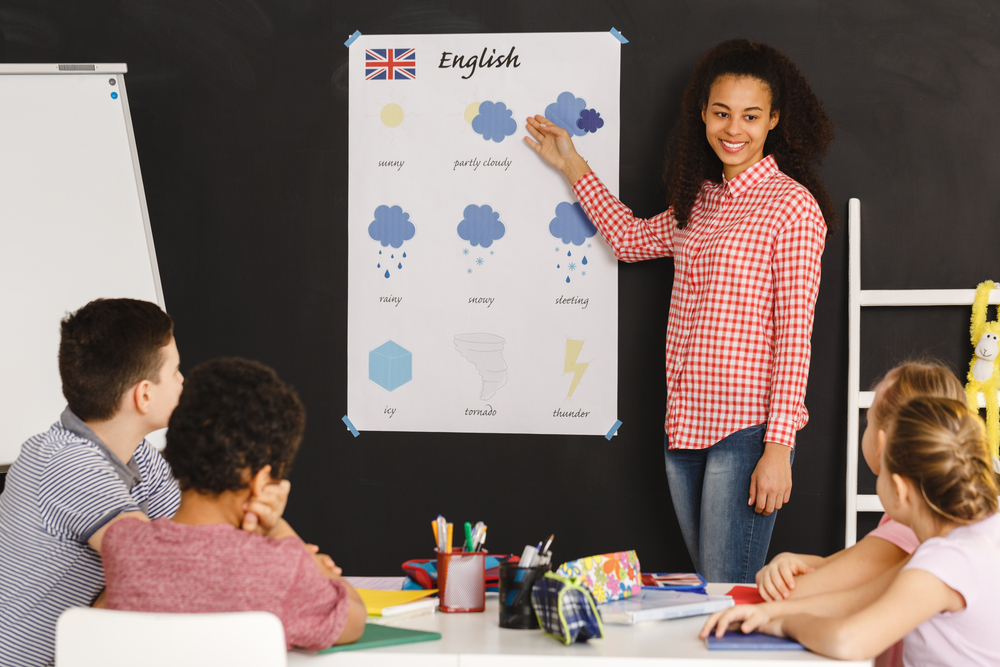





Parents and teachers should prioritize Reading Improvement and Grammar for children aged 3-8 because these foundational years are crucial for language development. During this period, children's brains are exceptionally receptive to learning new skills, and establishing strong reading and grammar abilities sets them up for future academic success.
First, proficiency in reading fosters better comprehension and critical thinking abilities. Children who learn to read well can more easily understand and retain information across all subjects, from science to social studies. Strong reading skills also nurture a love for books, which can become a lifelong habit enriching their lives culturally and intellectually.
Second, grammar is the building block of effective communication. Learning proper grammar helps children articulate their thoughts clearly and understand others better, enabling them to participate more fully in classroom discussions and social interactions. This is essential for cognitive development and self-confidence.
Lastly, focusing on reading and grammar in early childhood can help identify and address any learning difficulties sooner. Early intervention can provide the necessary support to bridge gaps and ensure that every child has the opportunity to succeed.
Investing time and resources into developing these skills in young children equips them with essential tools for academic and personal growth, making it a priority for both parents and teachers.








