Vowel Recognition Grammar Worksheets for Ages 3-8
4 filtered results
-
From - To
Enhance early literacy skills with our engaging Vowel Recognition Grammar Worksheets, designed specifically for children aged 3-8. These interactive worksheets focus on teaching young learners to identify and understand vowel sounds, vital for reading and writing success. Packed with fun activities, the worksheets encourage recognition of both short and long vowel sounds through playful exercises, coloring tasks, and matching games. Perfect for preschoolers and early graders, these resources are tailored to make learning enjoyable and effective. Help your child build a strong foundation in vocabulary and phonics with our easy-to-use printables, fostering a lifelong love for reading and learning!
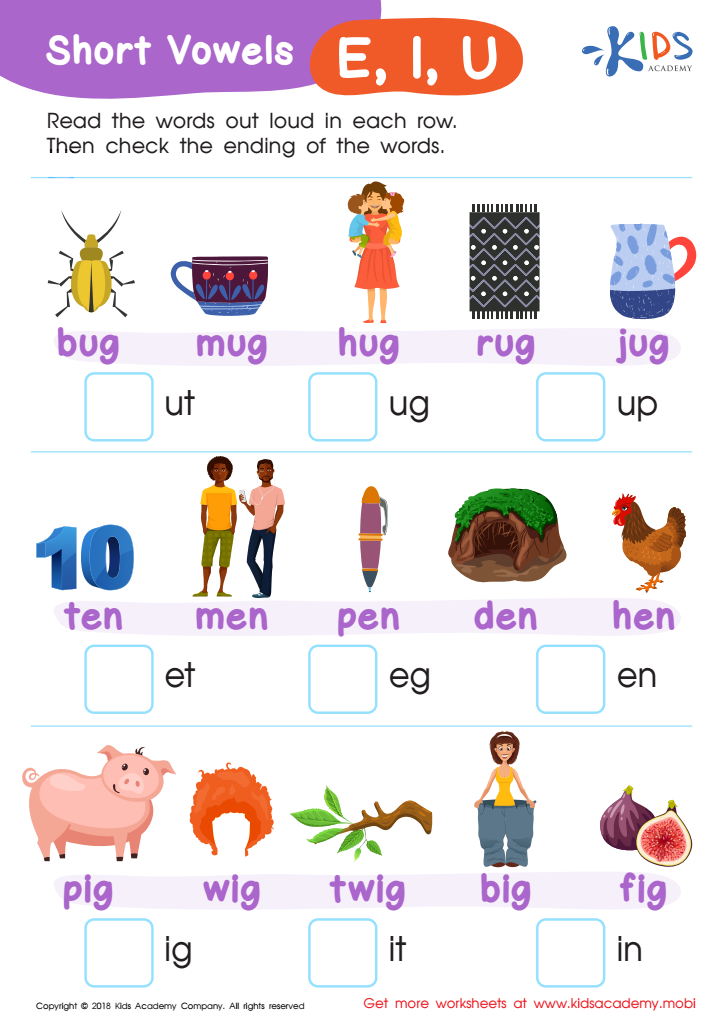
Short Vowels /e/, /i/, and /u/ Worksheet
 Assign to My Students
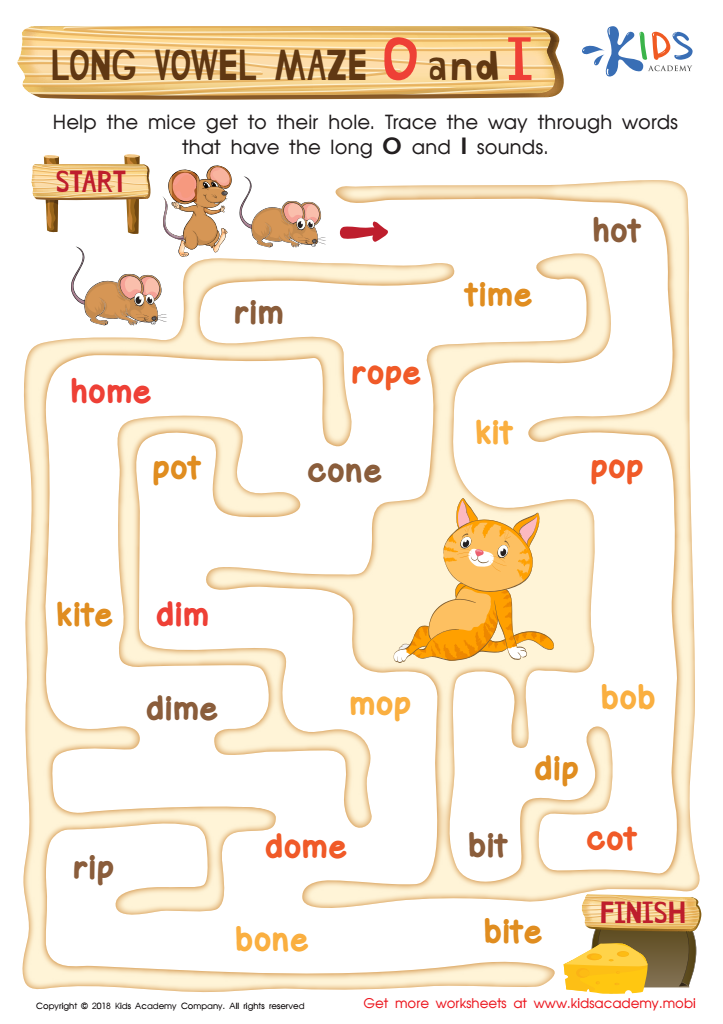
Long Vowel Maze /o/ and /i/ Worksheet
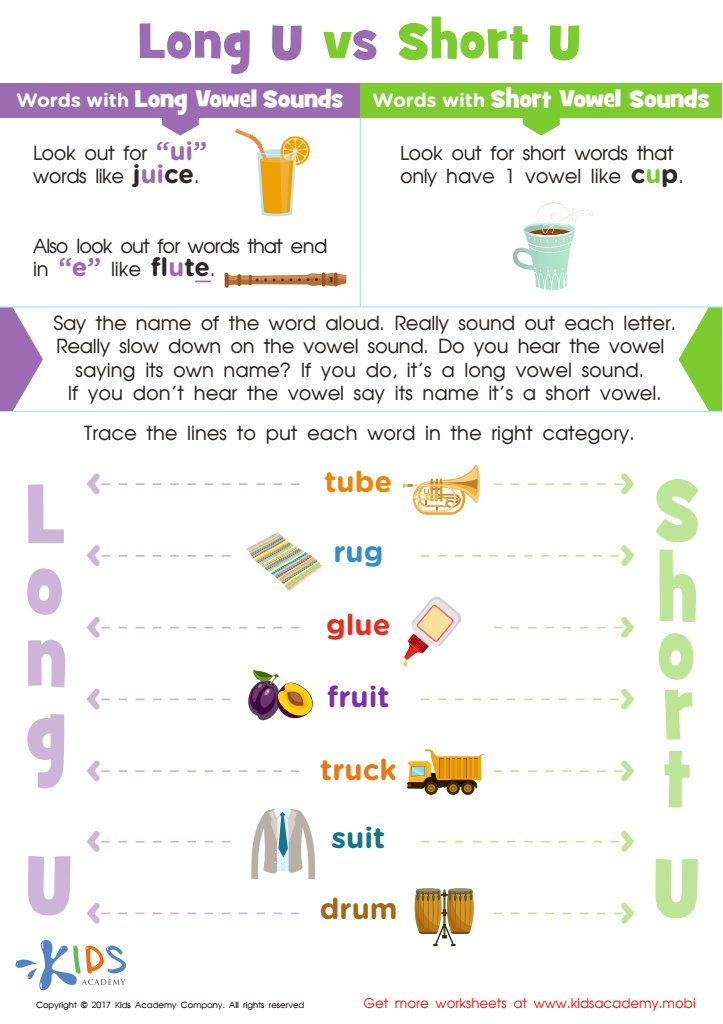
Long and Short Vowel U Spelling Worksheet
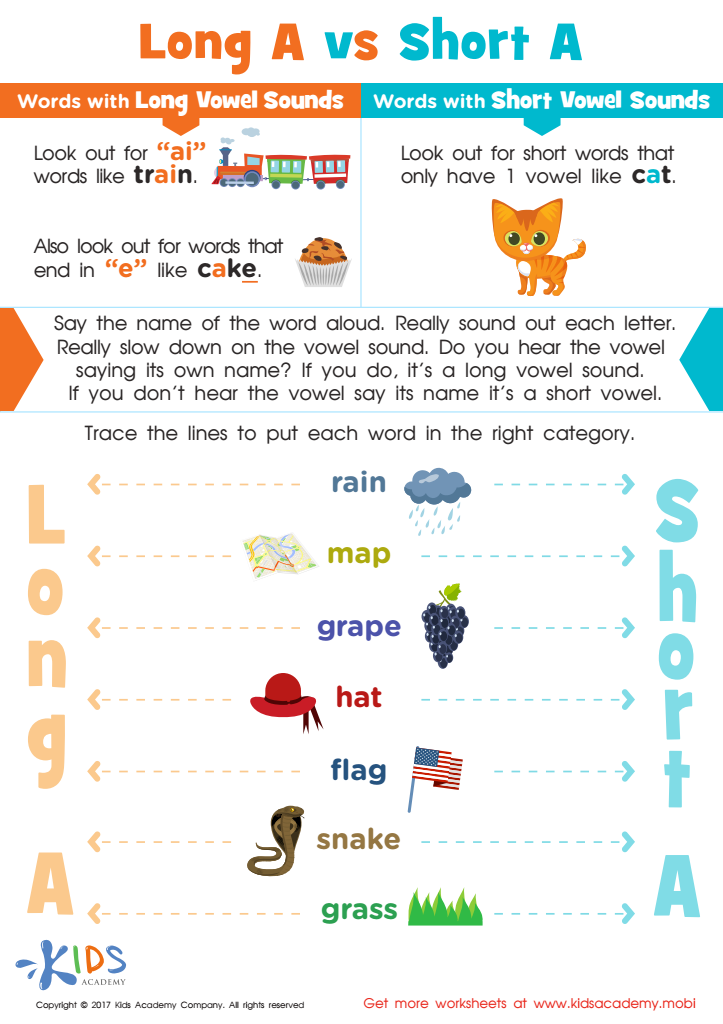
Long and Short Vowel A Spelling Worksheet







Vowel recognition is critical for children aged 3-8 as it forms the foundation for their reading and writing abilities. Understanding vowels helps children decode language, enabling them to spell and pronounce words correctly. For parents and teachers, promoting vowel recognition is essential for early literacy development; children who master vowels tend to excel in phonics and reading fluency, which are vital skills for academic success.
Vowel recognition also plays a significant role in language comprehension. By recognizing vowels, children can more easily identify syllables and word patterns, fostering their ability to comprehend sentences and paragraphs. This skill enhances their vocabulary acquisition, allowing them to express themselves more articulately.
Moreover, early vowel recognition can boost a child's confidence, making them more willing to engage in reading activities. Parents and teachers should integrate playful and engaging activities that emphasize vowel sounds, fostering a joy for learning. In this digital age where language skills are connected to future opportunities, ensuring children have a strong understanding of vowels will prepare them for success in higher education and beyond. Overall, focusing on vowel recognition sets the stage for lifelong learning and communication skills, making it an essential priority for caregivers and educators alike.








