Understanding punctuation Writing Worksheets for Ages 3-8
3 filtered results
-
From - To
Unlock the power of punctuation with our "Understanding Punctuation Writing Worksheets" designed specifically for children ages 3-8! These engaging worksheets introduce young learners to the basics of punctuation, including periods, question marks, exclamation points, and commas. Fun activities, colorful illustrations, and interactive exercises ensure kids grasp the importance and usage of each punctuation mark in their writing. Enhance your child’s reading and writing skills while boosting their confidence in language arts. Ideal for both home learning and classroom settings, these worksheets make mastering punctuation enjoyable and effective. Start your child's journey to becoming a proficient writer today!
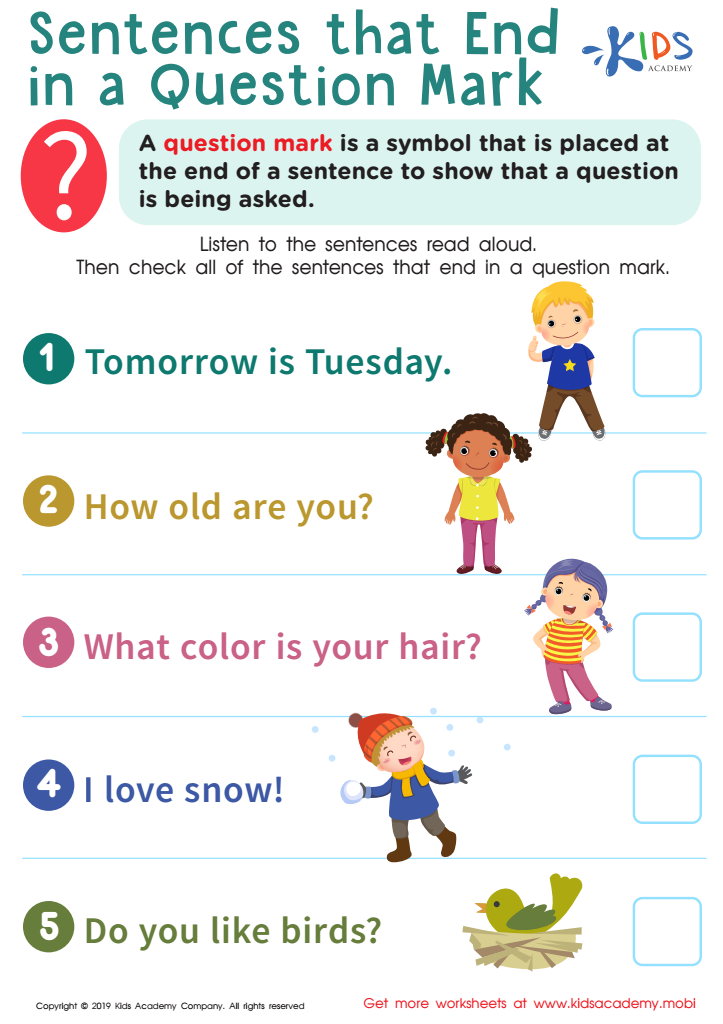
Sentences That End in an Question Mark Worksheet
 Assign to My Students
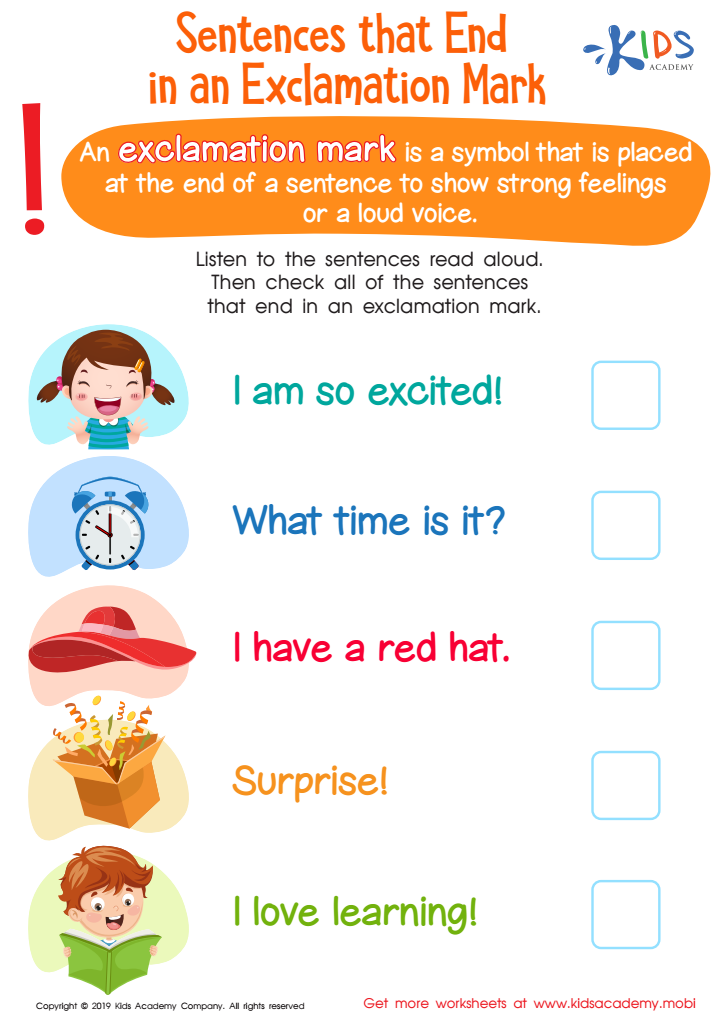
Sentences That End in an Exclamation Mark Worksheet
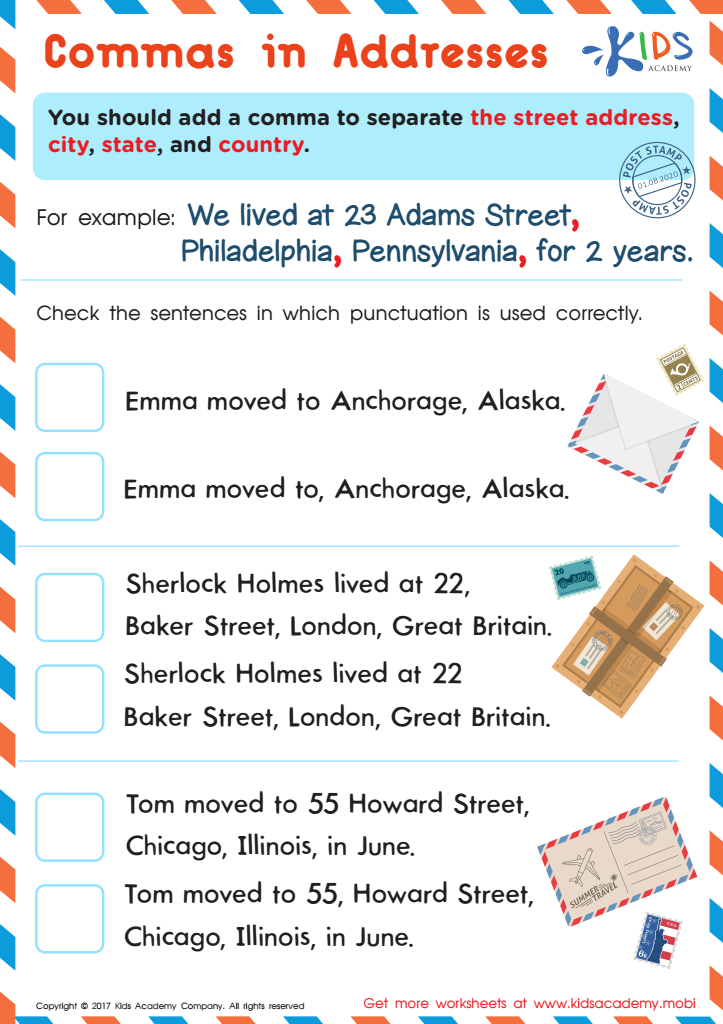
Commas in Addresses Worksheet





.jpg)


Understanding punctuation is crucial for young learners ages 3-8, as it lays the groundwork for effective communication. Parents and teachers should care about this foundational skill because punctuation helps children grasp the structure and meaning of written language. Correct punctuation clarifies sentences, which can significantly influence a young child’s ability to comprehend stories and instructions, fostering better reading and writing skills.
Learning punctuation at an early age aids in language acquisition and enhances a child’s ability to express ideas clearly. For instance, understanding the difference between a period and a question mark allows children to convey emotions and intentions in writing, making their expressions more engaging and meaningful.
Moreover, consistent exposure to punctuation helps children develop critical thinking skills as they learn to interpret texts and recognize nuances in meaning. This understanding also supports their ability to construct their sentences, promoting confidence in their writing abilities. By emphasizing punctuation's importance, parents and teachers encourage students to become more effective communicators, which will benefit them across all subjects and in everyday interactions. Ultimately, investing time in teaching punctuation early on sets the stage for lifelong literacy skills and a love for reading and writing.








