Handwriting Skills ABC Order Worksheets for Ages 3-9
7 filtered results
Difficulty Level
Grade
Age
-
From - To
Subject
Activity
Standards
Enhance your child's handwriting and alphabetical skills with our "Handwriting Skills ABC Order Worksheets for Ages 3-9." Crafted specifically for young learners, these worksheets help children practice proper letter formation while arranging the alphabet in the correct order. Featuring engaging and age-appropriate activities, kids will enjoy tracing and writing letters, improving their handwriting fluency, and mastering the ABCs simultaneously. Ideal for both classroom use and at-home practice, these worksheets make learning fun and effective, helping to build a solid foundation for literacy and fine motor development. Download now from Kids Academy for a brighter learning journey!
Favorites
With answer key
Interactive
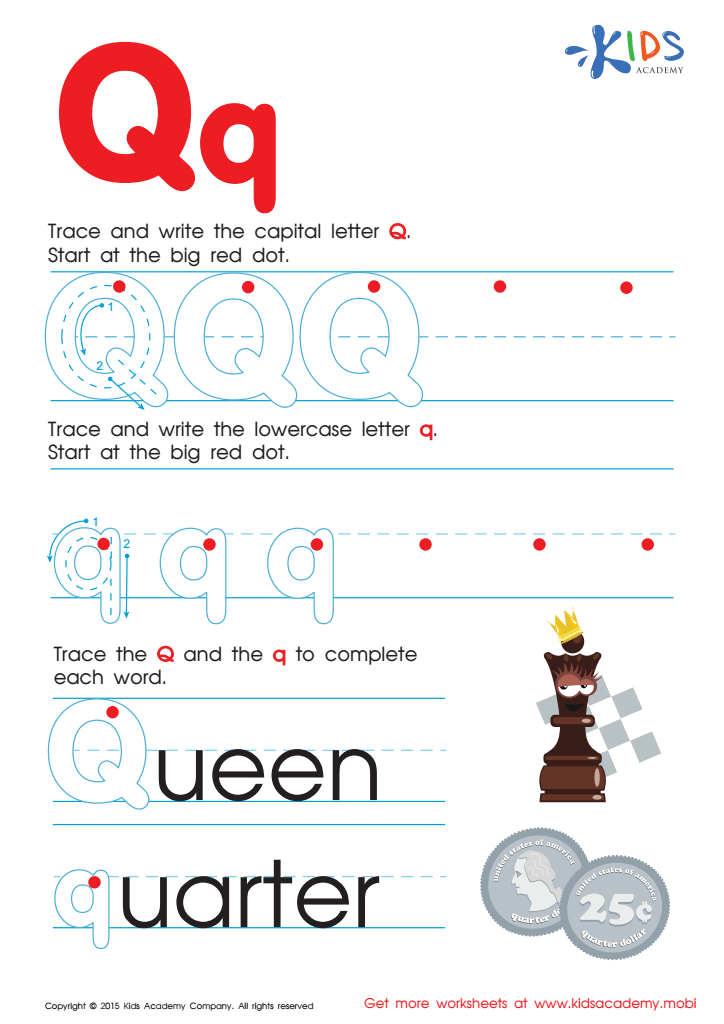
Letter Q Tracing Page
Learn the letter "Q"! Trace and write it a few times in upper and lowercase. Then help the Queen by writing her initial letter. Finally, write "quarters" and practice with more alphabet worksheets.
 Assign to My Students
Letter Q Tracing Page
Worksheet


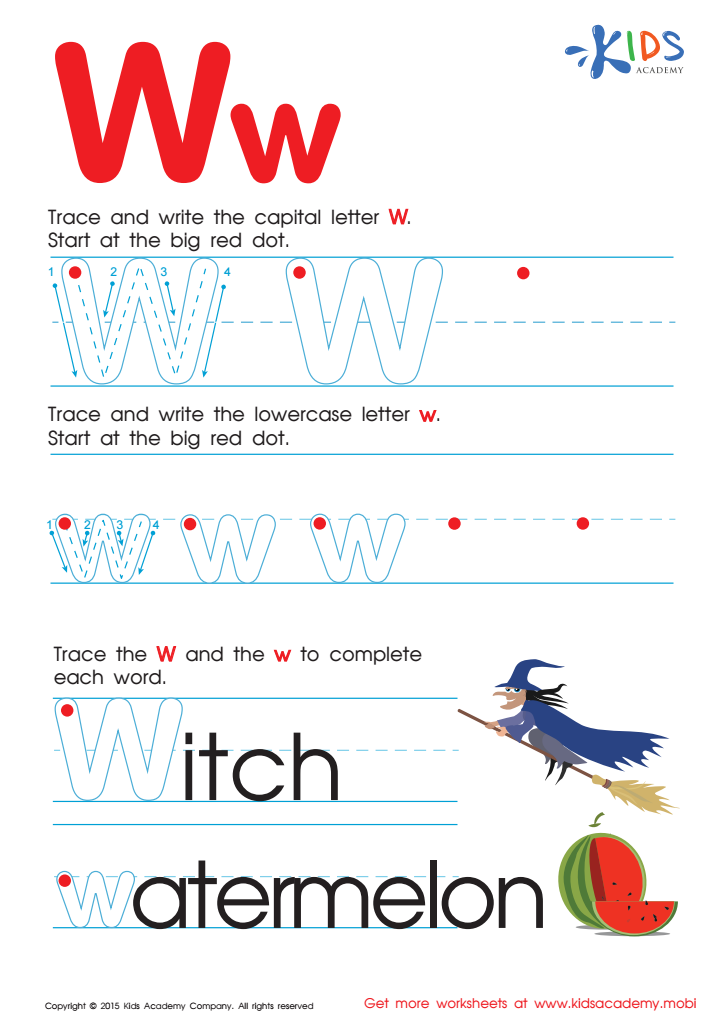
Letter W Tracing Page
Trace and write the capital and lowercase letter W with this free letter tracing worksheet by Kids Academy. Complete the words "Witch" (capital) and "watermelon" (lowercase). Check out our other kindergarten alphabet worksheets!
Letter W Tracing Page
Worksheet
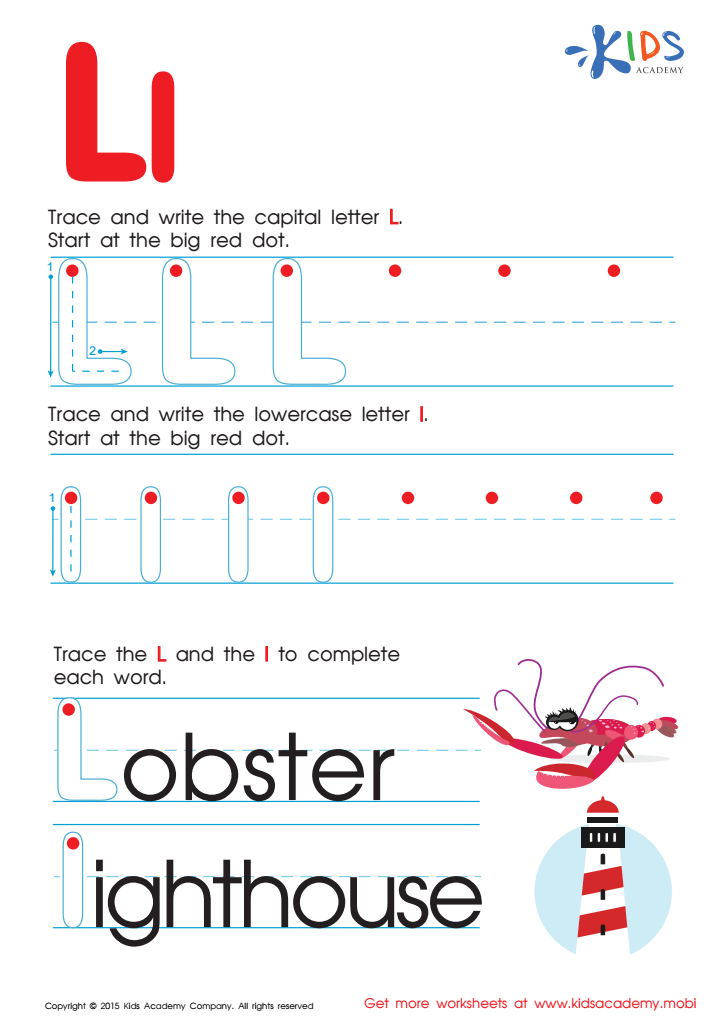
Letter L Tracing Page
Trace uppercase and lowercase letters to practice writing. Pay attention to the lowercase letters, like the "L", that are not as tall as an uppercase "I" or as short as a lowercase "i". Words like "lobster" and "lighthouse" are waiting to be completed. Enjoy!
Letter L Tracing Page
Worksheet
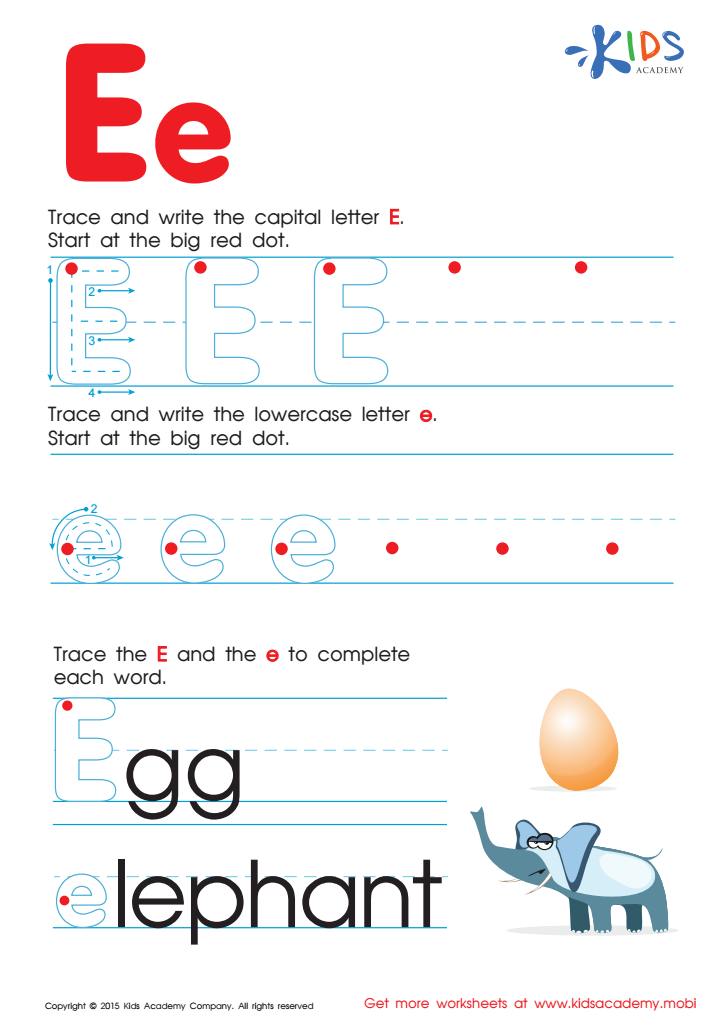
Letter E Tracing Page
Trace and write the uppercase and lowercase "E" starting at the big red dot. Complete words to perfect letter writing. Egg and Elephant must be written carefully. More alphabet worksheets for kindergarten are available for download to spend more time with your children learning.
Letter E Tracing Page
Worksheet
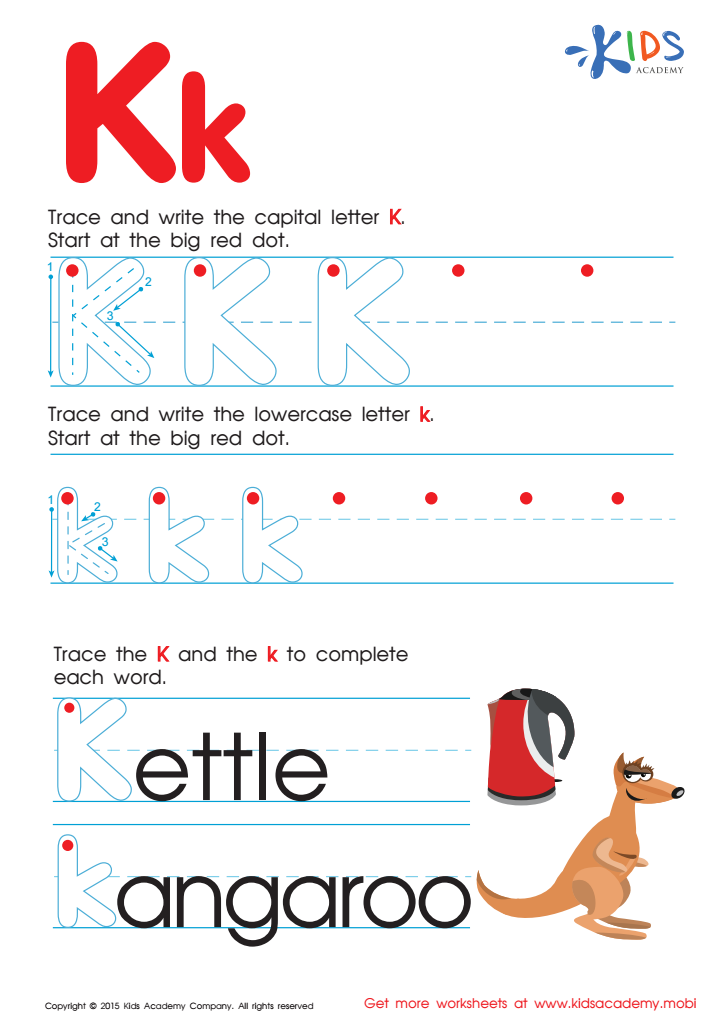
Letter K Tracing Page
Trace and write the letter K; start at the big red dot. Use it to complete words like "Kettle" and "Kangaroo". Visit Kids Academy for more free alphabet worksheets for kindergarten.
Letter K Tracing Page
Worksheet

Letter F Tracing Page
Trace "F" with your pencil! Start at the red dot and draw lines — it's fun! Check it out — it looks great! Keep practicing to make it even better. Then, try completing words. Help out the broken fan and funny frog! Get free alphabet worksheets and activities for your kids. Come see our new tracing pages!
Letter F Tracing Page
Worksheet
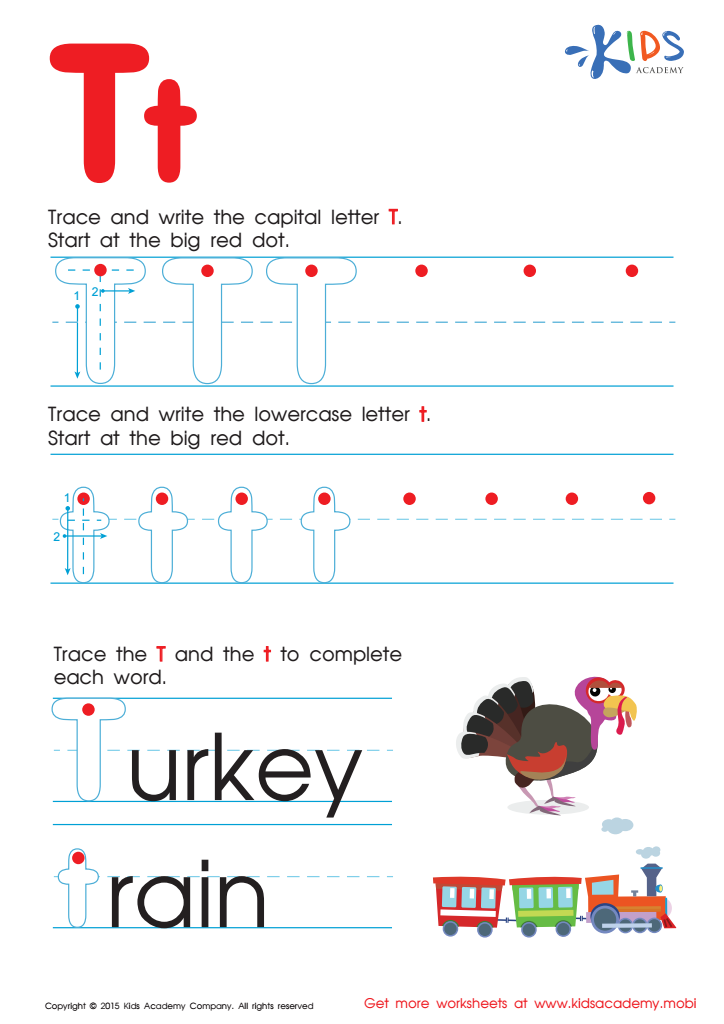
Letter T Tracing Page
Trace letters, complete words, draw pictures and see your kids having fun!
Kids Academy offers alphabet tracing worksheets to learn to write letters. Start with the big red dot, trace the letter, then write it. Practice uppercase and lowercase. Have fun completing words with a Turkey or a rain-train and draw pictures. Get more printable worksheets to make learning enjoyable.
Letter T Tracing Page
Worksheet
Join Kids Academy for Free
Who is primarily going to use this learning content?







Parents and teachers should prioritize handwriting skills and ABC order for children aged 3-9 because they're foundational for literacy and overall cognitive development. Handwriting isn't just about creating legible letters; it's a fundamental exercise that enhances motor skills, attention to detail, and fine motor coordination. This practice cultivates patience and persistence, qualities that are essential for academic success and broader life skills.
Introducing ABC order helps children understand the organization and sequence, which is crucial for language acquisition, reading comprehension, and effective communication. Recognizing alphabetical order supports tasks like using a dictionary, organizing information, and following structured routines—all vital for higher-level academic tasks and daily activities. Mastery of these skills sparks confidence, empowering young learners to engage fully and successfully in their education.
Moreover, developing handwriting and familiarity with the alphabet between ages 3-9 sets a solid base for educational endeavors. Children tend to feel more comfortable and perform better academically when they gain these early proficiencies, fostering a positive attitude towards learning. Hence, by emphasizing handwriting skills and alphabetical order during these formative years, parents and teachers can significantly contribute to the lifelong academic and interpersonal success of their children.