
Hand-eye Coordination Cursive Alphabet Worksheets for Ages 3-9
6 filtered results
Difficulty Level
Grade
Age
-
From - To
Subject
Activity
Standards
Enhance your child's handwriting skills with Hand-eye Coordination Cursive Alphabet Worksheets for ages 3-9. These engaging worksheets at Kids Academy seamlessly blend learning with fun, helping children master cursive writing while boosting their hand-eye coordination. Suitable for early learners, each sheet provides step-by-step guidance to form letters correctly, fostering fine motor skills. Perfect for home or classroom settings, these printable worksheets encourage practice that builds confidence and dexterity. Ideal for beginners, they make learning cursive an enjoyable adventure, turning intricate letter formation into accessible and rewarding challenges. Start your child's cursive journey today and watch their skills flourish!
Favorites
With answer key
Interactive
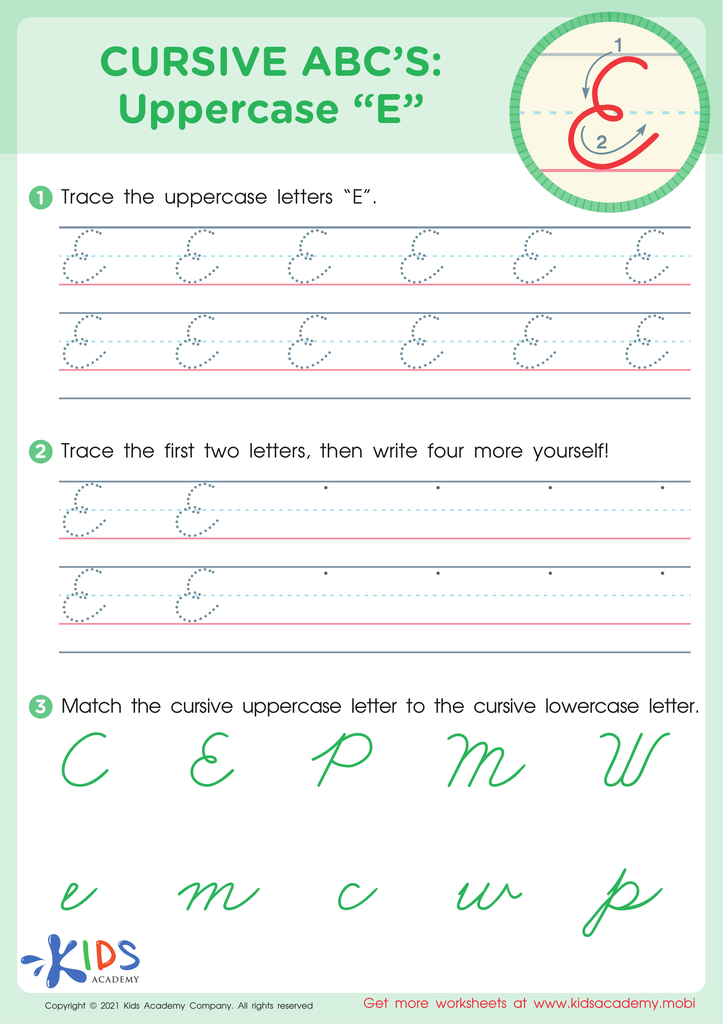
Cursive ABCs: Uppercase E
Ask your child if they can identify the letter 'E' and give examples. Each letter is unique, so provide coaching. Have them trace cursive 'E' to become familiar and boost confidence. Then, ask them to write it on their own.
Cursive ABCs: Uppercase E
Worksheet
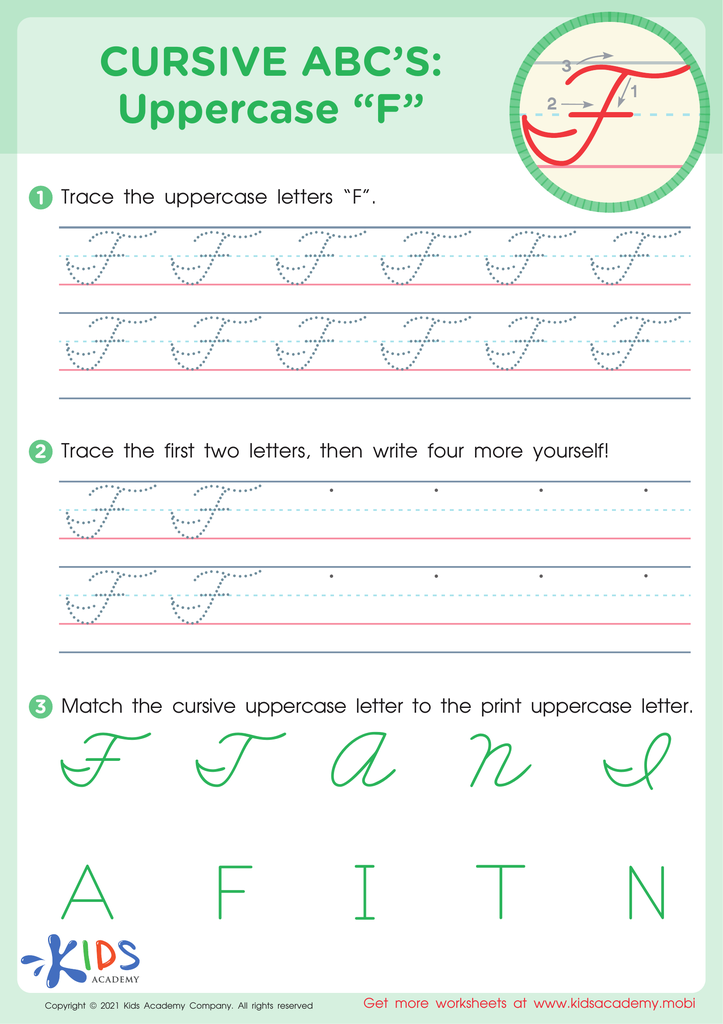
Cursive ABCs: Uppercase F
Help your kids trace the letters in these worksheets and watch their confidence grow as they learn to write cursive uppercase and lowercase letters. Ask them to identify the letters in words and give examples of words that start with an uppercase 'F', then have them write some letters on their own and assess their progress.
Cursive ABCs: Uppercase F
Worksheet
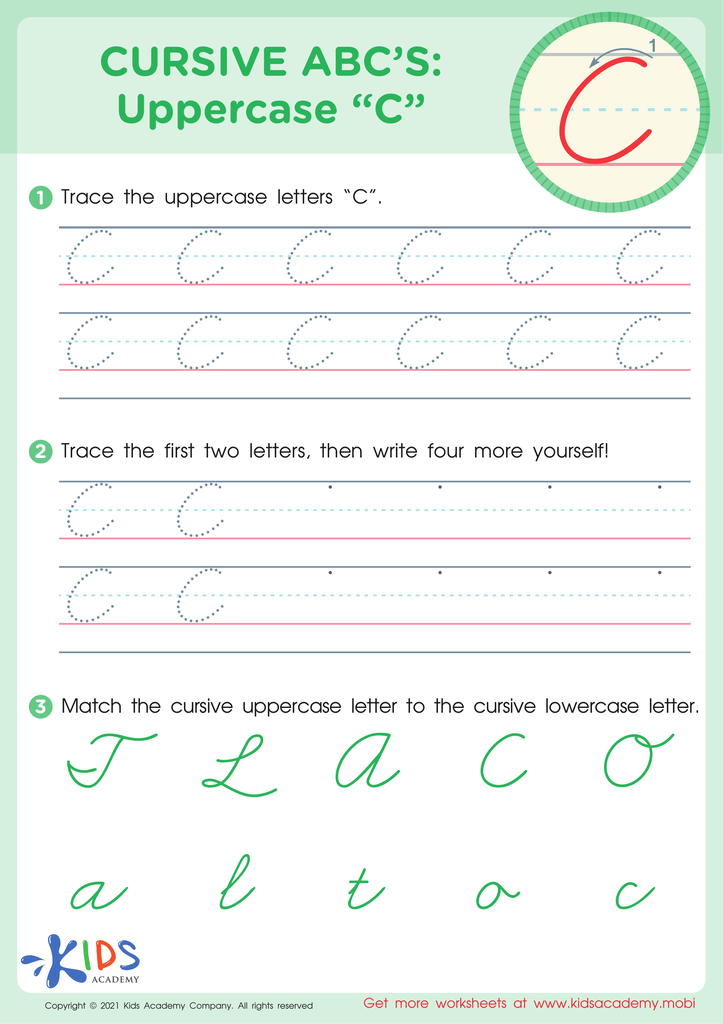
Cursive ABCs: Uppercase C
These worksheets are perfect for those wanting to improve their handwriting or learn letter recognition. The tracing exercises help younger students sharpen their writing skills and teach how to write the 'C' in cursive. First, they trace the given examples and then practice writing it solo. A letter recognition test is at the bottom of the page to check progress.
Cursive ABCs: Uppercase C
Worksheet
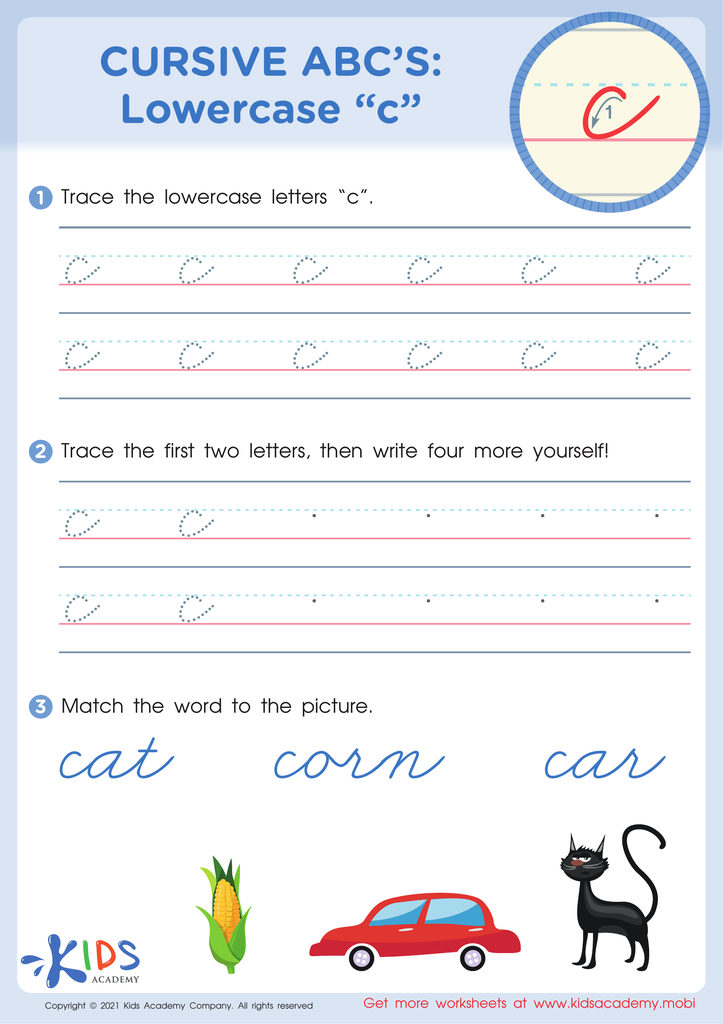
Cursive ABCs: Lowercase c
Once your child has successfully printed their letters, help them learn to recognize and write the alphabet in cursive. Struggling? This worksheet is perfect to assist them. Writing is an essential skill for kids to learn, so do all you can to help them. Use these tracing worksheets and guide them as they write the lowercase letter 'c' in cursive.
Cursive ABCs: Lowercase c
Worksheet
Cursive ABCs: Lowercase h
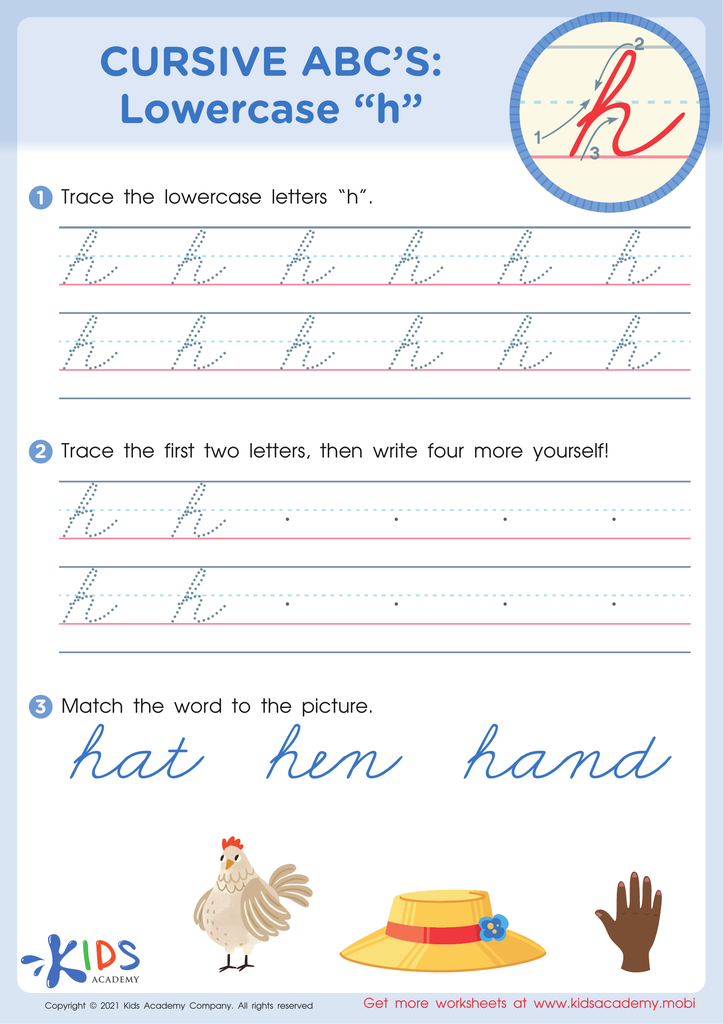
Your children will need more than just reciting the alphabet; they need to learn how to identify and write it. Cursive writing helps with neatness, and these tracing worksheets are great learning aids and offer exercises to practice writing lowercase 'h'. With these, your children get better writing skills and learn new words.
Cursive ABCs: Lowercase h
Worksheet
Cursive ABCs: Uppercase H
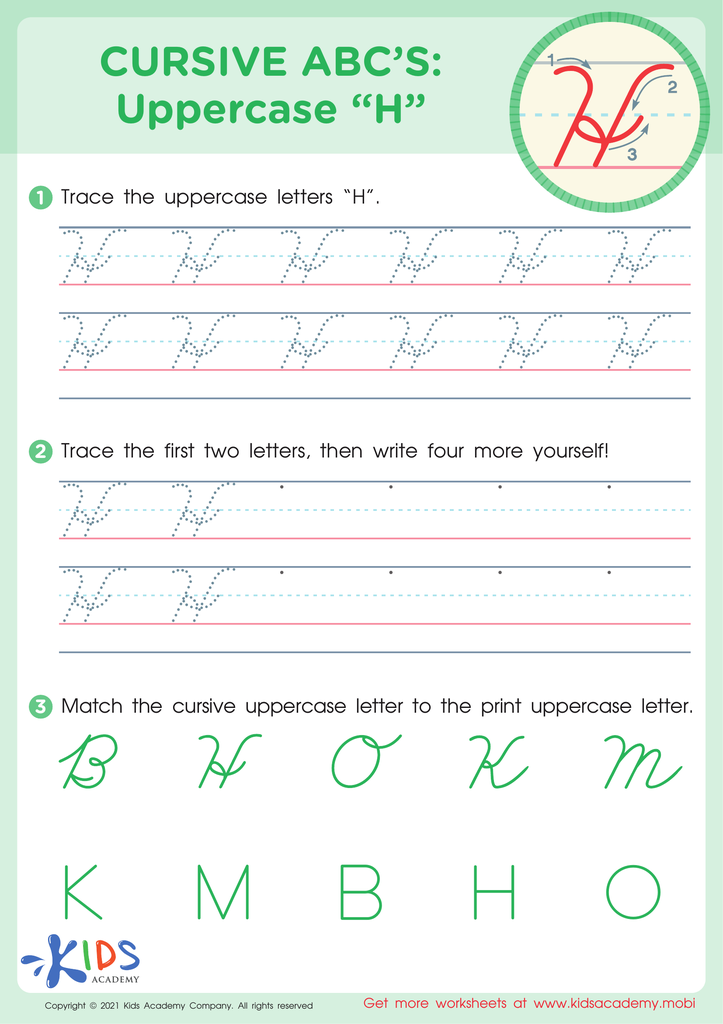
Have your child recite the alphabet and give you words beginning with H. This tracing sheet is perfect to help them improve their handwriting. Guide their hands as they trace the uppercase H, then have them practise writing it alone. At the bottom is an exercise to check their letter recognition.
Cursive ABCs: Uppercase H
Worksheet
Join Kids Academy for Free
Who is primarily going to use this learning content?





Parents and teachers should prioritize enhancing hand-eye coordination, especially through activities like teaching cursive writing, because of its critical role in early childhood development. For children aged 3-9, fine motor skills are in a crucial development phase, and activities that incorporate hand-eye coordination significantly contribute to this shaping process.
Engaging in cursive handwriting practice helps children synchronize their visual perception with motor function. This alignment is vital for numerous day-to-day tasks, such as dressing, eating, and participating in sports, integral activities in a child's life. As kids learn to control the movement of the pen while sticking to patterns and letter forms, their brain coordinates input from the eyes to guide the hands efficiently, enhancing fine motor control and cognitive development.
Moreover, mastering hand-eye coordination through cursive writing has academic implications. Improved motor skills can lead to better handwriting quality, making education tasks more manageable and less frustrating for students. This stimulation further bolsters manual dexterity, contributing significantly to classroom performance and encouraging a lifelong appreciation for cohesive motor and mental activity. By promoting hand-eye coordination and integrating cursive alphabet exercises, parents and teachers lay a foundation for holistic growth that extends beyond mere academic achievements, fostering essential life skills.







