Sound identification Elementary Phonics Worksheets for Ages 3-9
4 filtered results
-
From - To
Enhance your child's phonics skills with our engaging Sound Identification Worksheets, designed for ages 3-9. These worksheets provide interactive activities that help young learners recognize and differentiate sounds, laying the foundation for reading success. Each worksheet features colorful illustrations and fun exercises that encourage children to associate sounds with corresponding letters and words. Ideal for classrooms or home learning, these worksheets promote critical listening and comprehension skills essential for early literacy. Explore the joy of learning with our comprehensive collection, perfect for fostering a love of reading while developing essential sound identification abilities. Start your phonics journey today!
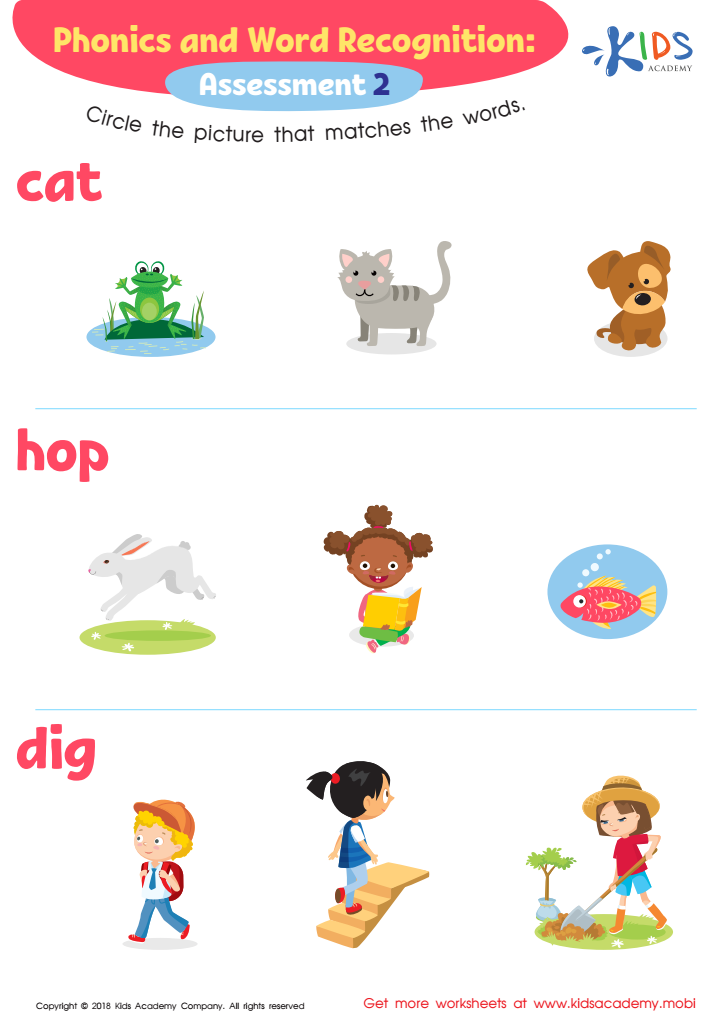
Phonological Awareness: Assessment 2 ELA Worksheet
 Assign to My Students
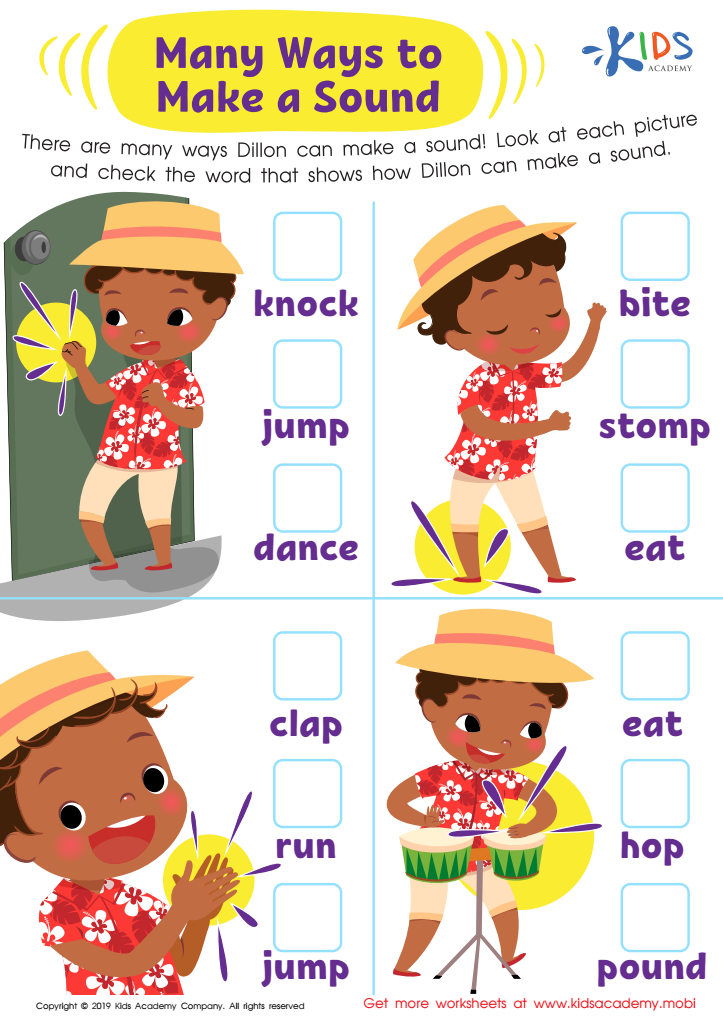
Many Ways to Make a Sound Worksheet
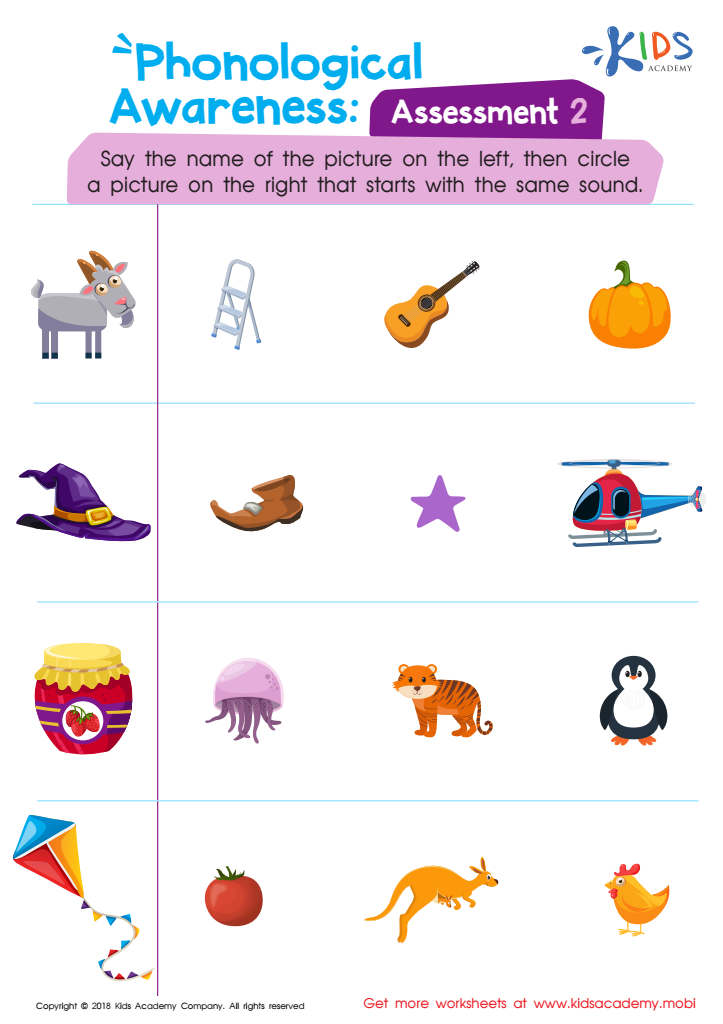
Phonological Awareness: Assessment 2 Worksheet
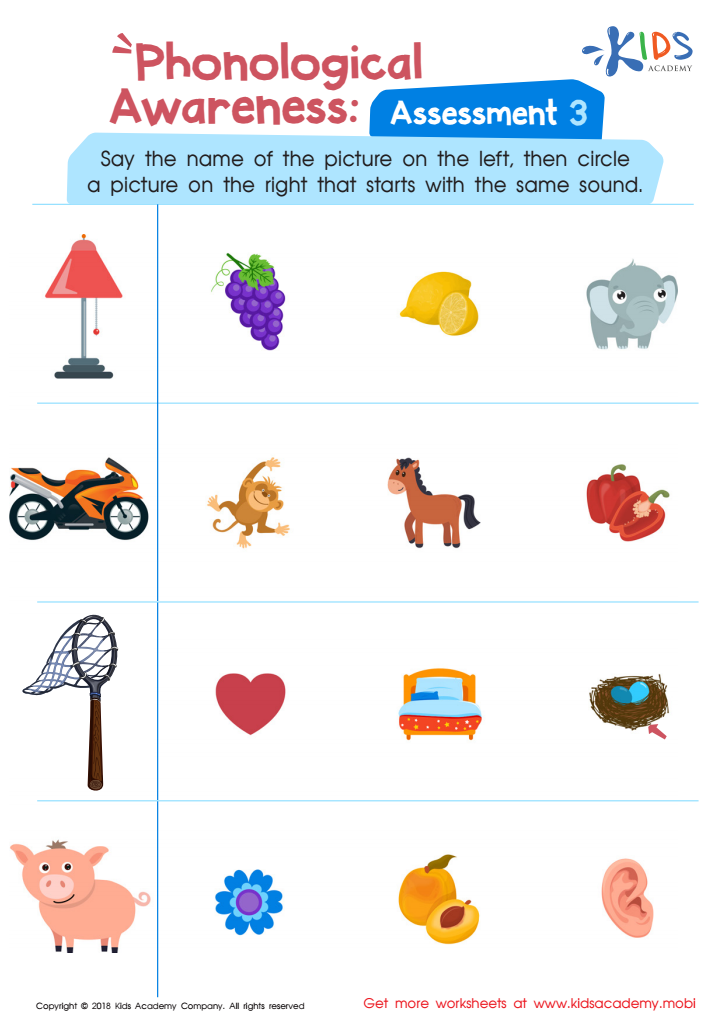
Phonological Awareness: Assessment 3 Worksheet




Sound identification is a crucial component of elementary phonics for children aged 3-9, as it lays the foundation for reading and writing skills. Phonemic awareness, which involves recognizing and manipulating sounds in spoken language, is essential for understanding how letters and sounds connect within words. At this age, children's brains are highly adaptable, making this the perfect time to develop strong phonetic skills.
Parents and teachers should care about sound identification because it enhances children's literacy competence, helping them decode words and improving their vocabulary. Early mastery of phonics leads to confidence in reading, which encourages a lifelong love of books and learning. Additionally, sound identification supports language development, including listening and oral communication skills, essential for overall academic success.
Furthermore, effective sound identification strategies, such as playing phonics games or engaging in activities that emphasize sound recognition, motivate children to participate and invest in their learning journey. This not only strengthens reading skills but also fosters critical thinking and problem-solving abilities. Ultimately, prioritizing sound identification helps equip children with essential tools for success in school and beyond, making it an invaluable focus for both parents and teachers.







