Vocabulary development Elementary Phonics Worksheets for Ages 3-9
4 filtered results
-
From - To
Enhance your child's vocabulary skills with our engaging Elementary Phonics Worksheets, specially designed for ages 3-9. These interactive resources focus on phonetic awareness while incorporating vocabulary development activities that keep learning fun and effective. Perfect for home or classroom use, our worksheets encourage young learners to explore words through games, exercises, and illustrations. Help your child master essential phonics concepts while expanding their vocabulary in a playful environment. Our comprehensive selection of worksheets caters to various learning levels, making it easy to find the right activities for your child. Discover the joy of learning with Kids Academy worksheets today!
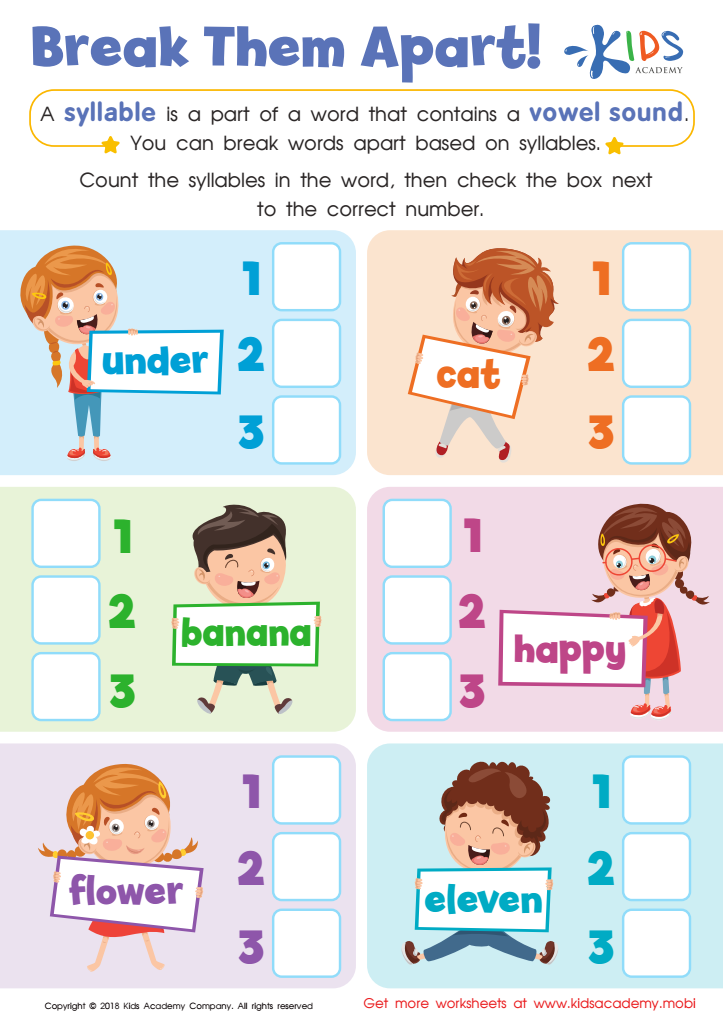
Reading: Break Them Apart Worksheet
 Assign to My Students
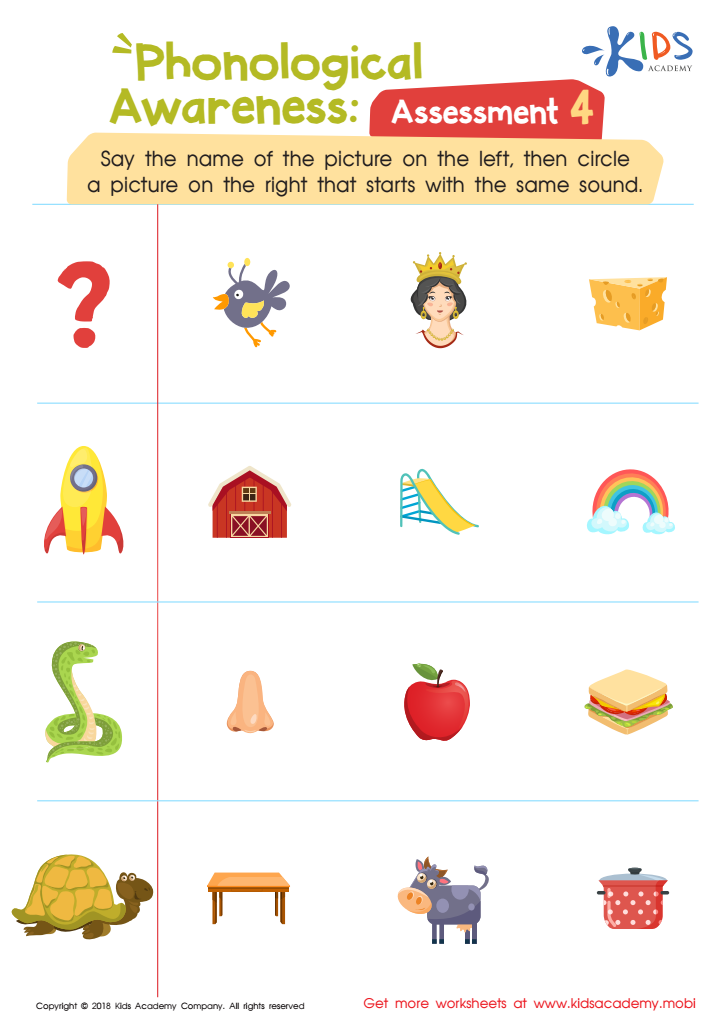
Phonological Awareness: Assessment 4 Worksheet
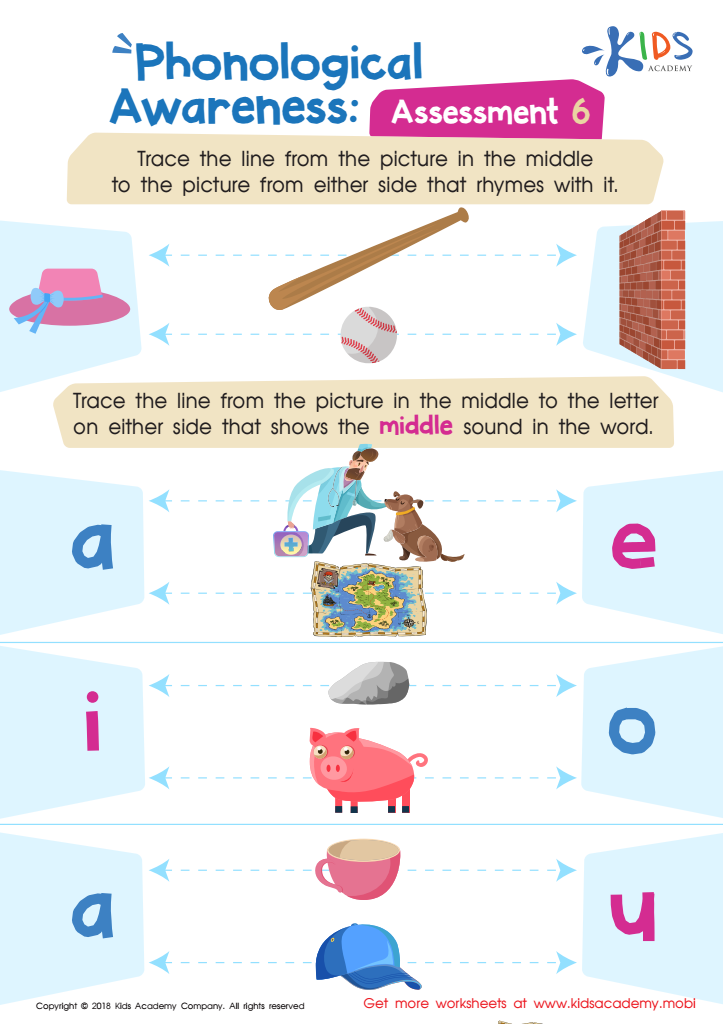
Phonological Awareness: Assessment 6 Worksheet
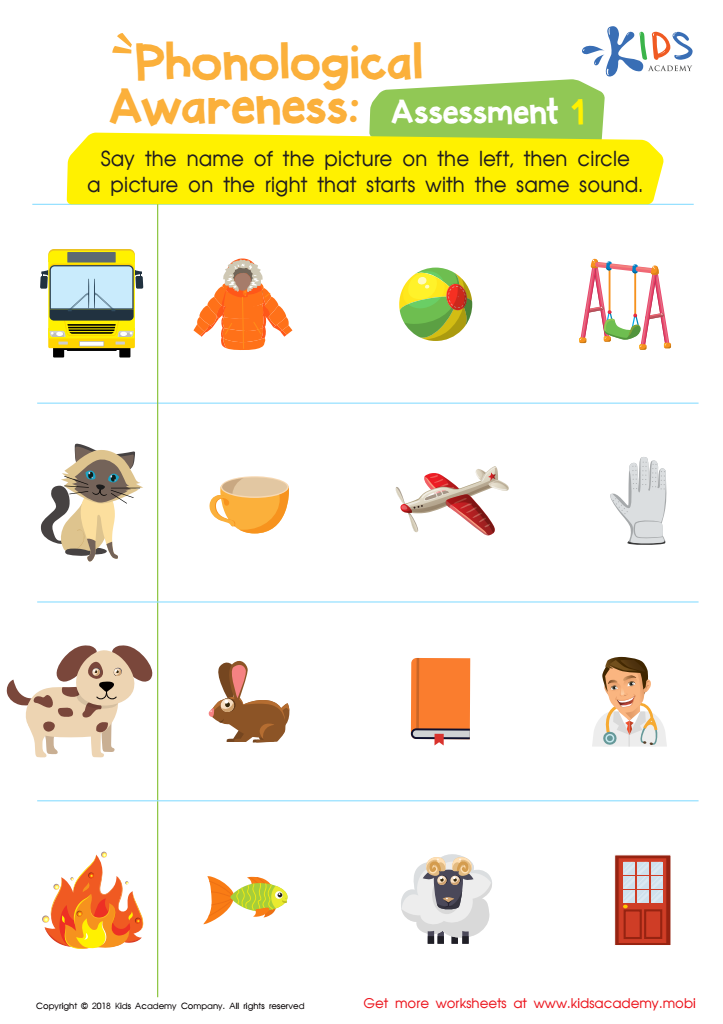
Phonological Awareness: Assessment 1 Worksheet




Vocabulary development and phonics are critical components of early literacy for children ages 3-9. At this foundational stage, the growth of vocabulary enables children to articulate their thoughts, express their emotions, and engage meaningfully with others. It fosters a love for reading, which is essential for academic success. This age group is particularly sensitive to language exposure, and rich vocabulary experiences can support deeper comprehension skills later on.
Phonics, the systematic approach to teaching the relationship between sounds and letters, is equally important. It lays the groundwork for decoding words, which is vital for reading fluency. When children grasp phonics, they can navigate unknown words with more confidence, enhancing their overall reading experience.
Parents and teachers should care about these elements because they are intertwined with children's self-esteem and literacy success. A robust vocabulary and strong phonics skills help children participate effectively in classroom discussions, understand written materials, and develop critical thinking skills. Furthermore, fostering literacy in these early years contributes to long-term academic achievement, paving the way for lifelong learning and communication abilities. Supporting vocabulary development through engaging activities can lead to empowered learners ready to tackle future educational challenges.







