Word identification Elementary Phonics Worksheets for Ages 3-9
3 filtered results
-
From - To
Enhance your child's literacy skills with our Word Identification Elementary Phonics Worksheets designed for ages 3-9. These engaging, printable resources support early readers as they build foundational phonics knowledge and boost their word recognition abilities. Featuring a variety of fun, interactive activities, these worksheets make learning to identify words an enjoyable experience. Children will practice matching letters, vowel sounds, and simple sight words, fostering both confidence and competence in reading. Perfect for home or classroom use, our worksheets cater to different learning styles and developmental stages. Start your child’s journey to becoming a proficient reader with our comprehensive phonics resources today!
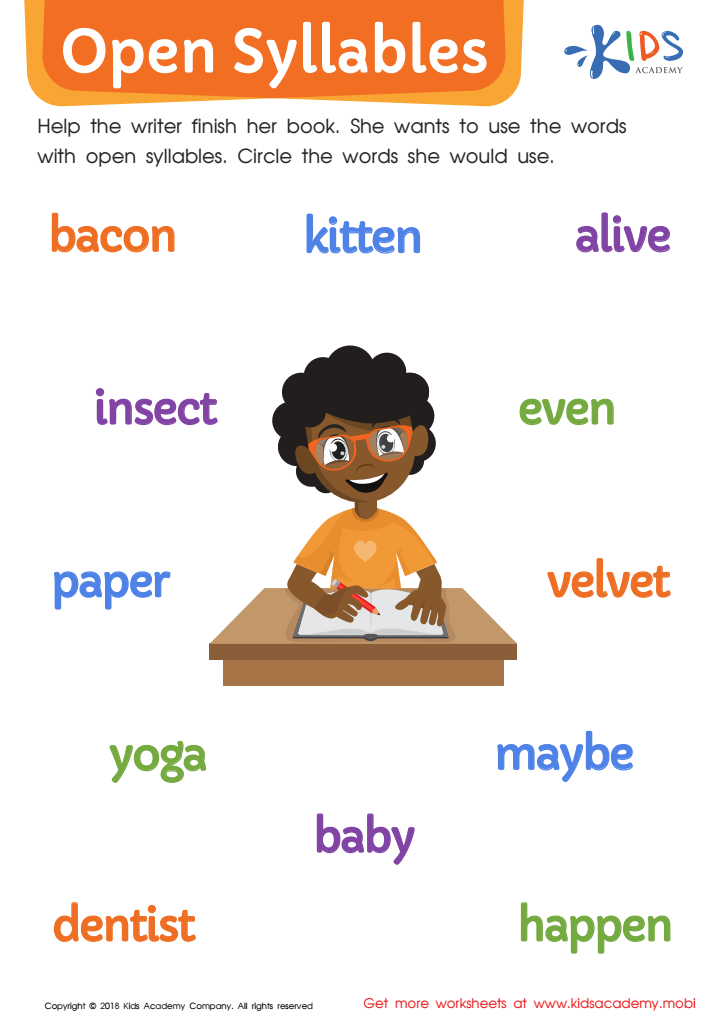
Open Syllables Worksheet
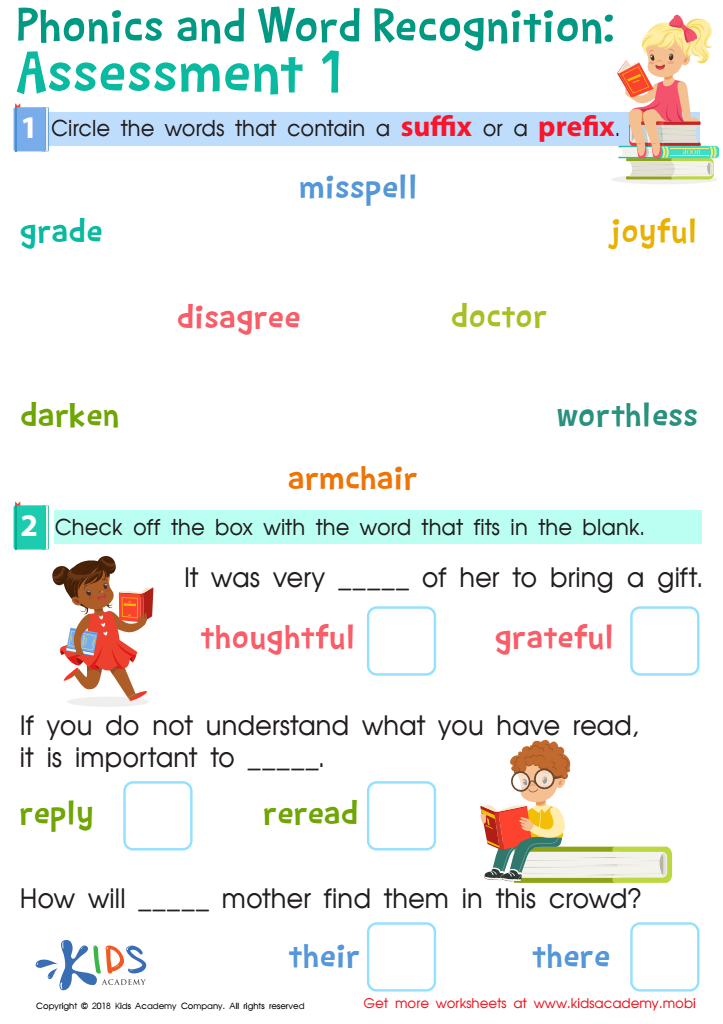
Phonics and Word Recognition: Assessment 1 Worksheet
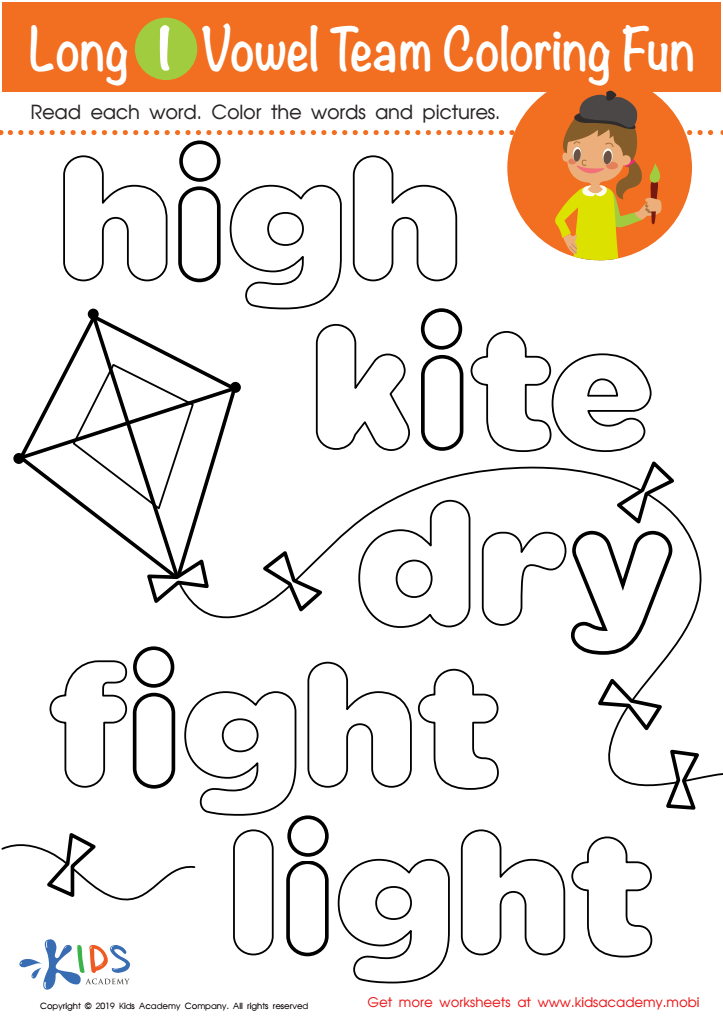
Long I Vowel Team Coloring Worksheet
 Assign to My Students




Word identification and phonics are essential components of early literacy development for children aged 3-9. Understanding phonics helps children to connect sounds with letters, forming the foundation for word recognition and spelling. When children master these skills, they become more confident readers, which leads to improved comprehension and academic performance across subjects.
Parents and teachers play a critical role in supporting phonics instruction. Early exposure to phonetic principles allows children to decode unfamiliar words independently, fostering a love for reading and learning. As children progress from identifying single sounds to blending them into words, they develop essential skills that will benefit them throughout their education.
Moreover, early intervention in phonics is key to preventing literacy difficulties later on. Students who struggle with word identification are at risk for falling behind, which can affect their self-esteem and motivation to learn. By focusing on phonics during the formative years, educators and parents can help all children achieve literacy proficiency.
Additionally, involving parents in phonics activities creates a supportive home environment conducive to learning. By working together, teachers and parents can ensure that children have the tools they need to succeed, laying the groundwork for a lifetime of reading enjoyment and achievement.







