Rhyme recognition Alphabet Worksheets for Ages 3-9
5 filtered results
-
From - To
Discover the joy of learning with our Rhyme Recognition Alphabet Worksheets for Ages 3-9! Designed to enhance phonemic awareness, these engaging activities help your child recognize rhyming words and connect sounds and letters effectively. With colorful illustrations and fun exercises, kids will develop essential early reading skills while having fun. Perfect for home or classroom use, our worksheets foster a love for language and set a strong foundation for literacy success. Empower your little learners today and unlock the magic of rhyming with our expertly crafted resources!
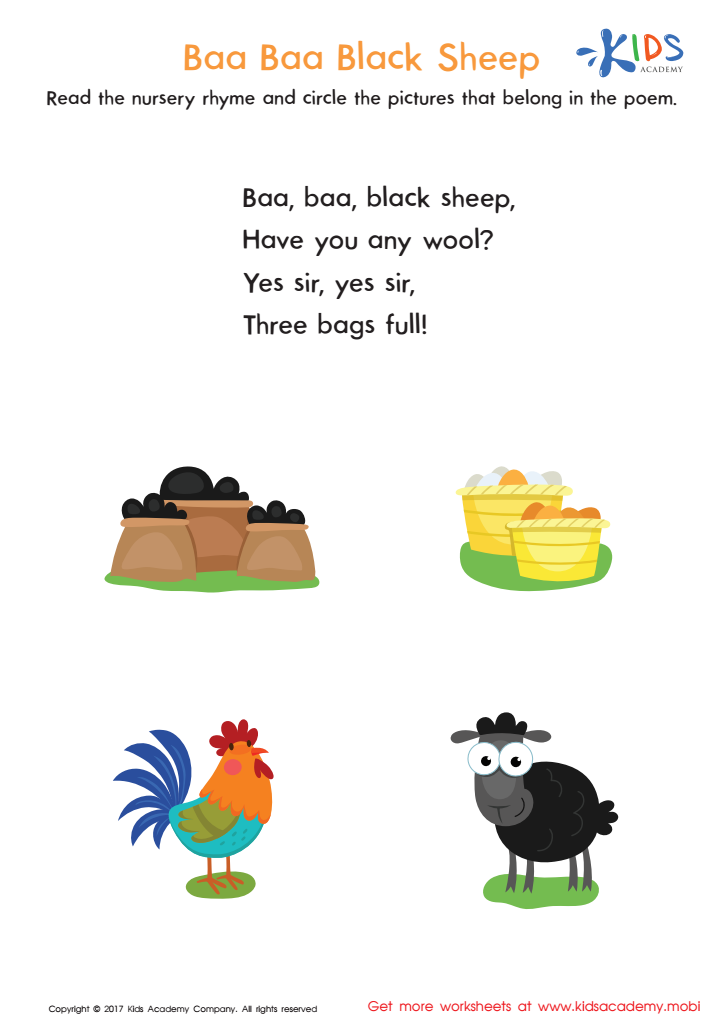
Baa Baa Black Sheep Printable
 Assign to My Students
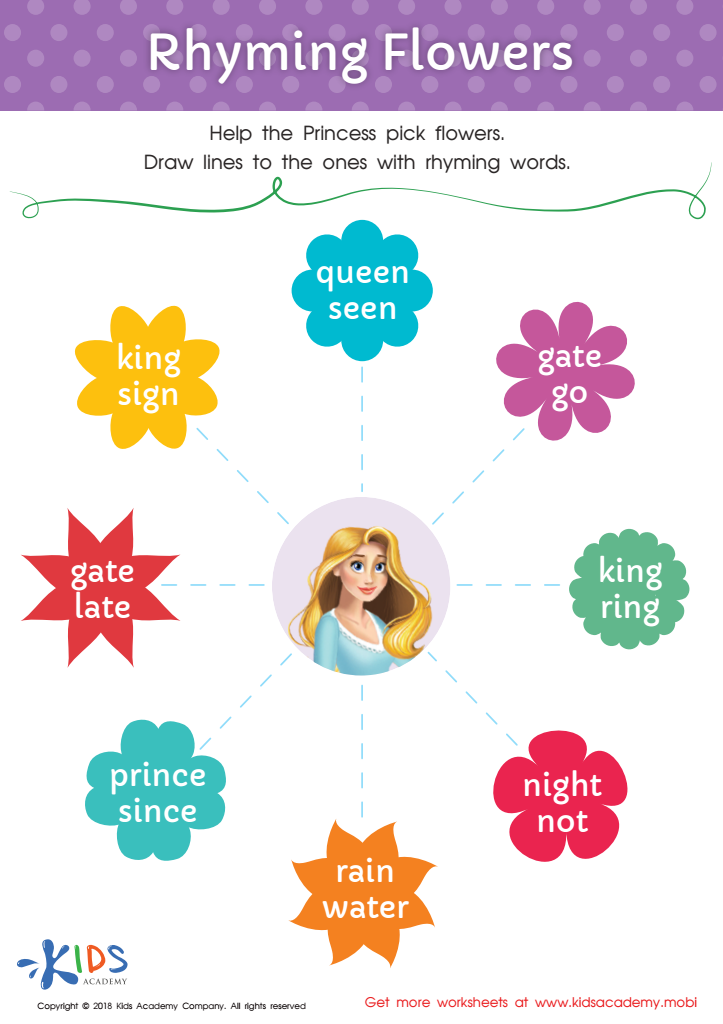
Rhyming Flowers Worksheet
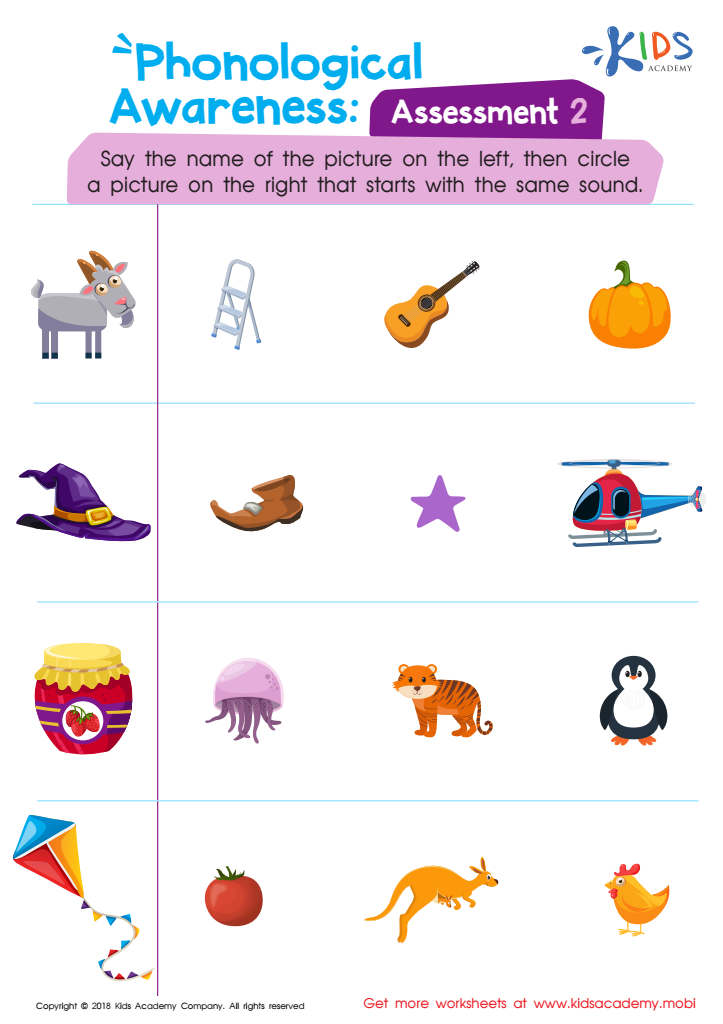
Phonological Awareness: Assessment 2 Worksheet
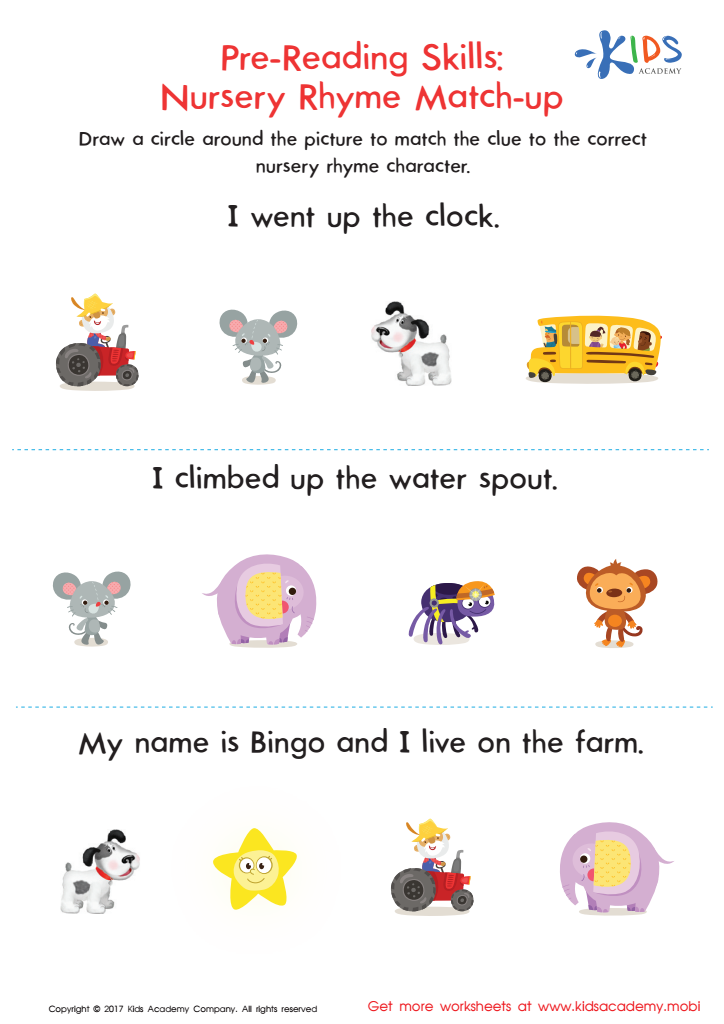
Nursery Rhyme Match–Up Worksheet
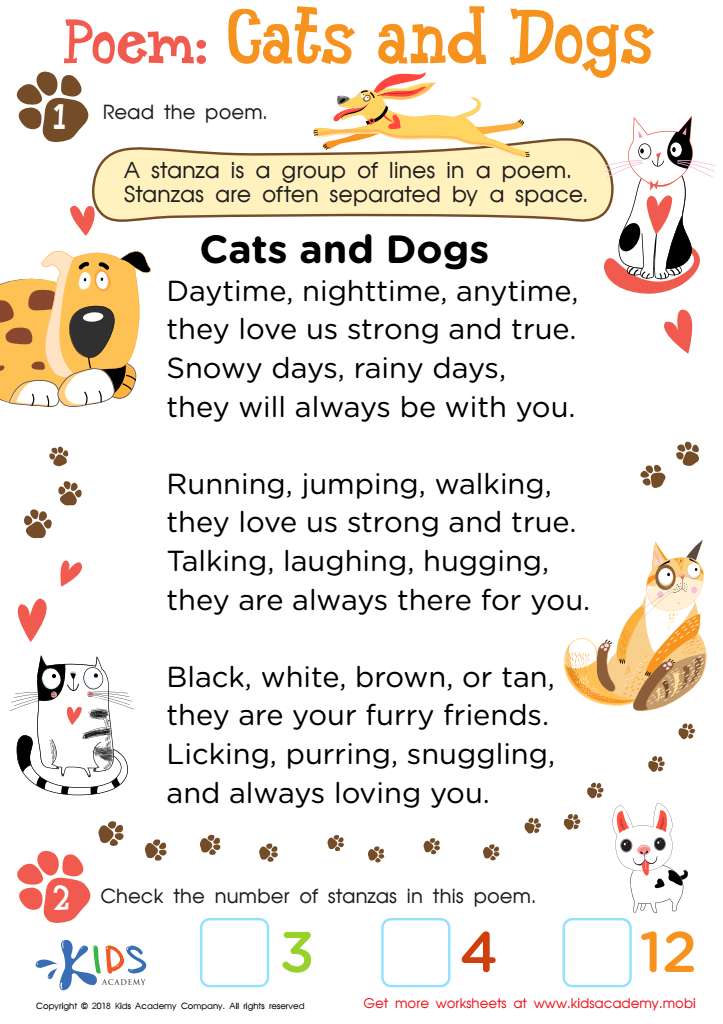
Poem: Cats and Dogs Worksheet






Rhyme recognition and alphabet knowledge are foundational for young children’s language and literacy development, particularly for ages 3-9. These skills significantly contribute to their reading and writing abilities.
When children recognize rhymes, they become attuned to the sounds of a language. This phonemic awareness enables them to differentiate and manipulate sounds, a critical step in understanding how words work. Exposure to rhyming strengthens memory and makes learning new words fun, which in turn enriches their vocabulary. Recognizing rhyming patterns also helps children predict text and sentences, aiding comprehension.
Alongside rhyme recognition, familiarity with the alphabet is crucial. Knowing the alphabet involves recognizing letter shapes, understanding their corresponding sounds, and being able to sequence them. This is the scaffolding upon which other literacy skills are built. Phonics, the method of teaching reading by correlating sounds with symbols, depends heavily on a child’s knowledge of the alphabet.
Combined, rhyme recognition and alphabet knowledge support phonemic awareness and phonics, the predictors of reading success. Thus, parents and teachers should invest time in these practices to set a strong foundation for future academic achievement. Making learning interactive with rhyming games and alphabet activities engages children and promotes a lifelong love for reading and learning.







