Handwriting practice Letter G Worksheets for Ages 3-9
3 filtered results
-
From - To
Enhance your child's handwriting skills with our engaging Letter G Practice Worksheets for ages 3-9. Developed by Kids Academy, these printable worksheets offer delightful exercises that guide young learners through forming both uppercase and lowercase letters. Each activity focuses on fine motor skills, letter recognition, and proper penmanship. Featuring fun graphics and step-by-step instructions, kids will find learning to write the letter G both enjoyable and educational. Perfect for homeschooling or supplemental classroom practice, these worksheets are designed to build confidence and ensure progress in early literacy development. Download now and support your child's handwriting journey!
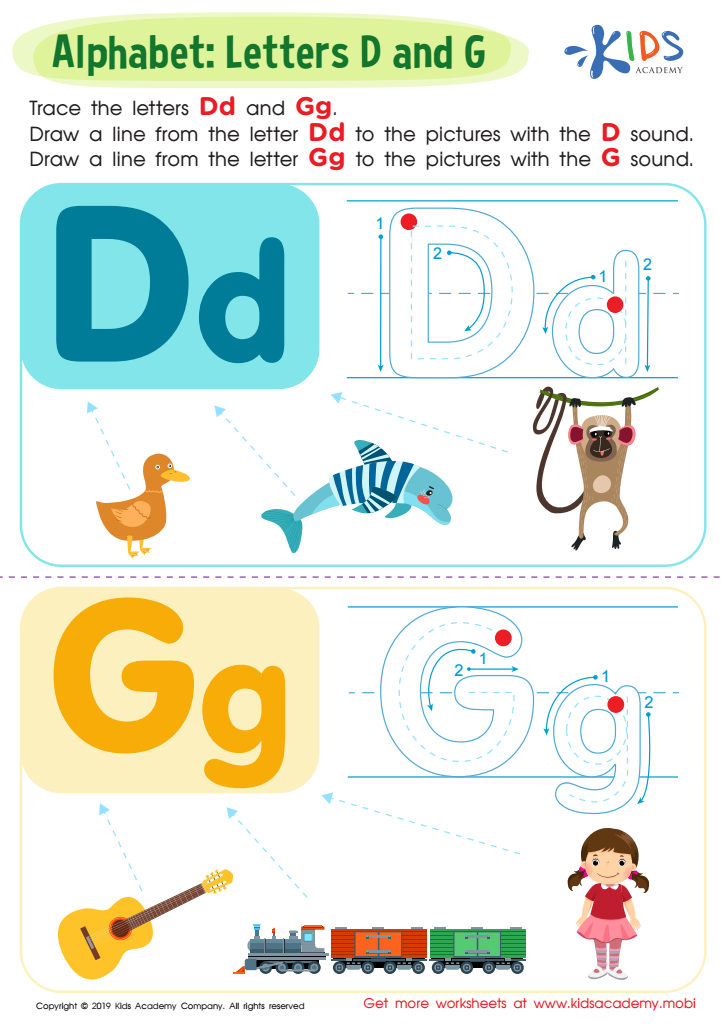
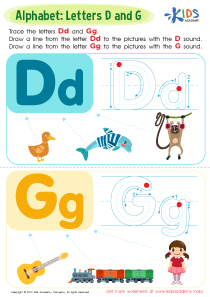
Letter D and G Tracing Worksheet
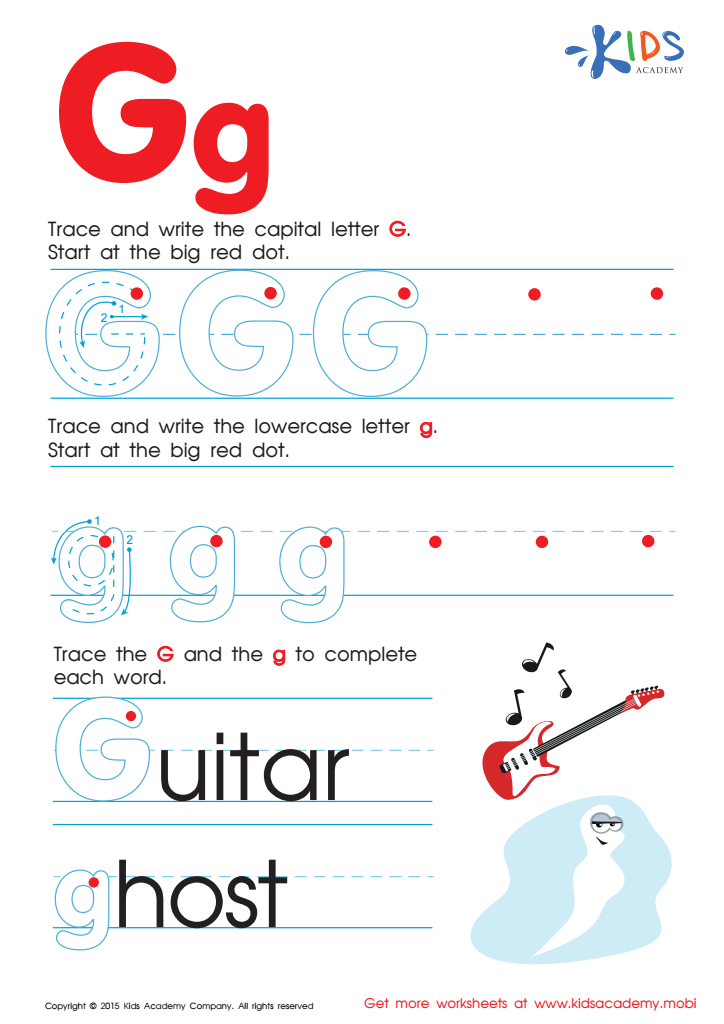
Letter G Tracing Page
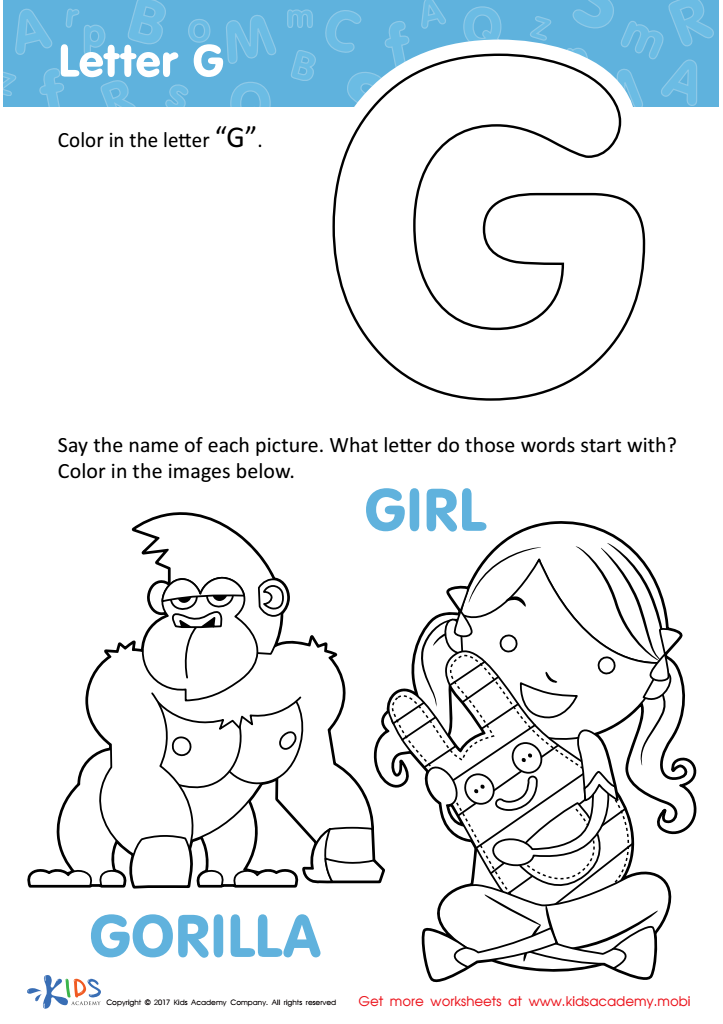
Letter G Coloring Sheet
 Assign to My Students






Handwriting practice, especially focusing on individual letters like “G,” for children aged 3-9 is crucial for several reasons. Firstly, the early years form the foundation for fine motor skills. As children learn to manipulate a pencil to form the letter “G,” they develop hand-eye coordination and muscle control, essential for all subsequent writing tasks.
Secondly, mastery of handwriting enhances cognitive development. The process of learning to write involves visual recognition, memory recall, and the ability to translate shapes into writing movements, making it an effective brain-training exercise.
Additionally, handwriting practice with letters can also support literacy development. Recognizing and writing each letter helps children understand the alphabet and phonetics, vital for reading skills. Writing the letter “G” multiple times aids in memorization, supporting both spelling and word formation as their reading skills advance.
Moreover, well-developed handwriting instills confidence and independence in young learners. Children take pride in seeing their progress, which boosts self-esteem and motivates continued learning. Lastly, social factors play a role; clear handwriting is a practical communication skill, enabling children to express their ideas better and fostering success in both academic and social settings.
Ensuring adequate practice of letters like “G” during these formative years sets the stage for lifelong educational and interpersonal success.