
Letter Tracing Letter Recognition Worksheets for Ages 3-9
6 filtered results
Difficulty Level
Grade
Age
-
From - To
Subject
Activity
Standards
Unlock your child’s potential with our engaging Letter Tracing and Letter Recognition Worksheets designed for ages 3-9. These fun, interactive resources help young learners develop essential pre-writing and literacy skills. Through tracing letters, children improve motor skills while becoming familiar with the shapes and sounds of each letter in the alphabet. Our worksheets cater to various learning styles, providing endless practice designed to foster confidence in early literacy. Perfect for both classroom and home use, these worksheets are an invaluable tool in preparing your child for future academic success. Explore our colorful and engaging content today to support your child’s journey in learning the alphabet!
Favorites
With answer key
Interactive
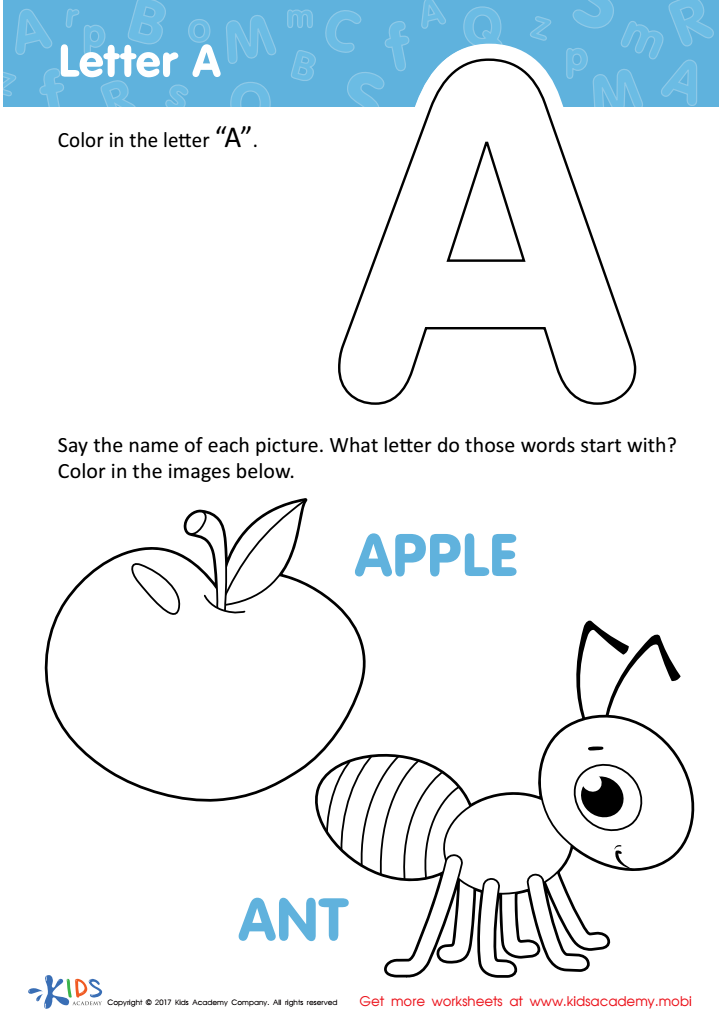
Letter A Coloring Sheet
This letter "A" coloring page is great for introducing kids to the alphabet! Let them exercise their creativity while they learn to recognize letters and sounds - it's a fun and easy way to help them get started.
Download (PDF)
 Assign to My Students
Assign to My Students
Letter A Coloring Sheet
Worksheet
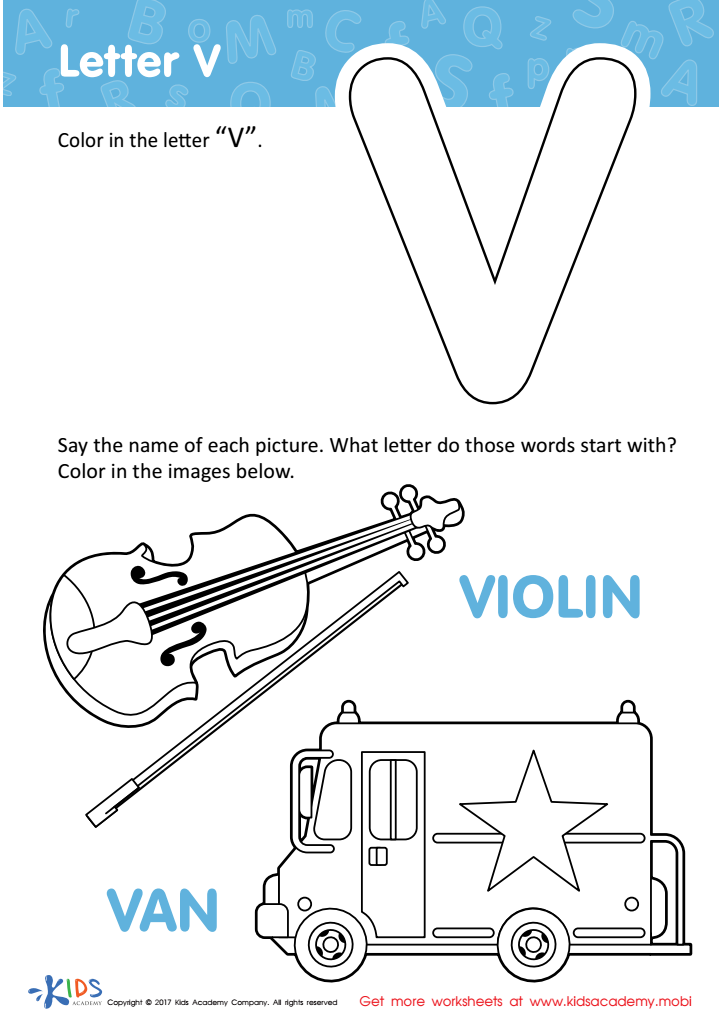
Letter V Coloring Sheet
This fun letter V coloring page can boost your child's knowledge of the letter "V" and its sound. Help them pronounce it correctly, too!
Download (PDF)
Assign to My Students
Assign to My Students
Letter V Coloring Sheet
Worksheet
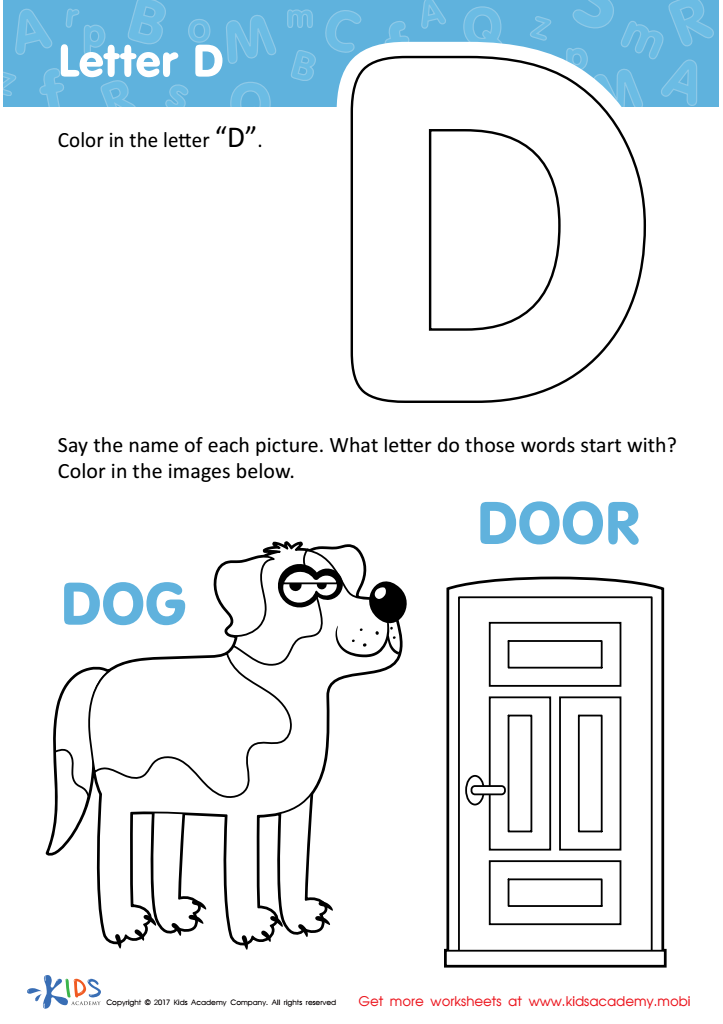
Letter D Coloring Sheet
Coloring with this letter "D" page is a great way to encourage your child's creativity while they learn the letter "D" and its sound. It's a fun activity to stimulate their imagination!
Download (PDF)
Assign to My Students
Assign to My Students
Letter D Coloring Sheet
Worksheet
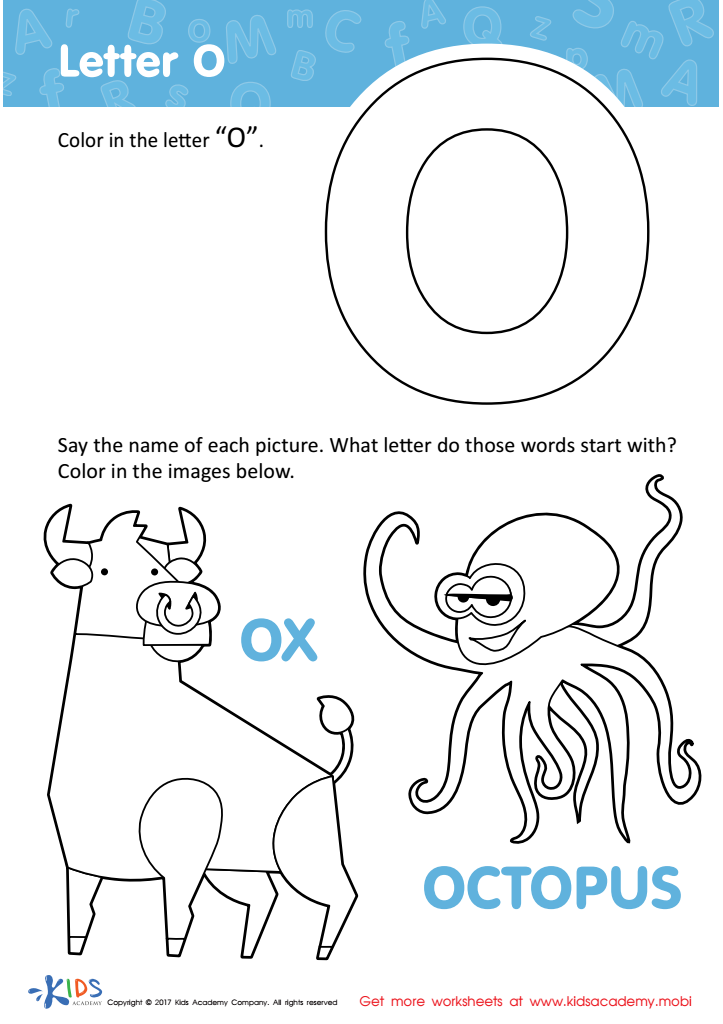
Letter O Coloring Sheet
Oh my! The letter "O" is so much fun. Coloring in the octopus and ox on this delightful letter "O" coloring page can help your child have fun while strengthening their recognition of the letter and sound.
Download (PDF)
Assign to My Students
Assign to My Students
Letter O Coloring Sheet
Worksheet
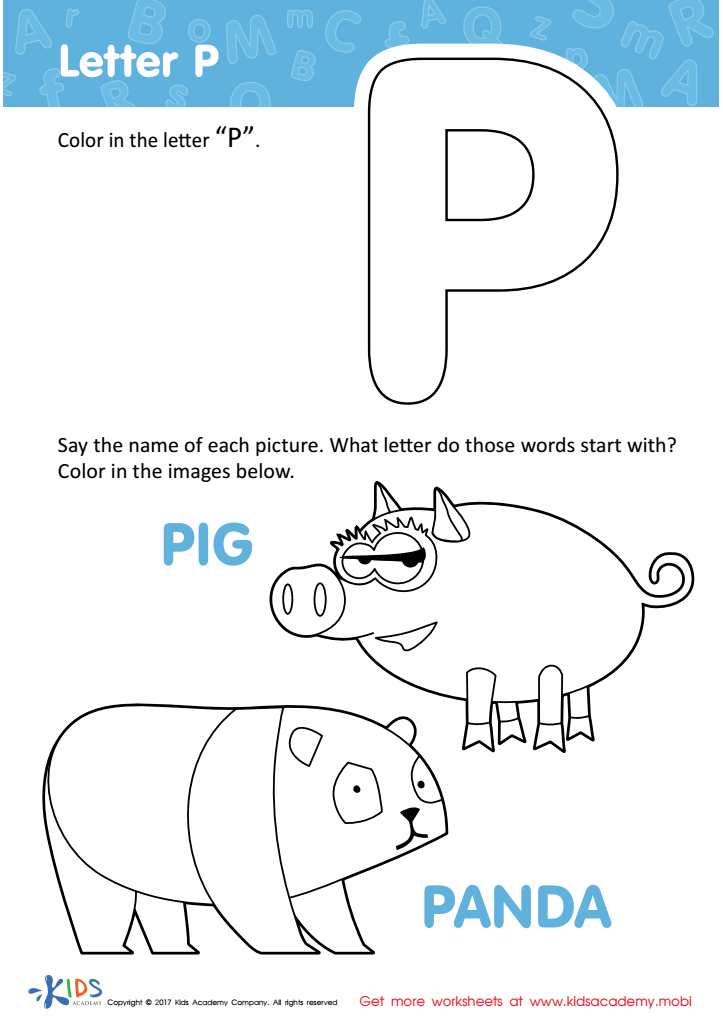
Letter P Coloring Sheet
Encourage your child's creativity and letter recognition with this "P" coloring page! Through coloring animals such as pigs and pandas, your little one will get to know the sound of the letter "P" and have fun too!
Download (PDF)
Assign to My Students
Assign to My Students
Letter P Coloring Sheet
Worksheet
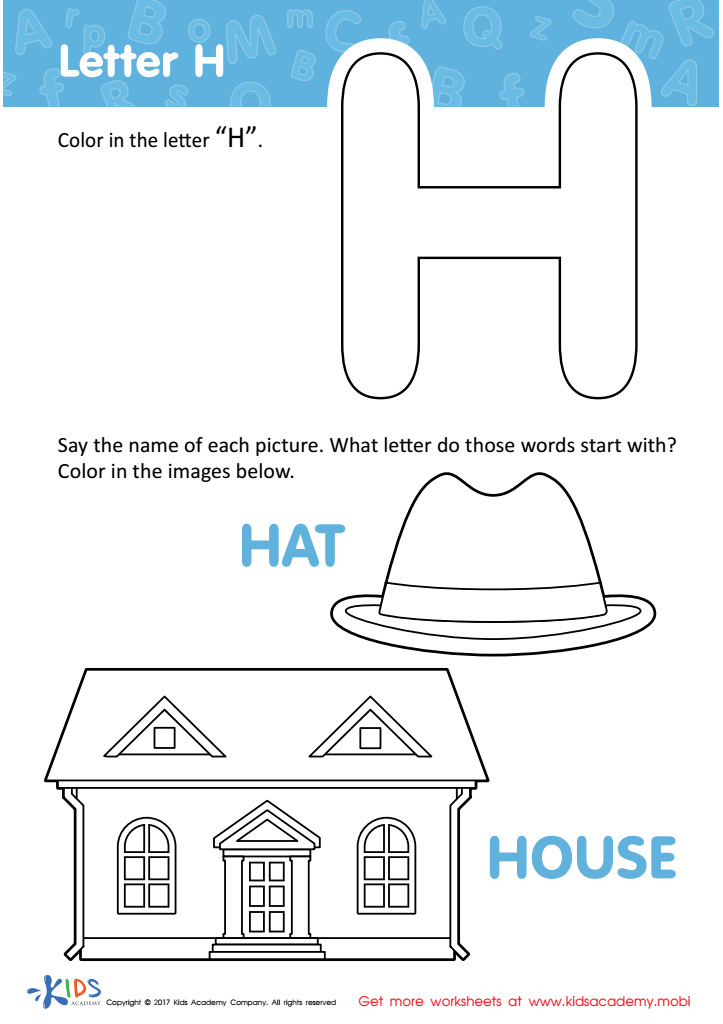
Letter H Coloring Sheet
This fun "H" coloring page will help your child recognize the letter and sound of "H"! With a hat and house to color, your little learner will have a blast picking colors and creating designs, all while learning about the letter "H"!
Download (PDF)
Assign to My Students
Assign to My Students
Letter H Coloring Sheet
Worksheet
Join Kids Academy for Free
Who is primarily going to use this learning content?








Letter tracing and letter recognition are crucial foundational skills in early childhood education that significantly benefit children aged 3-9. Firstly, letter recognition helps children identify and understand the alphabet, which is essential for reading and writing. When they can easily recognize letters, they become more confident in constructing words, ultimately fostering a love for reading.
Tracing letters enhances fine motor skills, which are important not only for writing but also for various everyday tasks. The coordination required for tracing helps build muscle control in young fingers, laying the groundwork for effective writing later on. Additionally, tracing reinforces memory through visual and tactile learning, as children simultaneously see and feel the shapes of the letters.
Furthermore, participation in letter tracing activities encourages concentration and patience—key skills for academic and personal growth. Parents engaging in these activities with their children create lasting bonds and instill a positive attitude toward learning, making education a delightful experience rather than a chore.
In summary, letter tracing and recognition are integral to child development and early literacy, making them high priorities for parents and teachers in nurturing young learners. Investing time in these activities sets the stage for academic success and a lifelong love of learning.







