Spelling practice Missing Vowels Worksheets for Ages 3-9
5 filtered results
Difficulty Level
Grade
Age
-
From - To
Subject
Activity
Standards
Enhance your child's spelling skills with our engaging Missing Vowels Worksheets, specially designed for ages 3-9. These printable worksheets offer a fun and interactive way for young learners to practice identifying and inserting missing vowels in various words. Perfect for both classroom and at-home learning, our resources align with early literacy standards and help develop strong spelling foundations. Kids will love the colorful images and fun exercises, while educators and parents will appreciate the structured, progressive nature of the activities. Boost your child's confidence and ability with these must-have spelling practice worksheets from Kids Academy.
Favorites
With answer key
Interactive
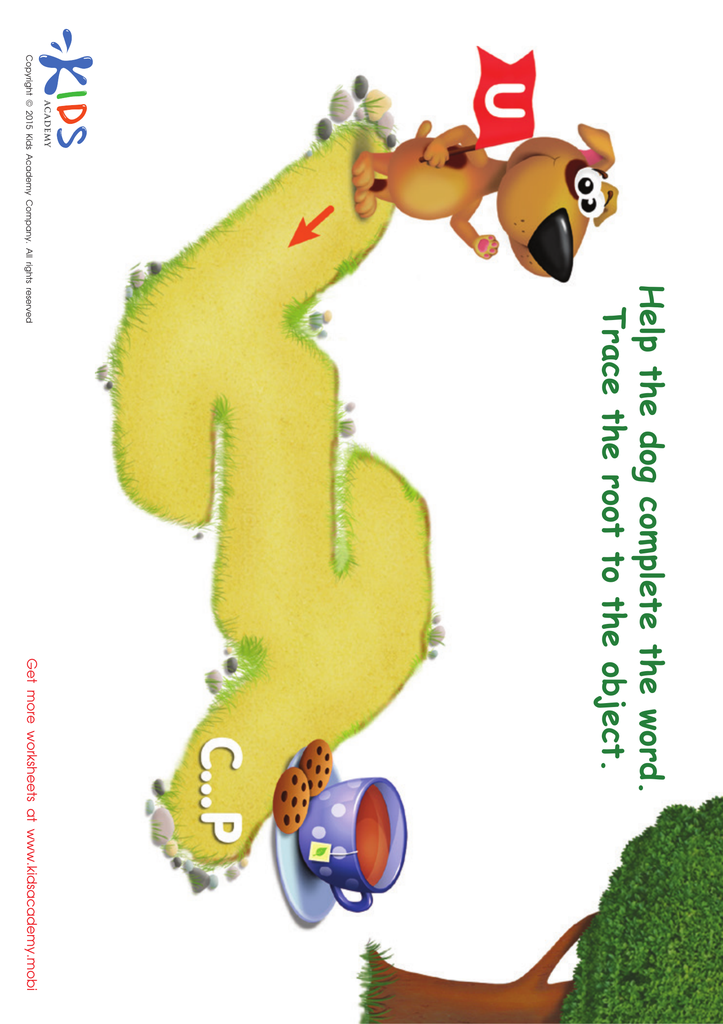
Short Vowel Sound U Worksheet Worksheet
Help your early reader join the adorable dog on his way to the cup of tea with cookies. This traceable worksheet reinforces the short -u sound and strengthens fine motor skills. Kids don't realize they are practicing reading skills while having fun!
Short Vowel Sound U Worksheet Worksheet
Worksheet
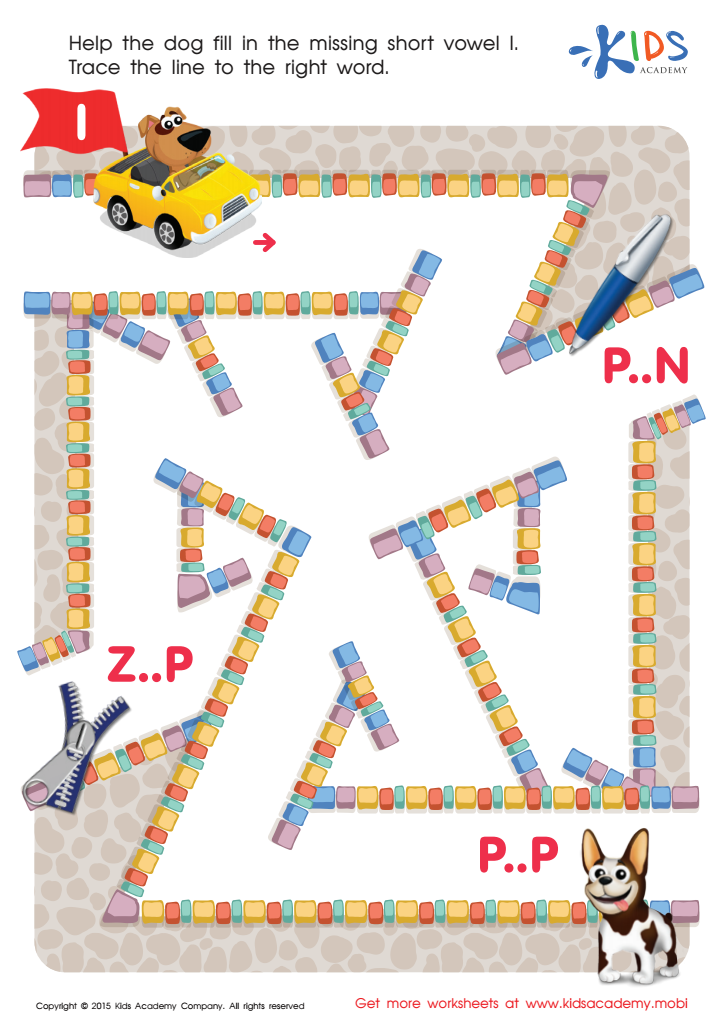
Short Vowel Sound I Worksheet
This free printable phonics worksheet will get your kid prepped for reading! It's a maze to help the dog complete the word “zip” with the missing letter I. Have your kid say the word aloud to learn the I sound. It's a great way to practice reading, writing and spelling skills. Check out here for more phonics worksheets!
 Assign to My Students
Short Vowel Sound I Worksheet
Worksheet
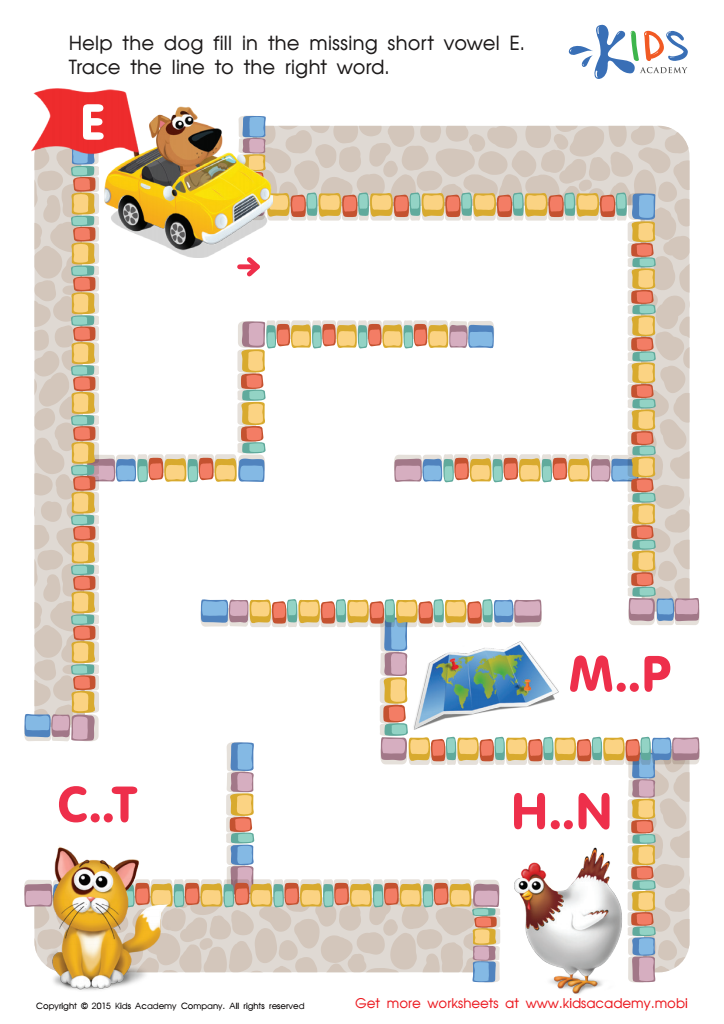
Short Vowel Sound E Worksheet
This free printable phonics worksheet helps kids learn the short vowel sound E. Kids need to help the dog complete the word “hen” by finding their way through a maze. It teaches kids to see the connection between letters and sounds and also strengthens their writing and spelling skills. Fun and educational, this phonics worksheet is great for kids. Want more? Check out here.
Short Vowel Sound E Worksheet
Worksheet
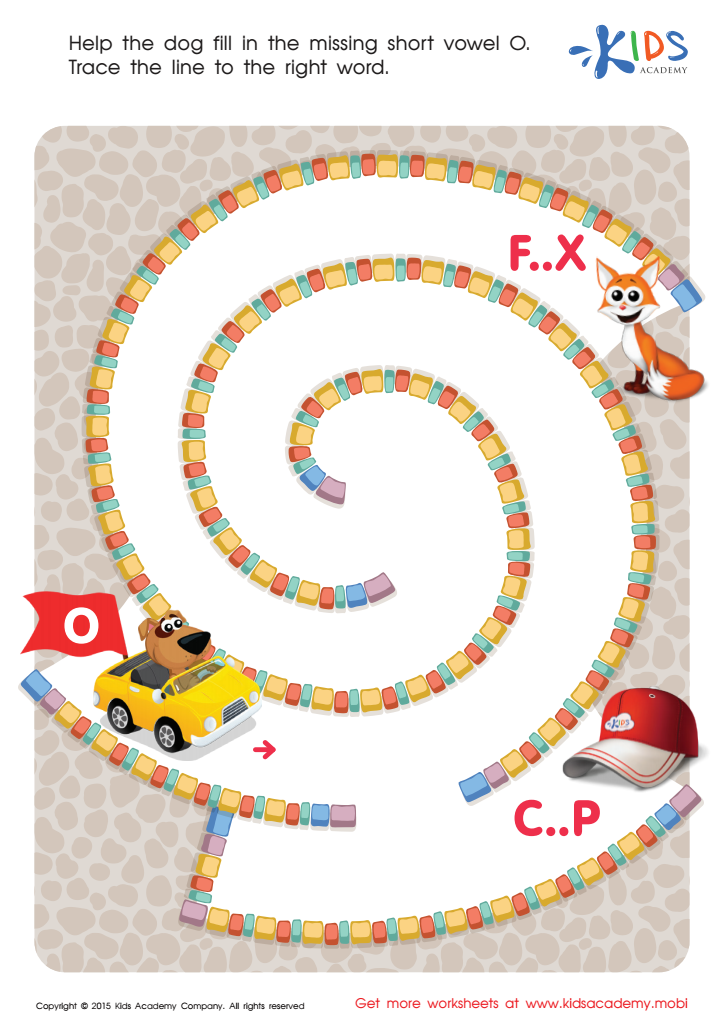
Short Vowel Sound O Worksheet
Help your child learn the short vowel sound O with this fun and free printable phonics worksheet! They'll need to complete the maze to help the dog finish the word "fox" with the missing letter O. Engage their fine motor muscles while they color or trace the maze with crayon or pencil. This educational activity is sure to bring a smile to your little learner's face! For more phonics worksheets, check here.
Short Vowel Sound O Worksheet
Worksheet
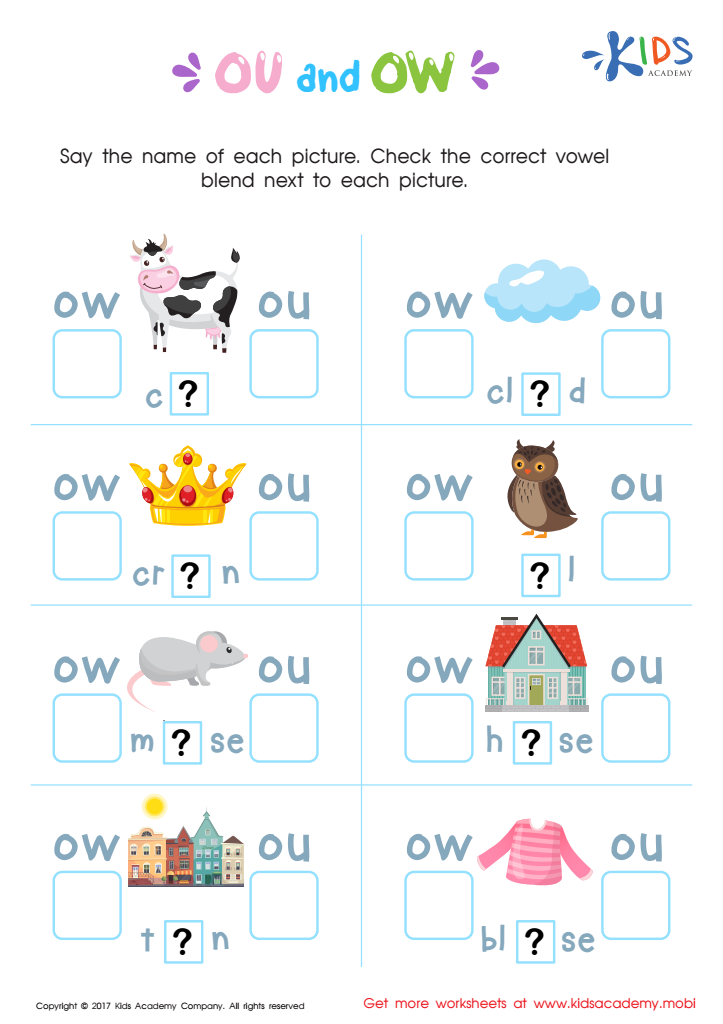
OU and OW Words Worksheet
Enhance your child's reading and spelling with this ou and ow words worksheet! Fun pictures and common words make mastering the diphthongs ou and ow easy and enjoyable.
OU and OW Words Worksheet
Worksheet
Join Kids Academy for Free
Who is primarily going to use this learning content?


Spelling practice that focuses on missing vowels for children aged 3-9 is crucial for several reasons. First, it nurtures early literacy skills by helping children recognize and understand the role of vowels within words. Vowels are the building blocks of language; without them, words lose their structure and meaning. By practicing with missing vowels, children learn to identify word patterns and improve their decoding skills, which are essential for fluent reading.
Moreover, these exercises enhance phonemic awareness, which is the ability to hear, identify, and manipulate individual sounds in spoken words. This awareness is a fundamental skill in both reading and spelling. When children fill in missing vowels, they engage in active problem-solving, which sharpens their cognitive skills and boosts memory retention.
Additionally, spelling practice with missing vowels can be highly engaging and fun, making learning enjoyable. This enjoyment promotes a positive attitude towards literacy, encouraging continual practice and improvement. Activities like these also build confidence as children experience small, consistent wins that bolster their self-esteem.
Lastly, early proficiency in spelling provides a strong foundation for more complex literacy tasks. It aids in effective communication, both written and verbal, enabling young learners to express themselves clearly and accurately. Thus, prioritizing such practices supportive of developmental milestones sets children on a successful academic path.