Color Identification Phonics Worksheets for Ages 3-9
5 filtered results
-
From - To
Explore our Color Identification Phonics Worksheets designed for children ages 3-9! These engaging resources blend phonics and color recognition, helping young learners develop essential skills in a fun and interactive way. Each worksheet features vibrant images and activities that enhance color knowledge while reinforcing letter sounds and vocabulary. With a variety of exercises, kids will enjoy identifying colors, matching letters, and strengthening their reading abilities. Perfect for at-home learning or classroom use, our worksheets cater to different learning styles, ensuring every child can thrive. Download and ignite your child's love for learning with our Color Identification Phonics Worksheets today!
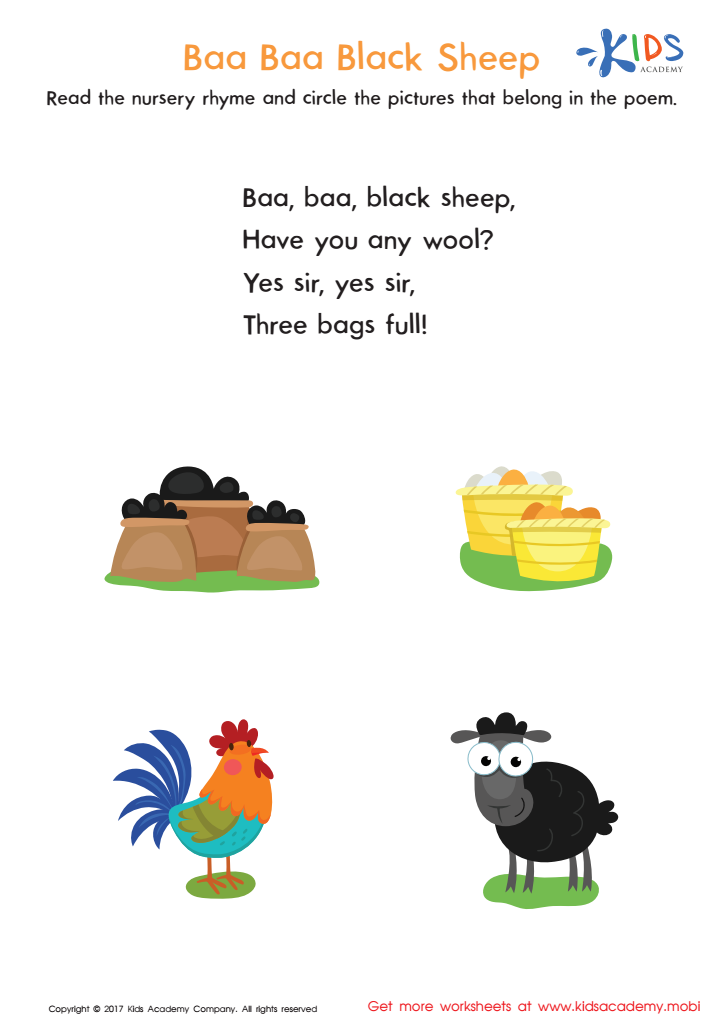
Baa Baa Black Sheep Printable
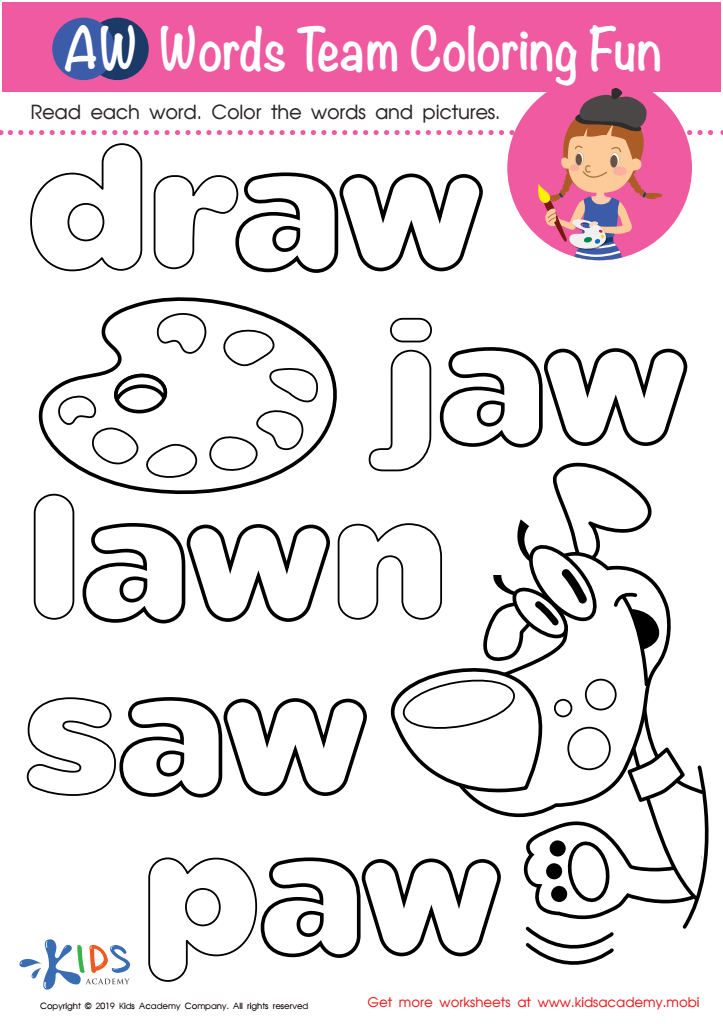
AW Words Team Coloring Fun Worksheet
 Assign to My Students
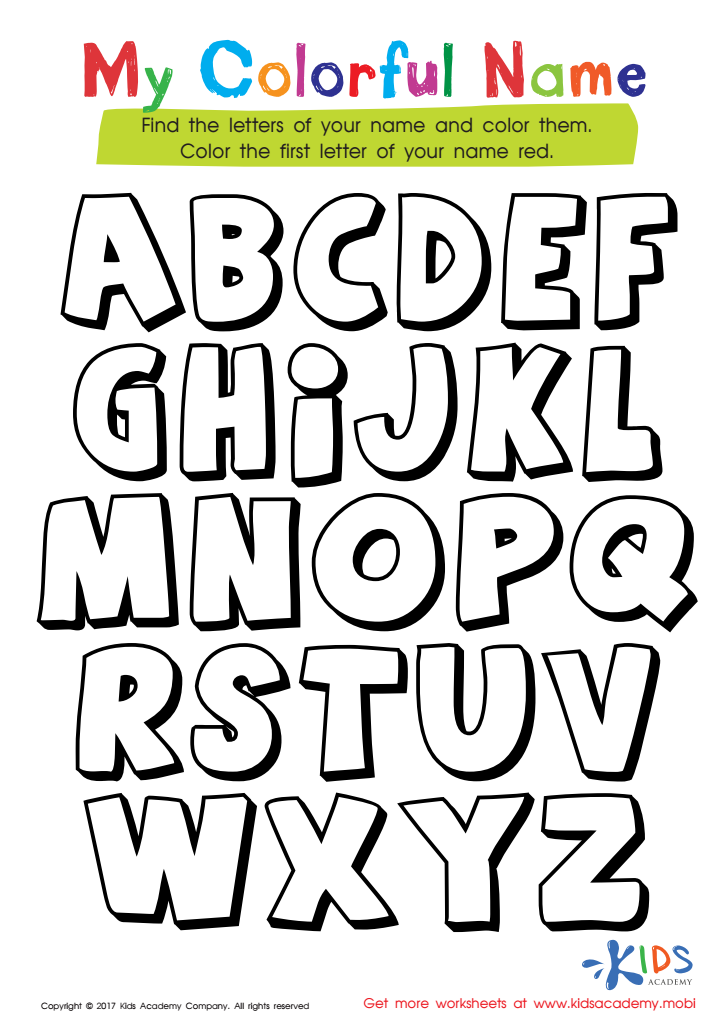
My Colorful Name Worksheet
Assign to My Students
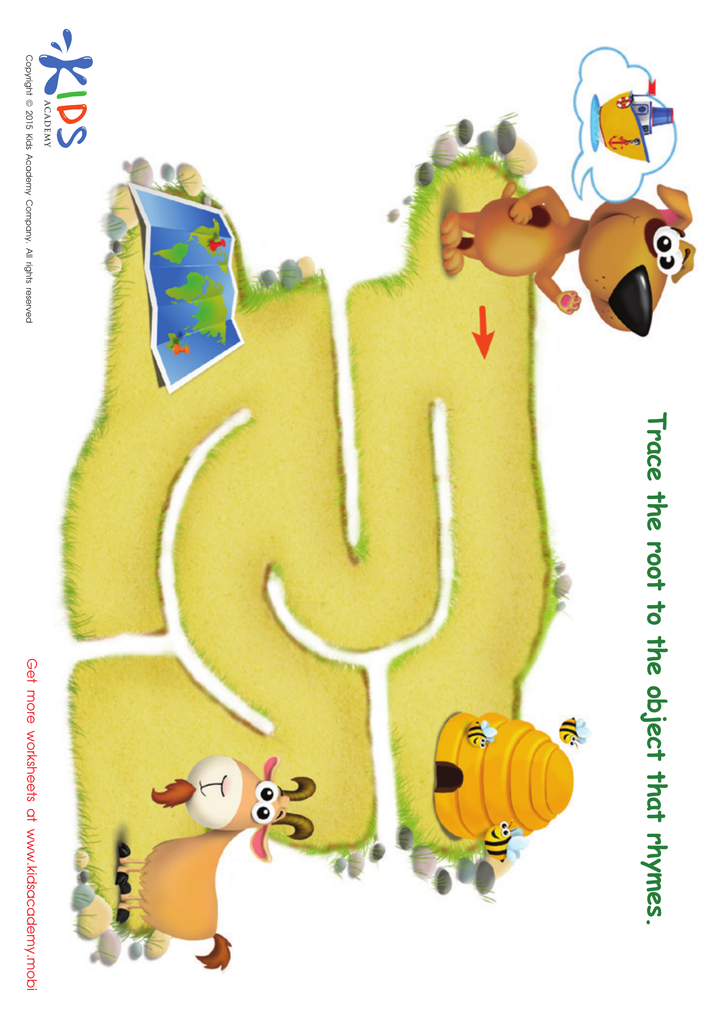
Boat Rhyming Words Worksheet
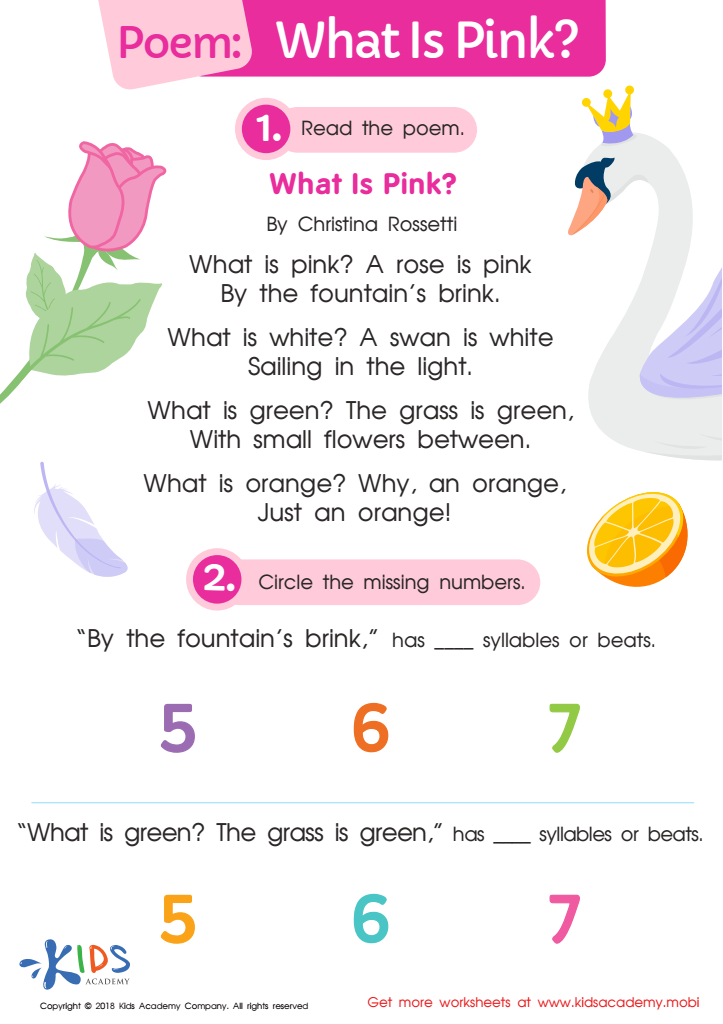
Poem: What Is Pink? Worksheet








Color identification is a crucial early learning component that substantially aids literacy development for children aged 3-9. This foundational skill intertwines with phonics, laying the groundwork for reading and language acquisition. When children learn to recognize colors, they boost their cognitive skills, which enhances their ability to identify letters and sounds associated with those letters.
Incorporating color identification into phonics activities makes learning engaging and multi-sensory. This approach captures the imaginations of young children, facilitating retention and recall through visual associations. For instance, associating the color red with the letter "R" not only strengthens letter recognition but also makes reading more memorable.
Additionally, color identification contributes to language development. When children describe colors, they practice vocabulary and enhance their expressive skills, which are vital for communication. Parents and teachers play a key role in integrating these concepts through playful activities, such as art projects, songs, and games that encourage discussion of colors in conjunction with letters and sounds.
By caring about color identification in phonics, adults can foster a supportive and encouraging learning environment that nurtures literacy skills, boosts confidence, and prepares young learners for future academic success.







