Letter identification Phonics Worksheets for Ages 3-9
3 filtered results
-
From - To
Explore our engaging Letter Identification Phonics Worksheets designed for children aged 3-9. These resources are perfect for developing essential literacy skills, helping young learners recognize letters and their sounds through fun activities. Encouraging phonetic awareness, each worksheet features vibrant visuals and interactive exercises tailored to various skill levels. Whether your child is a beginner or honing their abilities, our worksheets provide a seamless blend of learning and play. Boost your child’s confidence in reading and writing with these essential phonics tools. Start your child’s literacy journey today and watch their skills flourish! Visit us for a delightful learning experience!
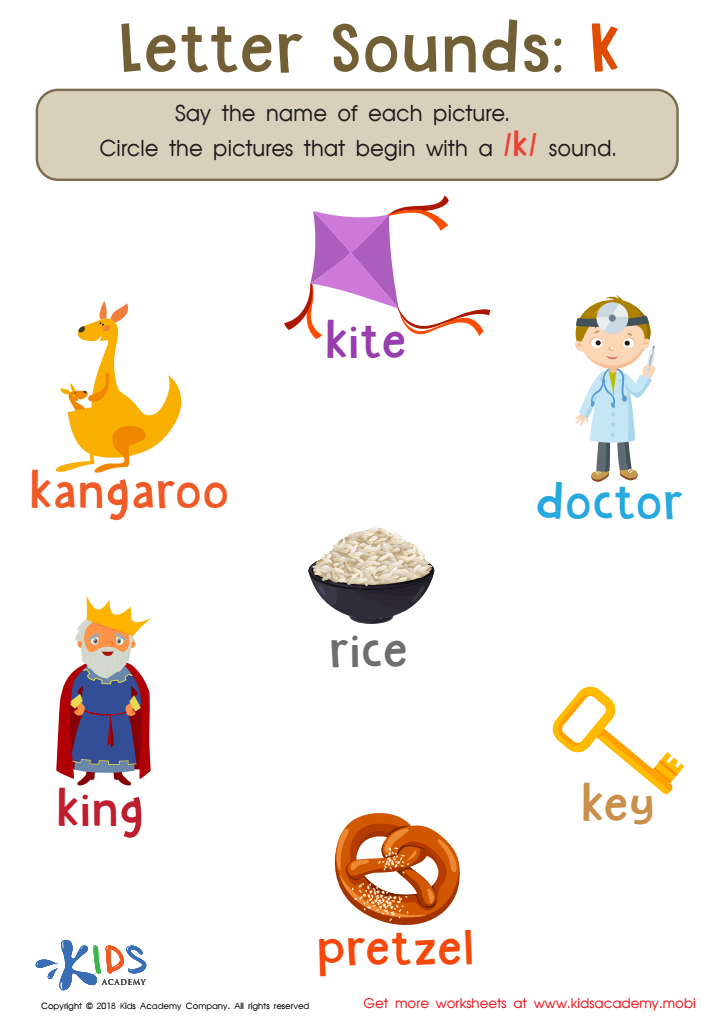
Letter K Sounds Worksheet
 Assign to My Students
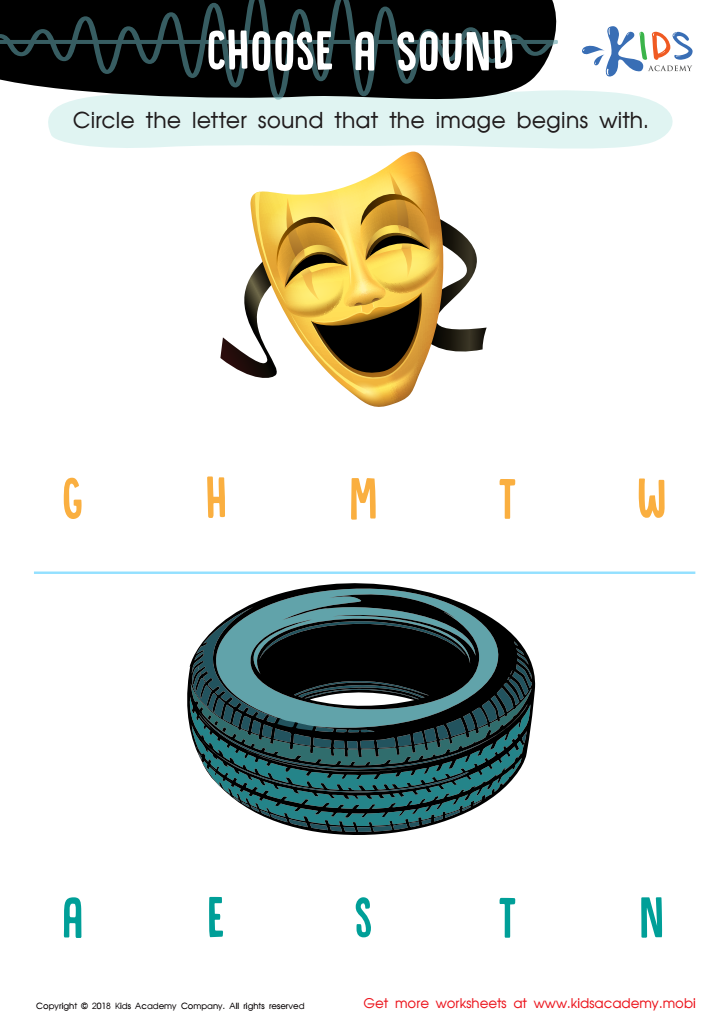
Choose a Sound Worksheet
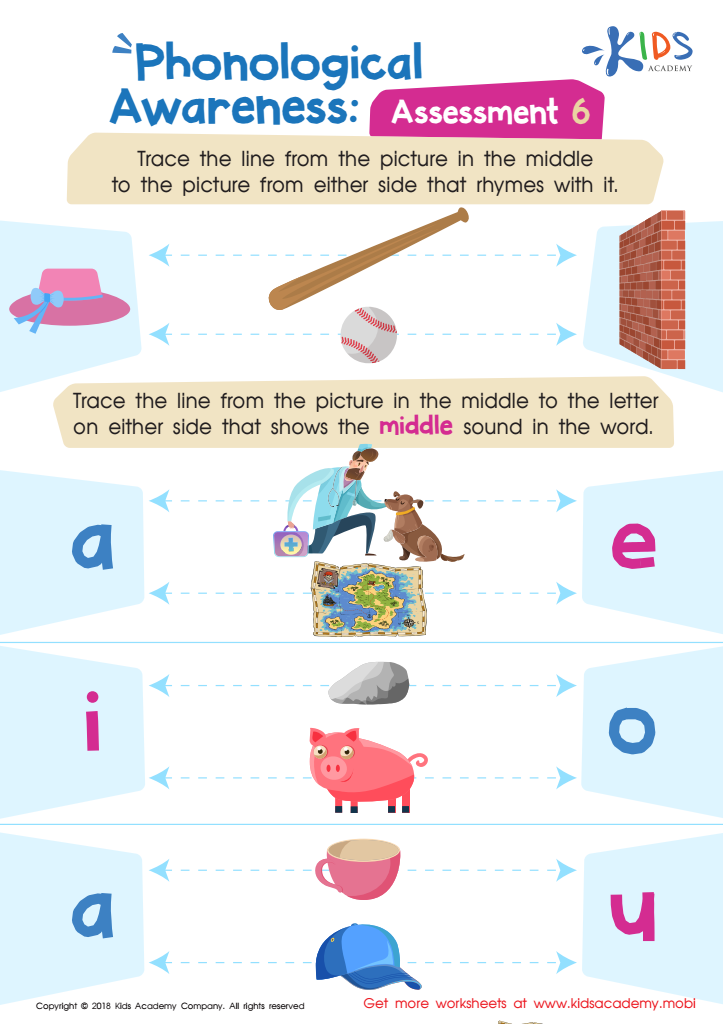
Phonological Awareness: Assessment 6 Worksheet








Letter identification and phonics are foundational skills that significantly impact a child's literacy development, particularly for ages 3-9. Parents and teachers should prioritize these skills for several reasons.
Firstly, letter identification enables children to recognize and name letters, forming the basis of reading and writing. When children can identify letters, they are better equipped to understand the relationship between letters and their corresponding sounds, which is essential for decoding words. This skill directly supports their ability to read fluently and comprehend text.
Secondly, phonics instruction—teaching kids the systematic relationships between letters and sounds—helps children grasp how words are formed and pronounced. This knowledge is crucial for developing spelling skills and increasing reading proficiency, which has lifelong implications for a child’s education.
Moreover, strong literacy skills correlate with academic success across subjects. When children master these early skills, they gain confidence and motivation to engage with reading, enabling them to become avid readers and learners.
Finally, the early years are critical for language acquisition, and introducing letter identification and phonics in engaging ways fosters a love for reading. Parents and teachers play vital roles in nurturing these skills, ensuring that children are well-prepared for future academic challenges.







