Phonics skills development Short Vowels Worksheets for Ages 3-9
3 filtered results
Difficulty Level
Grade
Age
-
From - To
Subject
Activity
Standards
Enhance your child's reading journey with our Phonics Skills Development Short Vowels Worksheets, designed for ages 3-9. These engaging and educational worksheets help young learners grasp the fundamentals of short vowel sounds through fun, interactive activities. Whether your child is just starting out or needs extra practice, our expertly crafted exercises ensure a solid understanding of short vowels, bolstering their phonics foundation. Perfect for home or classroom use, these worksheets foster early literacy skills, captivating children's interest while promoting essential learning. Equip your young reader with the tools they need for phonics success today!
Favorites
With answer key
Interactive
Short Vowel Sound U Worksheet
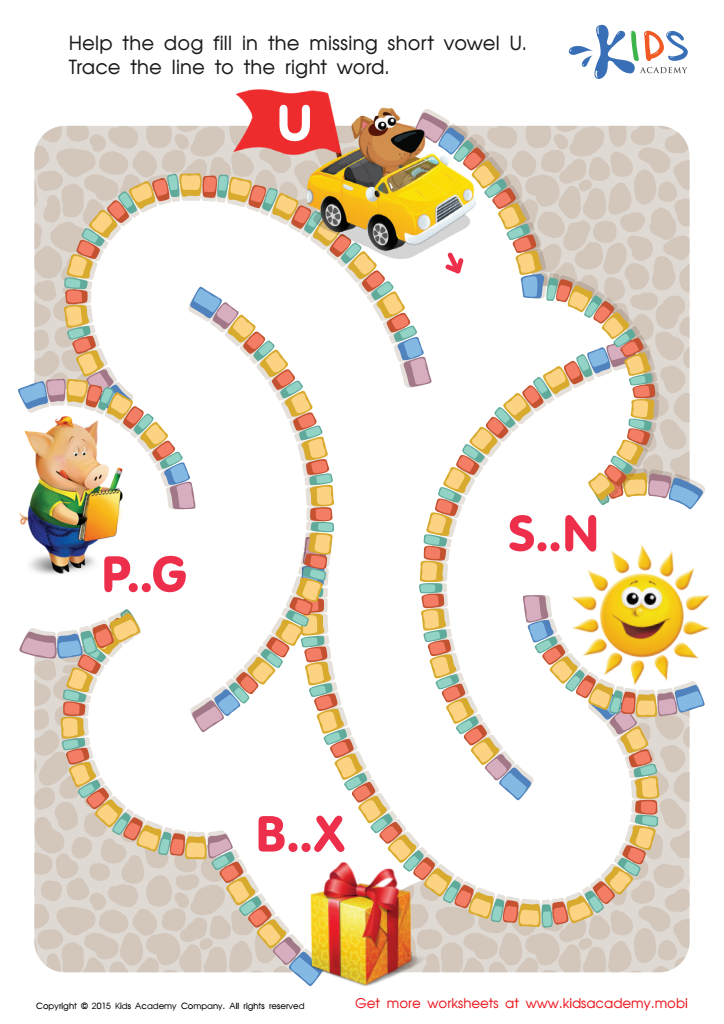
Practice abc phonics to help young learners link sounds to letters. This free printable phonics worksheet helps your kid learn the short vowel sound U. Guide them through the maze to help the dog complete the word "sun". Make sure they say the word out loud to emphasize the short U sound. Check out more phonics worksheets with mazes here.
Short Vowel Sound U Worksheet
Worksheet
Long and Short I Worksheet
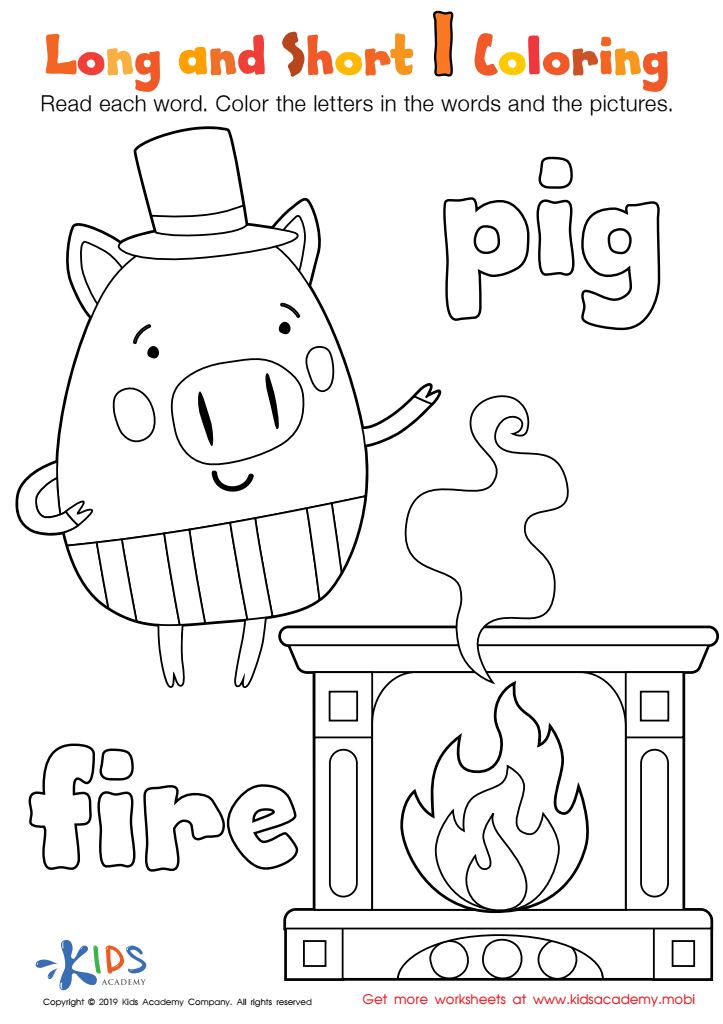
Print the worksheet and have the students read "pig" and "fire". Check for understanding the difference between long and short vowels. Color in words and pictures to make learning phonics fun! This exercise is perfect for introducing the topic to your students.
Download (PDF)
 Assign to My Students
Assign to My Students
Long and Short I Worksheet
Worksheet
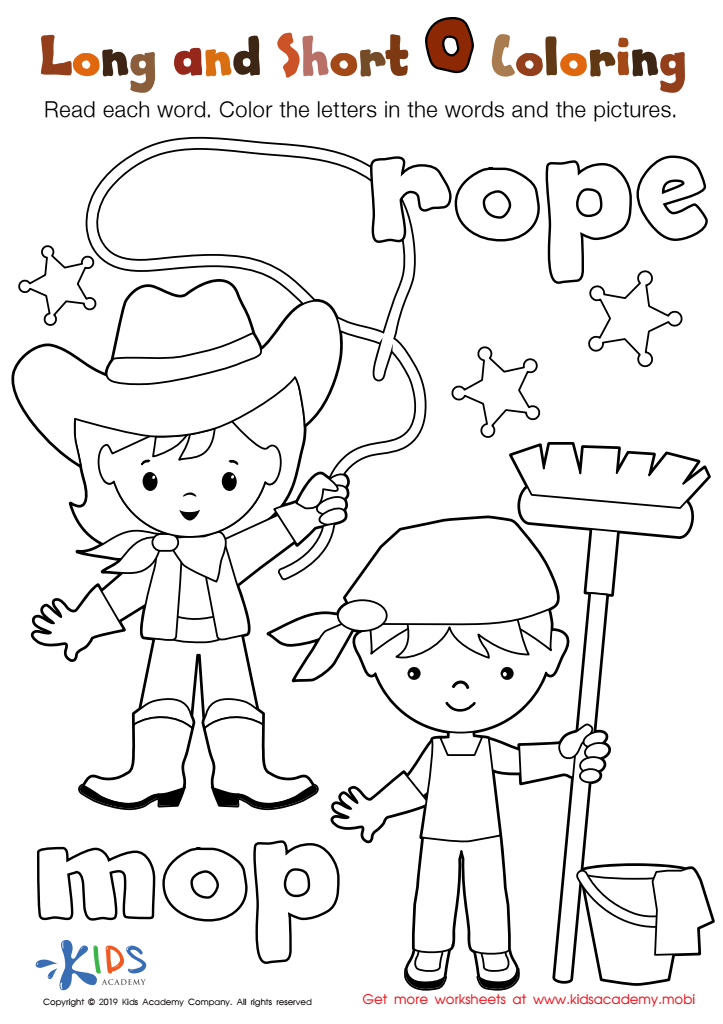
Long and Short O Worksheet
Help your students recognize the difference between long and short «Os» with this fun printout. Let them read and color-in "rope" and "mop" simultaneously. Listen to the different sounds, then color the words and pictures. Great for classes, it'll make your phonics lesson memorable and enjoyable.
Download (PDF)
Assign to My Students
Assign to My Students
Long and Short O Worksheet
Worksheet
Join Kids Academy for Free
Who is primarily going to use this learning content?



Phonics skills, particularly in the area of short vowels, are foundational to early childhood literacy and play a critical role in children's overall educational development. For children ages 3-9, mastering short vowels is a crucial step toward achieving fluent reading and accurate spelling. Understanding short vowel sounds allows children to decode basic words, which builds their confidence and encourages a positive attitude toward reading and learning.
Phonics teaches children the relationship between letters and sounds, enabling them to recognize patterns and blend sounds to form words. This skill is essential for reading proficiency, which is a predictor of academic success across various subjects. When children grasp short vowel sounds, they can more easily break down unfamiliar words, improving their reading speed and comprehension.
Moreover, early proficiency in phonics also aids in proper pronunciation and development of vocabulary. It equips children with the tools to analyze and understand the mechanics of language, which fosters critical thinking and communication skills. Parents and teachers, by focusing on phonics and especially short vowel sounds, lay a strong foundation for their children’s future literacy, instilling a love for reading and learning that transcends the classroom. Consequently, dedicated phonics instruction during these formative years can have long-lasting educational benefits.