Fine motor skills development Tracing Letters Worksheets for Ages 3-9
3 filtered results
-
From - To
Elevate your child's fine motor skills with our Tracing Letters Worksheets, perfect for ages 3-9. These expert-designed activities enhance hand-eye coordination, pencil control, and early writing ability. Through fun and engaging tracing exercises, kids can practice proper letter formation, ensuring a solid foundation for future writing success. Ideal for young learners, our worksheets stimulate brain development, improve dexterity, and build the confidence needed for academic achievements. Suitable for home or classroom use, these worksheets make learning both enjoyable and effective. Take the first step towards developing essential lifelong skills with our tracing letters resources.
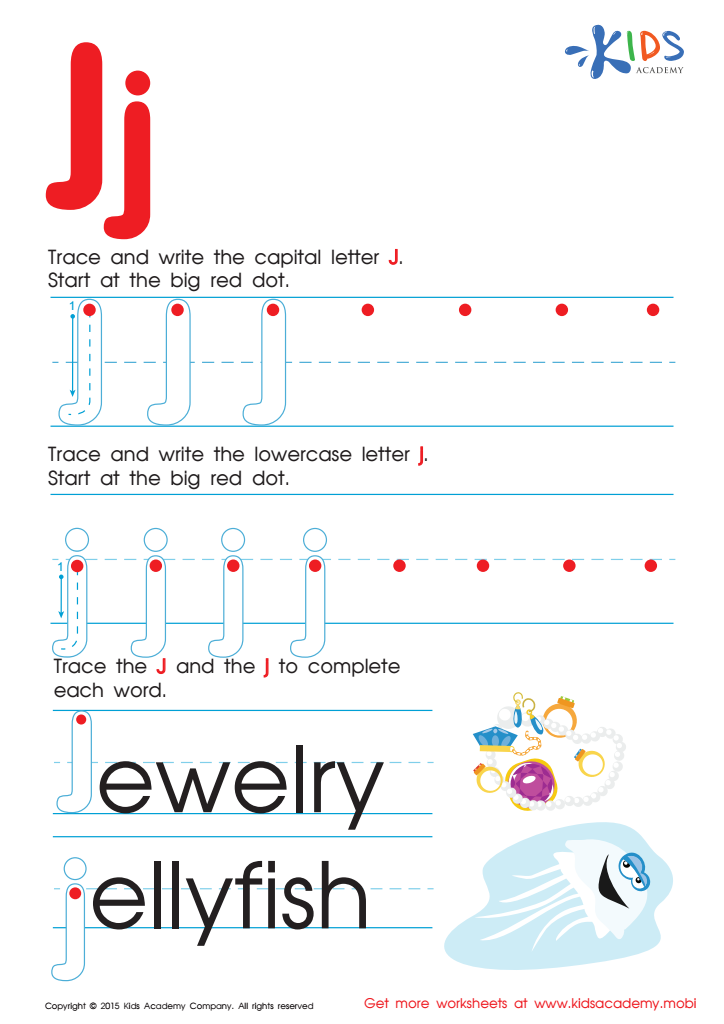
Letter J Tracing Page
 Assign to My Students
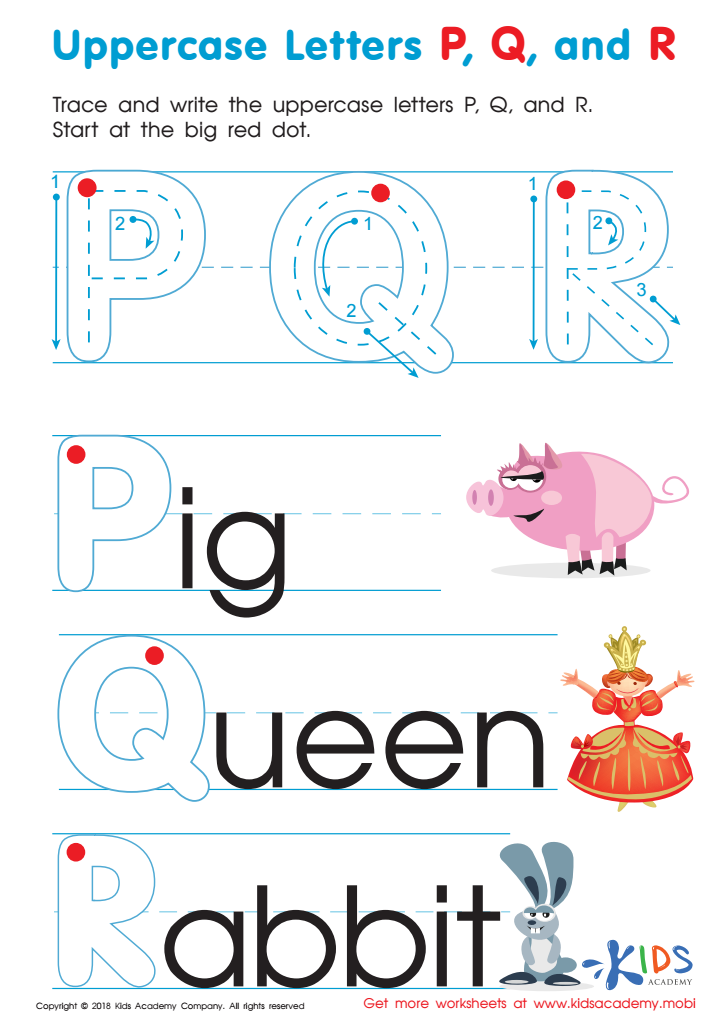
Uppercase Letters P, Q, and R Worksheet
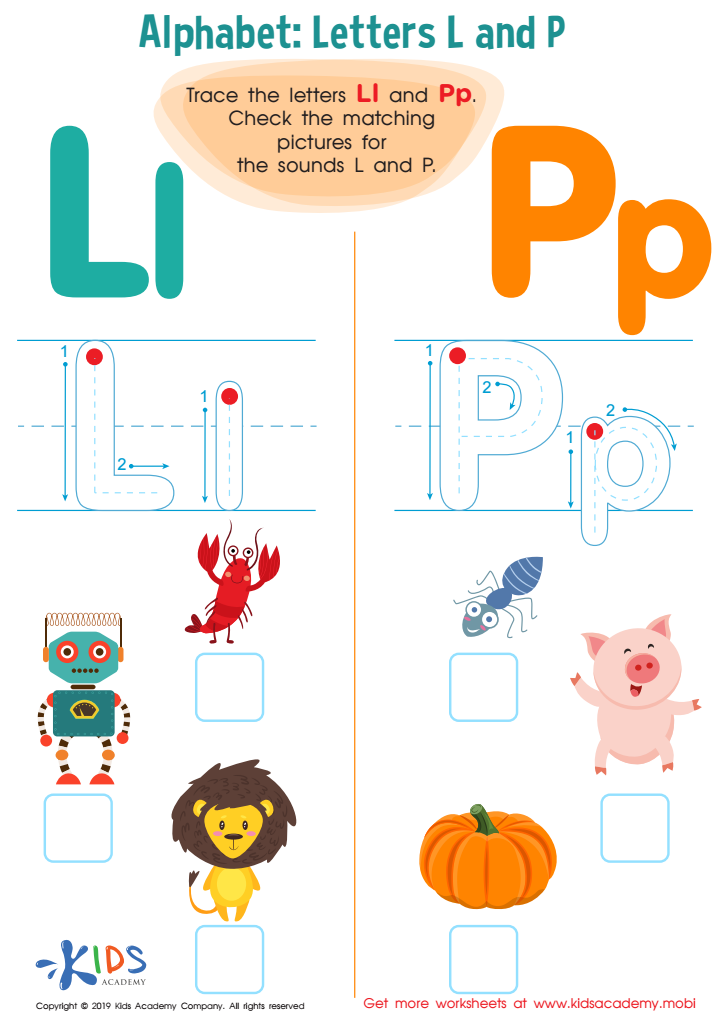
Letter L and P Tracing Worksheet







Fine motor skills are crucial for children's overall development, and tracing letters plays a significant role in honing these skills, especially for children aged 3-9. These skills involve the coordination of small muscles, particularly in the hands and fingers, which are vital for tasks such as writing, buttoning, and tying shoelaces. Tracing letters helps children strengthen these muscles, improving their hand-eye coordination and dexterity.
In the early years, developing fine motor skills sets the foundation for academic success. When children learn to trace letters, they aren't just practicing penmanship; they're also enhancing their ability to concentrate, follow instructions, and develop patience. These skills are transferable to many academic and daily life tasks, thereby boosting their self-confidence and independence.
Moreover, integrating the practice of tracing letters into a fun and engaging activity promotes a positive learning environment. Children are more likely to enjoy educational tasks that involve creativity and interaction, making the learning process enjoyable. This practice encourages early literacy, allowing children to become familiar with the shapes and sounds of letters, which is essential for reading and writing.
Overall, focusing on the development of fine motor skills through tracing letters is beneficial for a child's educational journey and their everyday capabilities, providing a strong foundation for future learning and life skills.








