Letter-sound association Tracing Letters Worksheets for Ages 3-9
5 filtered results
-
From - To
Introducing our Letter-Sound Association Tracing Letters Worksheets, designed for children aged 3-9. Our engaging worksheets help young learners develop essential reading skills by combining letter recognition with sound association. By tracing each letter, children reinforce fine motor skills while simultaneously enhancing their phonemic awareness. Perfect for both classroom and at-home learning, these worksheets make mastering the alphabet fun and interactive. Encourage your child’s natural curiosity and give them a head start in literacy with activities that integrate playful learning and critical early education concepts. Transform letter learning into an enjoyable journey with our expertly crafted resources.
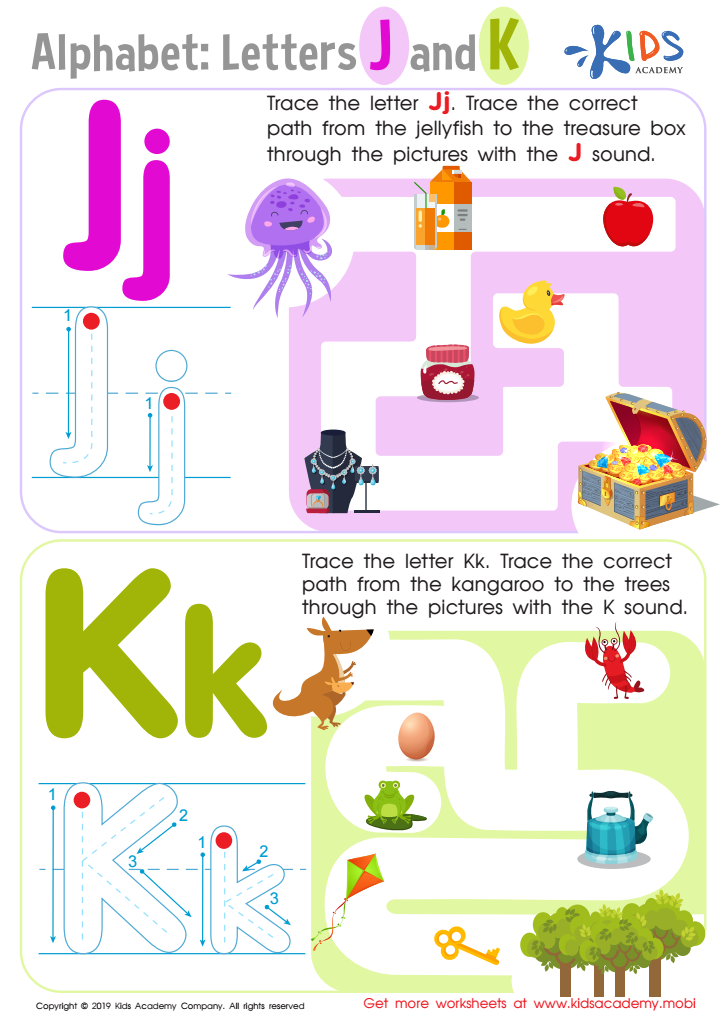
Letters J and K Tracing Worksheet
 Assign to My Students
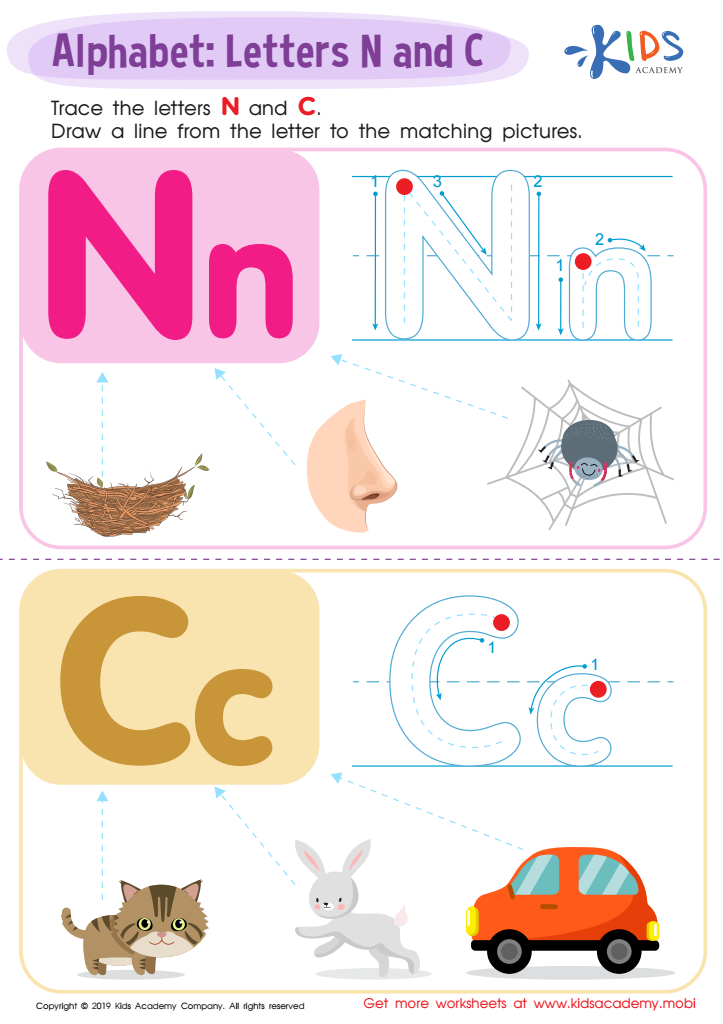
Letter N and C Tracing Worksheet
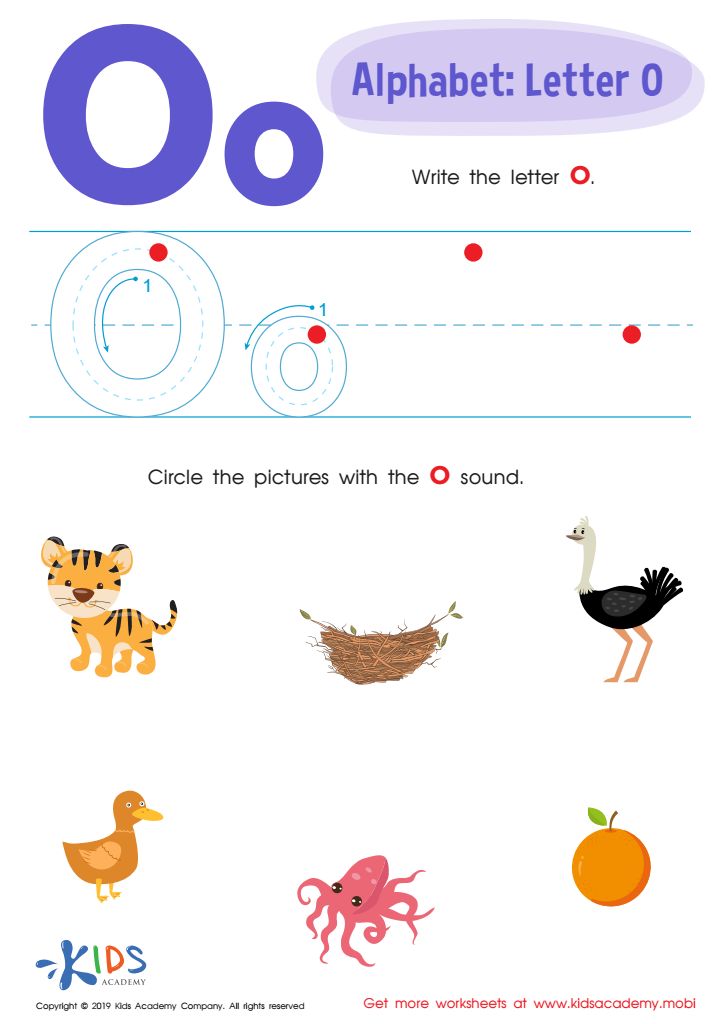
Letter O Tracing Worksheet
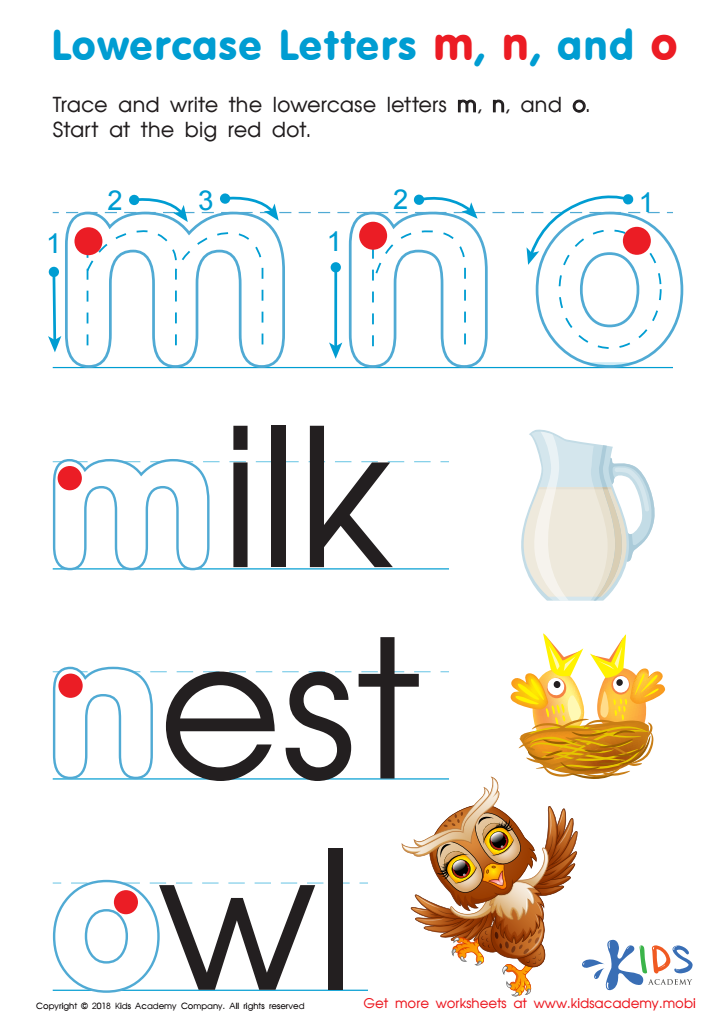
Lowercase Letters m n o Worksheet
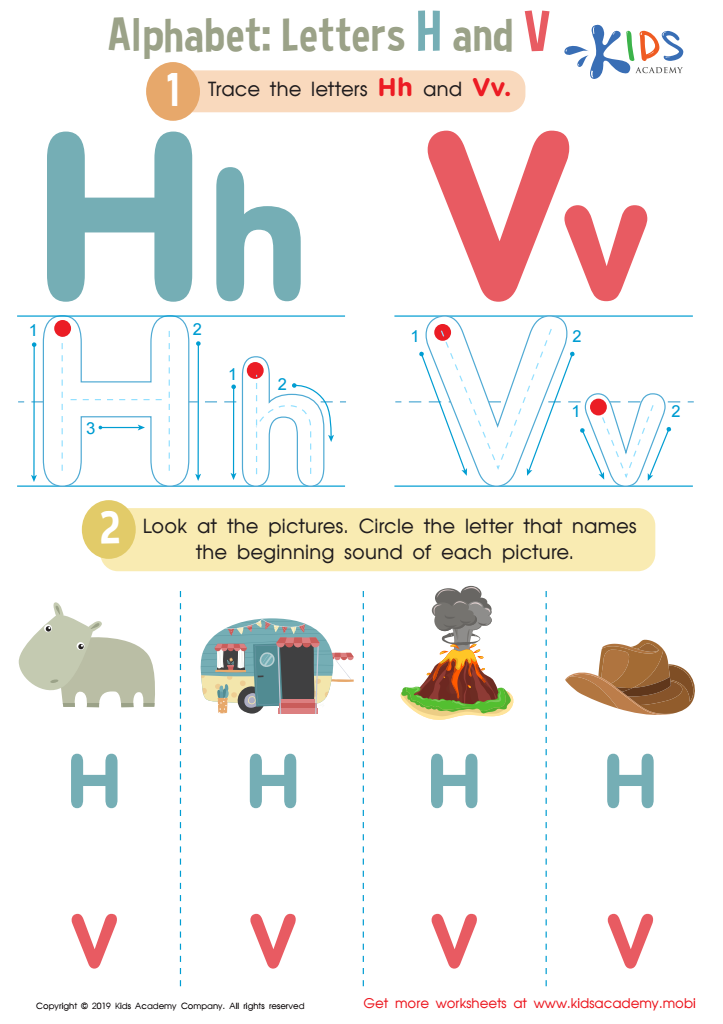
Letters H and V Tracing Worksheet








Letter-sound association and tracing letters are foundational skills for children ages 3-9, forming the bedrock of their reading and writing abilities. These activities help children link the visual aspects of letters with their corresponding sounds, creating crucial neural pathways for literacy. Tracing letters enhances fine motor skills, essential for writing fluency, by allowing children to develop hand-eye coordination and muscle memory.
When parents and teachers focus on letter-sound associations, they provide children with tools for phonemic awareness—recognizing and manipulating the smallest units of sound in the language. This skill is a significant predictor of future reading success. Early mastery of these concepts makes learning to read smoother and more intuitive, transforming what could be a frustrating endeavor into a engaging discovery process.
Incorporating multisensory methods, such as tracing, engages different parts of the brain, aiding in better retention and understanding. Children learn in varied ways, and combining visual, tactile, and auditory practices maximizes comprehension. This not only bolsters their literacy journey but also instills confidence and an early love for learning. Thus, investing time in these practices lays a strong foundation for academic success and lifelong learning.








