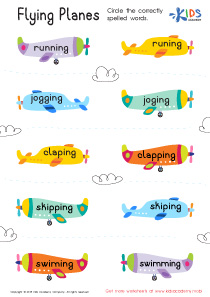
Phonics skills improvement Vowels Worksheets for Ages 3-9
5 filtered results
Difficulty Level
Grade
Age
-
From - To
Subject
Activity
Standards
Improve your child's phonics skills with our engaging Vowels Worksheets, designed specifically for ages 3-9. These interactive resources help young learners identify, practice, and master vowel sounds through fun activities and exercises. Our worksheets focus on blending, segmenting, and recognizing vowels in various contexts, promoting phonemic awareness and reading readiness. Ideal for parents and educators, these printables support early literacy development in an enjoyable way. Whether at home or in the classroom, our phonics worksheets empower students to build a strong foundation in reading while fostering a love for learning. Start your phonics journey today with our carefully crafted materials!
Favorites
With answer key
Interactive
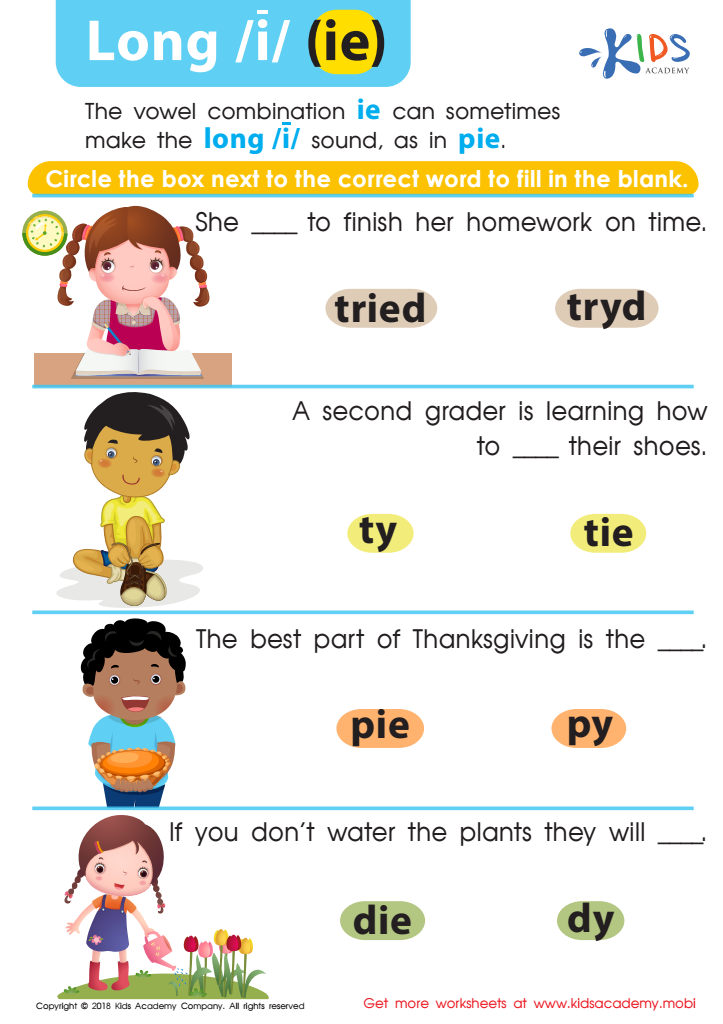
Reading: Long I and IE Worksheet
Have your child list words with the long /i/ sound (eg. 'pie'), and if needed, help them out with some examples. Read each word in the worksheet together and check their answer by having them circle the correct word.
Reading: Long I and IE Worksheet
Worksheet
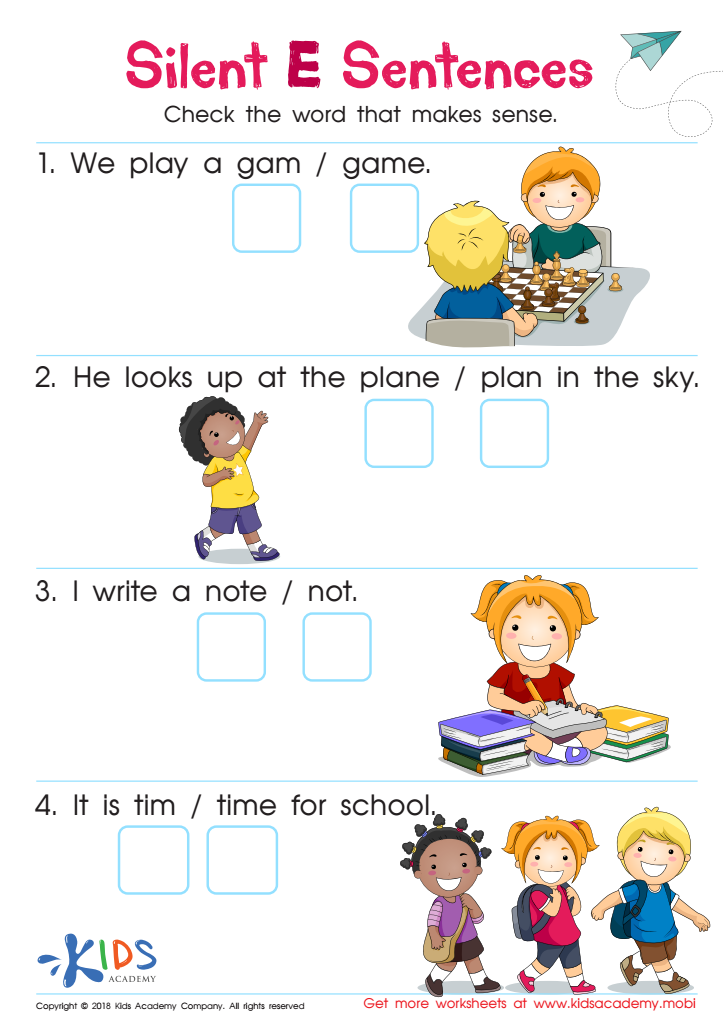
Silent E Sentences Worksheet
Young readers can find learning Silent E tricky, so this helpful worksheet can help! It teaches them to distinguish words that look the same but for the Silent E and choose the right word for sentence blanks. Kids can mark the correct answer and become familiar with closed syllables and words that require the E.
Silent E Sentences Worksheet
Worksheet
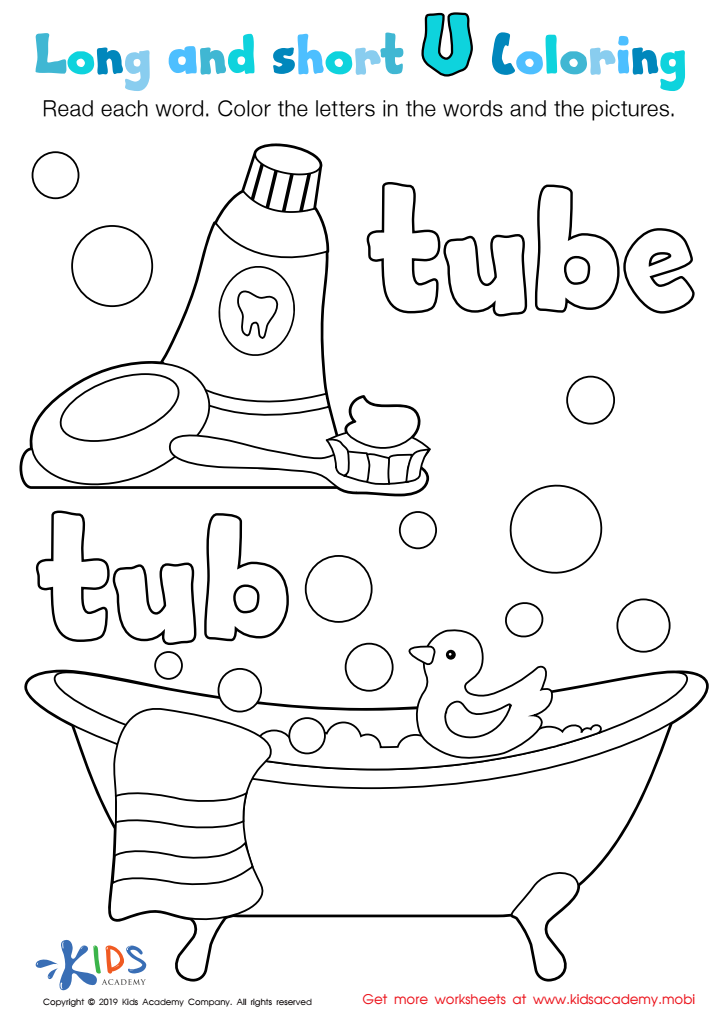
Long and Short U Worksheet
Revised: Spice up your lesson on long and short vowels with this fun printout! Kids read the words "tube" and "tub," then reinforce the sound by coloring in the words and pictures. It's a great way to make phonics class enjoyable!
Download (PDF)
 Assign to My Students
Assign to My Students
Long and Short U Worksheet
Worksheet
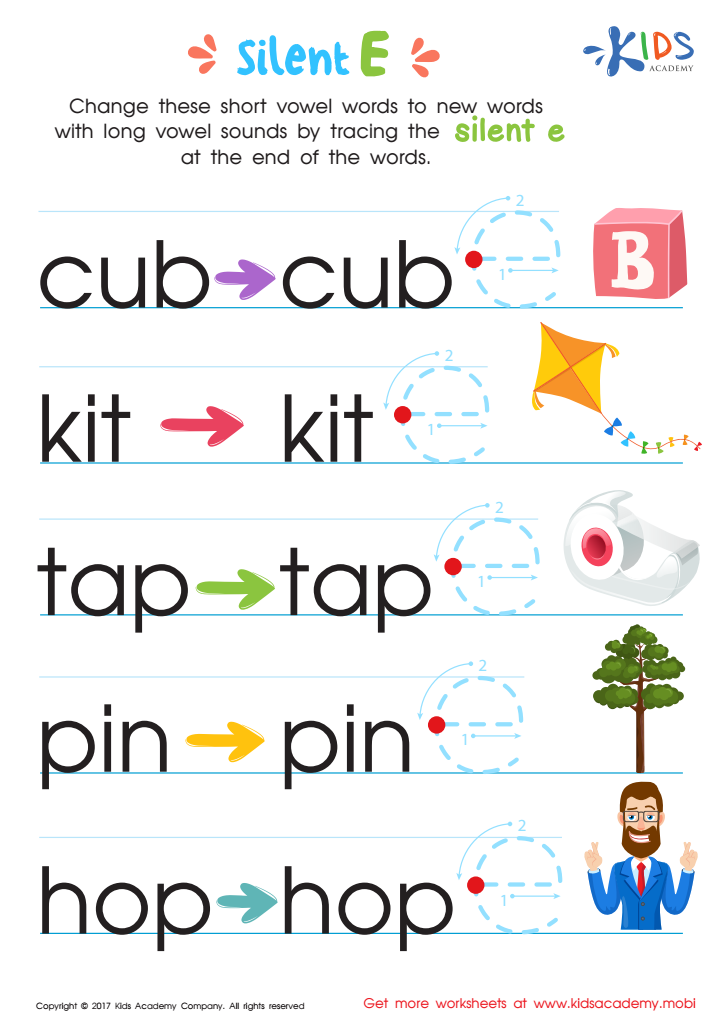
Silent E Words Worksheet
The letter e is amazing - it changes words without making a sound! Boost spelling and phonics with this Silent e worksheet from Kids Academy - fun and colorful!
Silent E Words Worksheet
Worksheet
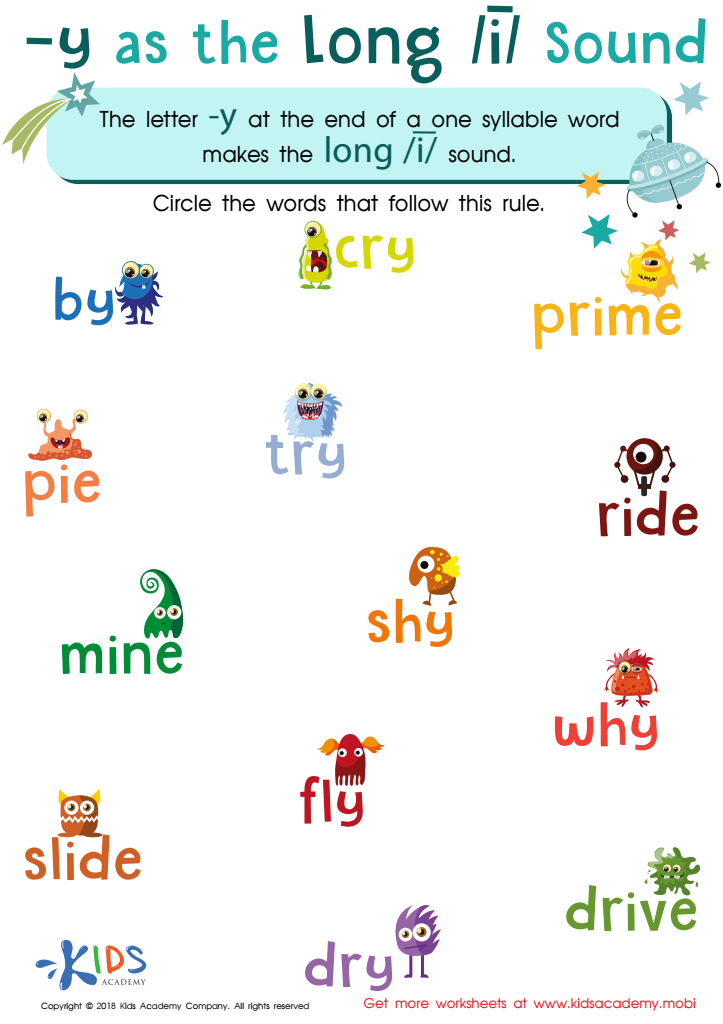
Reading: Y as Long I Worksheet
Students need practice and exposure to letters that make different sounds for decoding and reading success. This printable is a great resource for language arts classes: it explains that words ending with Y and having only one syllable make the long I sound. Students will circle all words with Y that have this sound.
Reading: Y as Long I Worksheet
Worksheet
Join Kids Academy for Free
Who is primarily going to use this learning content?





Phonics skills, particularly focusing on vowels, are crucial for young learners aged 3-9 as they form the foundation of reading and writing. Mastery of vowel sounds directly influences a child's ability to decode words, making it easier for them to read fluently. Vowels are integral to word formation; understanding how they function within words helps children break down more complex language structures.
For parents and teachers, emphasizing phonics skills enhances children’s literacy development and boosts their confidence in communicating effectively. Early phonics instruction can prevent reading difficulties and promote a lifelong love for reading. Importantly, the ability to recognize and manipulate vowel sounds correlates strongly with overall academic achievement, influencing skills in subjects beyond literacy.
Moreover, children's ability to articulate sounds improves their pronunciation and listening skills, fostering better verbal communication. Engaging children in phonics-related activities, such as songs and games, can make learning enjoyable and interactive. As such, prioritizing the improvement of phonics skills, especially vowels, is essential for ensuring children develop into proficient readers and communicators, paving the way for future educational success. Therefore, both parents and teachers should be proactive in supporting phonics education during these formative years.