
Sound recognition Vowels Worksheets for Ages 3-9
5 filtered results
Difficulty Level
Grade
Age
-
From - To
Subject
Activity
Standards
Discover our engaging Sound Recognition Vowels Worksheets, designed specifically for children ages 3-9. These worksheets help young learners develop their understanding of vowel sounds, fostering essential phonemic awareness effectively. Interactive and fun, our printable activities include vibrant illustrations and simple exercises that make learning vowels exciting. Kids will practice identifying, distinguishing, and producing vowel sounds, setting the foundation for future reading skills. Perfect for educators and parents alike, our worksheets promote active learning through play and exploration. Equip your child with the skills they need to succeed in reading and communication through our thoughtfully designed sound recognition activities. Download now for endless learning fun!
Favorites
With answer key
Interactive
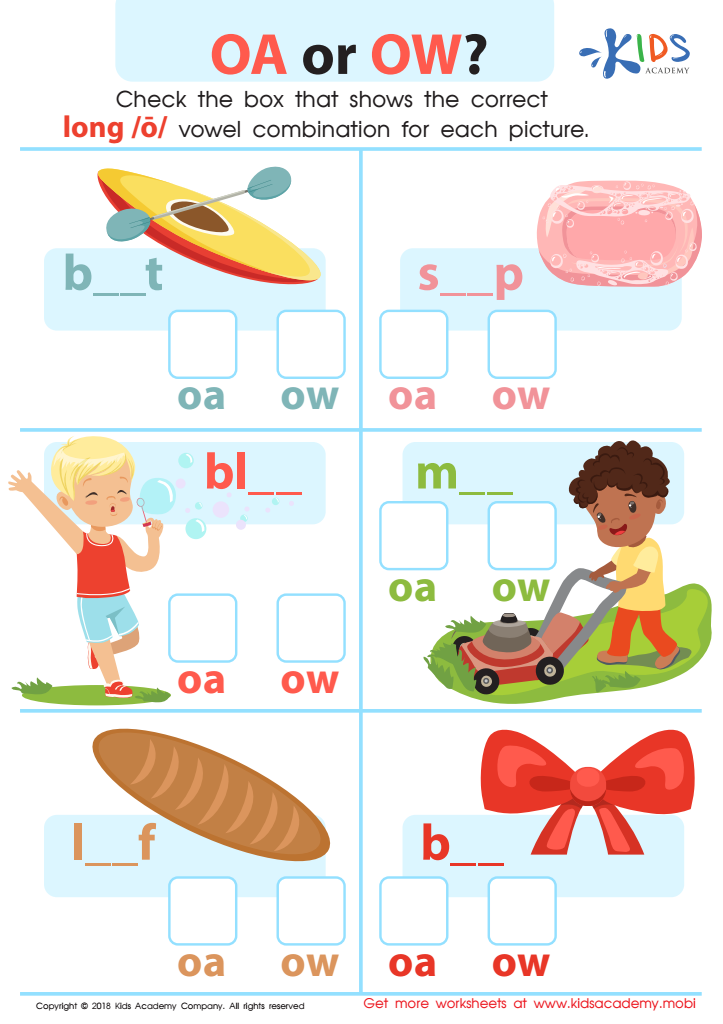
Reading: OA or OW Worksheet
This printable worksheet helps young and emergent readers with decoding words and understanding digraphs (two letters with one sound). It requires students to complete the spelling for each word based on the picture, focusing on /oa/ and /ow/ spellings. It's ideal for a reading classroom and for spelling practice.
Reading: OA or OW Worksheet
Worksheet
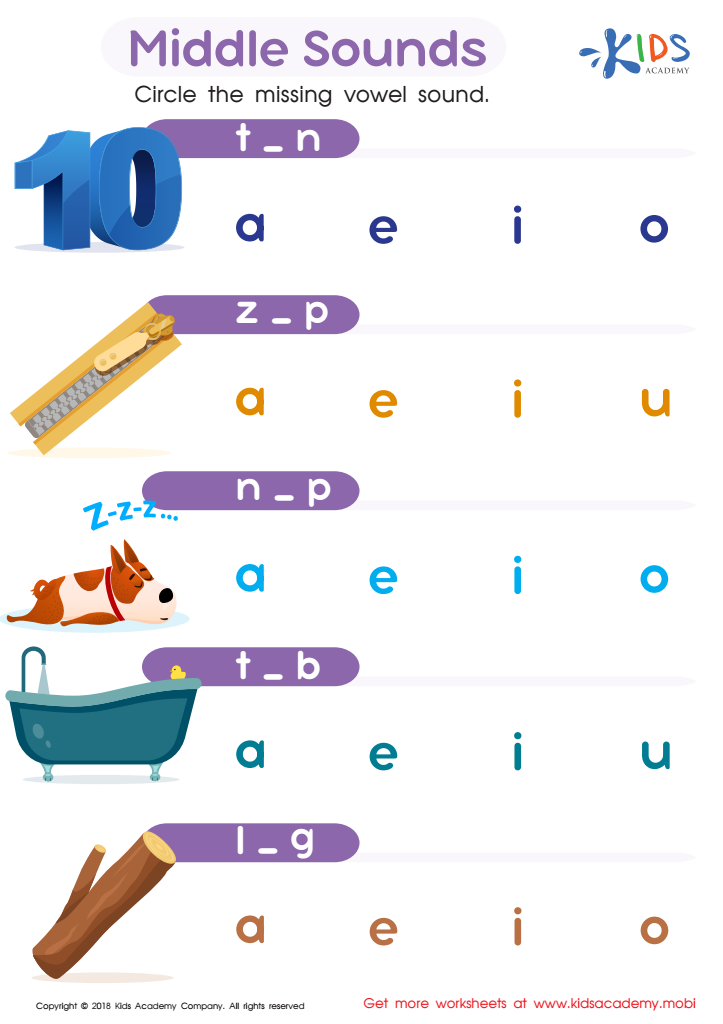
Middle Sounds Worksheet
Download this free worksheet and help your reader identify middle sounds in words. Pictures provide clues to the word, while tracing circles around the middle vowel sound strengthens fine motor and visual discrimination skills. It's a great way to teach sound discrimination between similar-sounding short vowels - a key component for proficient reading.
Middle Sounds Worksheet
Worksheet
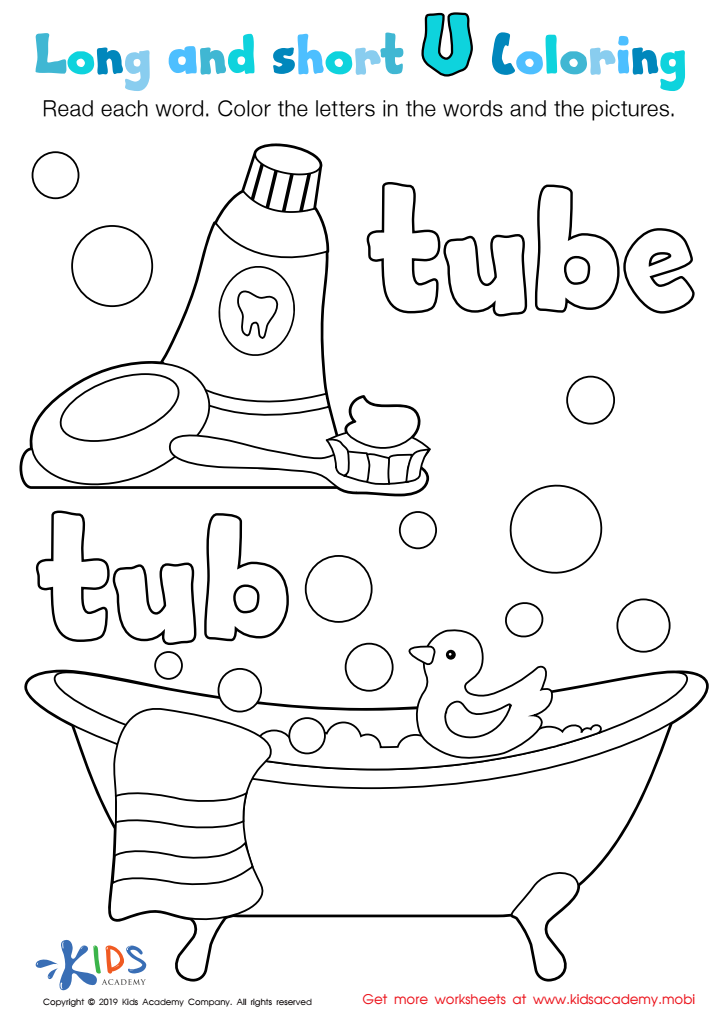
Long and Short U Worksheet
Revised: Spice up your lesson on long and short vowels with this fun printout! Kids read the words "tube" and "tub," then reinforce the sound by coloring in the words and pictures. It's a great way to make phonics class enjoyable!
Download (PDF)
 Assign to My Students
Assign to My Students
Long and Short U Worksheet
Worksheet
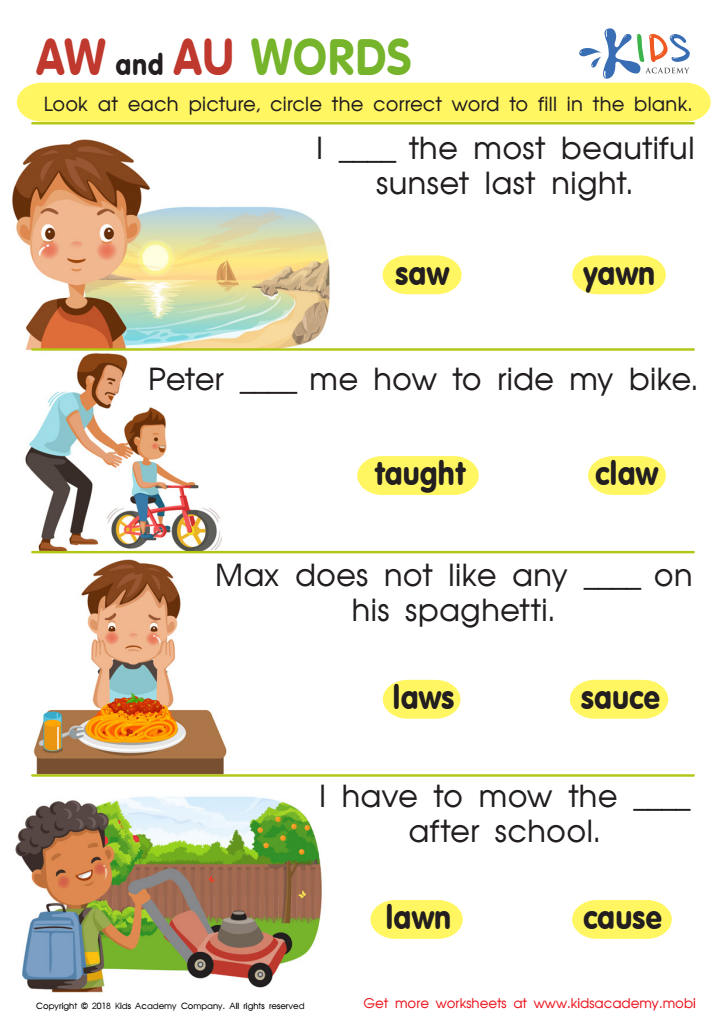
Reading: AW and AU Words Worksheet
This worksheet helps kids recognize that /au/ and /aw/ can make the same sound. Students read sentences and pick the correct word with one of the digraphs. Understanding digraphs improves decoding and reading fluency. Perfect for reading and phonics classes.
Reading: AW and AU Words Worksheet
Worksheet
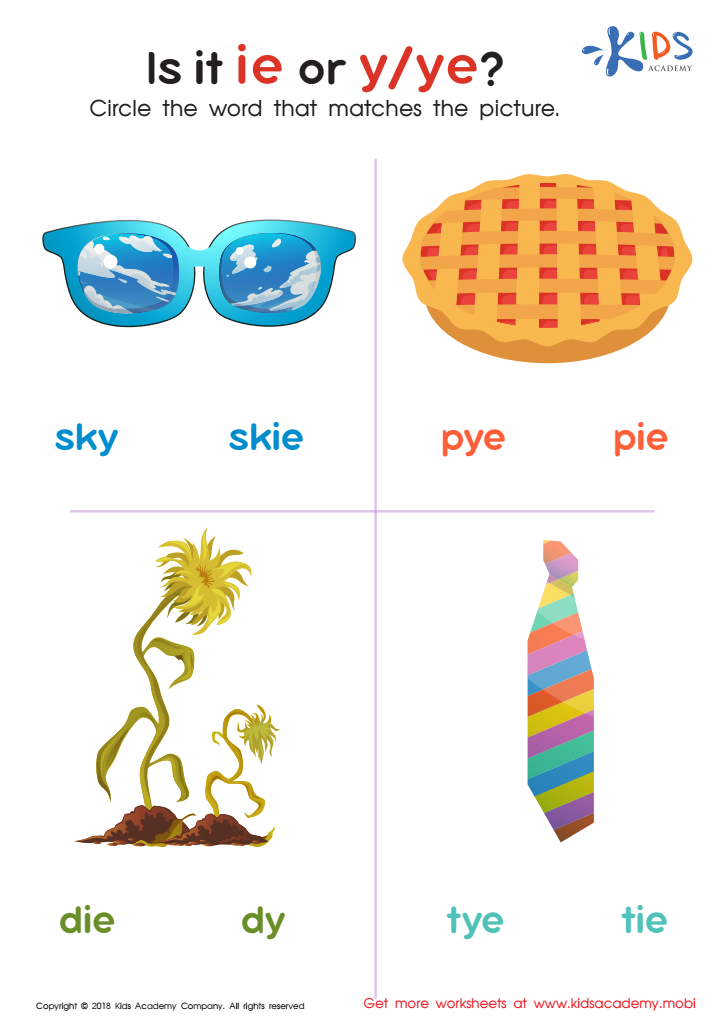
Is It IE or Y/Ye? Worksheet
Test your child's picture identification skills by pointing at common items in your house and asking them to name them. Then, look at the objects in this worksheet with your little one. Point at each one, ask for the name, then ask which spelling is correct. Help them circle the correct word.
Is It IE or Y/Ye? Worksheet
Worksheet
Join Kids Academy for Free
Who is primarily going to use this learning content?





Sound recognition, specifically focusing on vowels, is a foundational skill essential for early literacy development in children aged 3-9. It underpins their ability to read and write, making it critically important for parents and teachers to pay close attention to.
Understanding vowel sounds helps children decode words, allowing them to recognize patterns and build a solid phonetic basis for reading. Vowels are the core components of words; without a clear understanding of their sounds, a child's ability to pronounce and spell effectively can be severely hampered.
Additionally, mastering vowel sounds contributes to children's confidence in language use, fostering better communication skills. Engaging in sound recognition activities can also enhance cognitive skills and auditory processing, thus positively impacting overall academic performance.
Parents and teachers can make a significant difference by incorporating fun and interactive practices, such as songs and games, that emphasize vowel sounds. This playful approach not only reinforces learning but also encourages a love for reading in a supportive environment.
By nurturing sound recognition of vowels at an early age, adults play a crucial role in setting the stage for children’s future success in literacy, ultimately paving the way for lifelong learning opportunities.







