Sound Association English for Beginners Worksheets for Ages 3-9
5 filtered results
Difficulty Level
Grade
Age
-
From - To
Subject
Activity
Standards
Discover our engaging "Sound Association English for Beginners Worksheets" designed specifically for young learners aged 3-9. These vibrant and interactive worksheets help children build foundational language skills through fun and effective sound association exercises. Perfect for English as a Second Language students, our materials encourage early reading, listening, and phonics comprehension. Each worksheet is crafted to foster a love for learning while enhancing vocabulary, pronunciation, and cognitive development. With these resources, children embark on an exciting language discovery journey, making education enjoyable and enriching. Visit our page to help your child excel in English and embrace the joy of learning!
Favorites
With answer key
Interactive
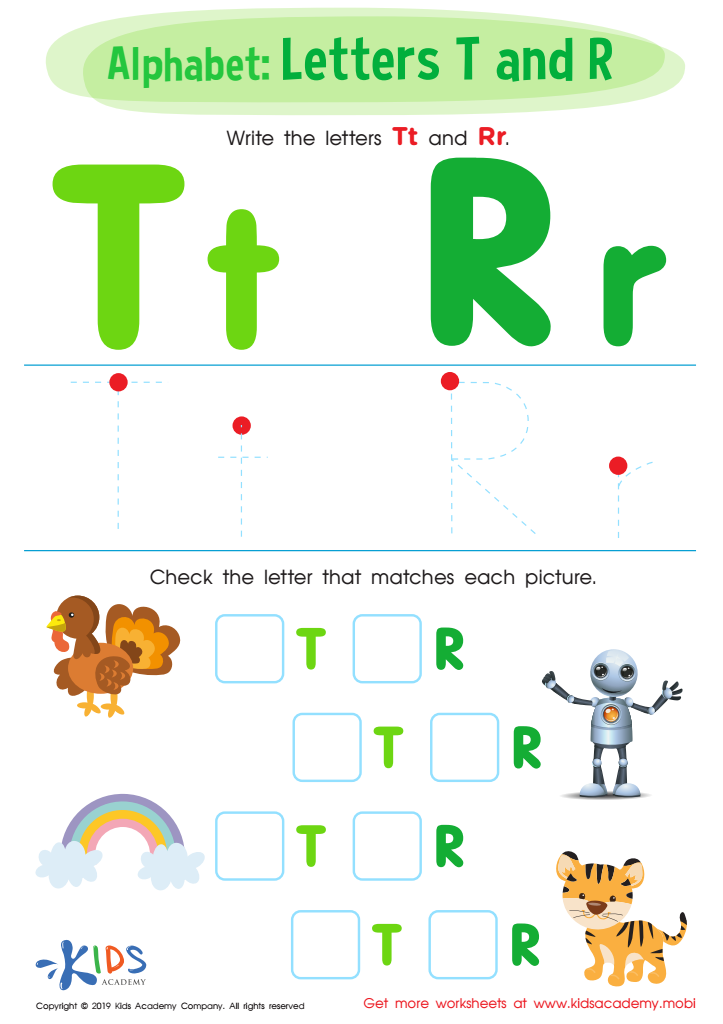
Letters T and R Worksheet
Is your kid bored with basic letter learning? Try this Letters T & R traceable sheet! It combines tracing and picture matching to help solidify fundamental skills. Your child will gain a better understanding and have fun at the same time.
Letters T and R Worksheet
Worksheet
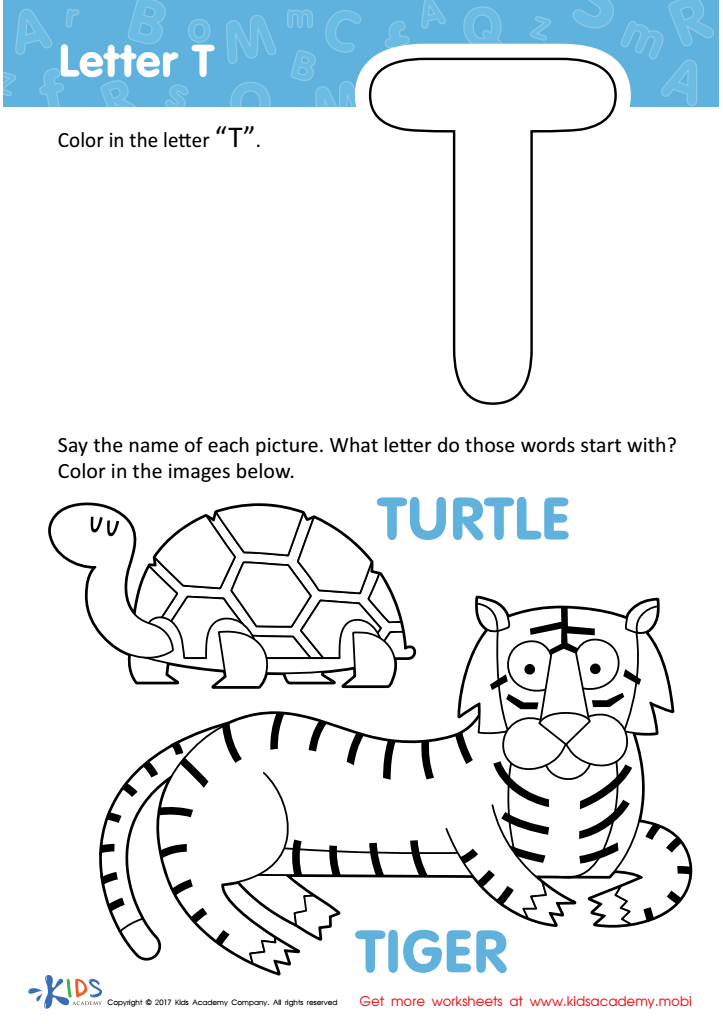
Letter T Coloring Sheet
Introduce your child to the letter "T" and its animals – turtles and tigers! With this coloring page, you can stimulate your child's imagination and creativity, while helping them recognize the letter "T". Have fun with your child and get coloring!
Download (PDF)
 Assign to My Students
Assign to My Students
Letter T Coloring Sheet
Worksheet
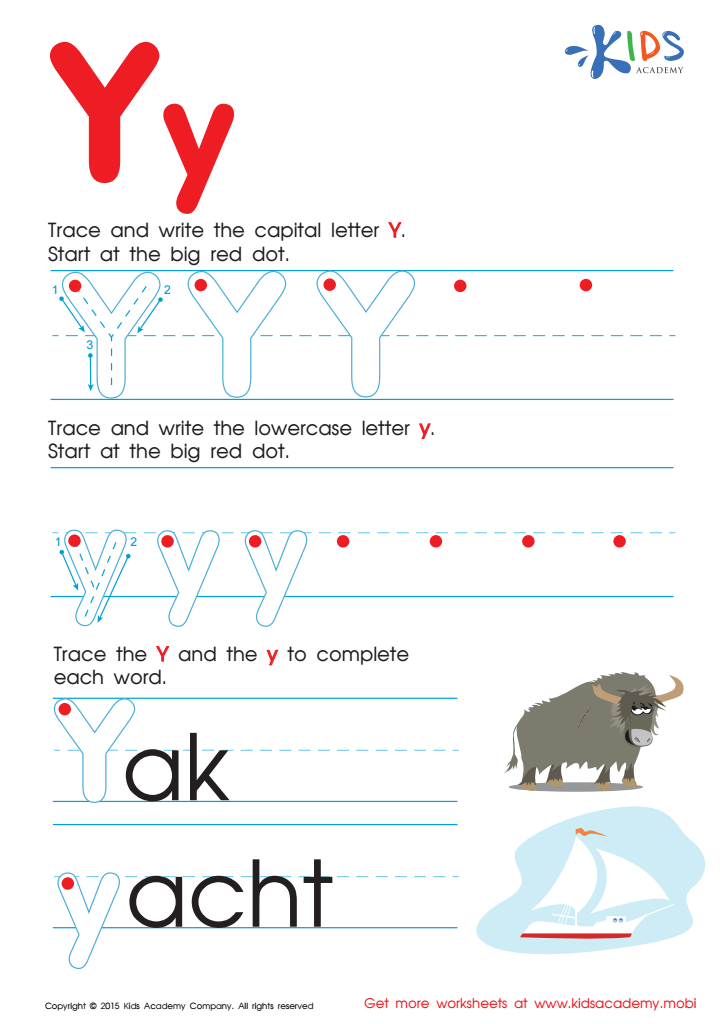
Letter Y Tracing Page
Trace the capital letter "Y" on the red dot, then trace and write the lowercase letter. Complete the words to help the Yak walk and the yacht swim. More worksheets at Kids Academy.
Letter Y Tracing Page
Worksheet
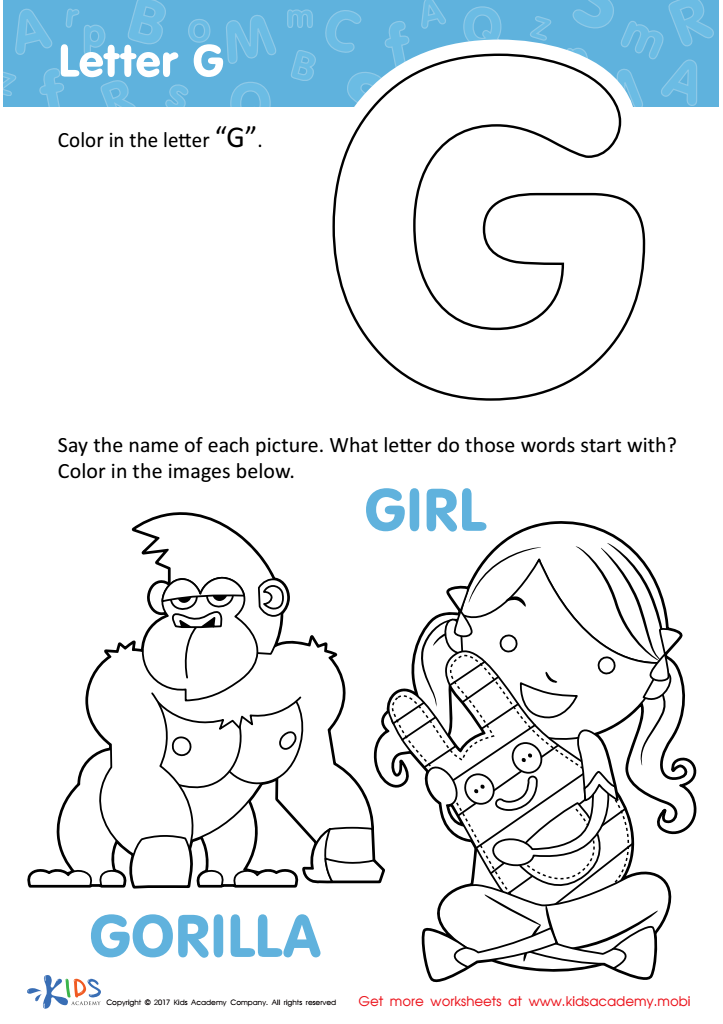
Letter G Coloring Sheet
This "G" coloring page encourages creativity and teaches kids the letter "G" sound. With its fun visuals and familiar words, it's sure to excite your child. Plus, you can talk about the letter’s sound with the pictures given.
Download (PDF)
Assign to My Students
Assign to My Students
Letter G Coloring Sheet
Worksheet
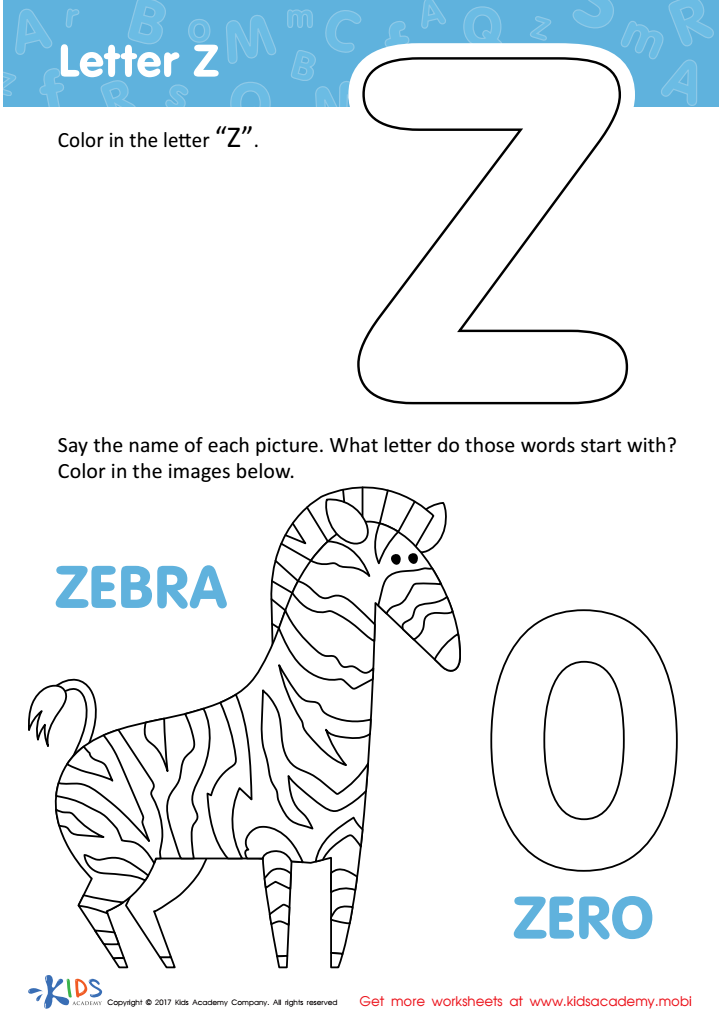
Letter Z Coloring Sheet
This coloring page featuring the letter "Z" is perfect for your child to practice letter recognition! Help them learn the unique sound it makes as they color. It'll be a fun and easy activity they won't have trouble with!
Download (PDF)
Assign to My Students
Assign to My Students
Letter Z Coloring Sheet
Worksheet
Join Kids Academy for Free
Who is primarily going to use this learning content?




Sound association is a powerful tool in helping children develop foundational language skills. For beginners aged 3-9, connecting sounds with letters and words is an essential component of learning to read and write effectively. Parents and teachers should care about sound association because it fosters phonemic awareness, which is the ability to hear, identify, and manipulate individual sounds in spoken words. This skill is critical for developing strong reading abilities.
By using sound association, children begin to understand that letters represent sounds, paving the way for decoding and blending, which are crucial for reading fluency. This method also aids in spelling, as children can start to match sounds with their corresponding letters or letter combinations. Early proficiency in these areas helps build a solid foundation for more advanced literacy skills, boosting a child’s confidence in their abilities.
Furthermore, engaging in sound-based activities makes the learning process fun and interactive, which can lead to a lifelong love for reading and learning. Inculcating strong literacy skills early on supports academic achievement across subjects since proficiency in reading directly enhances overall comprehension and problem-solving skills. Therefore, emphasizing sound association in early education is crucial for a child's long-term academic success and development.