Addition of fractions Worksheets for Ages 3-9
3 filtered results
-
From - To
Discover the magic of fractions with our engaging "Addition of Fractions Worksheets" designed for children ages 3-9. At Kids Academy, our printable worksheets help young learners build a solid foundation in math through hands-on practice and fun activities. Tailored to suit diverse learning needs, these worksheets guide children step-by-step through the process of adding fractions, making complex concepts simple and accessible. Boost your child's confidence and skills in no time with our colorful, expertly crafted resources. Explore the joy of learning fractions with Kids Academy, where education meets excitement. Download and start practicing today!
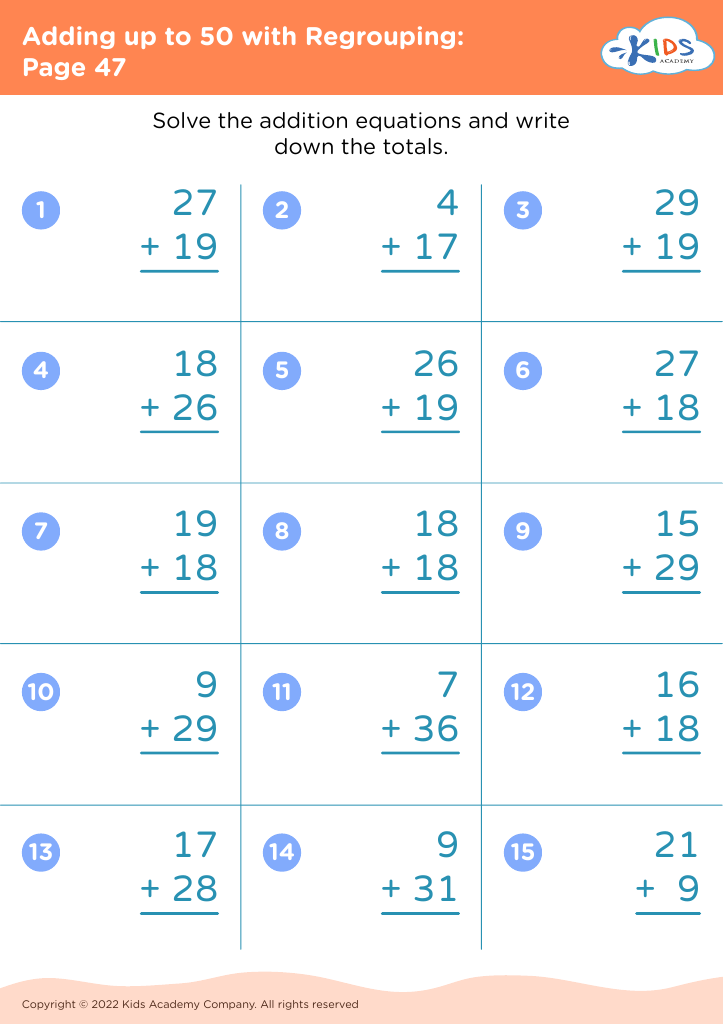
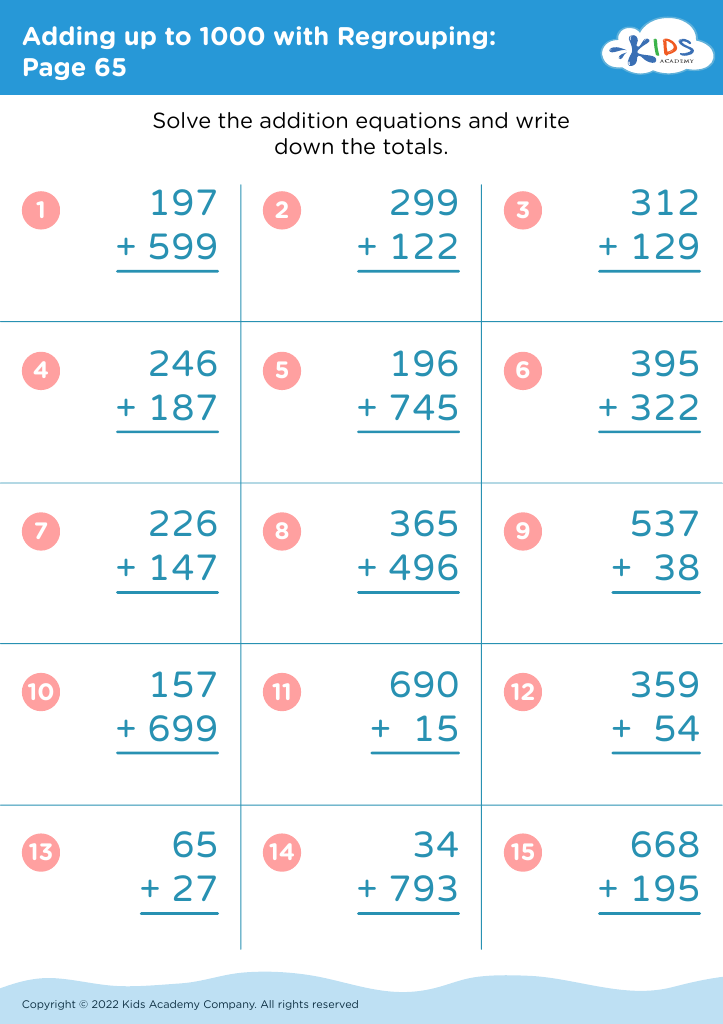
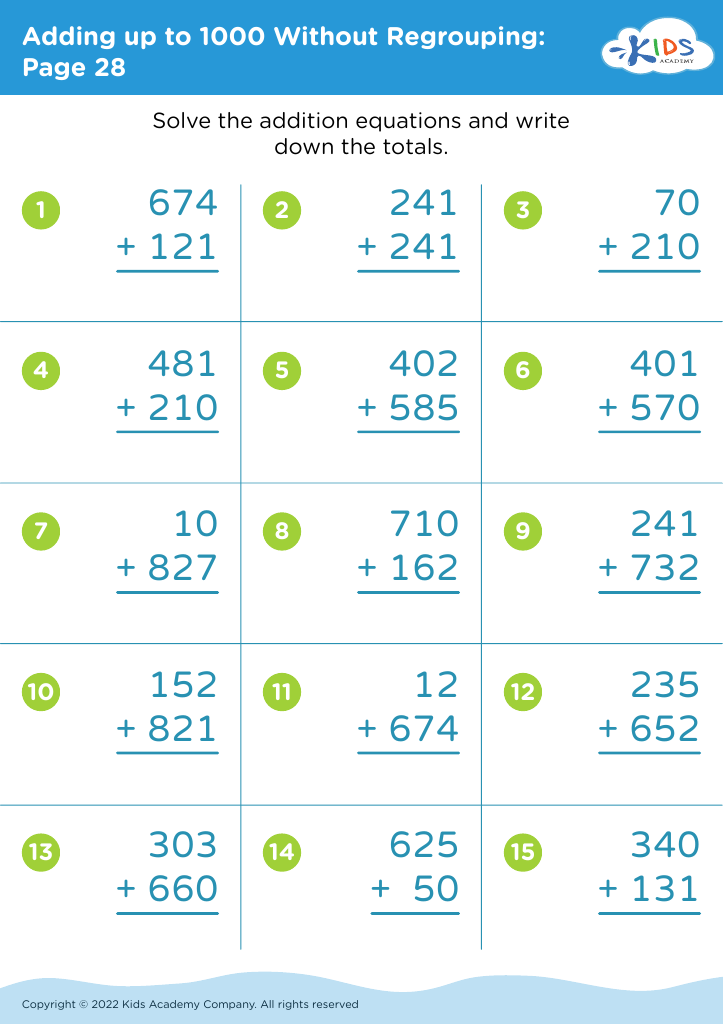







Parents and teachers should care about the addition of fractions for children ages 3-9 because it builds foundational math skills crucial for their future academic success. Understanding fractions is a key aspect of mathematical literacy that goes beyond simple number counting and equips children with the ability to handle more complex mathematical concepts later in life, such as ratios, proportions, and algebra. Early exposure to fractions helps develop critical thinking and problem-solving skills.
At this young age, children's brains are especially receptive to learning new concepts, and introducing fractions through fun, engaging activities can ignite a lifelong interest in mathematics. Furthermore, a solid grasp of fractions enhances children's abilities to handle everyday tasks involving time, cooking, and money. By mastering addition of fractions early, children gain confidence and a sense of accomplishment, which encourages a positive attitude towards math and learning in general.
For teachers and parents, supporting children in understanding these concepts fosters an environment of academic curiosity and resilience. It prepares children not just for future grade levels but also for real-life situations that require fraction knowledge. Therefore, the addition of fractions is an essential skill not only for academic progress but also for practical daily life, making it a worthwhile focus for early education.








