Analog clock reading Worksheets for Ages 3-9
4 filtered results
-
From - To
Discover our engaging Analog Clock Reading Worksheets designed for children aged 3 to 9! These highly interactive resources help young learners master the essential skills of telling time on an analog clock. With a variety of fun, age-appropriate activities, children can practice recognizing numbers, understanding minute and hour hands, and distinguishing between AM and PM. Our worksheets foster a love for learning while developing critical thinking and time-management skills in a playful way. Whether in the classroom or at home, these worksheets provide a perfect blend of education and fun, making time-telling a delightful journey for your little ones!
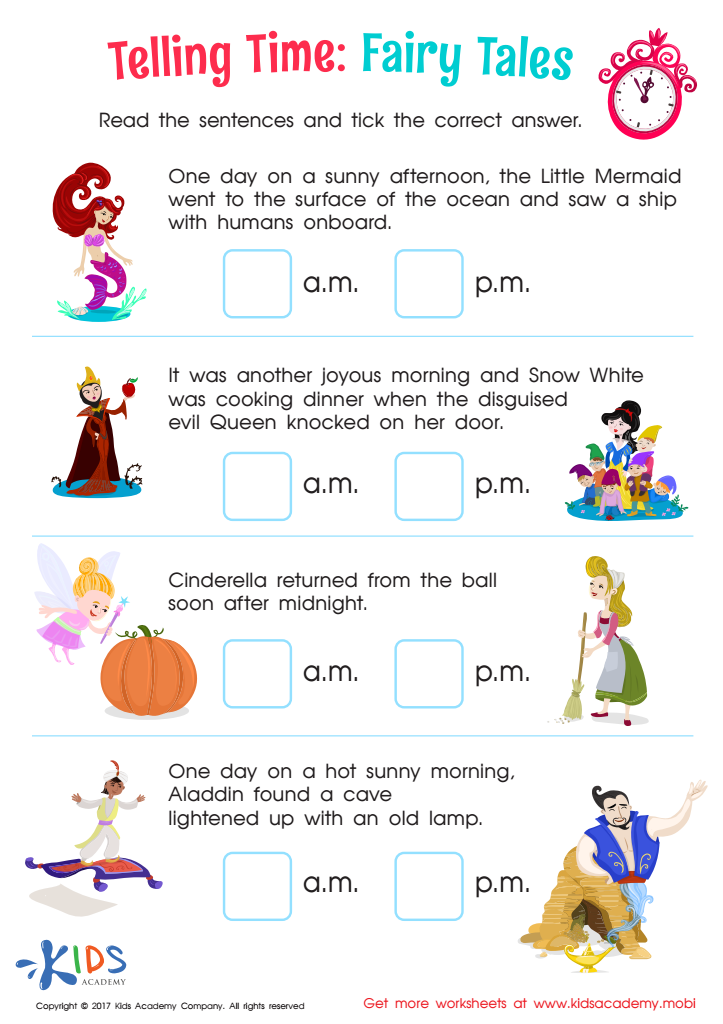
Telling Time: Fairy Tales Worksheet
 Assign to My Students
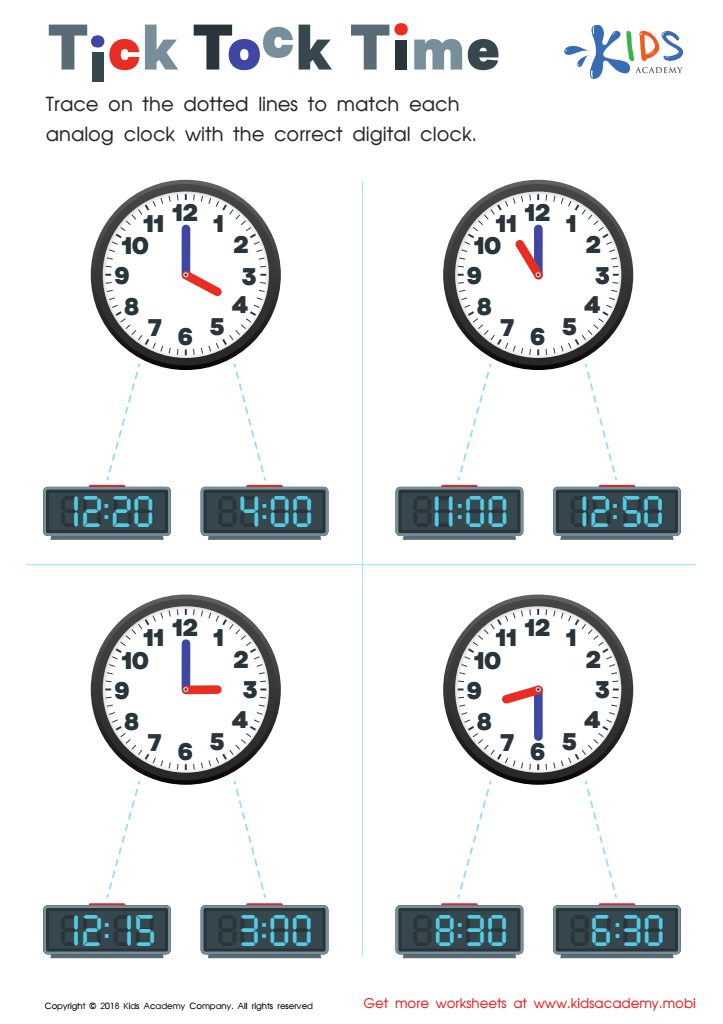
Tick Tock Time Worksheet
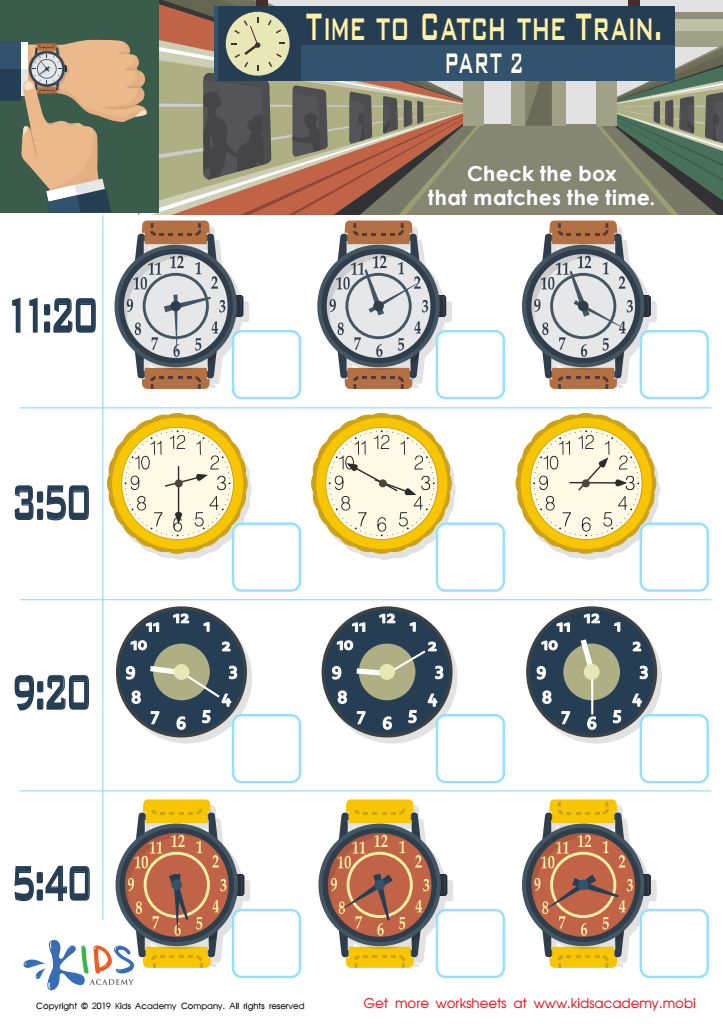
Time to Catch the Train Part 2 Worksheet







Understanding how to read an analog clock is an essential skill for children ages 3-9, laying the foundation for more complex time management concepts in the future. First, reading an analog clock promotes cognitive development by helping children recognize patterns and relationships between the hands and numbers. This skill fosters numerical literacy, enhancing their overall mathematics abilities.
Moreover, learning to tell time on an analog clock helps develop patience and memory. Children learn to focus, as they must observe the movement of the hands and remember the corresponding values. It also cultivates an understanding of the passage of time, crucial for daily routines, such as planning activities or understanding schedules.
Incorporating analog clock reading in early education encourages practical learning experiences. For instance, children can engage with tangible clocks, enhancing their fine motor skills and spatial awareness. It also sparks conversations about concepts like sequencing and time intervals, further enriching their language and communication skills.
Lastly, digital devices dominate today’s world, but analog clocks teach children to appreciate traditional methods. By immersing kids in both formats, parents and teachers create well-rounded learners who can navigate various time-telling scenarios, ensuring they are prepared for real-world situations as they grow older.








