Check out this FREE "Basic Addition Skills" Trial Lesson for age 3-9!

Match Exactly the Same

Favorites
With answer key
Interactive
  • 3-9
  • Basic Addition Skills
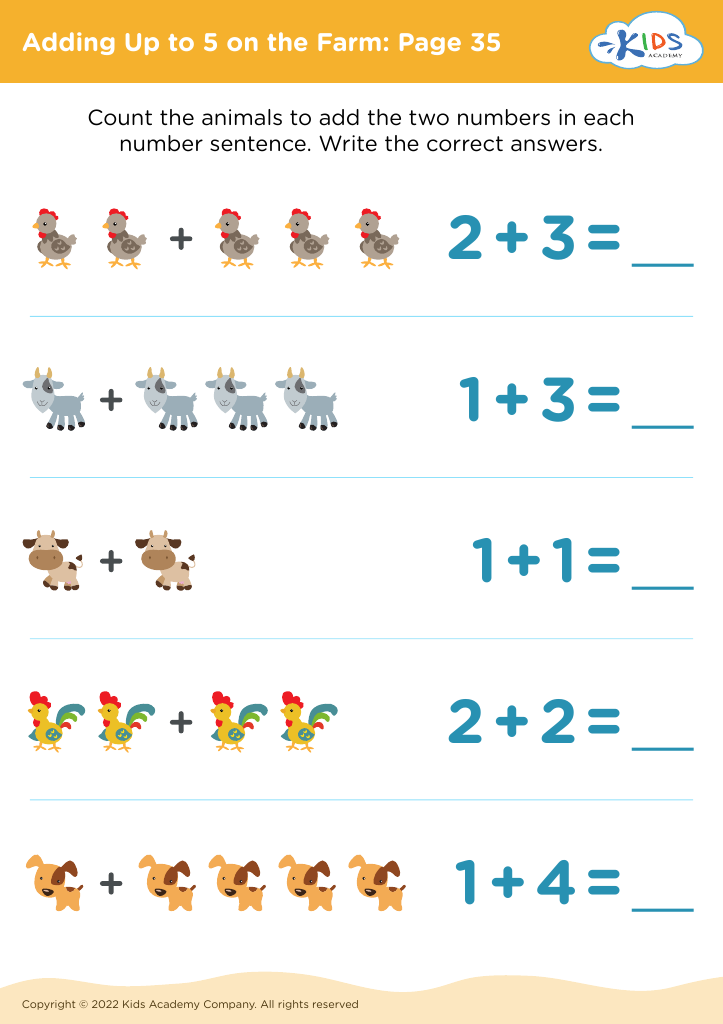
Adding Up to 5 on the Farm: Page 35
Worksheet
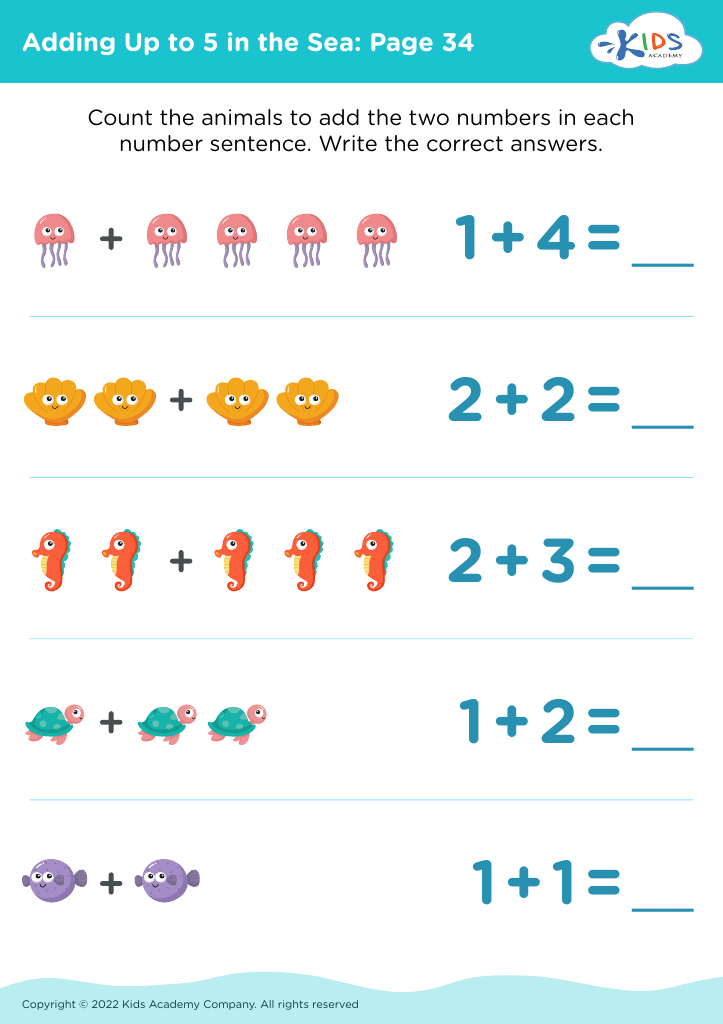
Adding Up to 5 in the Sea: Page 34
Worksheet
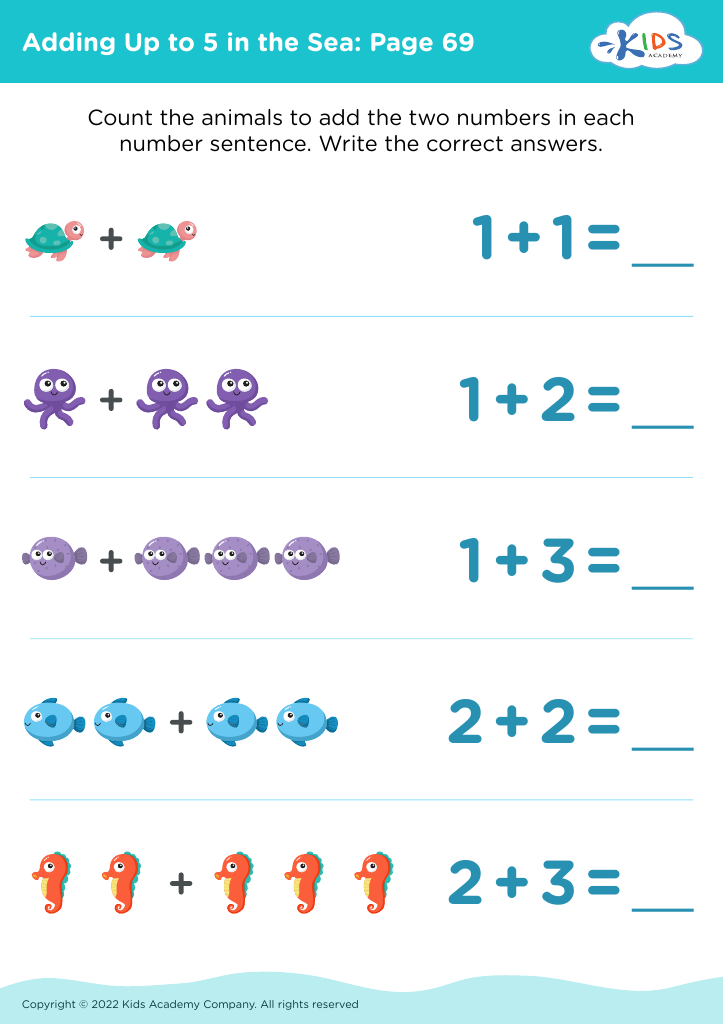
Adding Up to 5 in the Sea: Page 69
Worksheet
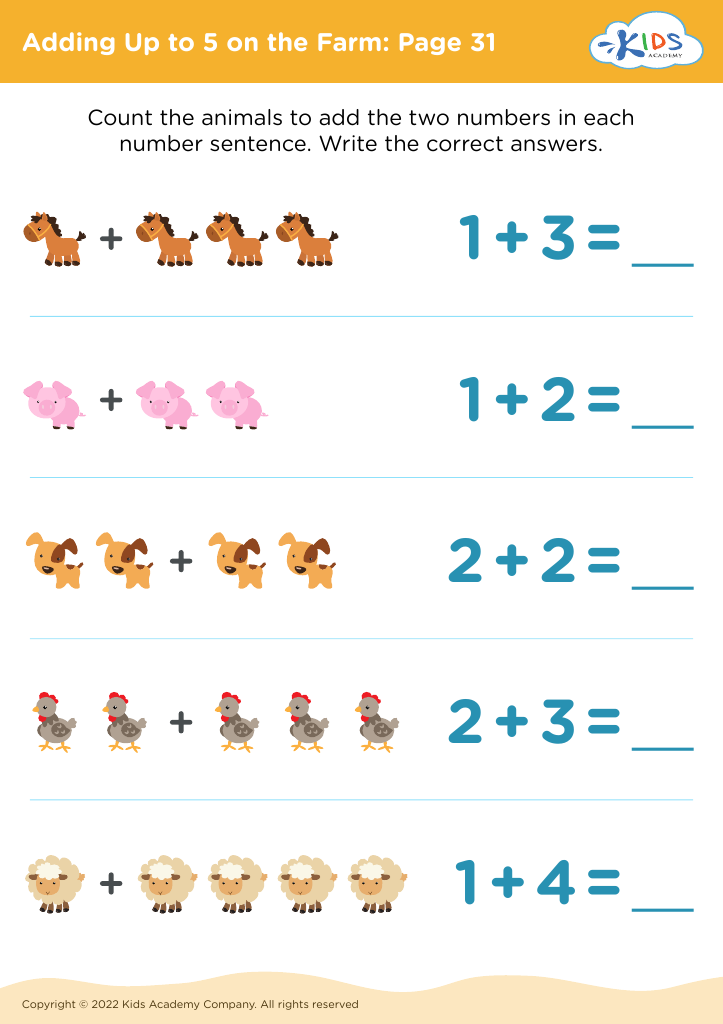
Adding Up to 5 on the Farm: Page 31
Worksheet
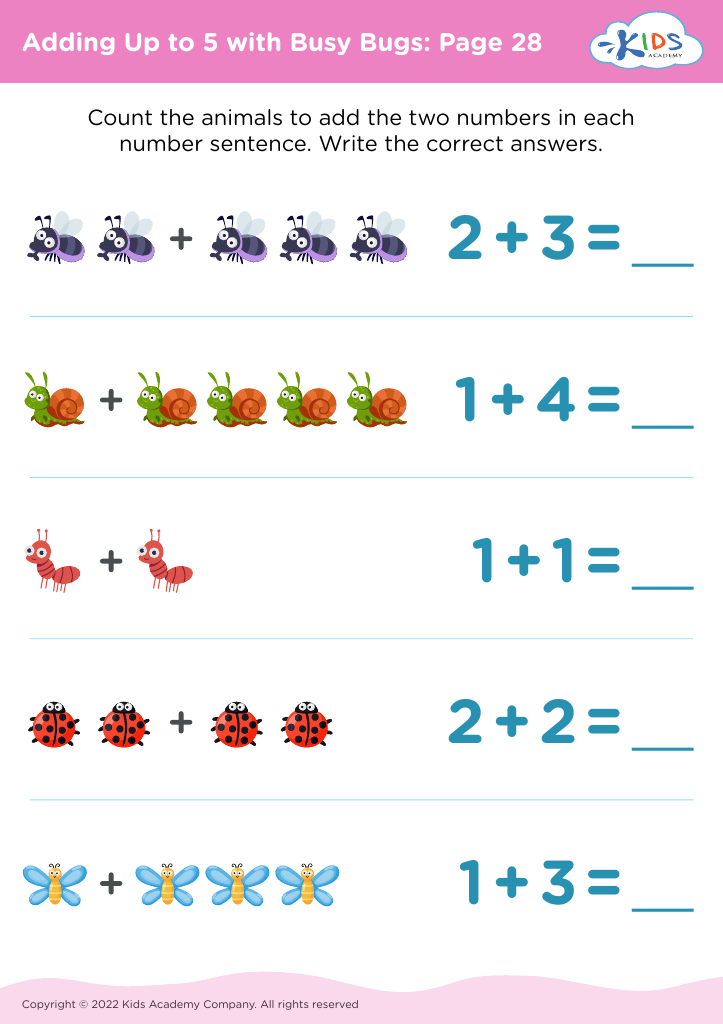
Adding Up to 5 with Busy Bugs: Page 28
Worksheet
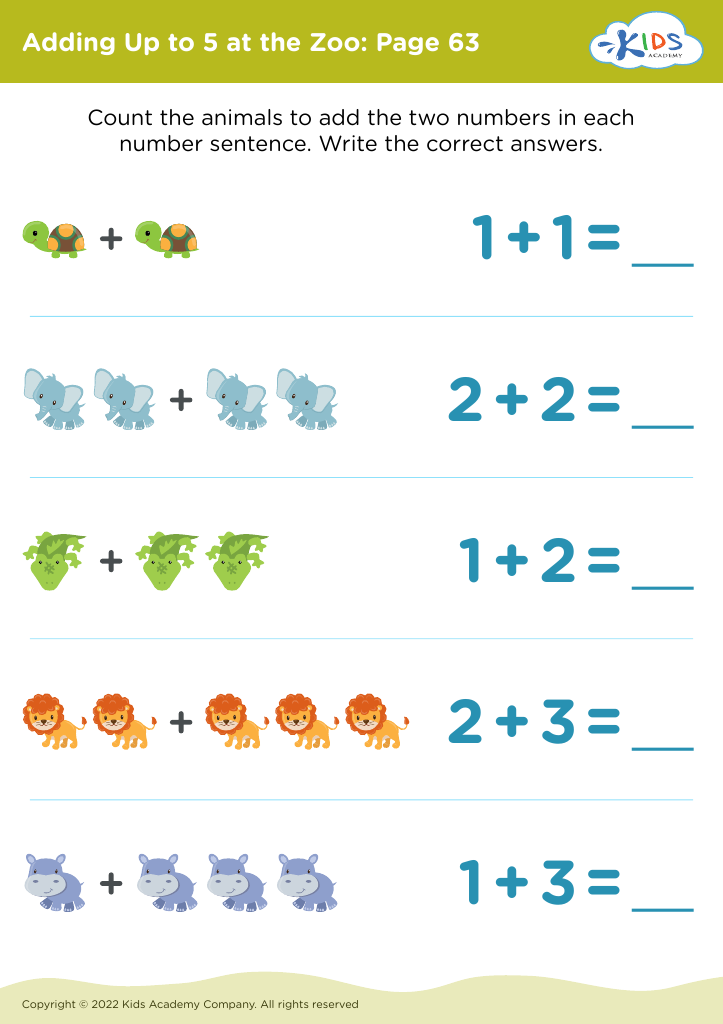
Adding Up to 5 at the Zoo: Page 63
Worksheet
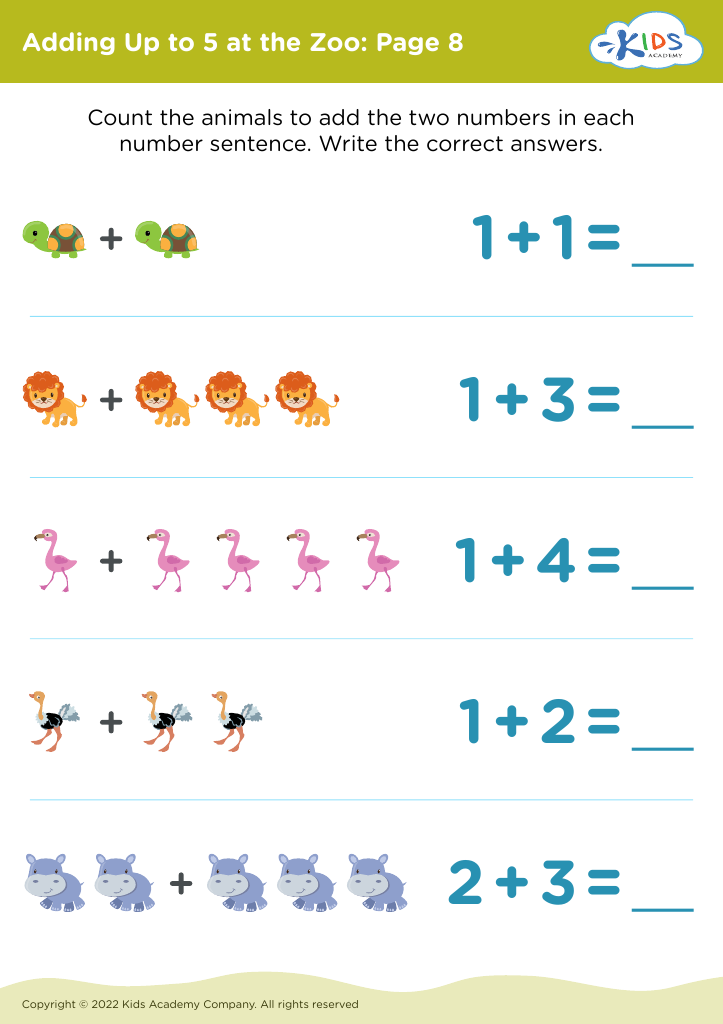
Adding Up to 5 at the Zoo: Page 8

Adding Up to 5 at the Zoo: Page 8

Adding Up to 5 at the Zoo: Page 8
Worksheet
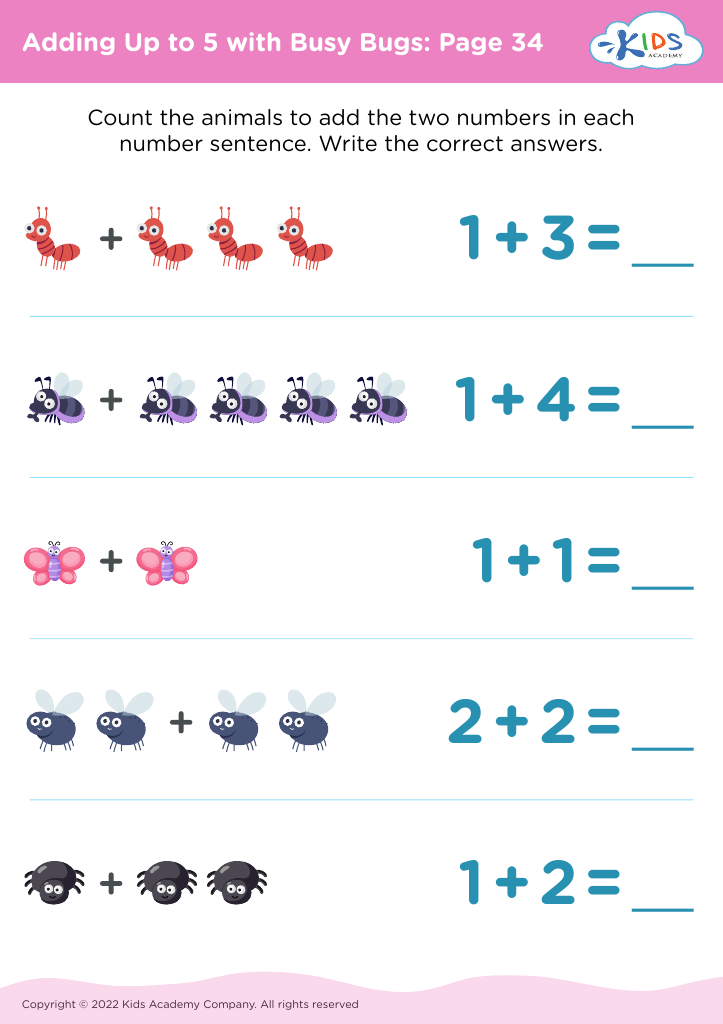
Adding Up to 5 with Busy Bugs: Page 34
Worksheet
Simple Addition PDF Worksheet

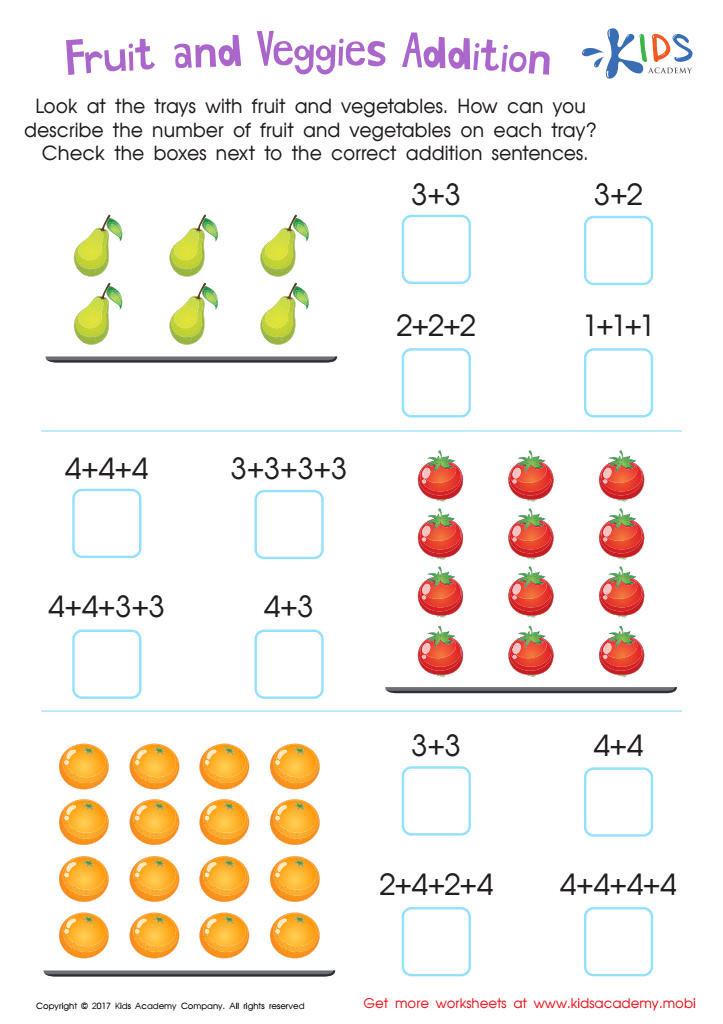
Fruit and Veggies Worksheet

It promotes problem-solving and analytical skills as kids match pictures to correct addition sentences. Help your child go beyond simple addition with this PDF worksheet!
Fruit and Veggies Worksheet
Worksheet
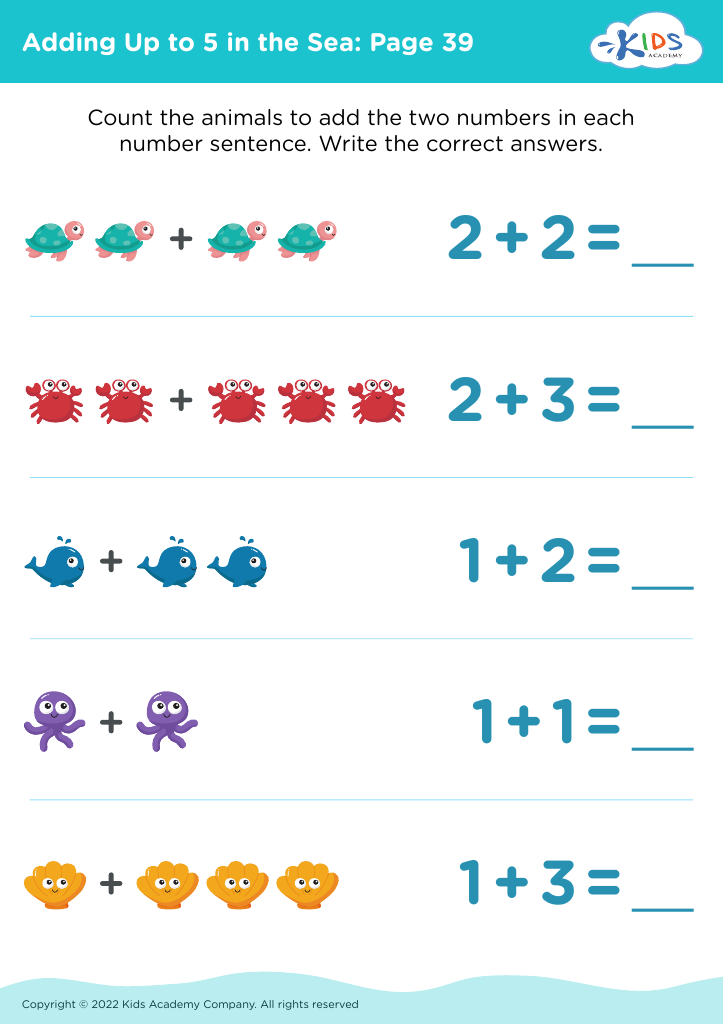
Adding Up to 5 in the Sea: Page 39
Worksheet
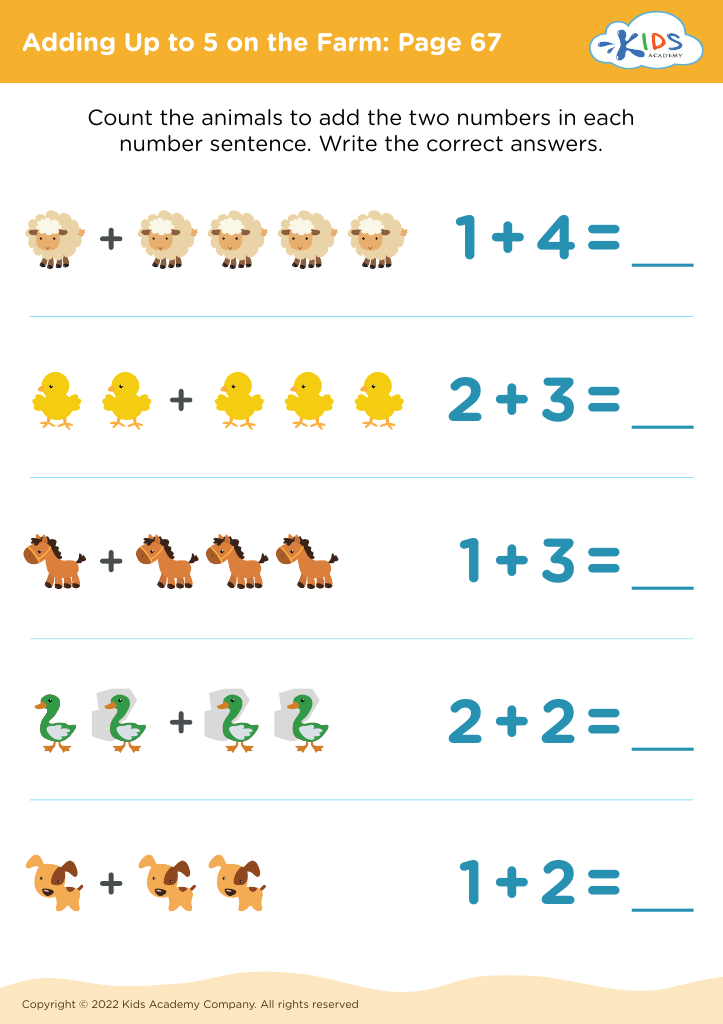
Adding Up to 5 on the Farm: Page 67
Worksheet
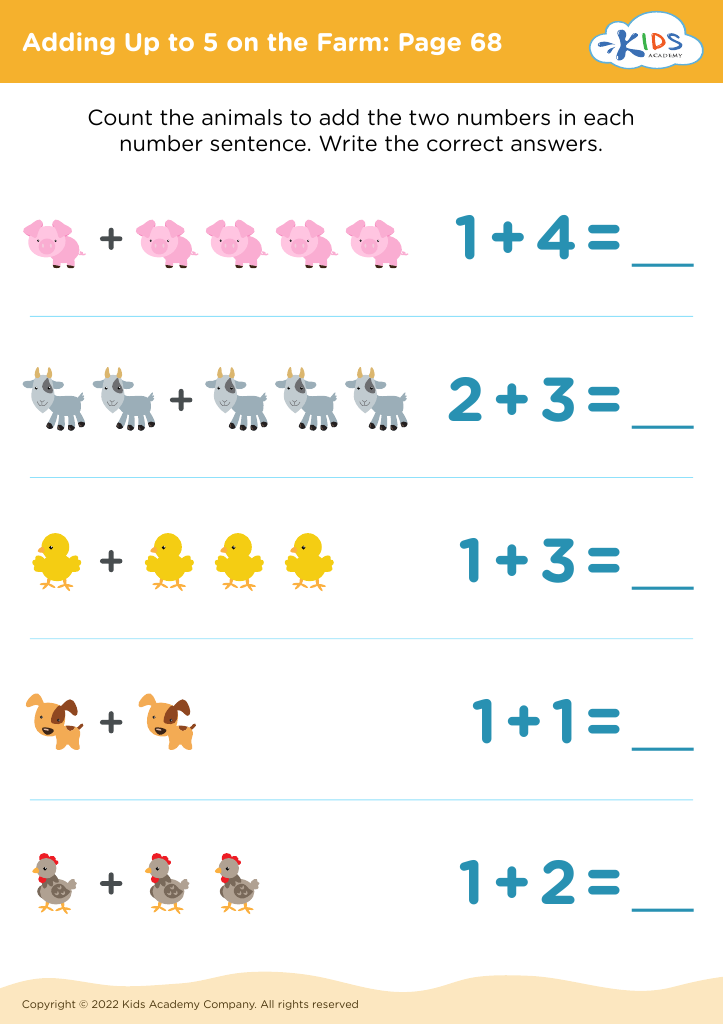
Adding Up to 5 on the Farm: Page 68
Worksheet
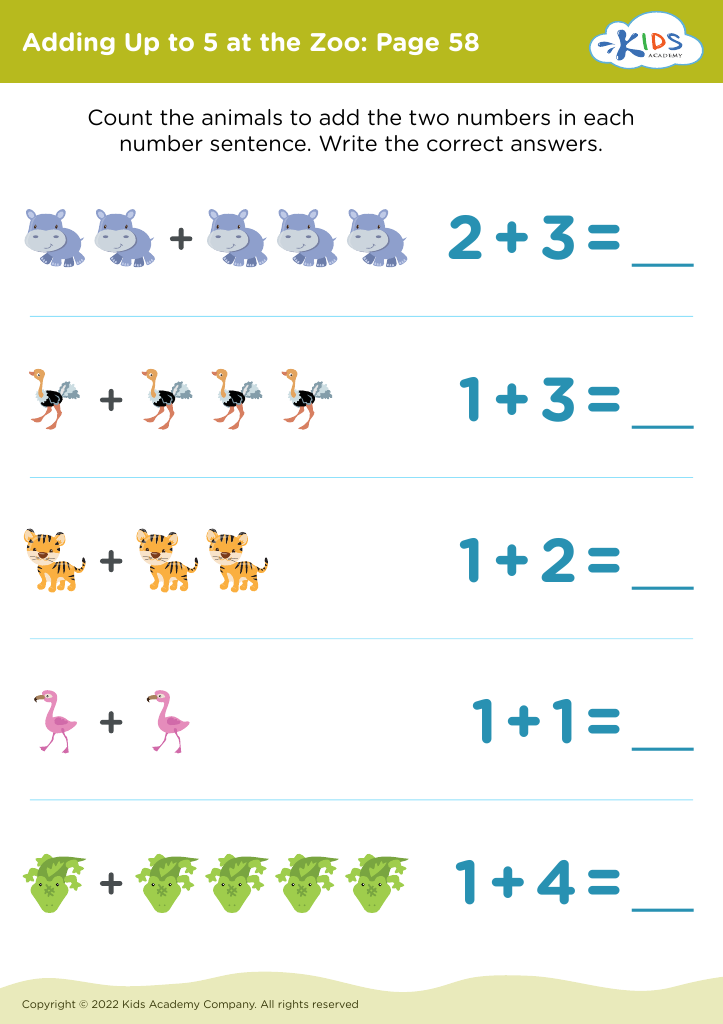
Adding Up to 5 at the Zoo: Page 58
Worksheet
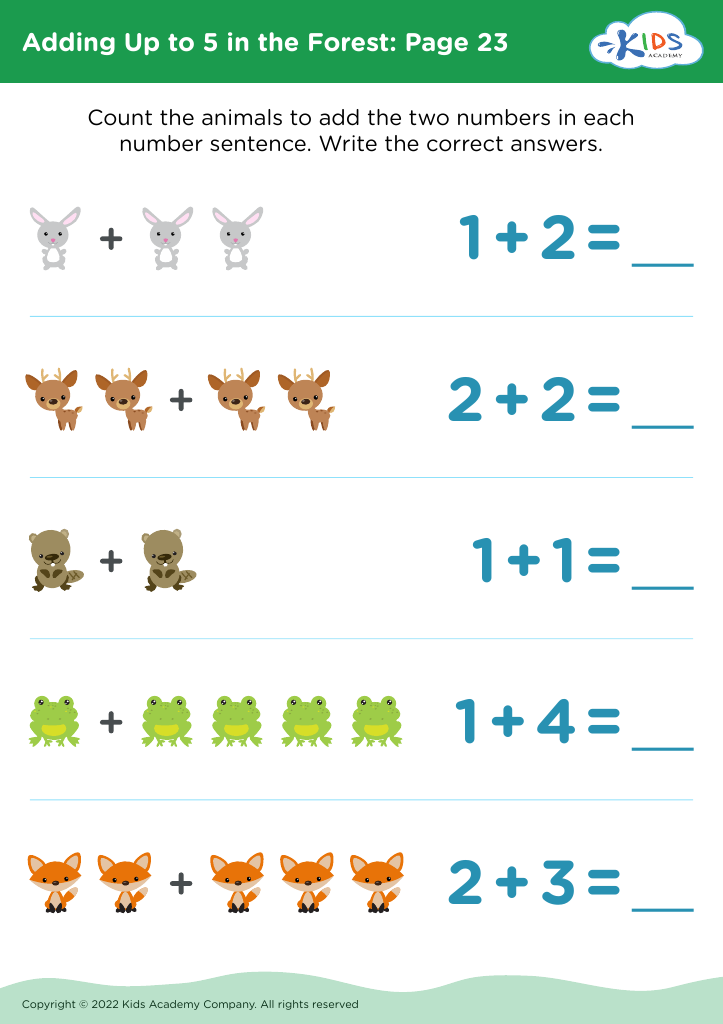
Adding Up to 5 in the Forest: Page 23
Worksheet
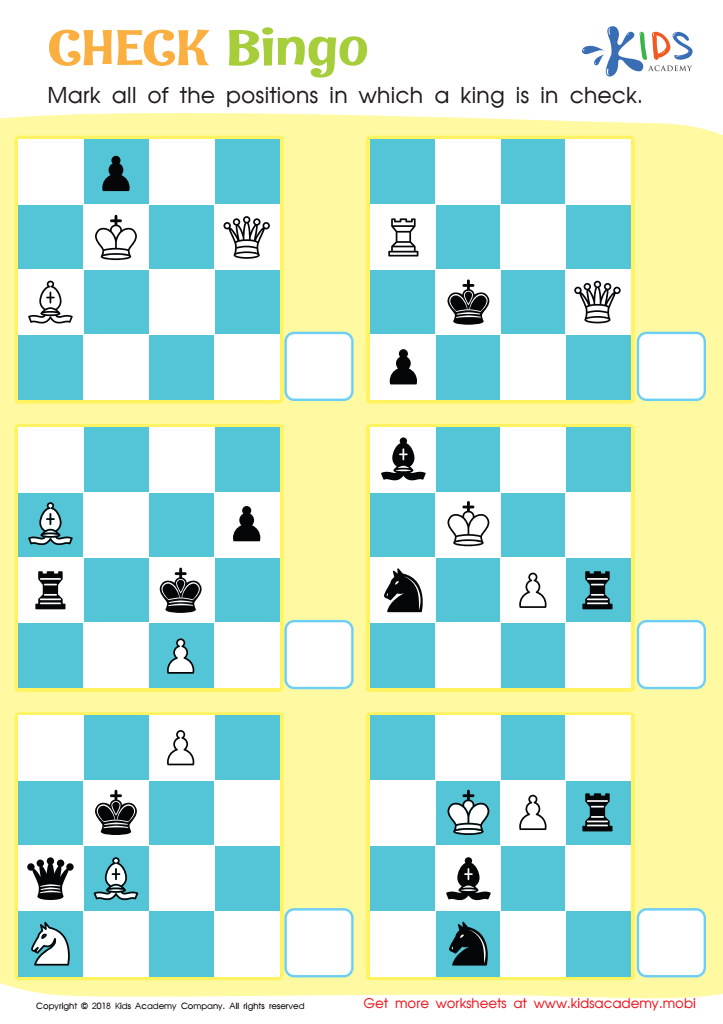
Check Bingo Worksheet

Check Bingo Worksheet

Chess helps young minds build critical thinking, problem-solving and logical reasoning skills. This free PDF worksheet is a fun way to teach these skills. It explains the concept of check and includes gameboards with kings in various positions. Students mark off the boards where a king isn't in check, and they're ready to move onto checkmate!
Check Bingo Worksheet

Worksheet
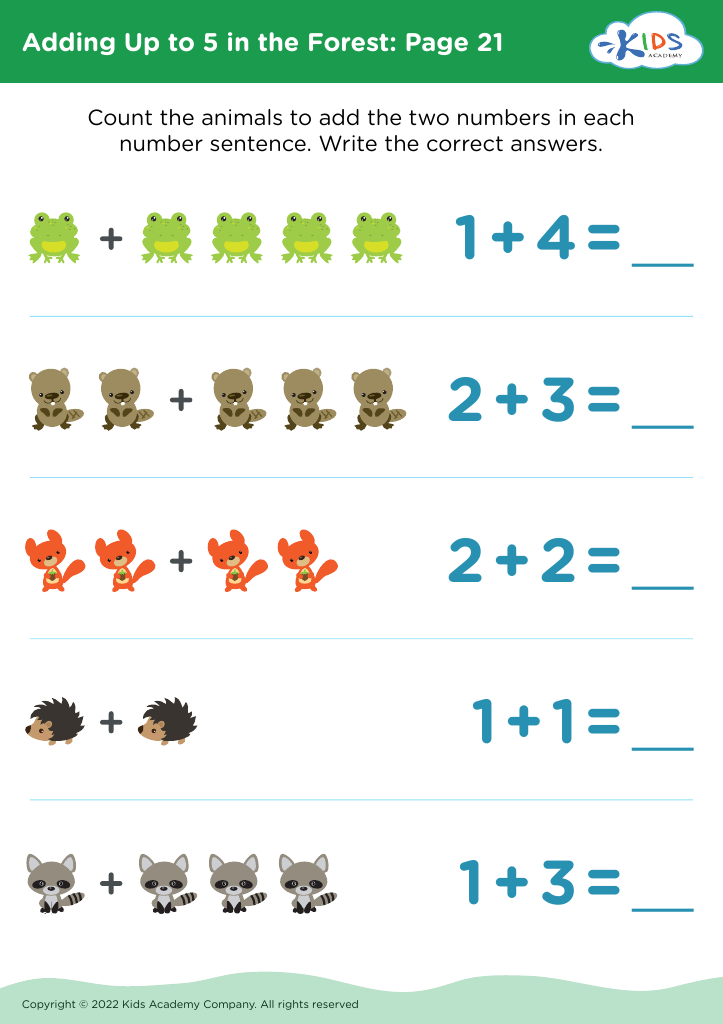
Adding Up to 5 in the Forest: Page 21
Worksheet
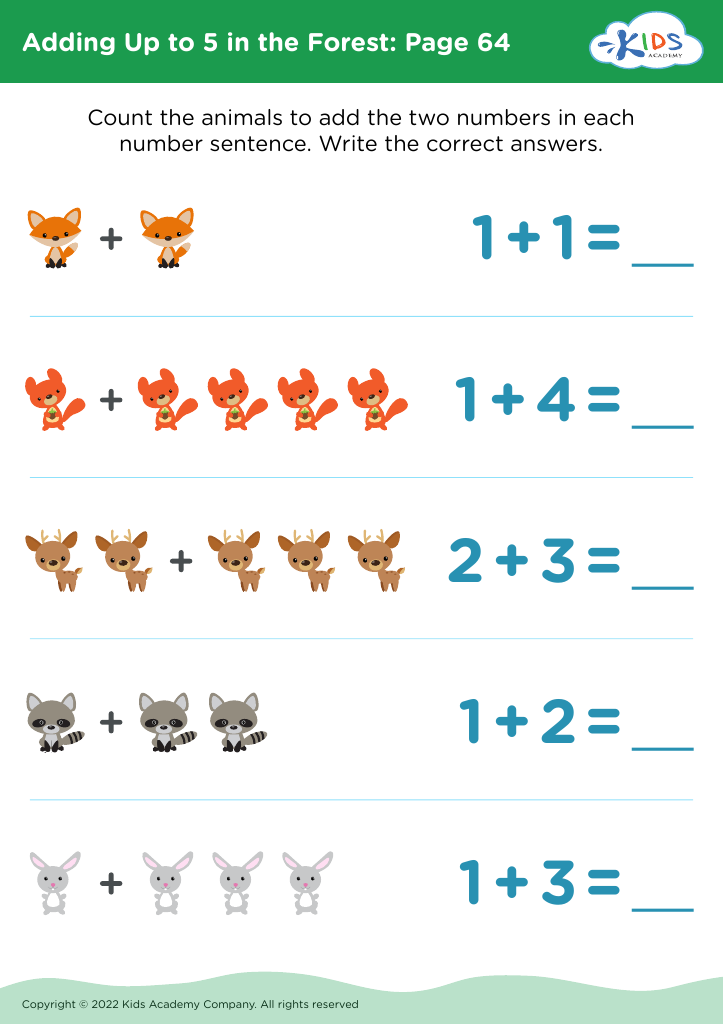
Adding Up to 5 in the Forest: Page 64
Worksheet
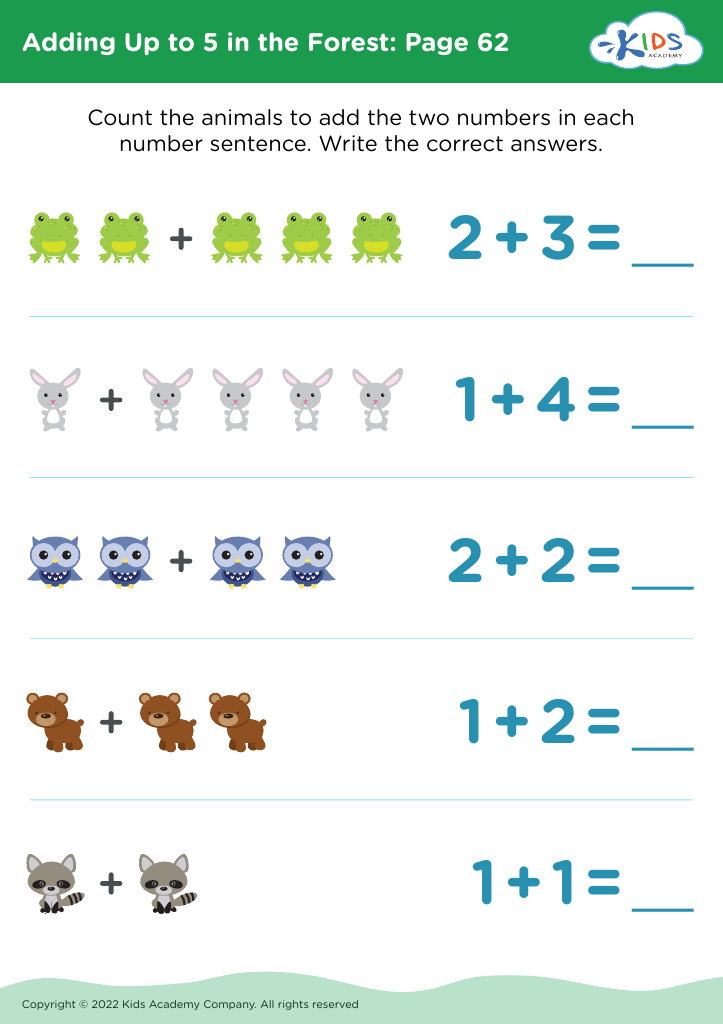
Adding Up to 5 in the Forest: Page 62
Worksheet
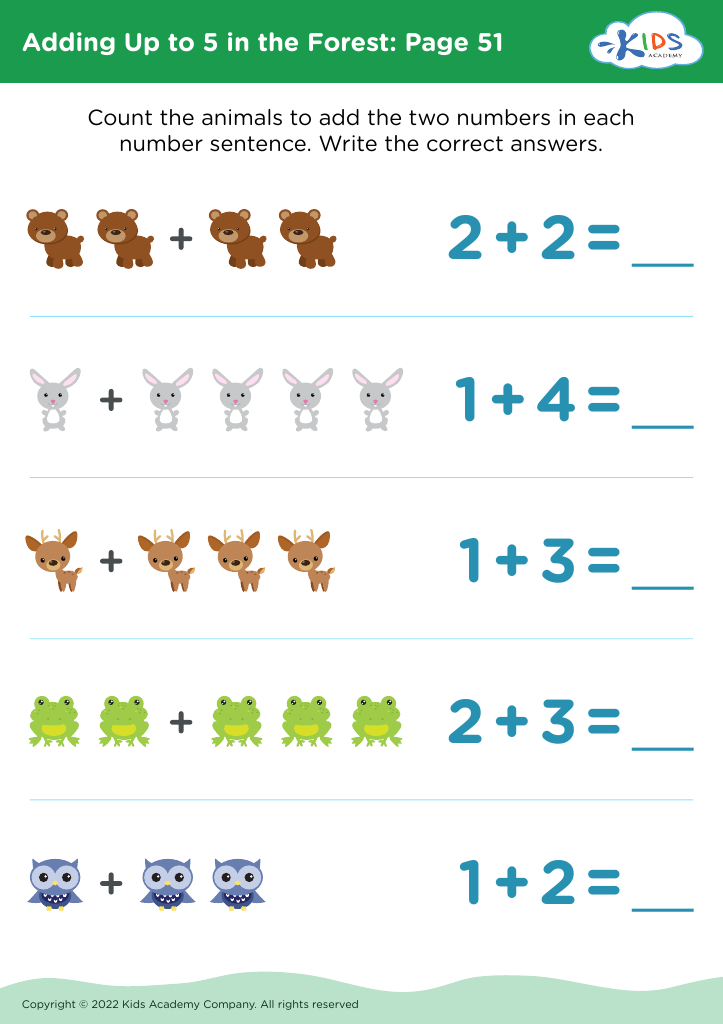
Adding Up to 5 in the Forest: Page 51
Worksheet
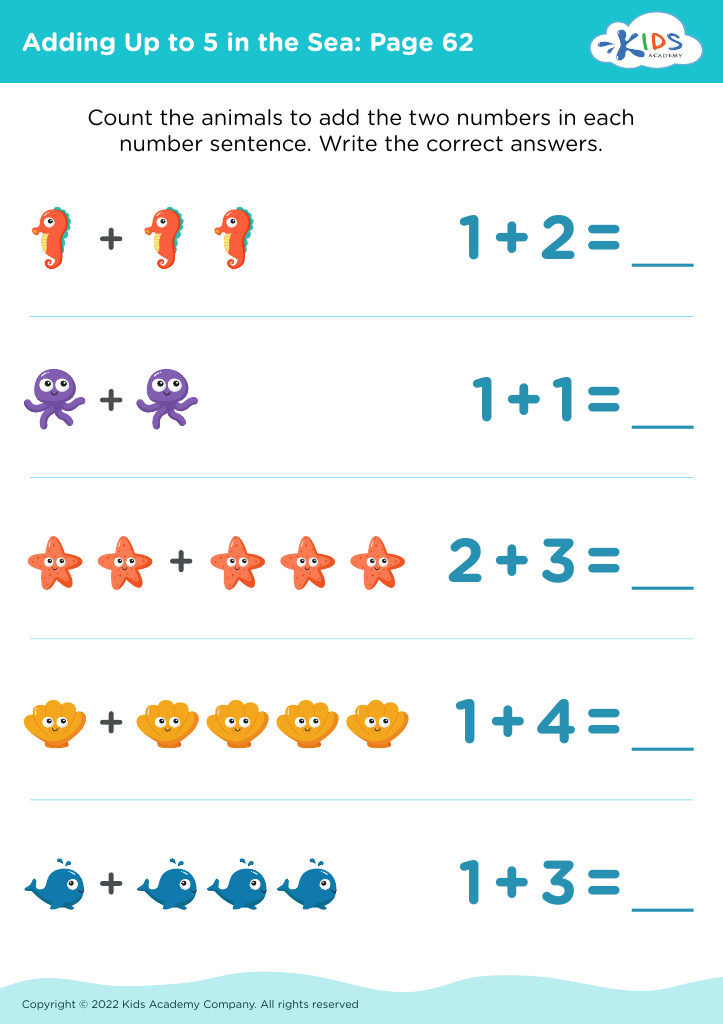
Adding Up to 5 in the Sea: Page 62
Worksheet
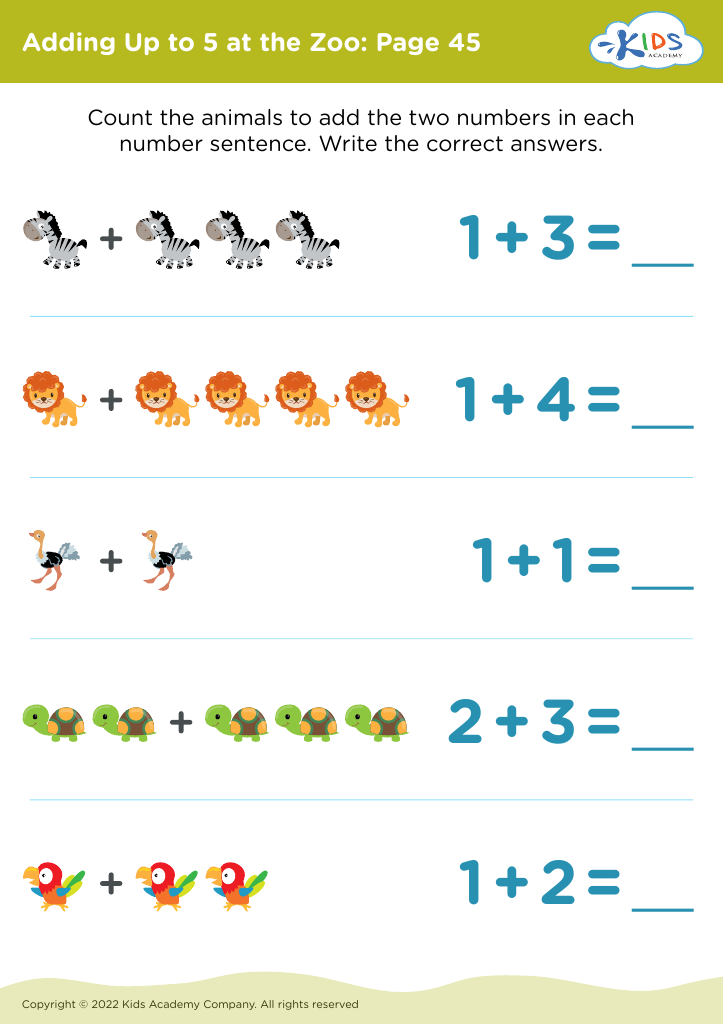
Adding Up to 5 at the Zoo: Page 45
Worksheet
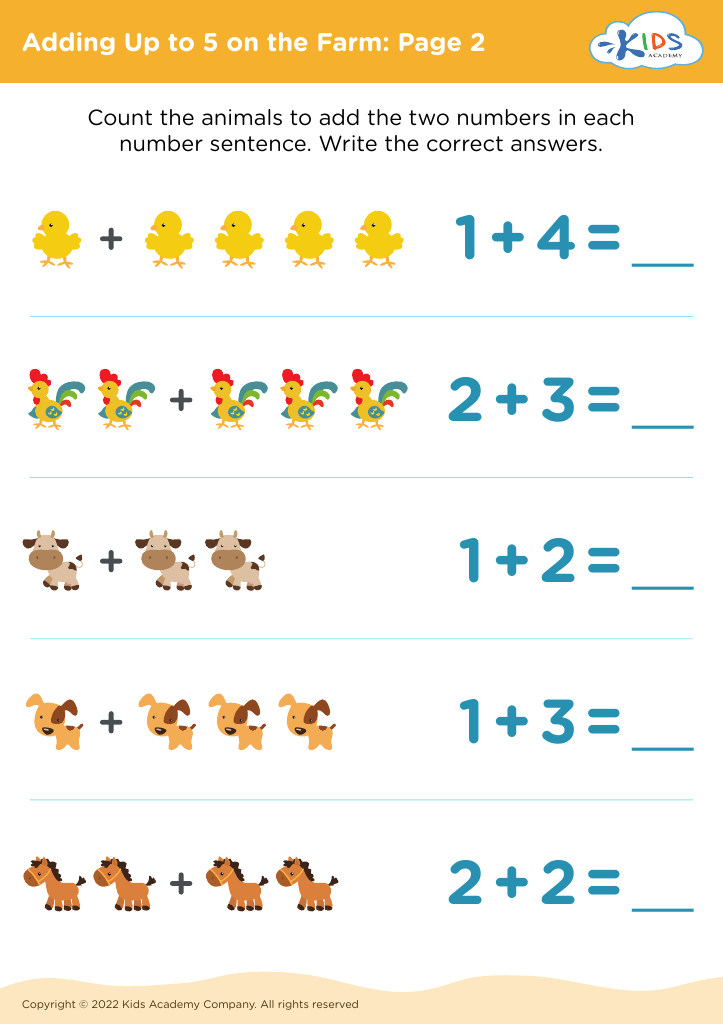
Adding Up to 5 on the Farm: Page 2
Worksheet
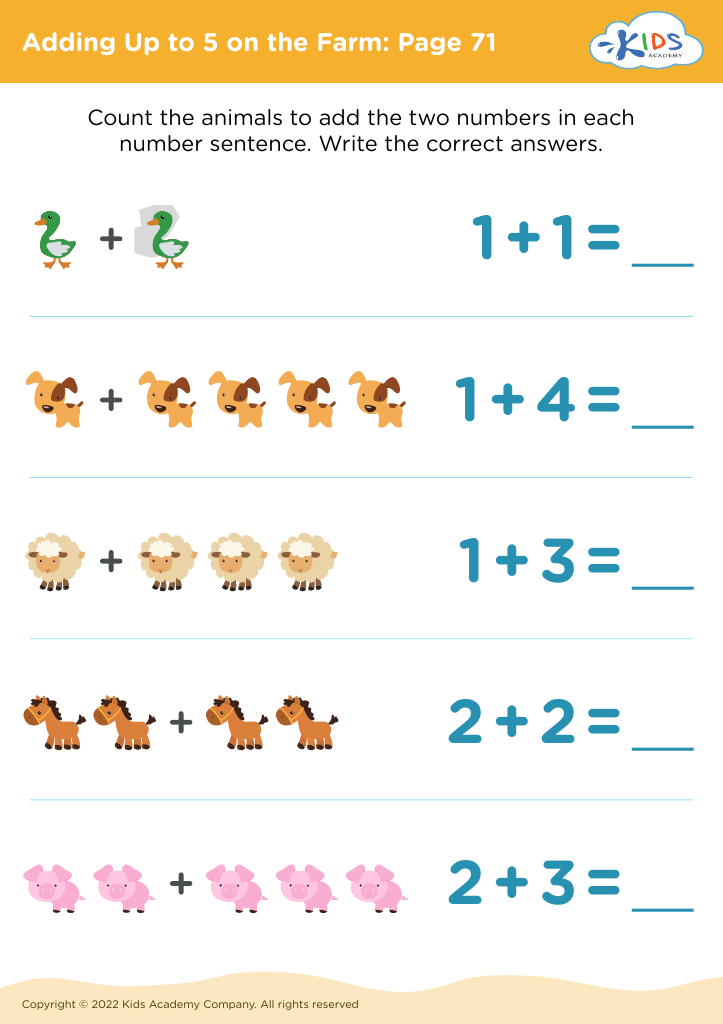
Adding Up to 5 on the Farm: Page 71
Worksheet
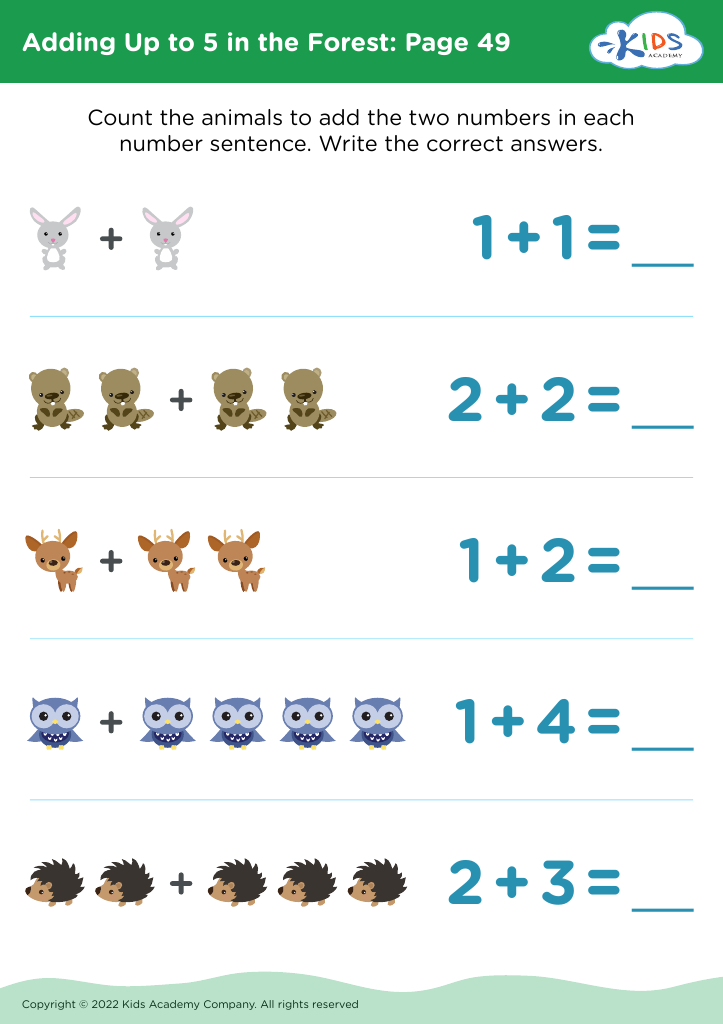
Adding Up to 5 in the Forest: Page 49
Worksheet


Basic addition skills are crucial for children aged 3-9 for several reasons. Firstly, mastering addition forms the foundation for a child's mathematical understanding, facilitating their ability to tackle more complex concepts like subtraction, multiplication, and division later on. Early proficiency in addition encourages confidence and promotes a positive attitude towards math, which can affect a child's willingness to engage with the subject throughout their education.

Moreover, these skills foster critical thinking and problem-solving abilities essential for everyday tasks. For example, knowing how to add numbers can help children manage time effectively, calculate expenses, and make informed decisions in daily situations. This early exposure helps build an intuitive grasp of numbers and enhances cognitive development.

Furthermore, addition skills are often introduced through playful activities, which creates a fun learning environment that strengthens the bond between parents, teachers, and children. This collaborative engagement reinforces educational concepts and social skills.

Lastly, recognizing the importance of addition lays the groundwork for future academic success, ensuring children are better prepared for challenges in higher grades. In summary, nurturing basic addition skills is vital for developing confident, capable learners who approach math—and life challenges—with enthusiasm and resilience.