Basic arithmetic comprehension Worksheets for Ages 3-9
6 filtered results
-
From - To
Unlock your child's math potential with our Basic Arithmetic Comprehension Worksheets for Ages 3-9. These engaging, age-appropriate activities cover essential math skills such as counting, addition, subtraction, and pattern recognition. Designed by educational experts, the worksheets aim to build a strong foundation in arithmetic through fun, colorful exercises that capture young learners' imaginations. Ideal for both classroom use and homeschooling, our worksheets support differentiated learning, ensuring each child progresses at their own pace. Enhance your child's confidence and math proficiency with these carefully crafted resources, and watch them excel in their early educational journey.
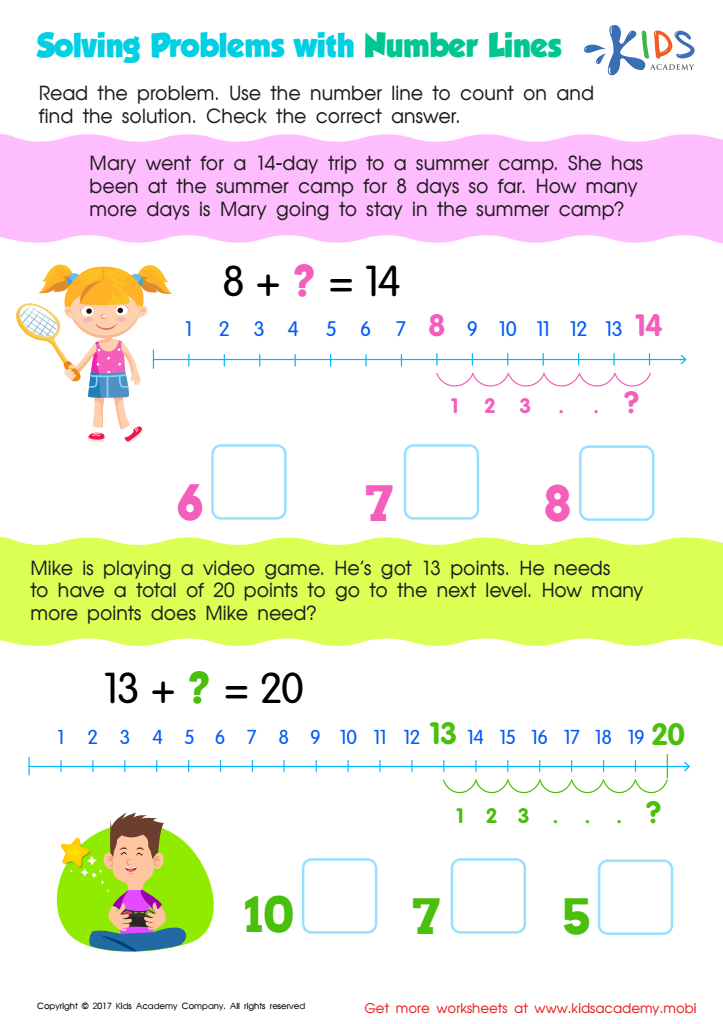
Solving Problems: Number Lines Worksheet
 Assign to My Students
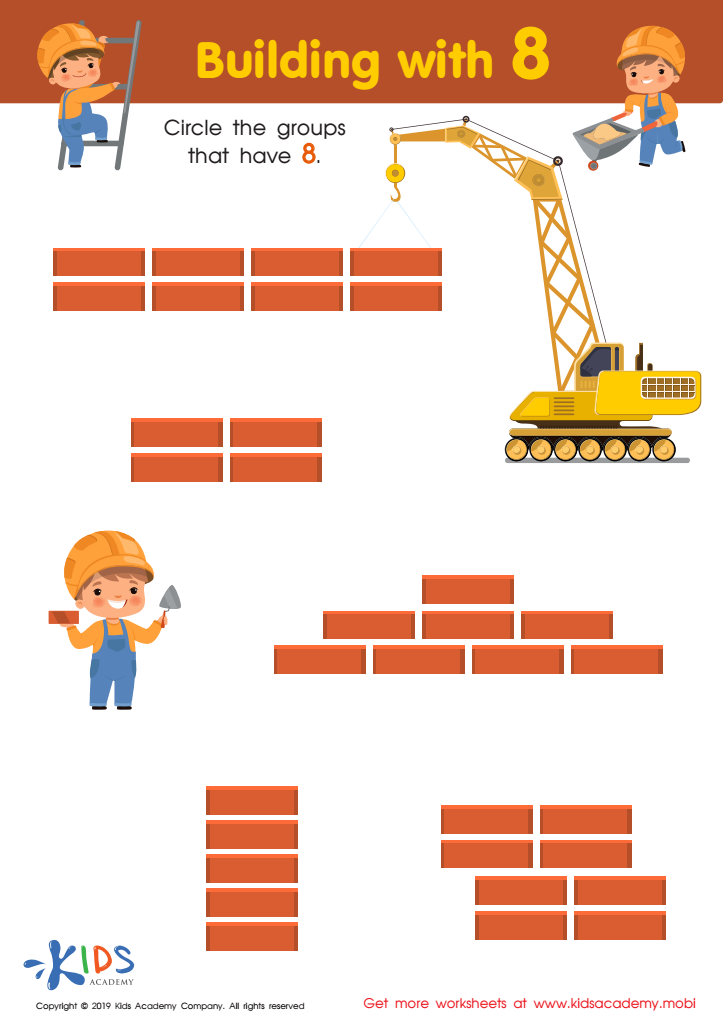
Building with 8 Worksheet
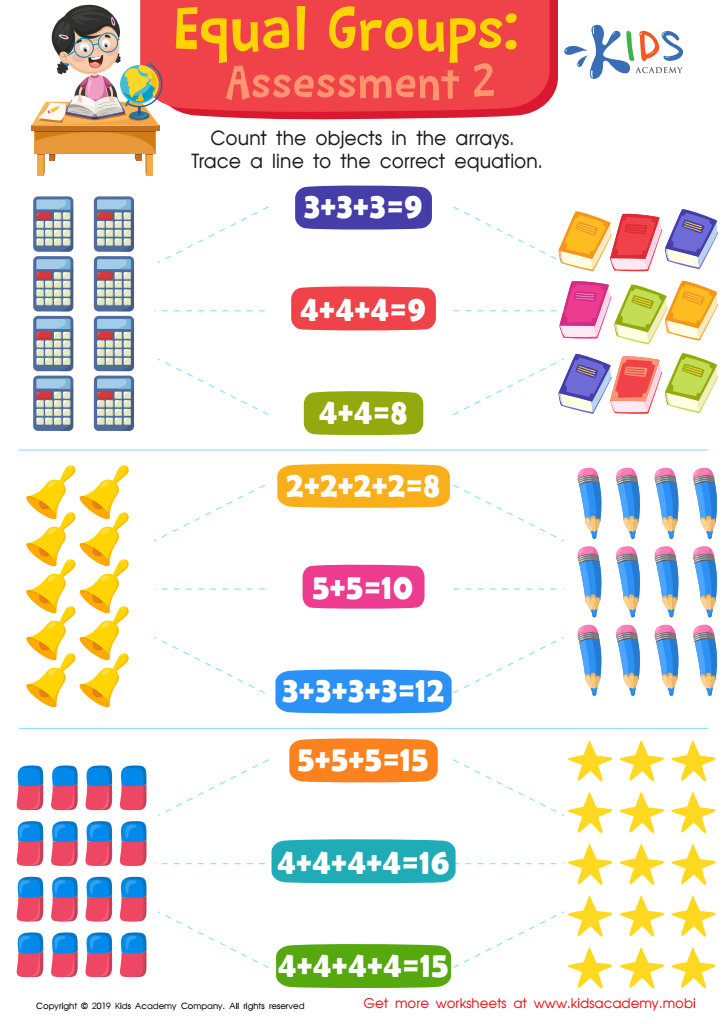
Equal Groups: Assessment 2 Worksheet
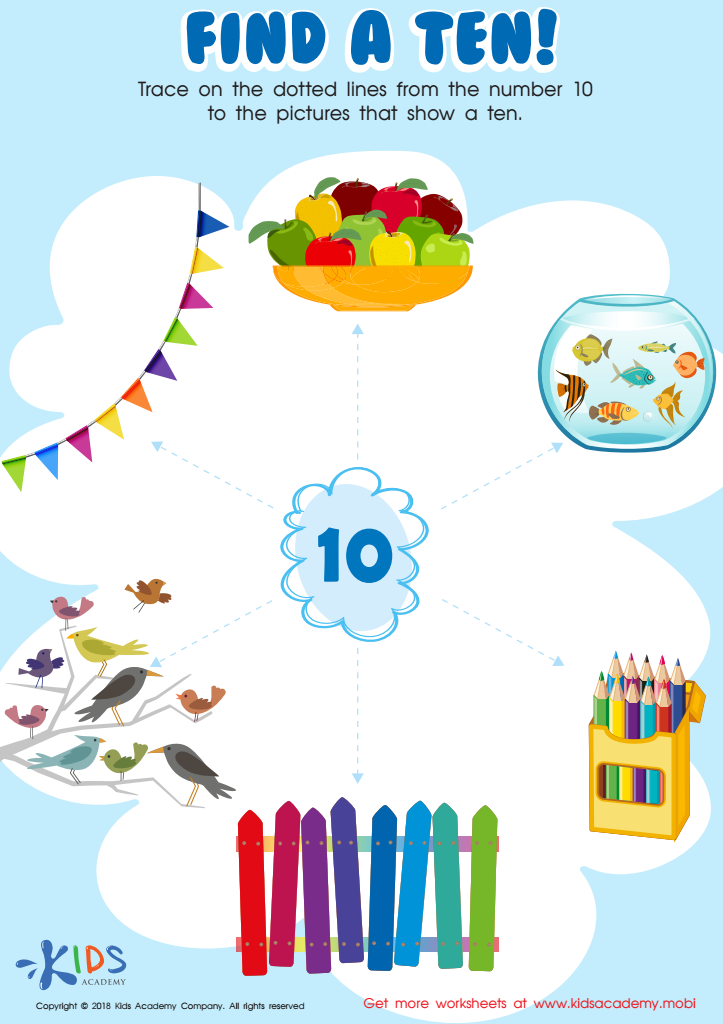
Kindergarten Math Worksheet: Find a Ten
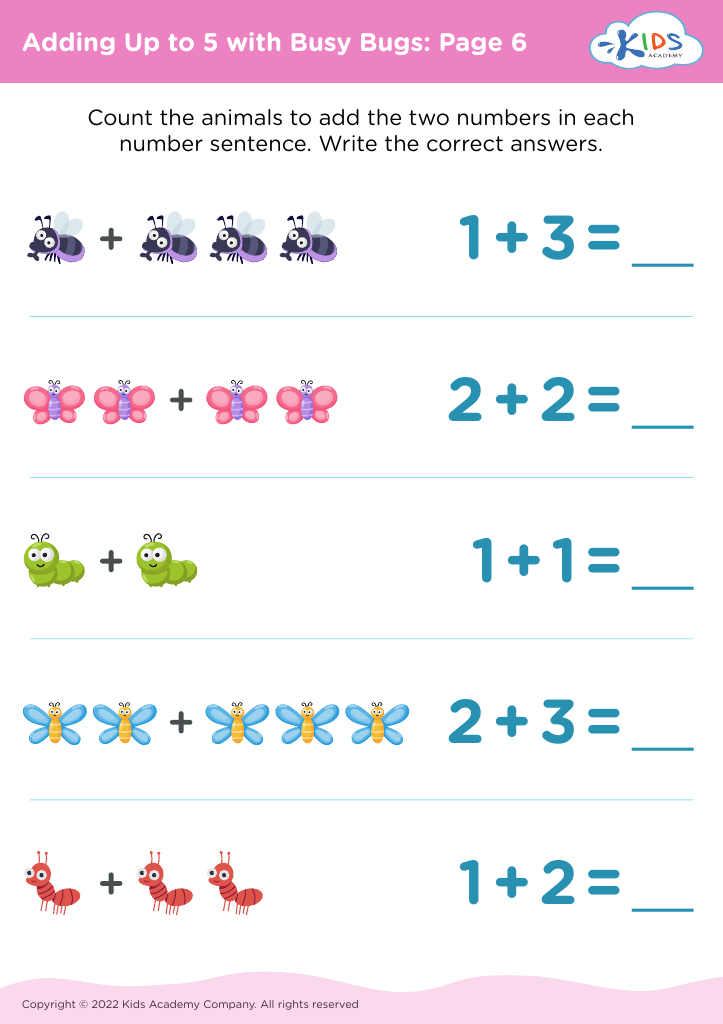
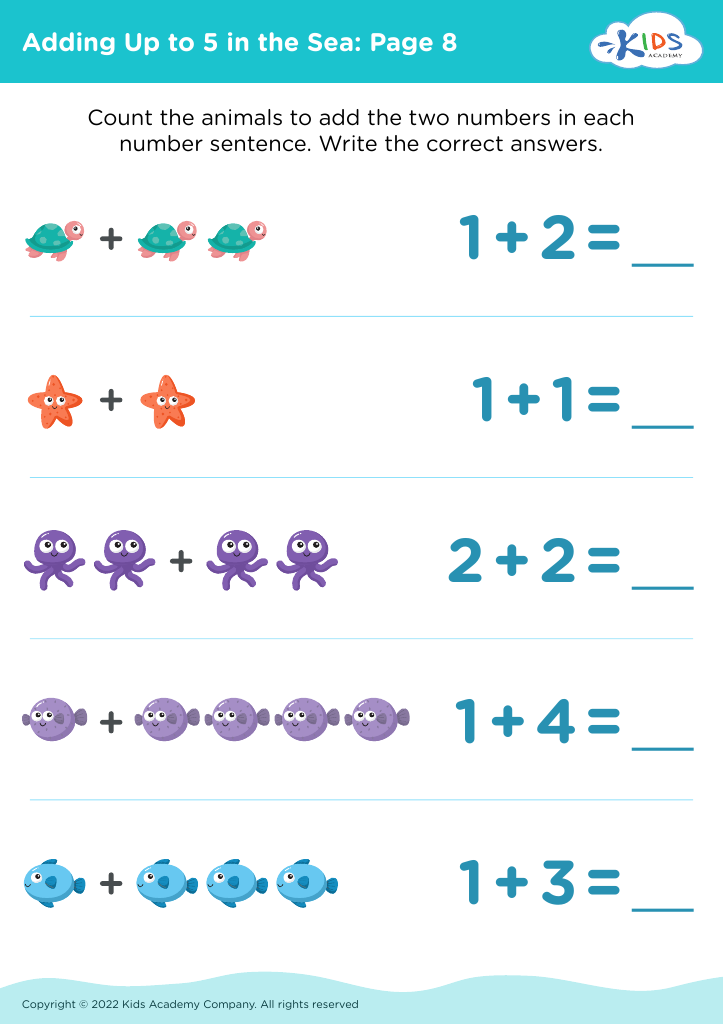







Basic arithmetic comprehension is a crucial foundation for children aged 3-9 because it forms the cornerstone of their overall mathematical understanding and cognitive development. During these formative years, young minds are highly receptive and capable of grasping fundamental concepts that will underpin future learning.
Firstly, mastering basic arithmetic – addition, subtraction, multiplication, and division – equips children with essential life skills. They use these skills in everyday activities, from counting toys and sharing snacks to understanding time and money, which fosters independence and confidence.
Secondly, early arithmetic comprehension correlates strongly with academic success. Proficiency in basic math sets the stage for more complex problem-solving and critical thinking tasks encountered in school and beyond. Children who struggle with early math skills may find it challenging to keep up with their peers, which can lead to frustrations and a negative attitude towards education.
Moreover, basic arithmetic enriches cognitive development. It enhances logical reasoning, strategic thinking, and pattern recognition. It supports the development of memory and attention span, which are critical for learning in all subjects.
For parents and teachers, nurturing arithmetic skills early helps create a positive and enduring educational trajectory. Supportive and engaging learning experiences in these early years lay the groundwork for a lifelong passion and competence in mathematics, science, and related fields.








