Basic geometry concepts Worksheets for Ages 3-9
3 filtered results
-
From - To
Explore our engaging Basic Geometry Concepts Worksheets, designed for children ages 3-9! These worksheets introduce young learners to fundamental geometric shapes, their properties, and spatial relationships through fun activities and colorful illustrations. Perfect for parents and educators, these resources enhance critical thinking skills and boost confidence in mathematics. Children will enjoy identifying shapes, completing puzzles, and engaging in hands-on exercises that make learning geometry both enjoyable and effective. Download our printable worksheets today to support early math skills in a playful way, ensuring a strong foundation in geometry for your child's educational journey!
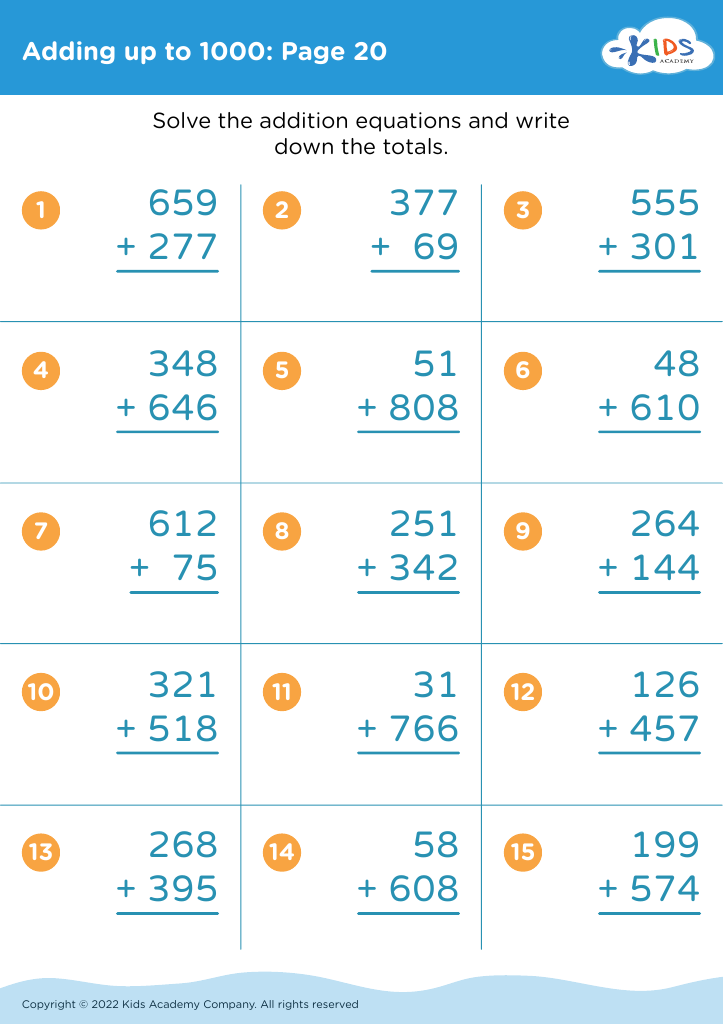
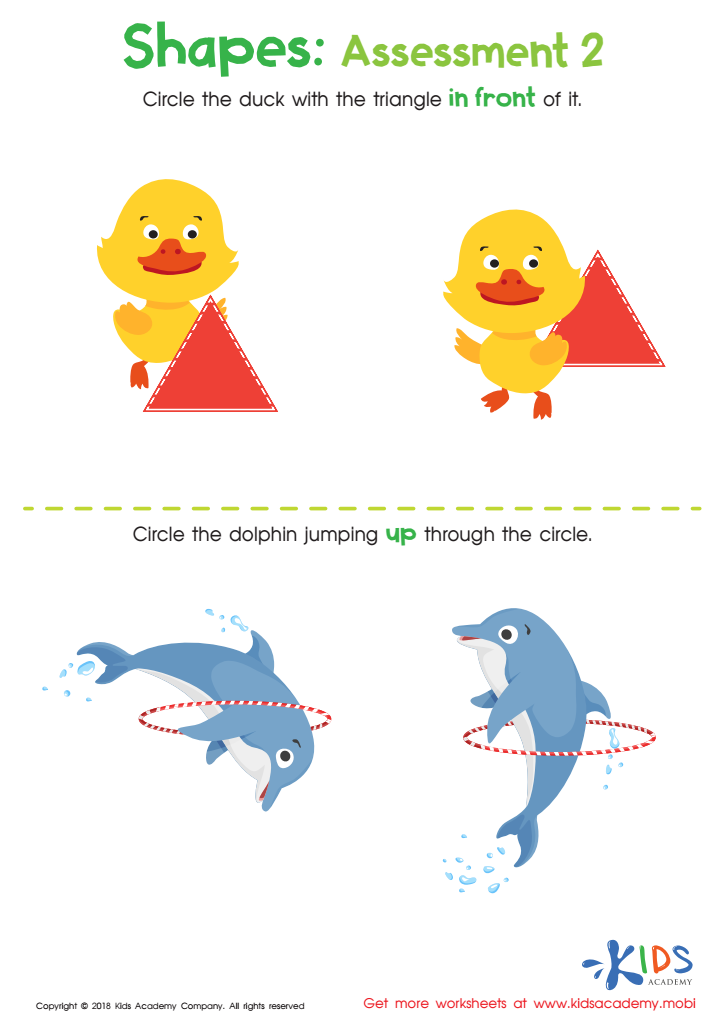
Geometry – Assessment 2 Worksheet
 Assign to My Students
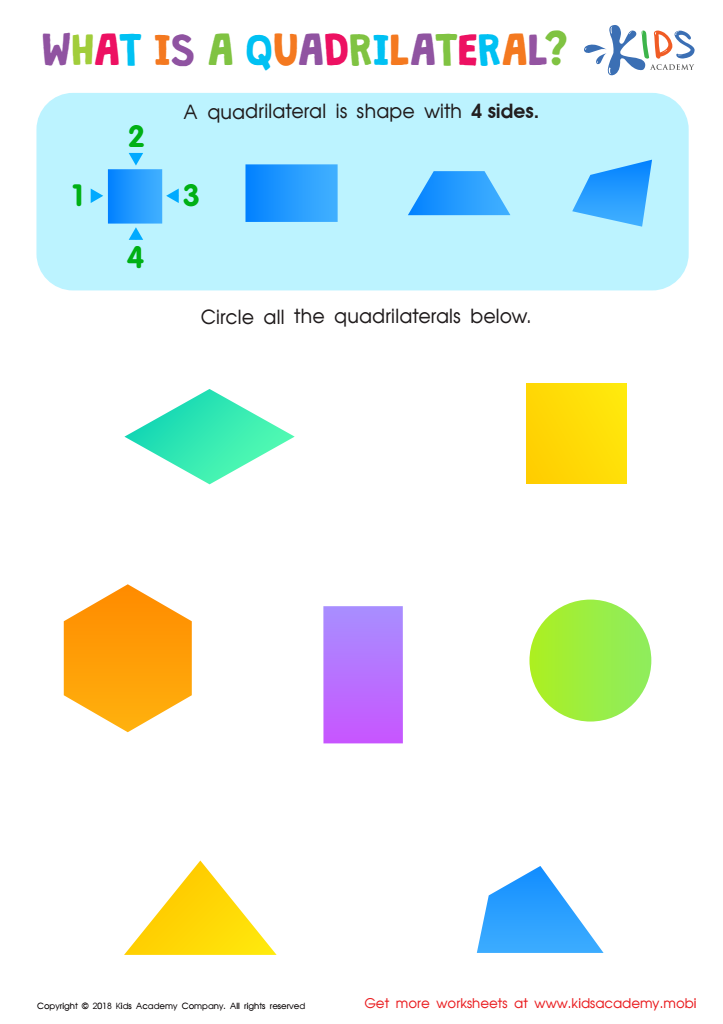
What Is a Quadrilateral? Worksheet







Understanding basic geometry concepts is crucial for children aged 3-9 because it lays the foundation for critical thinking and problem-solving skills. During these formative years, children's brains are highly receptive to new information, making it an ideal time to introduce fundamental geometric shapes and spatial awareness.
By learning shapes—such as circles, squares, and triangles—children enhance their ability to recognize patterns and categorize objects. This understanding extends beyond mere identification; it aids in developing visual-spatial skills that are essential not only in mathematics but in everyday life scenarios. For example, recognizing shapes helps with understanding maps, building structures, and even navigating social spaces.
Moreover, early exposure to geometry fosters creativity, enhancing children's ability to visualize and manipulate objects mentally. It also supports other academic areas, such as art and science by encouraging them to explore concepts like symmetry and balance.
Finally, these geometric concepts serve as a base for more advanced math skills in later years, influencing a child's confidence in their math abilities. When parents and teachers prioritize and integrate geometric concepts into play and learning activities, they equip children with essential tools for lifelong learning and problem-solving.








