
Basic math skills development Worksheets for Ages 3-9
3 filtered results
Difficulty Level
Grade
Age
-
From - To
Subject
Activity
Standards
Welcome to our collection of Basic Math Skills Development Worksheets for ages 3-9! Designed specifically to nurture young minds, these engaging worksheets provide fun and interactive ways to build foundational math skills. Our resources focus on key concepts such as number recognition, counting, simple addition and subtraction, and shapes. With colorful designs and age-appropriate activities, children will stay motivated while learning essential math concepts. Perfect for teachers, parents, or homeschoolers, these worksheets support early learners as they embark on their mathematical journey. Explore, print, and inspire a love of math in your child today!
Favorites
With answer key
Interactive
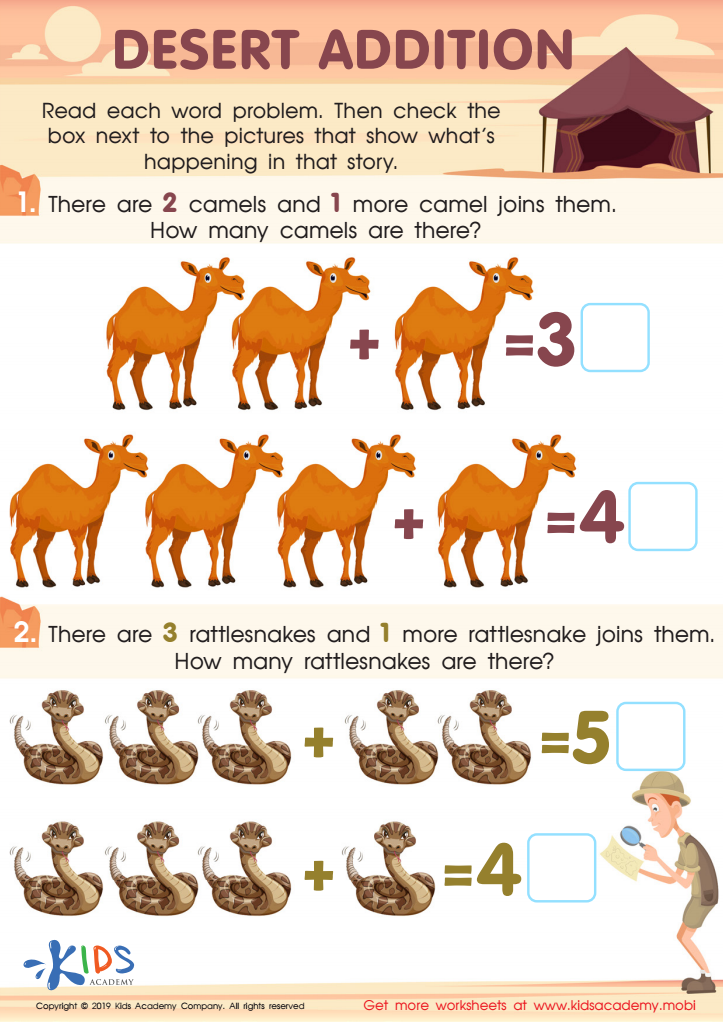
Desert Addition Worksheet
In the desert, scorching heat and little water mean animals must adapt to survive. Show kids pictures of these animals and teach their names. Then, read the word problems in the worksheet, and have them check the box next to the pictures that portray each story. 80 words
 Assign to My Students
Desert Addition Worksheet
Worksheet
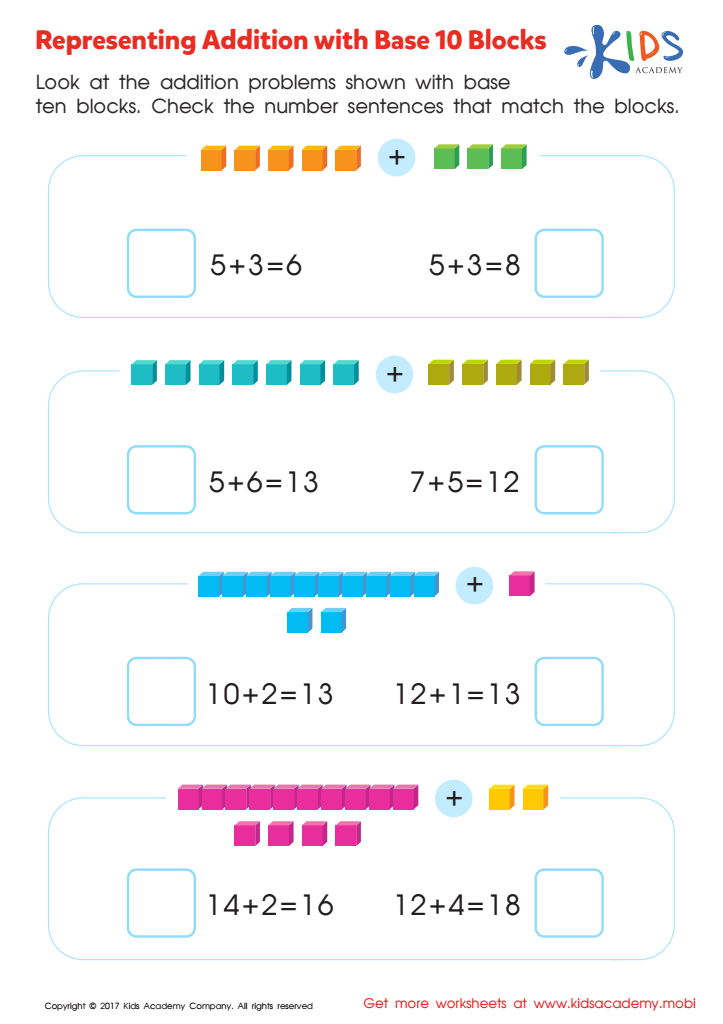
Representing Addition with Base 10 Blocks Worksheet
Solve addition problems with your little one: help them count the blocks, then select the correct equation from the choices. Circle the answer. Word play and math make a winning combo!
Representing Addition with Base 10 Blocks Worksheet
Worksheet
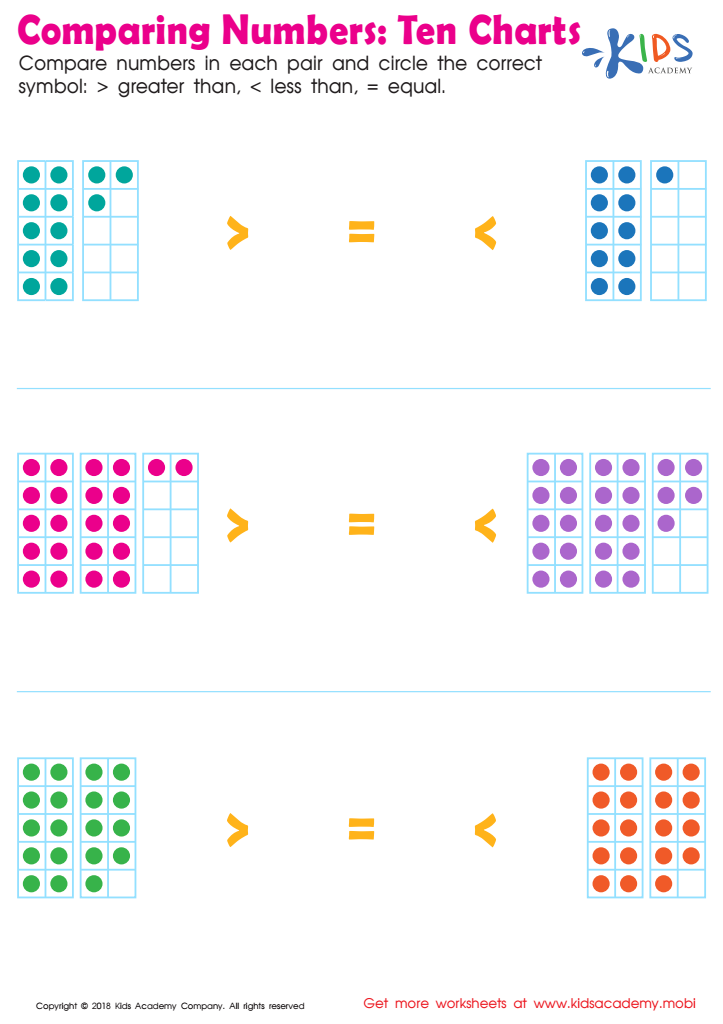
Ten Charts Worksheet
Help your child learn numbers in a creative way using this printable worksheet. They'll learn the difference between numbers, how to add them, and the symbols of "greater than", "less than" and "equals to". They can compare two sides, and identify which is greater, less or equal. Let their maths knowledge bloom!
Ten Charts Worksheet
Worksheet
Join Kids Academy for Free
Who is primarily going to use this learning content?








Developing basic math skills in young children, particularly between the ages of 3 and 9, is crucial for several reasons. Firstly, foundational math skills form the building blocks for more advanced mathematical concepts; children who grasp these skills early are more likely to succeed in later academic pursuits. Proficiency in basic arithmetic enhances cognitive development, promoting critical thinking and problem-solving abilities that extend beyond math.
Secondly, early math education supports social and emotional growth. Activities involving numbers often promote cooperation and teamwork, helping children learn essential social skills. Furthermore, by engaging with math in meaningful ways—through games, crafts, or daily activities—children build confidence and foster a positive attitude toward learning.
Additionally, in our increasingly data-driven world, numerical fluency equips children to navigate everyday situations, from budgeting allowance to understanding time and measurements. This early exposure not only prepares them academically but also serves to empower them in their future interactions with technology and science.
Ultimately, both parents and teachers play vital roles in nurturing these early skills, ensuring children are prepared for life’s challenges and opportunities, paving the way for long-term success in mathematics and beyond. Investing in basic math skills fosters well-rounded, capable learners equipped for the future.








