
Basic Mathematics Worksheets for Ages 3-9
10 filtered results
Difficulty Level
Grade
Age
-
From - To
Subject
Activity
Standards
Welcome to our collection of Basic Mathematics Worksheets for ages 3-9! At Kids Academy, we provide a vast array of printable worksheets designed to foster early math skills in young learners. Whether your child is just beginning to count or diving into elementary math concepts, our engaging exercises make math fun and accessible. Our worksheets cover a variety of topics including addition, subtraction, shapes, patterns, and more, making it easy for parents and teachers to find resources tailored to their child's or student's level. Help your young mathematicians build a strong foundation and develop a love for learning with our carefully crafted math worksheets!
Favorites
With answer key
Interactive
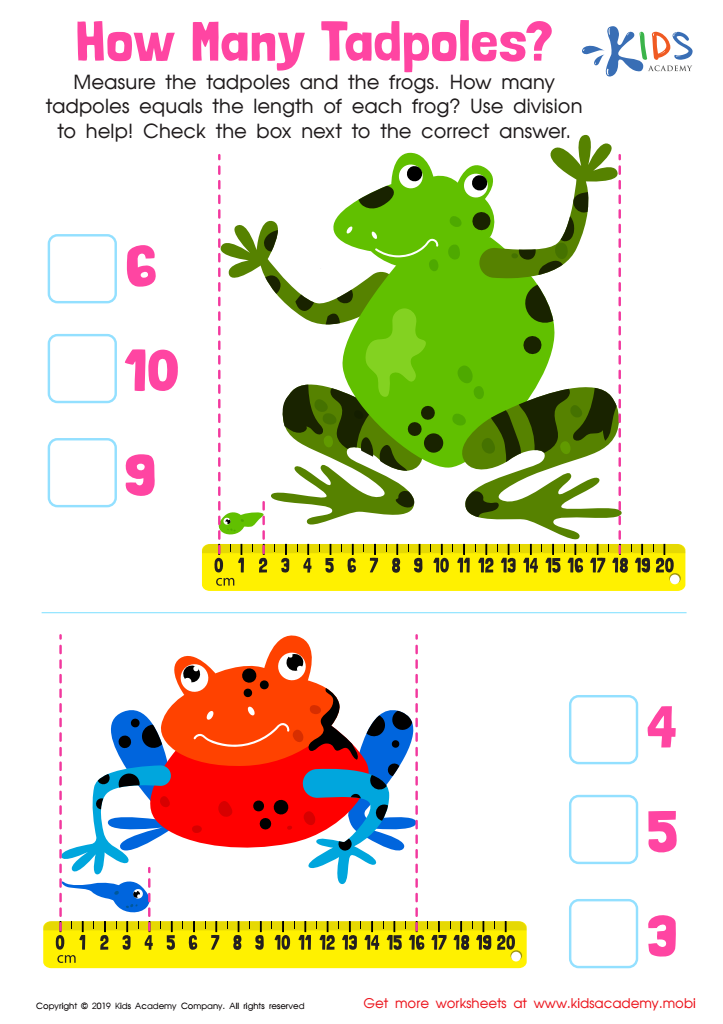
How Many Tadpoles Worksheet
Kids love tadpoles! They'll have fun using them to work out the measurements of their frog friends. By dividing the length of the frogs by the length of the tadpoles, children can deduce how many tadpoles it takes to equal a frog. With the use of 'how many' and 'each' they'll solve math problems without realizing it!
 Assign to My Students
How Many Tadpoles Worksheet
Worksheet
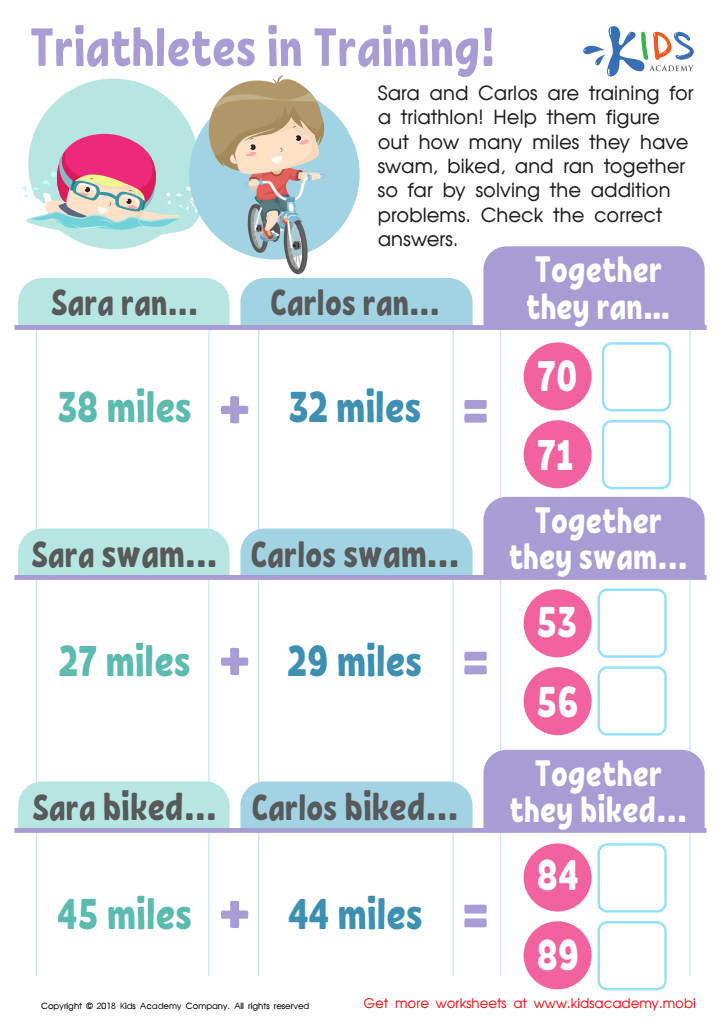
Triathletes in Training Worksheet
Sara and Carlos are training for a triathlon and need your child's help! They must solve the addition problems to figure out how many miles they've swam, ran, and biked. Help your kid check the answers and get them ready for the triathlon!
Triathletes in Training Worksheet
Worksheet
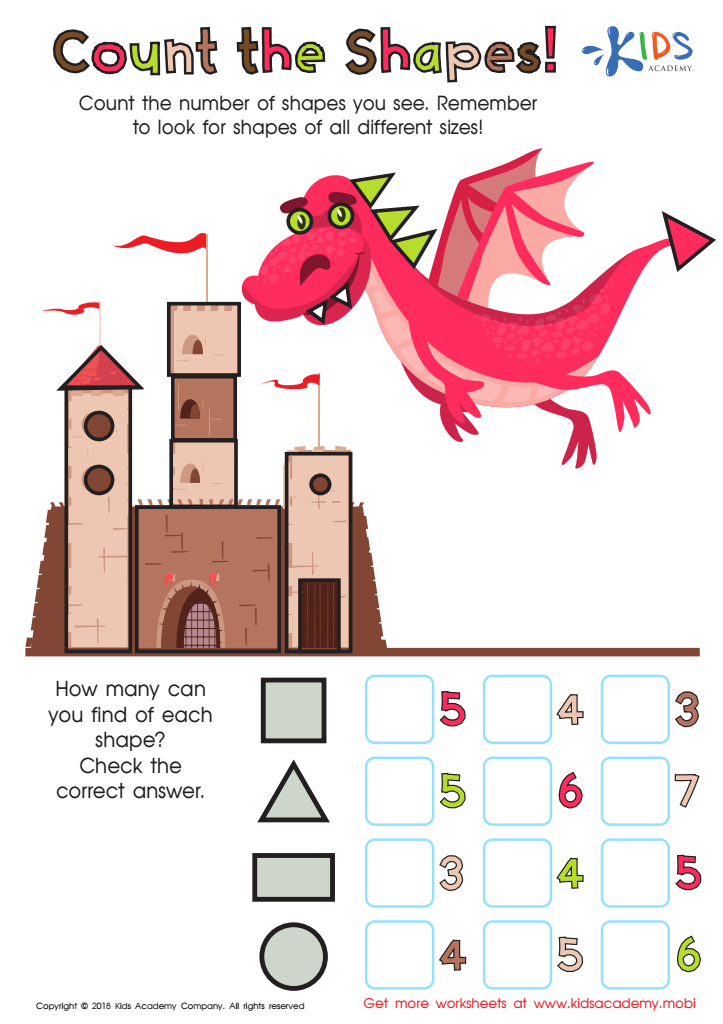
Count the Shapes Worksheet
This fun and learning worksheet is perfect for sharpening visual discrimination skills. Kids search a castle picture featuring a dragon and identify shapes, counting circles, squares, triangles and rectangles. Checking the correct box beside the number, they practice shape identification and counting. Download now and get started!
Count the Shapes Worksheet
Worksheet
Rounding Healthy Diet Worksheet
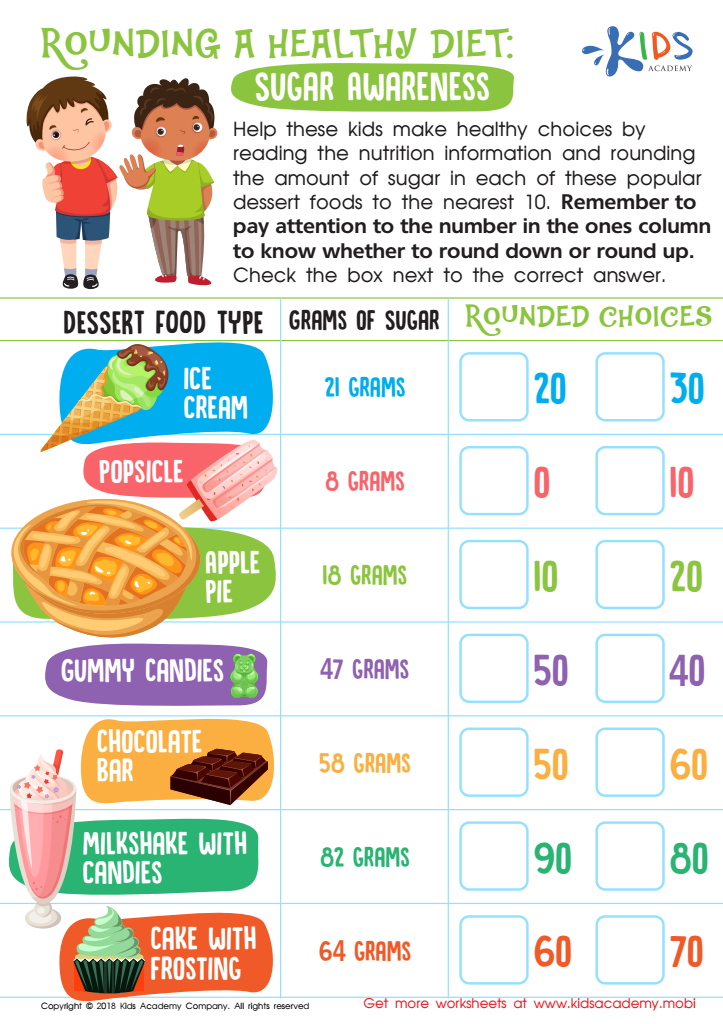
Kids Academy understands the value of making math relevant. Check out this energizing rounding worksheet which merges math concepts with health class! Kids get to be aware of sugary treats and work out how many grams of sugar they contain. To complete, they view each item and round the number to the nearest 10. Remind them to focus on the ones column to decide if the number rounds up or down.
Rounding Healthy Diet Worksheet
Worksheet
Party Problems Worksheet
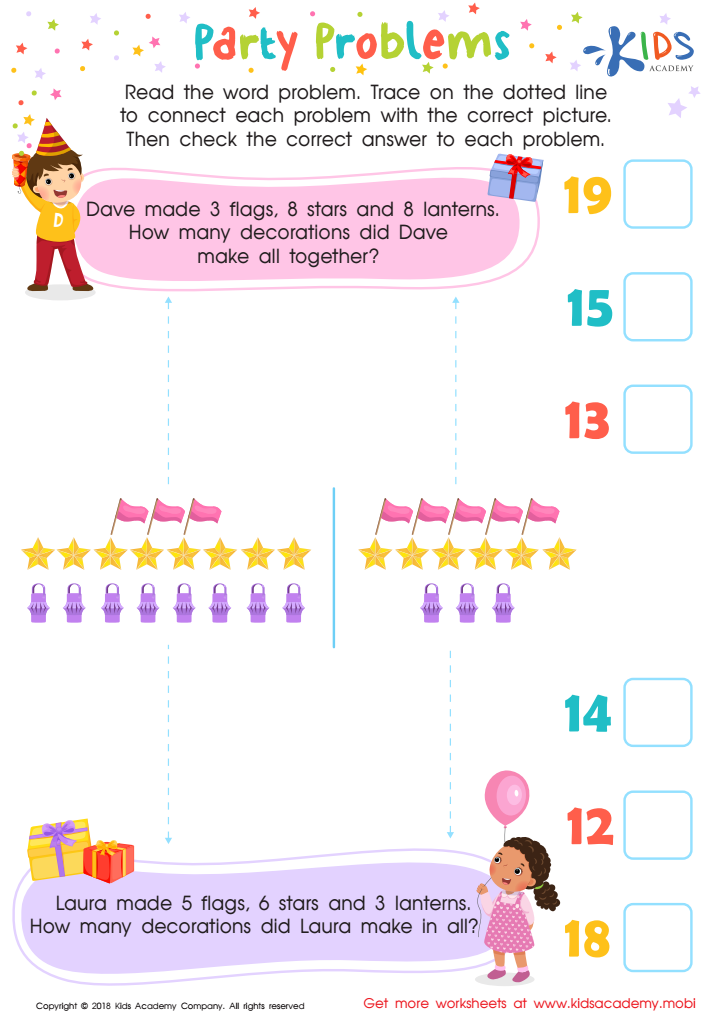
Problems at parties? No problem! With this engaging PDF worksheet, your student can connect word problems to pictures, check correct answers, and find the sum of 3 addend problems. They'll be a party-saving hero in no time!
Party Problems Worksheet
Worksheet
Adding Fruit at the Picnic Worksheet
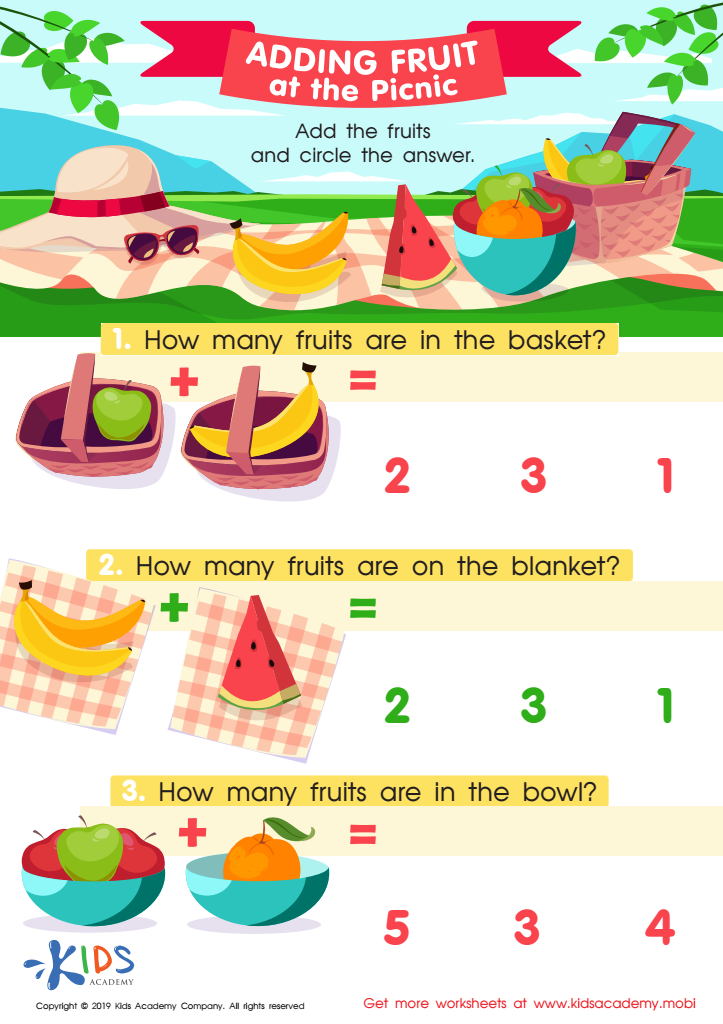
Picnics are a great way for the family to enjoy a fun day in the sun! Get your kids involved by having them help load the picnic basket and do this worksheet to practice their math skills while they get ready. Identify the fruits in the picture, add them up, and circle the correct answer.
Adding Fruit at the Picnic Worksheet
Worksheet
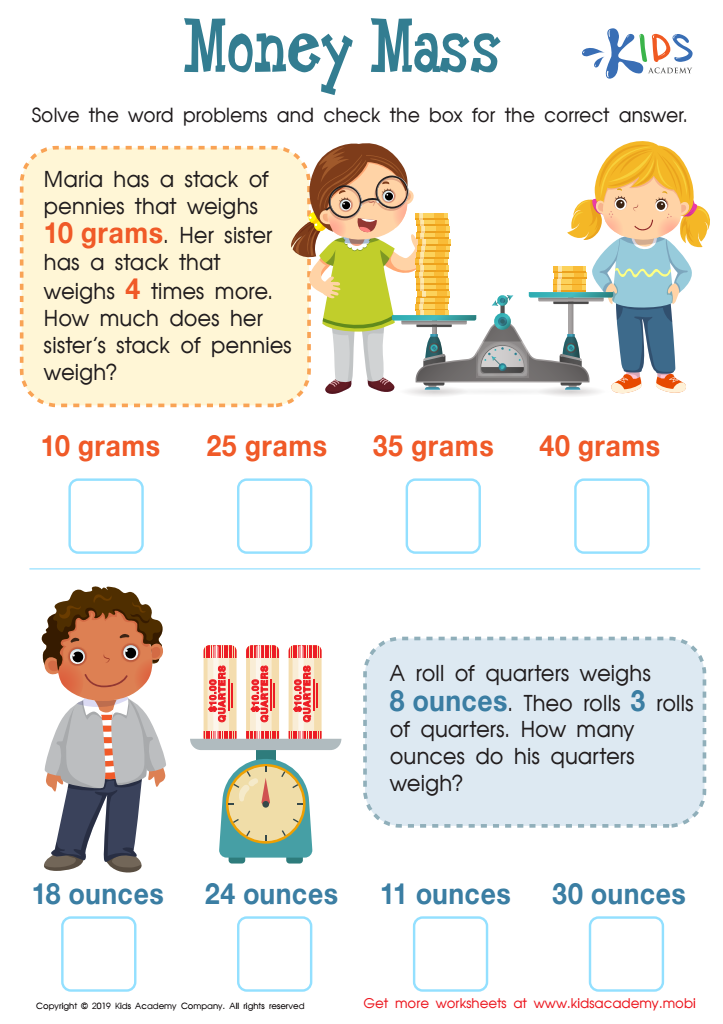
Money Mass Worksheet
By regularly working on math with your kids, they will become more confident. Ensure they understand the word problems in this printout, and help them solve it. Check the box for the correct answer of each to verify their work. With this practice, they will gradually get used to math and make progress.
Money Mass Worksheet
Worksheet
Join Kids Academy for Free
Who is primarily going to use this learning content?






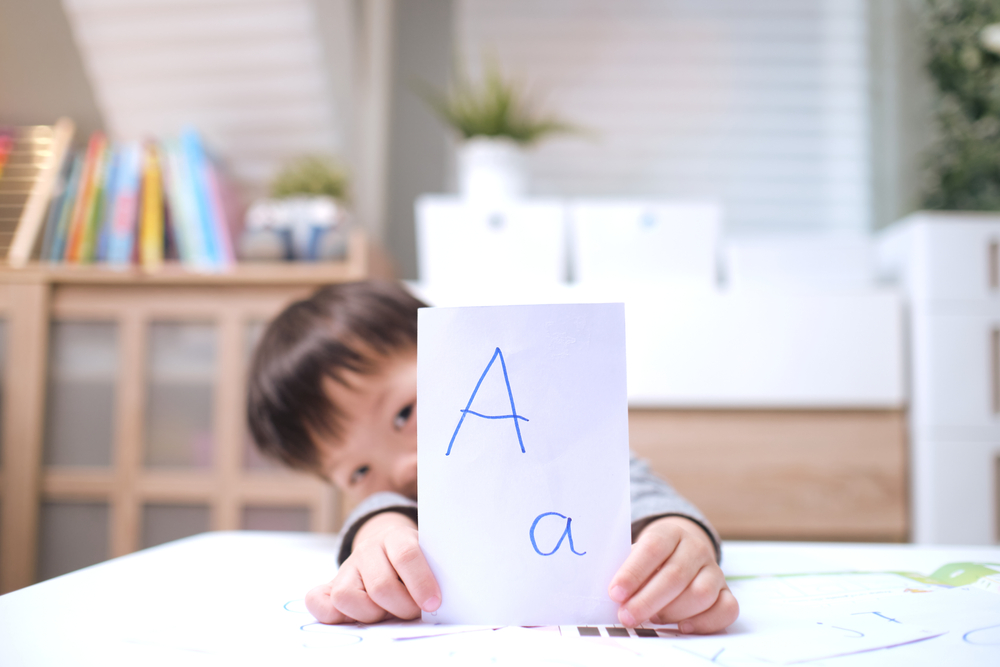
Parents and teachers should prioritize teaching basic mathematics to children aged 3-9 because it lays a crucial foundation for all future learning and cognitive development. During these formative years, children's brains are highly receptive and capable of developing strong neural connections that will benefit their problem-solving and analytical skills in later life.
Firstly, mathematics helps foster logical reasoning and critical thinking. By engaging in counting, sorting, and pattern recognition, children enhance their ability to understand and organize information methodically. These skills are essential not just in math, but across all academic subjects and real-life situations.
Secondly, basic math teaches perseverance and positive attitudes toward learning. When children encounter and solve simple mathematics problems, they learn the value of effort and patience. This building of confidence is essential for tackling more complex tasks as they grow older.
Most importantly, early proficiency in mathematics is linked to future academic success. Studies have shown that children who grasp math concepts early are more likely to succeed in various school subjects, particularly STEM fields (Science, Technology, Engineering, and Mathematics). Thus, investing time and resources in teaching basic mathematics at an early age pays lifelong dividends, equipping children with critical skills that promote intellectual growth and open doors to numerous educational and career opportunities.








