Boost critical thinking Worksheets for Ages 3-9
5 filtered results
-
From - To
Discover our engaging "Boost Critical Thinking Worksheets" designed for children ages 3-9! These educational resources enhance creativity, problem-solving, and analytical skills through interactive activities tailored for young minds. Each worksheet encourages children to think independently while solving puzzles, completing patterns, and engaging in logic games. Perfect for both classroom use and at-home learning, our worksheets promote cognitive development and foster a love for learning. Whether they are tracing, matching, or reasoning, kids will enjoy strengthening their critical thinking abilities in a fun and interactive way. Explore our collection today to elevate your little learner’s thinking skills!
 Assign to My Students
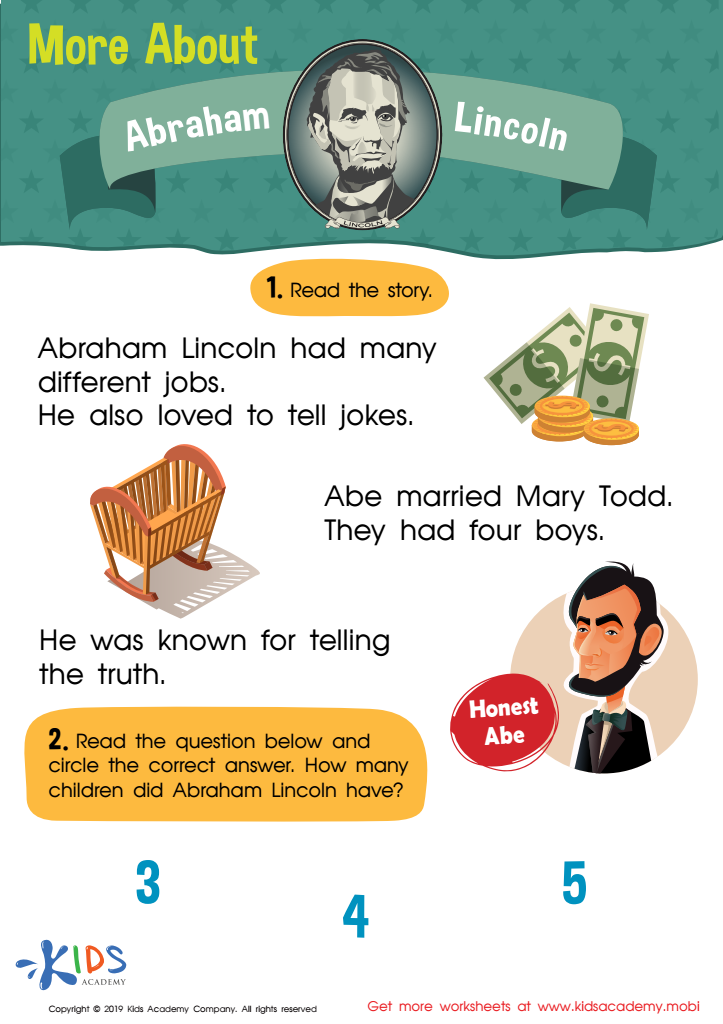
More About Abraham Lincoln Worksheet




.jpg)


.jpg)
Boosting critical thinking skills in children aged 3-9 is crucial for their overall development and future success. During these formative years, children are naturally curious, and nurturing their ability to think critically can enhance their problem-solving skills, creativity, and independence. Critical thinking encourages them to ask questions, analyze situations, and make reasoned decisions, laying a strong foundation for lifelong learning.
Parents and teachers should care about fostering these skills as they contribute to better academic performance and social interactions. Children who think critically are more likely to engage in meaningful discussions, understand different perspectives, and navigate challenges effectively. By encouraging open-ended questions and exploration, caregivers can help children develop a growth mindset, teaching them that effort, resilience, and learning from mistakes are essential components of success.
Moreover, in today’s rapidly changing world, the ability to evaluate information critically is vital. With access to vast amounts of information online, teaching kids to discern fact from opinion, recognize bias, and think independently empowers them to become informed citizens.
Overall, boosting critical thinking in early childhood nurtures confident, capable, and adaptable individuals who are equipped to face the complexities of the modern world. Investing in these skills today reaps benefits tomorrow, making it a priority for parents and educators alike.








