
Chess piece identification Worksheets for Ages 3-9
3 filtered results
Difficulty Level
Grade
Age
-
From - To
Subject
Activity
Standards
Enhance your child's cognitive skills and introduce them to the classic game of chess with our engaging Chess Piece Identification Worksheets, designed for ages 3 to 9. These worksheets provide a fun and interactive way for young learners to explore and identify different chess pieces, fostering essential skills like critical thinking and strategy. Each worksheet is crafted to encourage creativity while reinforcing the names and roles of each piece, making it perfect for both classroom and home use. Give your child the gift of strategic thinking and game fundamentals with our colorful, age-appropriate materials that ensure hours of educational entertainment!
Favorites
With answer key
Interactive
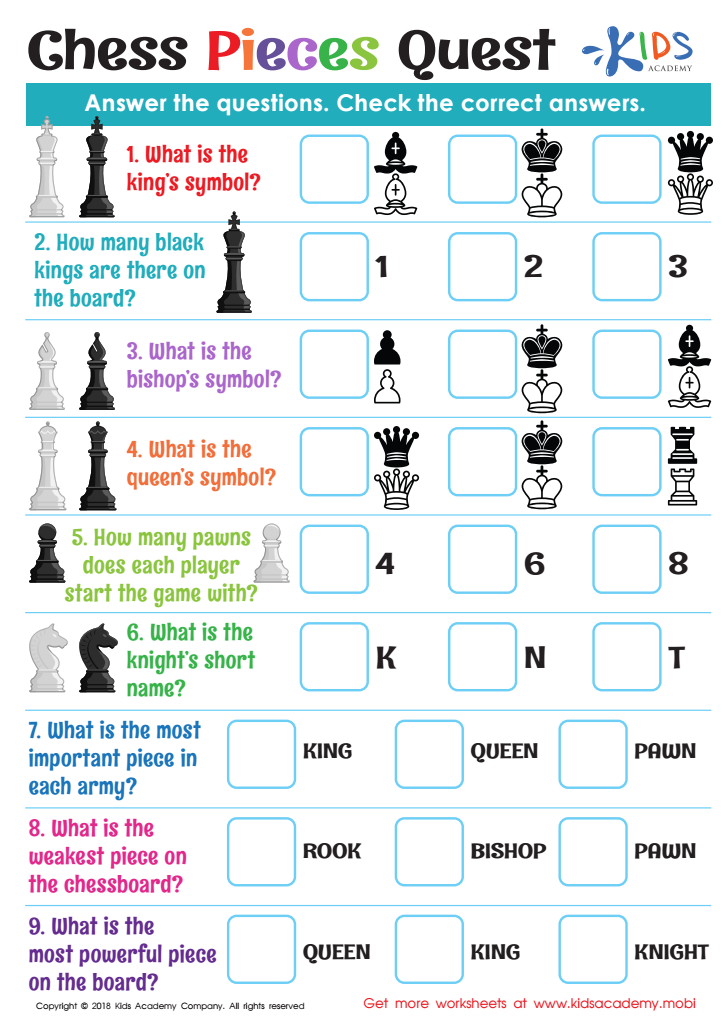
Chess Pieces Quest Worksheet
Help your child prepare for the chess quest by refreshing their knowledge of the symbols and characteristics of each chess piece. Then, have them try the 9 questions on this worksheet. These questions will assess their understanding of the symbols and how many pieces each player starts with.
 Assign to My Students
Chess Pieces Quest Worksheet
Worksheet
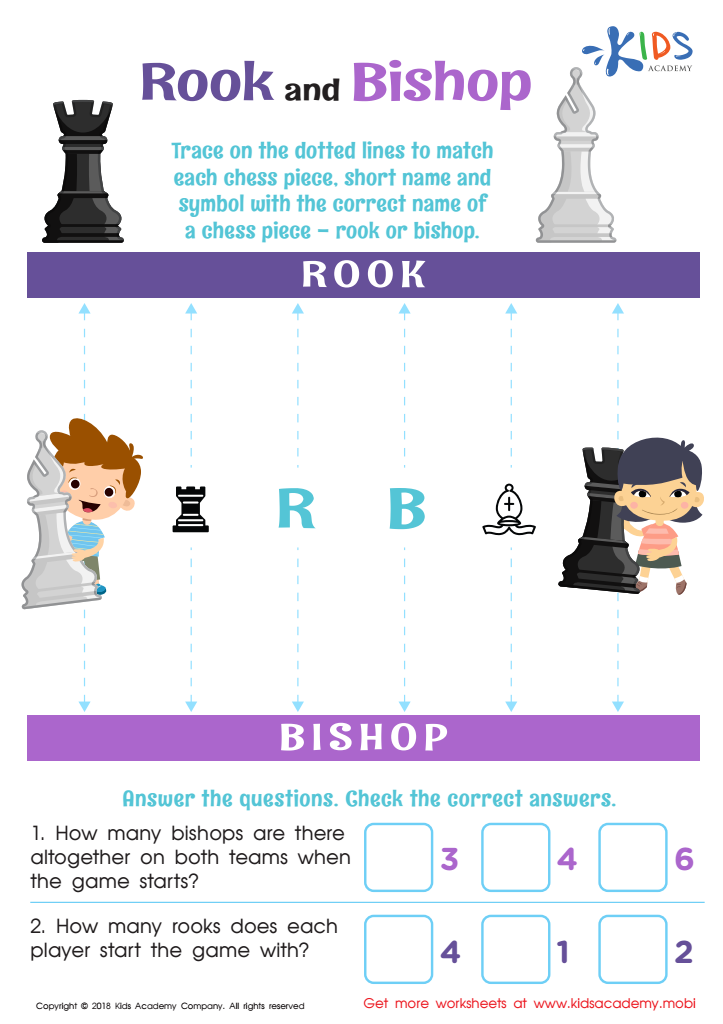
Rook and Bishop Worksheet
This tracing sheet helps your child learn chess pieces by matching each piece, short name and symbol to the correct name. After tracing, have them answer the questions and check their answers. It's a great way for them to become familiarized with chess.
Rook and Bishop Worksheet
Worksheet
Join Kids Academy for Free
Who is primarily going to use this learning content?






Chess piece identification is a foundational aspect of learning the game of chess, particularly for children aged 3 to 9. Understanding the distinct pieces—pawns, knights, bishops, rooks, queens, and kings—helps young learners grasp the mechanics of play more effectively. Early familiarity with these pieces fosters cognitive development, enhancing memory, focus, and critical thinking skills.
Parents and teachers should care because chess promotes strategic thinking and problem-solving abilities, skills that are invaluable in academic settings and everyday life. By engaging children in chess and ensuring they can identify and differentiate between the pieces, adults help build a strong foundation for lifelong learning and development.
Additionally, chess serves as a fun, engaging activity that can improve social interaction among peers. Children learn the importance of sportsmanship, cooperation, and respect for opponents, essential values in their growth.
Furthermore, simple activities, such as labeling chess pieces or playing memory games, can provide a playful environment conducive to learning. Investing in children’s understanding of chess at a young age nurtures critical life skills while making learning enjoyable, providing them with a solid platform for future academic and personal success.








