Cultural Understanding Worksheets for Ages 3-9
3 filtered results
-
From - To
Explore our engaging Cultural Understanding Worksheets designed for children aged 3-9! These resources help young learners appreciate diversity and foster empathy through fun and interactive activities. Tailored to cultivate cultural awareness, our worksheets cover various themes, including traditions, languages, and celebrations from around the world. Ideal for early grade teachers and parents, these worksheets promote respect and understanding of different cultures, enhancing children's social skills and global awareness. By integrating colorful illustrations and age-appropriate content, our materials make learning about cultural differences enjoyable. Help your child develop a broad perspective and appreciation of the vibrant world around them with our enriching worksheets!
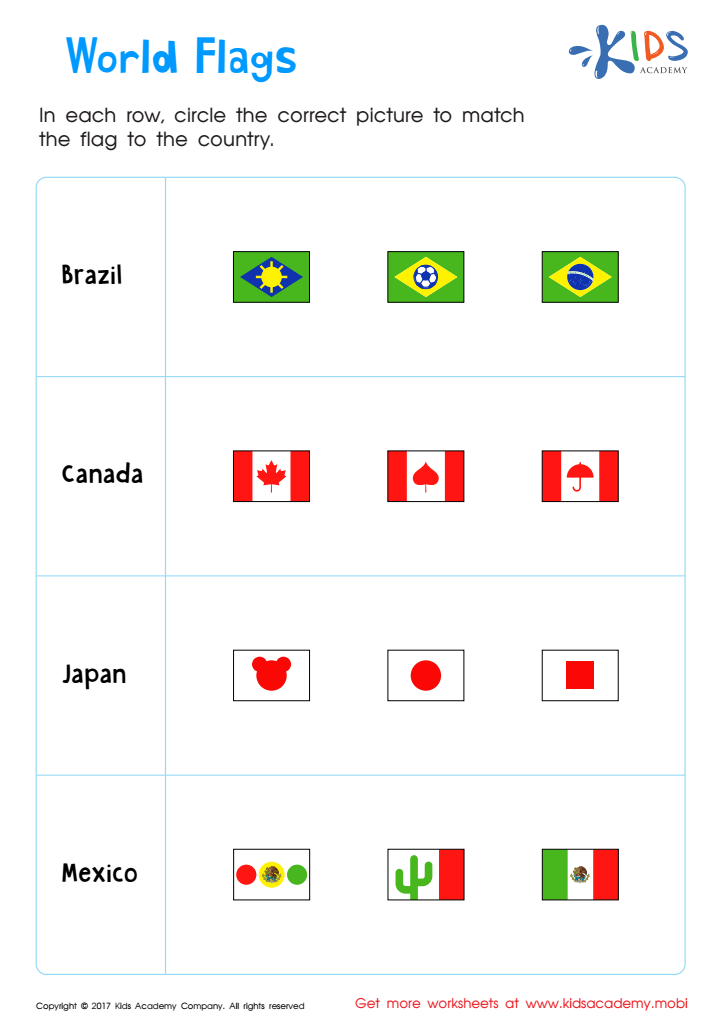
World Flags Printable
 Assign to My Students
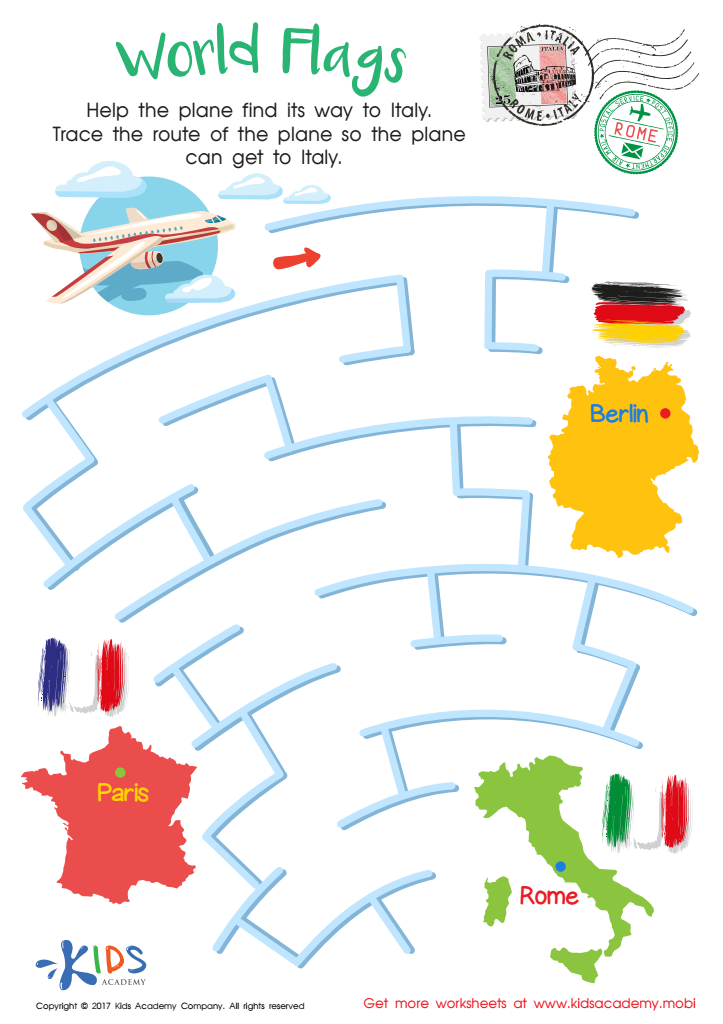
World Flags Maze Worksheet








Cultural understanding is crucial for children aged 3-9 as it lays the foundation for empathy, respect, and inclusivity. At this formative stage, children are naturally curious and actively observe their surroundings. By fostering an environment that celebrates diversity, parents and teachers can help young learners appreciate differences in traditions, languages, and experiences.
Promoting cultural understanding enhances social skills, as children learn to communicate and interact with peers from various backgrounds. This understanding also combats stereotypes and prejudice, leading to more harmonious play and learning experiences. Furthermore, incorporating diverse perspectives in education enriches the curriculum, allowing children to reflect on their own identities while recognizing the value of others.
When children engage with various cultures, they develop critical thinking and adaptability—skills essential for navigating an increasingly interconnected world. Parents and teachers have a pivotal role in guiding these conversations and experiences, making it essential that they actively participate in promoting cultural awareness. In doing so, they create a safe and supportive environment where every child feels valued, fostering a sense of belonging that benefits not only individual learners but also the larger community. Ultimately, cultural understanding equips children with the tools to thrive in a diverse society.








