Developing problem-solving skills Worksheets for Ages 3-9
10 filtered results
-
From - To
Enhance your child's critical thinking with our engaging "Developing Problem-Solving Skills Worksheets" designed for ages 3-9. These worksheets foster essential cognitive abilities through fun, interactive activities that keep young minds captivated. Children will encounter challenges that promote curiosity and creativity, encouraging them to explore different solutions while building confidence in their skills. With activities tailored to various age groups, our resources support early learners in mastering concepts such as logic, patterns, and reasoning. Download and print these worksheets to make problem-solving fun at home or in the classroom, ensuring a strong foundation for lifelong learning and success!
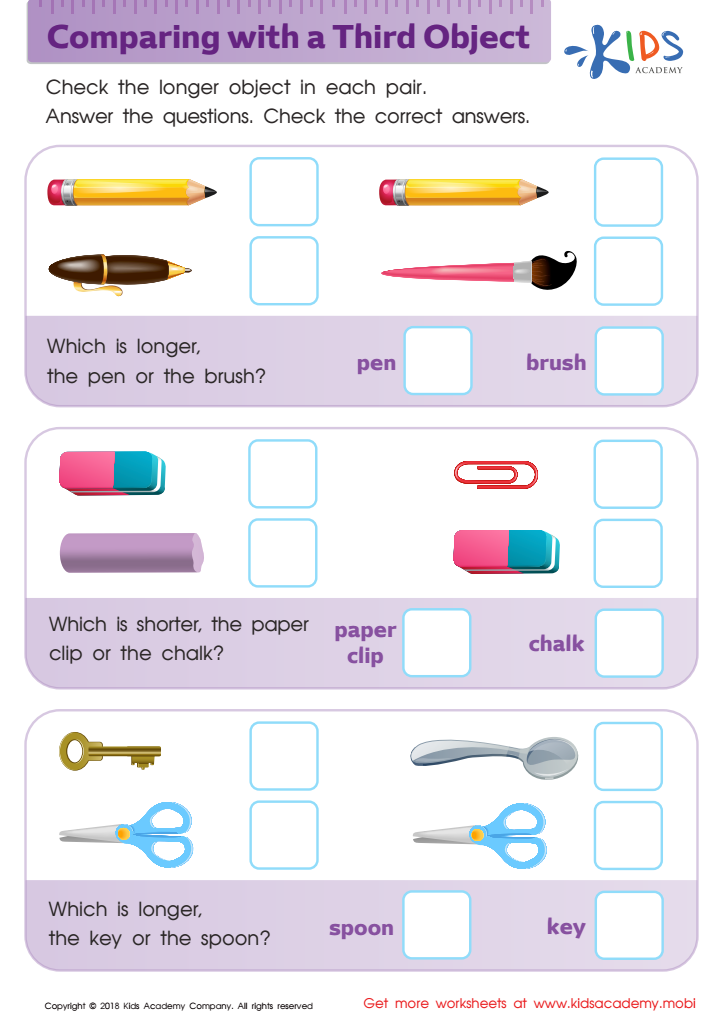
Comparing with a Third Object Worksheet
 Assign to My Students

Mass Word Problems Worksheet


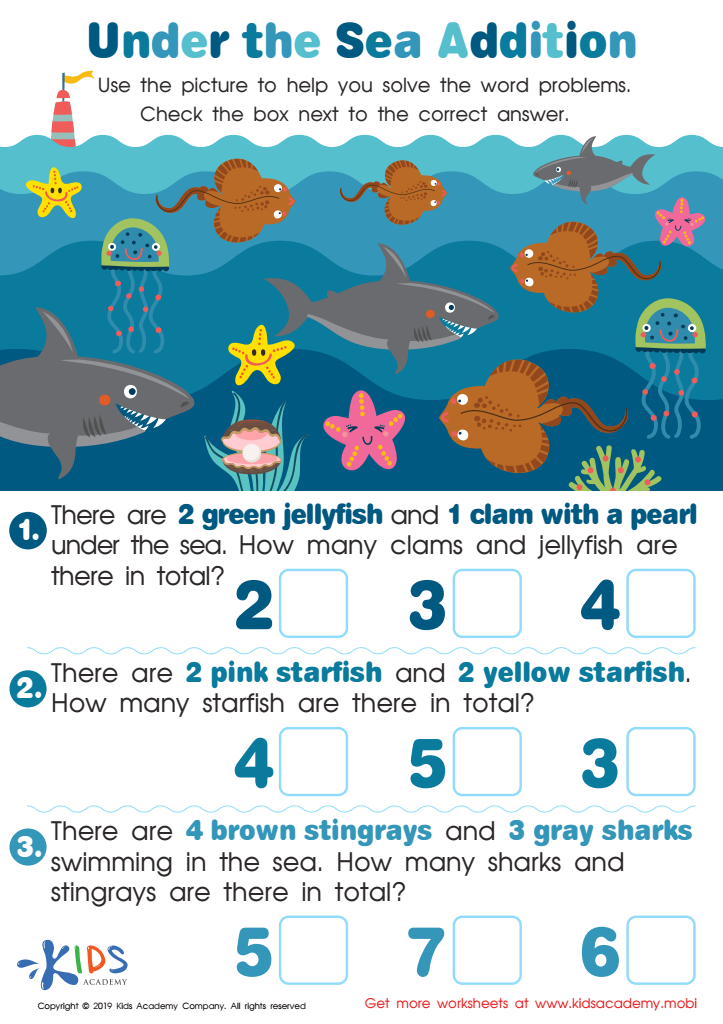
Under the Sea Addition Worksheet
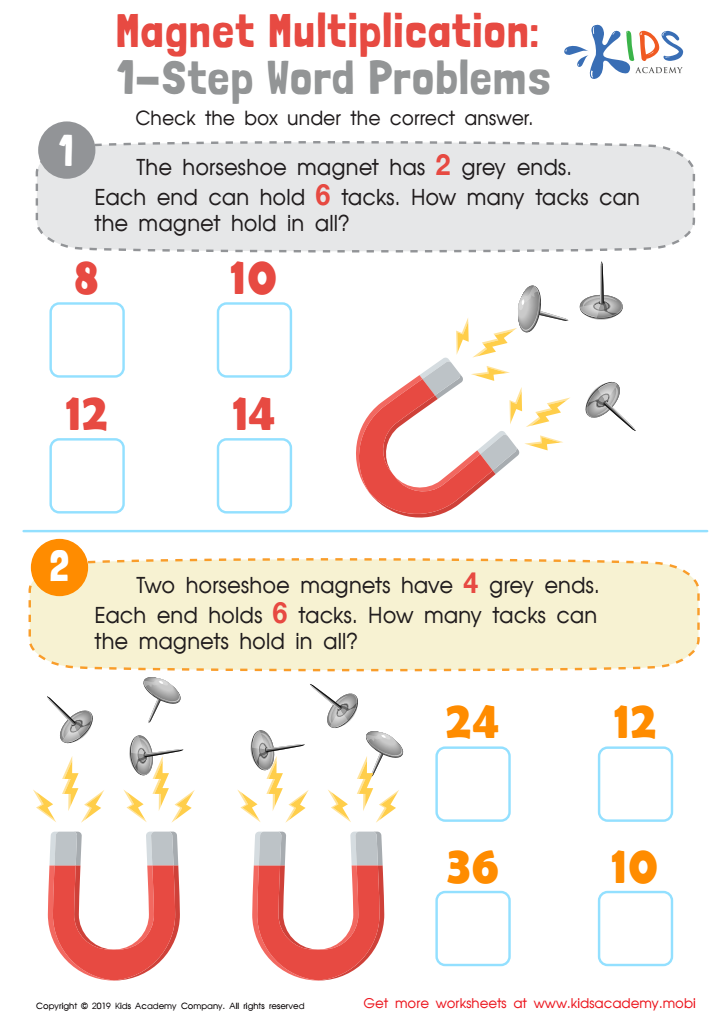
Magnet Multiplication: 1-Step Word Problems Worksheet











Developing problem-solving skills in children aged 3-9 is crucial for their cognitive, emotional, and social growth. At this stage, children are highly impressionable and eager to explore their surroundings. By fostering these skills early on, parents and teachers help children learn to think critically and creatively, enabling them to tackle challenges independently and effectively.
Problem-solving activities—not only enhance cognitive development but also boost confidence and resilience. Children learn that failure is a natural part of learning, nurturing perseverance and a growth mindset. Engaging in problems, whether simple puzzles, constructive play, or basic math, promotes logical thinking, enhances memory, and improves concentration.
Furthermore, these skills lay the groundwork for collaboration and communication. As children work in groups to solve problems, they develop teamwork and social abilities while learning to respect diverse opinions and ideas.
Ultimately, early problem-solving skills equip children to better navigate academic challenges and real-world situations as they grow. Parents and teachers who prioritize this development influence their children's future success, both personally and academically, instilling a lifelong love for learning and mastery over life's hurdles. Investing time in this area is not only beneficial—it’s essential for raising well-rounded, capable individuals.








