
Enhance problem-solving ability Worksheets for Ages 3-9
3 filtered results
Difficulty Level
Grade
Age
-
From - To
Subject
Activity
Standards
Boost your child's problem-solving skills with our expertly designed worksheets for ages 3-9. These printable resources, available at Kids Academy, offer engaging and age-appropriate activities that encourage critical thinking, logical reasoning, and decision-making abilities. Whether it's fun puzzles for the younger ones or challenging exercises for older kids, our worksheets make learning enjoyable and effective. Enhance your child's cognitive development and prepare them for future academic success with our tailored worksheets. Explore our collection today and give your child the tools they need to become confident problem-solvers.
Favorites
With answer key
Interactive
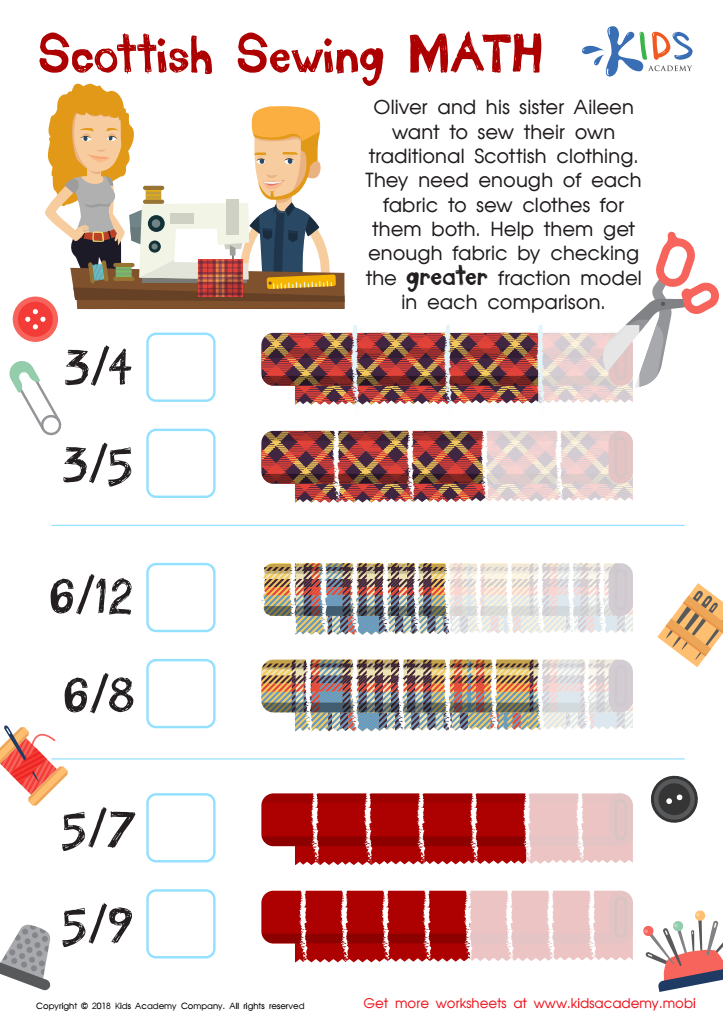
Scottish Sewing Math Worksheet
Ask your kindergartners to help Oliver and Alleen make traditional Scottish clothing by figuring out how much fabric to cut out. Help them learn a bit of geography by explaining Scotland is the home of the Scottish people and their unique traditions. Get the right amount by checking the fraction models. 80 words
 Assign to My Students
Scottish Sewing Math Worksheet
Worksheet
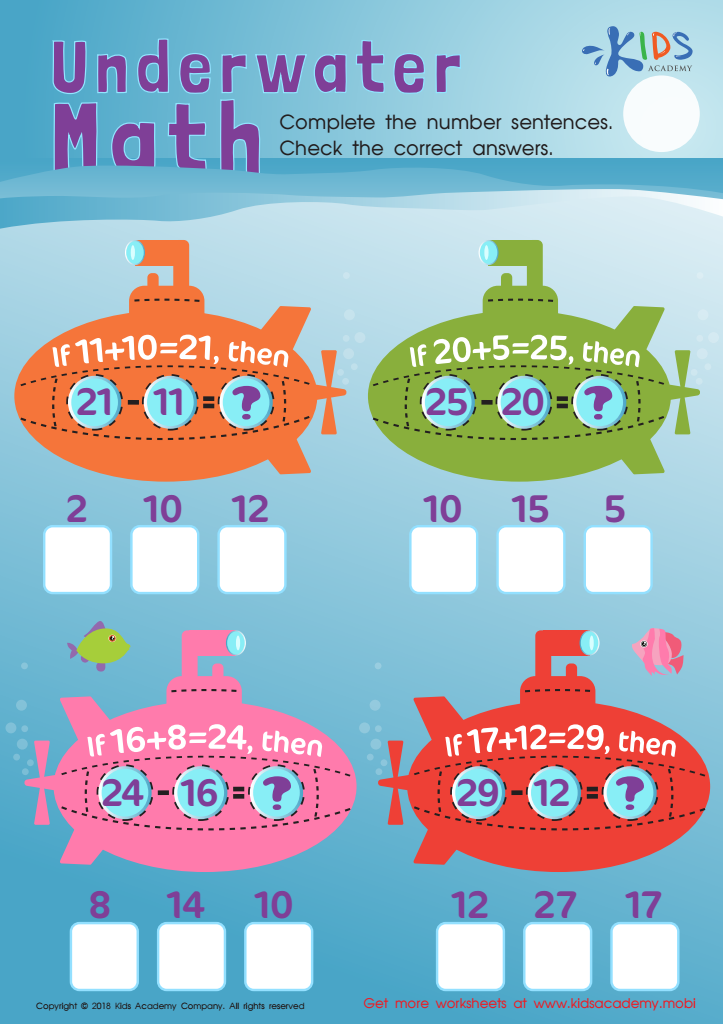
Addition and Subtraction: Underwater Math Worksheet
Take your little mathematicians on an undersea adventure as they work to solve number sentences. With fun worksheets, they'll analyze numbers, orders of operation and use if/then statements. They'll learn addition and subtraction are opposites, helping them solve more problems!
Addition and Subtraction: Underwater Math Worksheet
Worksheet
Join Kids Academy for Free
Who is primarily going to use this learning content?








Supporting children's problem-solving abilities between ages 3-9 is crucial for their overall development. During these formative years, their brains are highly adaptable, making it an ideal period to build foundational skills.
Problem-solving nurtures critical thinking and creativity. When children face various challenges, they learn to analyze situations, think of different solutions, and evaluate the best options. This boosts their cognitive abilities and encourages innovative thinking, which is essential for academic success and real-world scenarios.
Moreover, problem-solving skills contribute significantly to a child's emotional and social growth. As children tackle problems, they develop resilience and learn persistence. This builds their confidence and self-esteem as they realize their competence in overcoming obstacles. In social contexts, effective problem-solving enables children to resolve conflicts amicably, fostering positive relationships with peers and adults.
Encouraging problem-solving from an early age sets a strong foundation for lifelong learning. It enhances their memory, decision-making, and reasoning skills, which are vital across subjects, from math to reading and beyond. Both parents and teachers have an essential role in creating environments rich with opportunities for exploration and guided practice in problem-solving. Through engaging activities and supportive guidance, they can help children become independent, thoughtful, and resourceful individuals.








