Identifying colors Worksheets for Ages 3-9
4 filtered results
-
From - To
Explore our engaging "Identifying Colors Worksheets for Ages 3-9," designed to make color recognition fun and educational! These printable resources help young learners develop essential color identification skills through interactive activities. With a variety of exercises like matching, coloring, and visual-based challenges, children will enjoy discovering and naming colors in a playful way. Our worksheets cater to different learning styles, ensuring that every child can benefit from this foundational skill. Perfect for home or classroom use, these activities will foster creativity and reinforce early learning concepts. Bring a splash of color to your teaching and watch your students thrive!
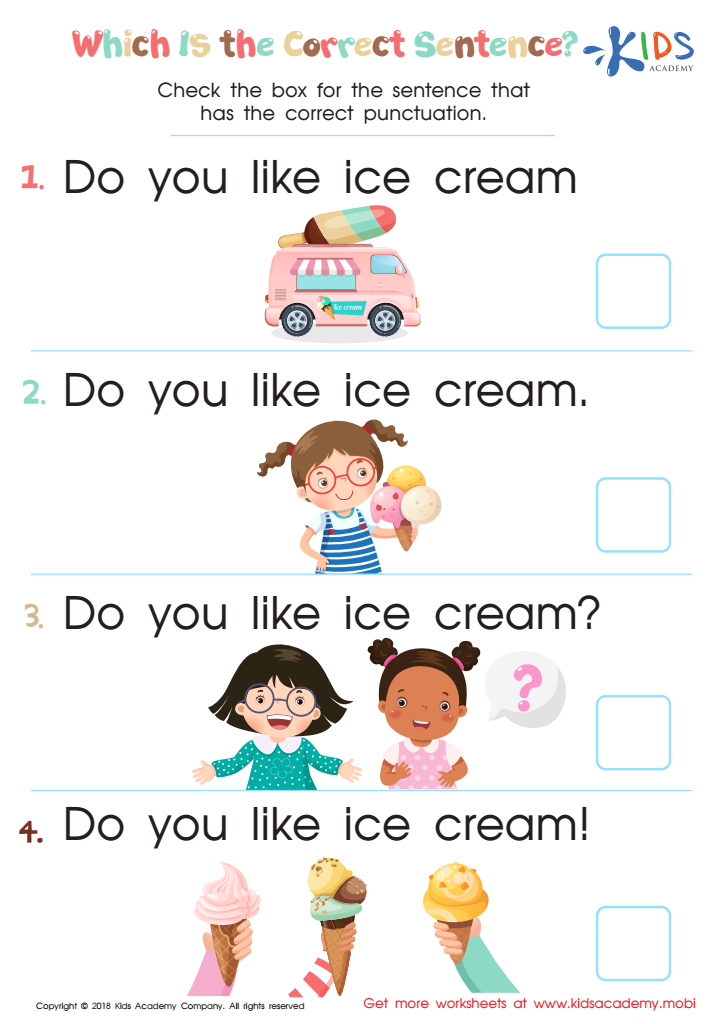
Which is the Correct Sentence? Worksheet
 Assign to My Students
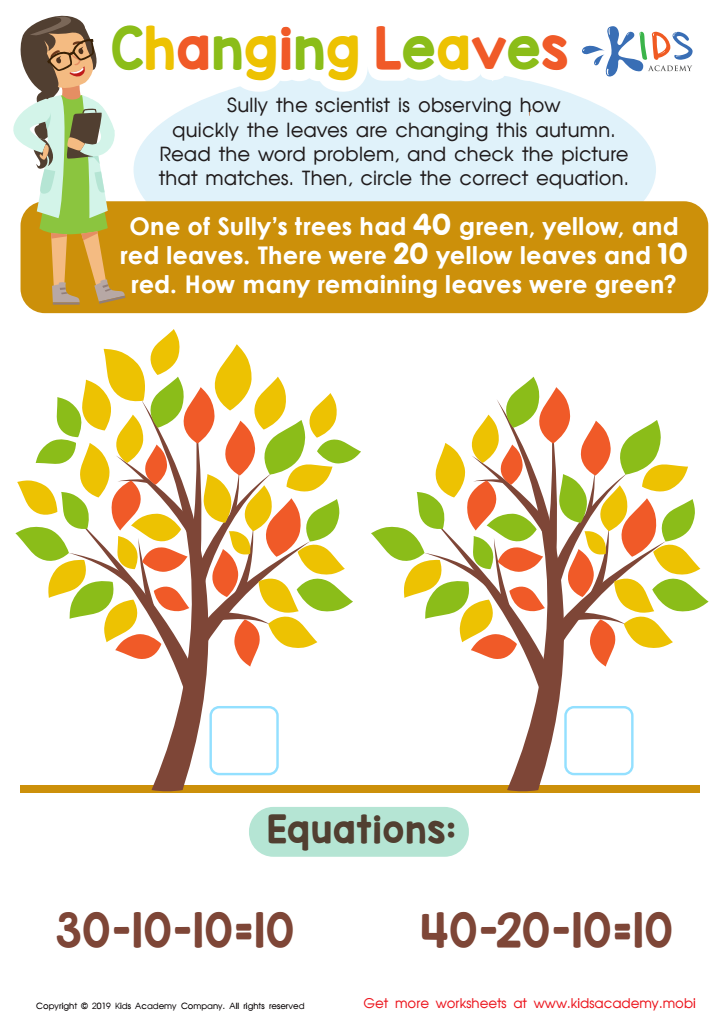
Changing Leaves Worksheet
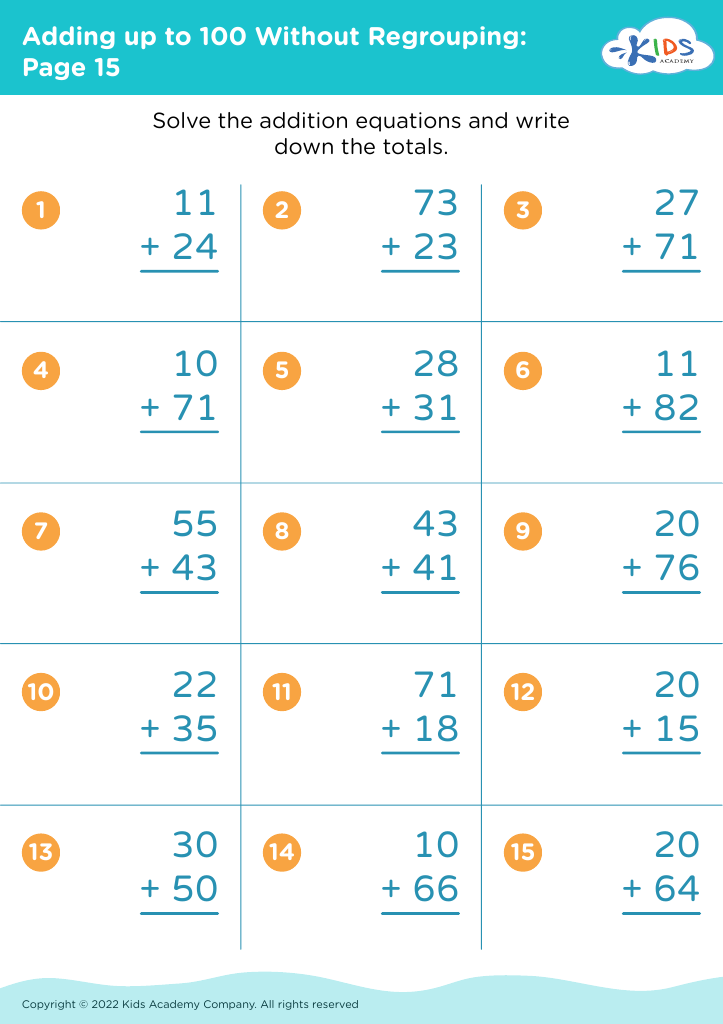
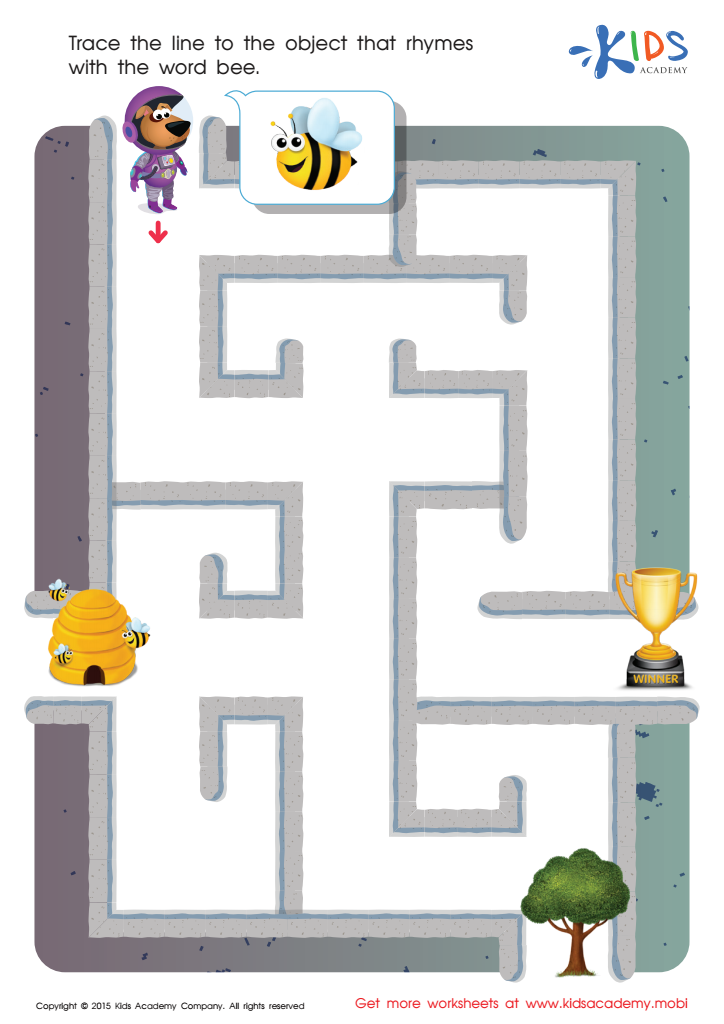
Bee Rhyming Words Worksheet








Identifying colors is a fundamental skill for children aged 3-9 that extends beyond simple recognition. Understanding colors engages not just visual perception but also cognitive development, as it fosters language skills, creativity, and critical thinking. For parents and teachers, nurturing this ability early on helps children express themselves, categorize objects, and understand their environment. This foundational knowledge aids in recognizing patterns and making connections, enhancing overall learning adaptability.
Moreover, color identification often serves as a gateway to other essential concepts. For example, it forms the basis for teaching about shapes, emotions, and even science. When children learn to associate colors with different objects or emotions (like red for anger or blue for calmness), they begin developing their emotional intelligence.
To engage children in this learning process, parents and teachers can incorporate fun activities, such as sorting games, craft projects, or interactive storytelling. These playful approaches not only make learning enjoyable but also reinforce social skills through cooperative play.
Ultimately, prioritizing color identification helps lay the groundwork for academic success and personal expression, empowering children to navigate and articulate their world confidently. Recognizing its significance helps adults foster a rich learning environment for holistic growth.








