Improve mathematical skills Worksheets for Ages 3-9
3 filtered results
-
From - To
Unlock your child's potential with engaging and effective "Improve Mathematical Skills" worksheets designed for ages 3-9. Our comprehensive range of printable activities covers essential math concepts, from number recognition and counting to addition, subtraction, shapes, patterns, and more. Perfect for home or school use, these worksheets make learning math fun and interactive, helping young learners build a strong foundation in a supportive environment. Developed by educational experts at Kids Academy, each worksheet is crafted to enhance problem-solving skills, critical thinking, and confidence. Download now and watch your child thrive with math success!
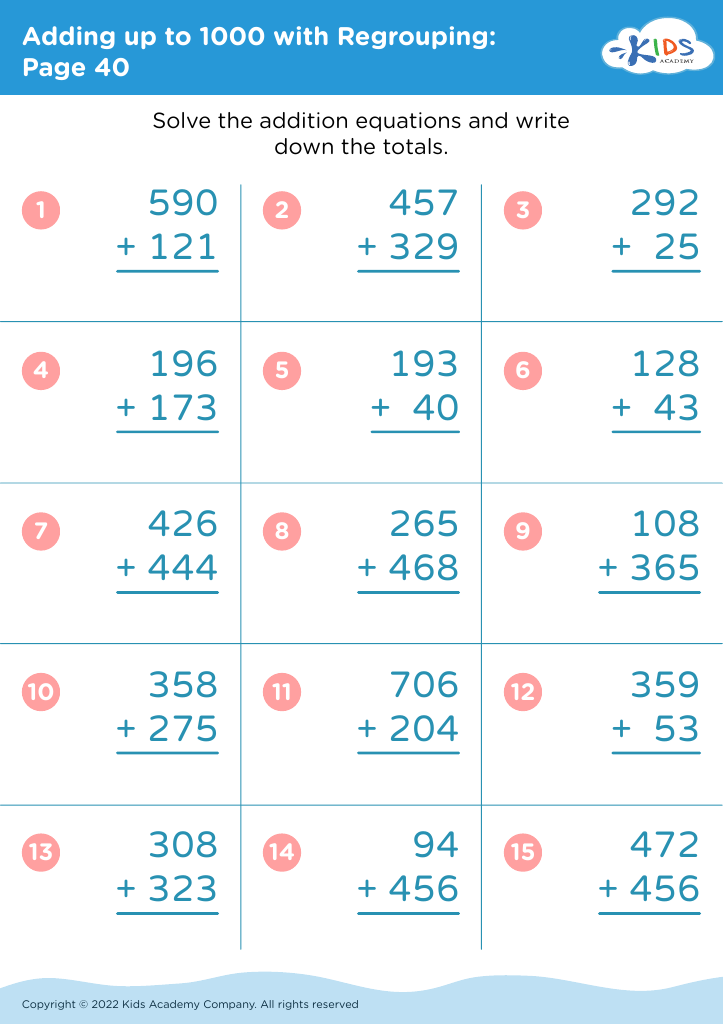
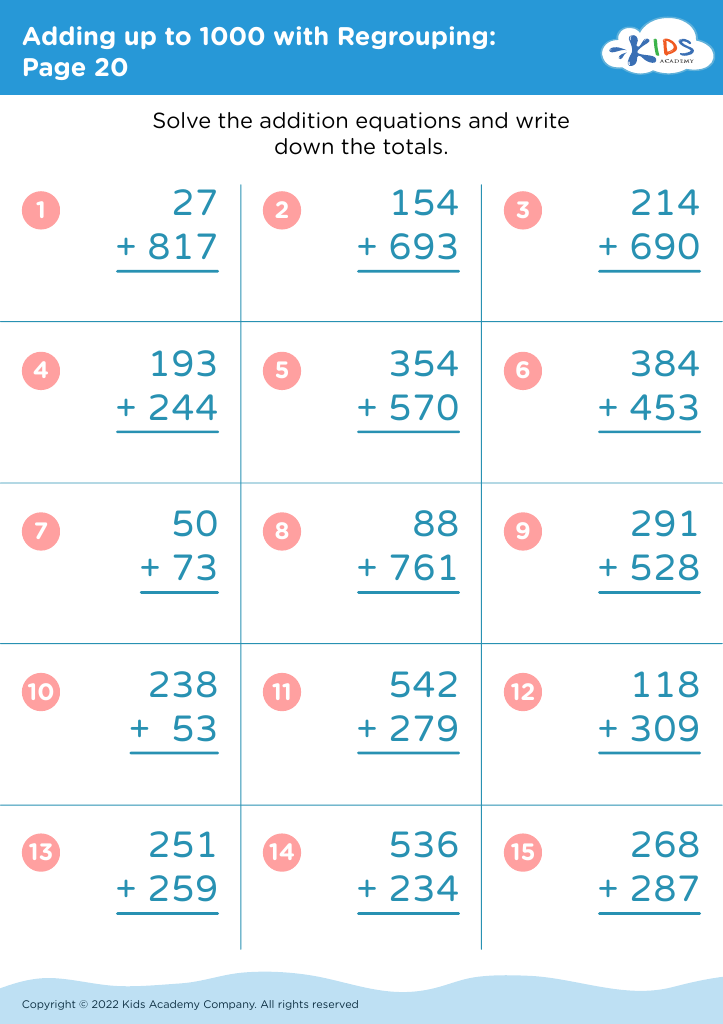
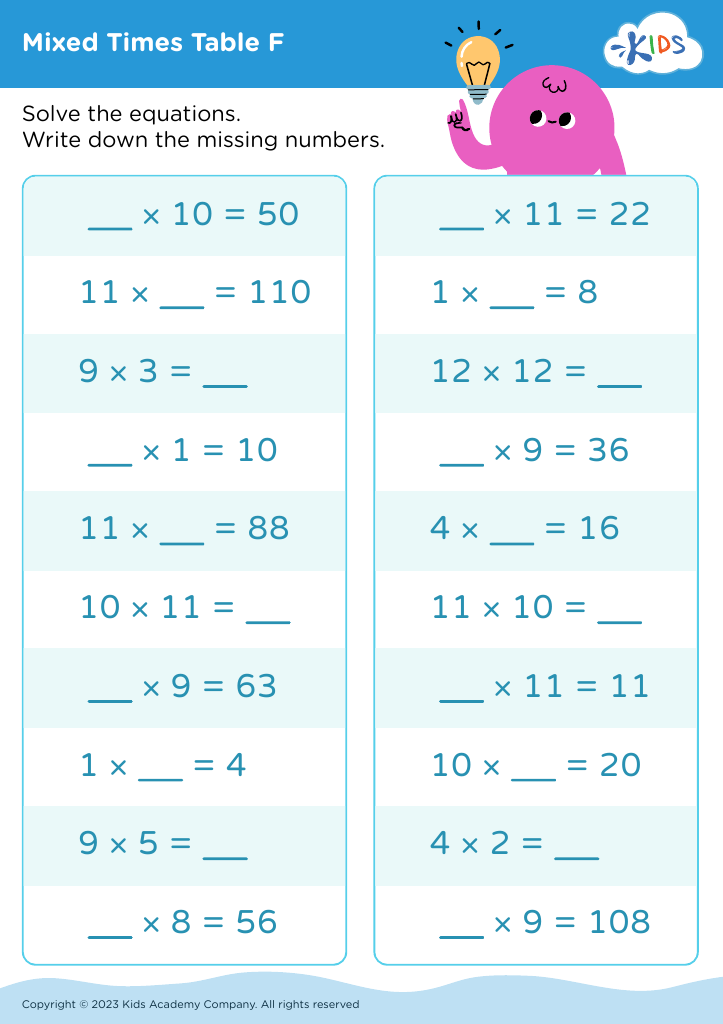








Improving mathematical skills for children aged 3-9 is crucial due to the tremendous impact it has on their overall cognitive development and future academic success. At this early stage, children's brains are highly plastic, meaning they have a greater capacity to absorb new information and build foundational skills that will benefit them throughout their lives. Early math proficiency is closely linked to better performance in both math and other subjects as they progress through school. This is because early math skills develop critical thinking, problem-solving abilities, and logical reasoning.
Additionally, fostering a positive attitude towards math from a young age helps children overcome math anxiety. This positive foundation can promote confidence and independence in tackling math-related challenges. Practical math skills, such as counting, recognizing patterns, and basic arithmetic, are often integral parts of everyday activities and understanding them enhances a child's ability to manage real-life situations proficiently.
Furthermore, the global economy increasingly demands proficiency in STEM (Science, Technology, Engineering, and Mathematics) fields. Early mastery of mathematics sets the stage for future competitiveness in these areas, ensuring children have the necessary tools to explore advanced topics and innovate. In summary, parents and teachers should prioritize enhancing early mathematical skills to pave the way for a lifetime of success and opportunity in both academic and real-world contexts.








