Enhance your child's counting skills with our engaging worksheets designed for ages 3-9! Our collection features fun, interactive activities that foster essential numerical understanding. Perfect for preschoolers and early learners, these worksheets include counting exercises, number recognition, and creative games that make learning enjoyable. Tailored to various skill levels, they help boost confidence and offer valuable practice. Whether at home or in the classroom, these resources ensure a solid foundation in math while sparking a love for learning. Discover the joy of counting through coloring, matching, and more. Start your child’s counting journey today with our easy-to-use worksheets!

Check out this FREE "Improves counting skills" Trial Lesson for age 3-9!

Before and After Numbers

Favorites
With answer key
Interactive
  • 3-9
  • Improves counting skills
Counting: Maraca Fun Worksheet

Counting: Maraca Fun Worksheet

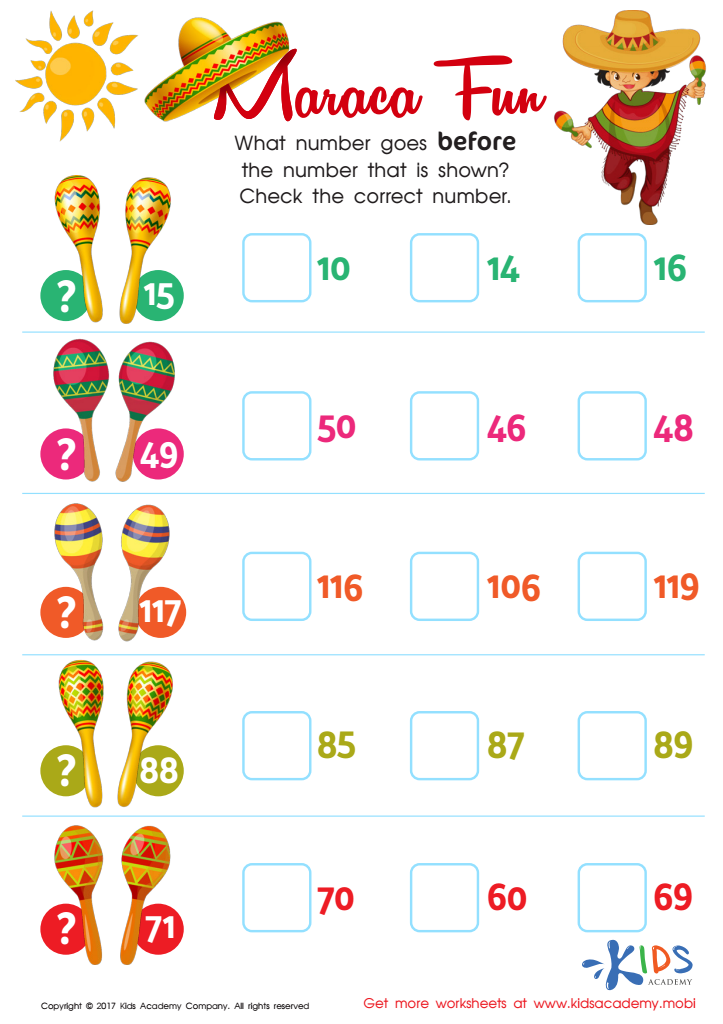
Let your child add some Maraca fun to their math lessons by using this printable worksheet! They must figure out the numbers that come before the ones shown. Answers are provided on the other side; all your child needs to do is check the boxes with the correct numbers. Help them improve their counting and have fun along the way!
Counting: Maraca Fun Worksheet
Worksheet
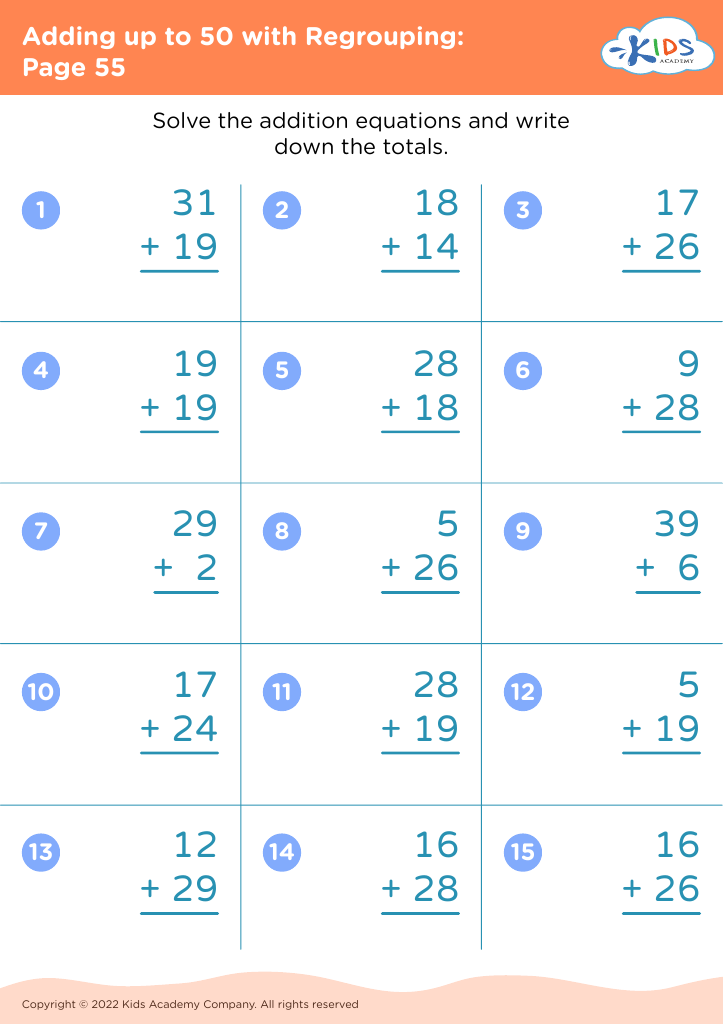
Adding up to 50 with Regrouping: Page 55
Worksheet
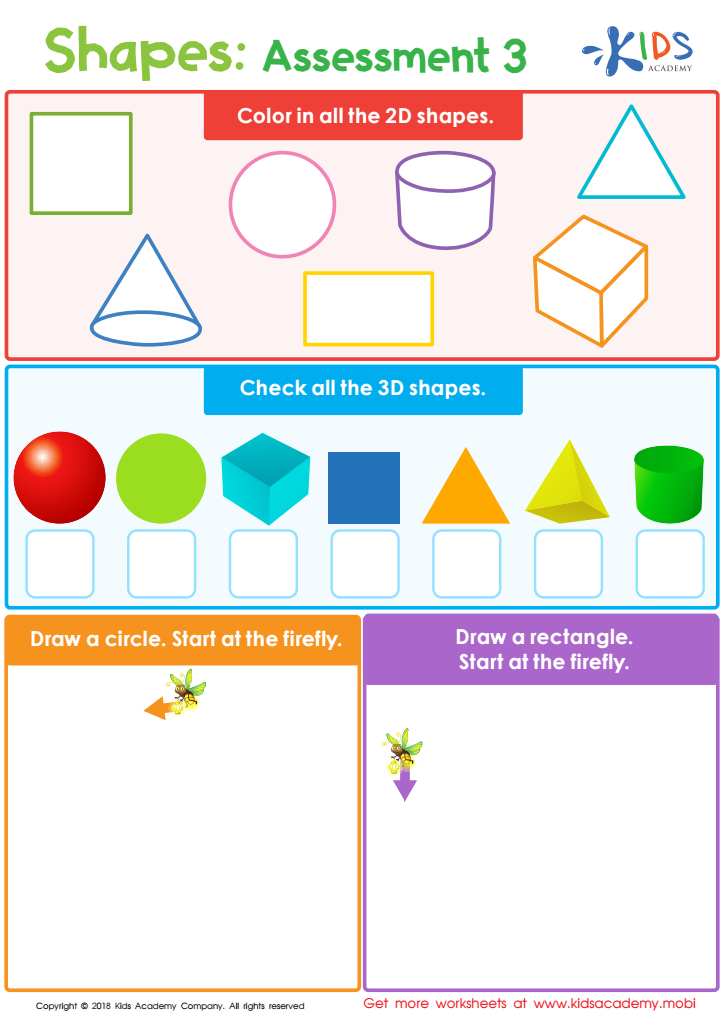
Shapes: Assessment 3 Worksheet

Shapes: Assessment 3 Worksheet

Shapes are everywhere! Help your students differentiate between 2D and 3D shapes. Ask them the difference between a triangle and pyramid, or a circle and a sphere. This worksheet tests their understanding of both types and is a useful assessment tool.
Shapes: Assessment 3 Worksheet
Worksheet
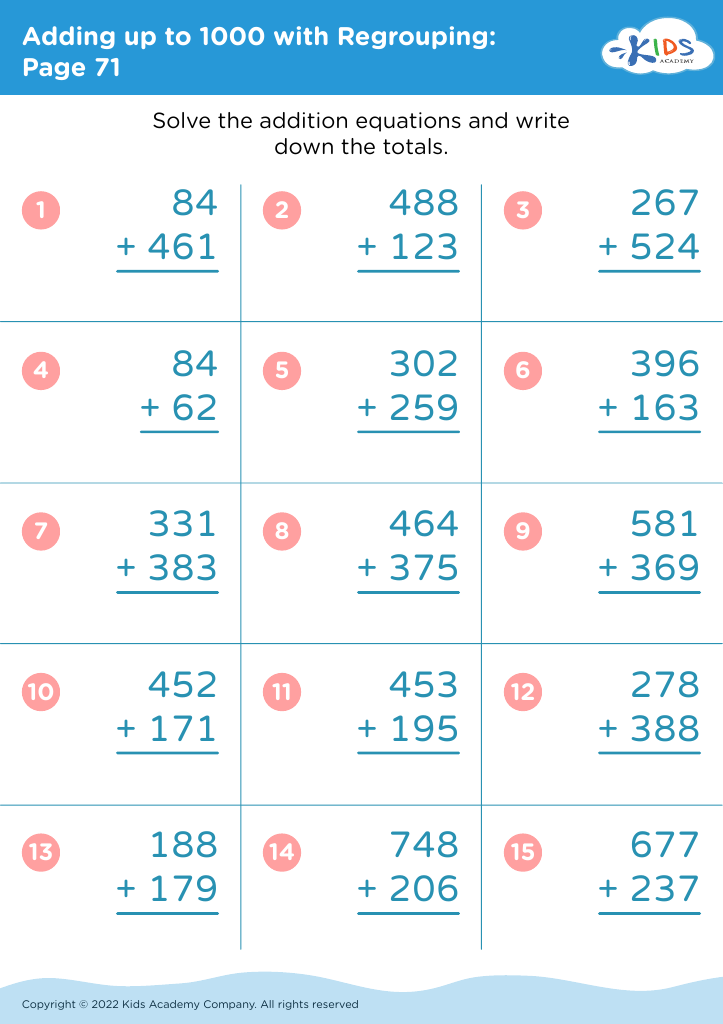
Adding up to 1000 with Regrouping: Page 71
Worksheet
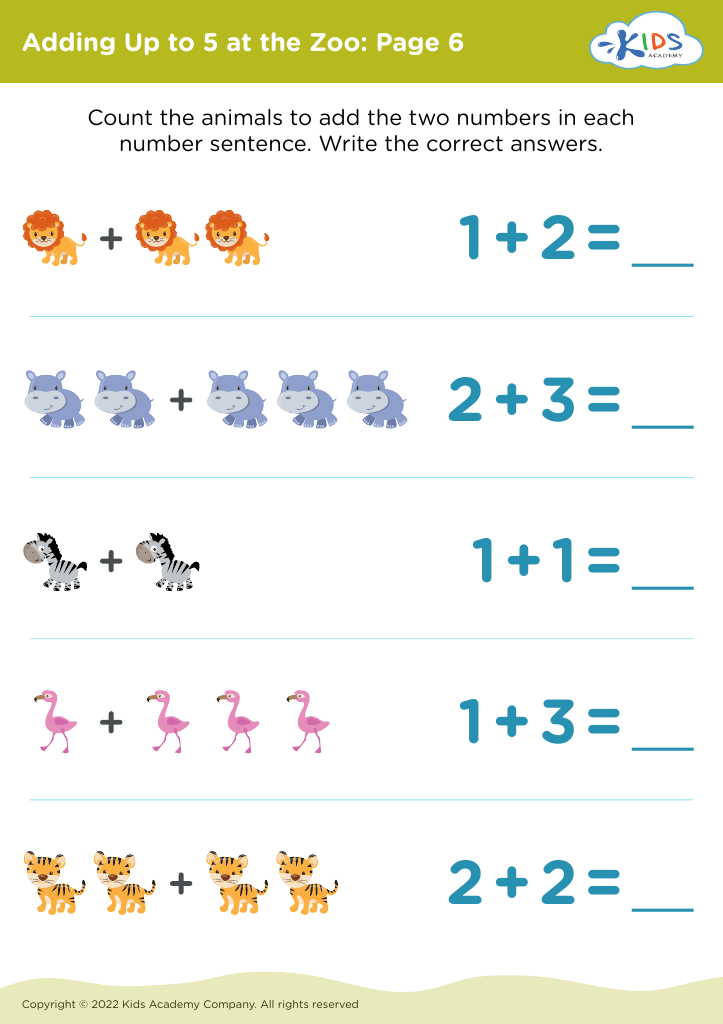
Adding Up to 5 at the Zoo: Page 6

Adding Up to 5 at the Zoo: Page 6

Adding Up to 5 at the Zoo: Page 6
Worksheet
Making 17 with the Weather Worksheet
Making 17 with the Weather Worksheet

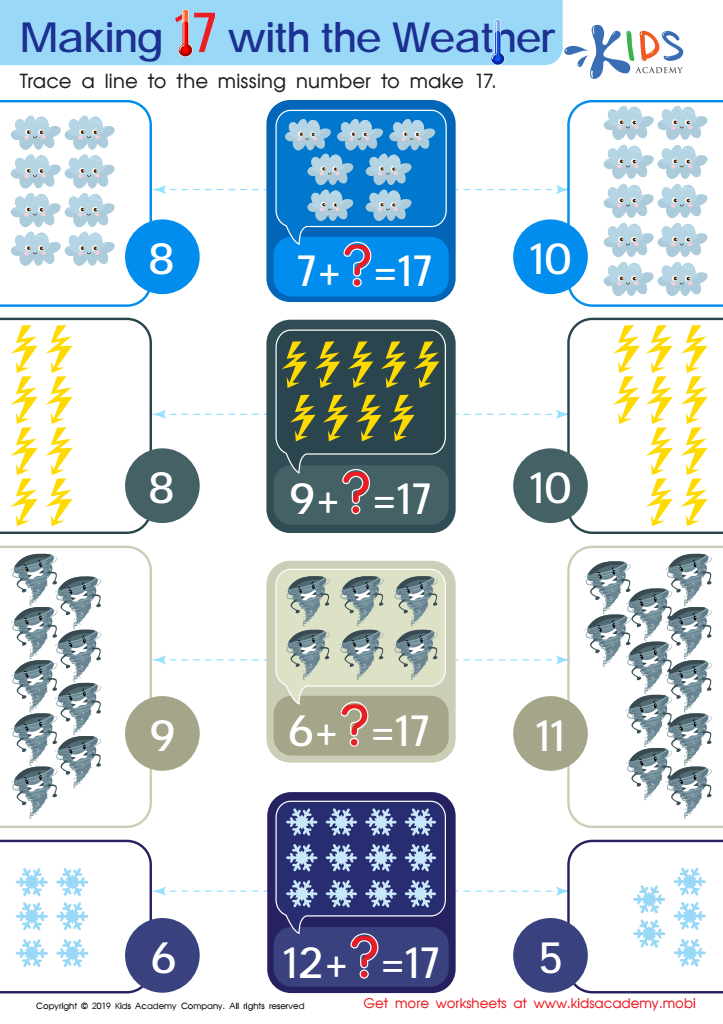
Show your kids the pictures in the worksheet and identify the weather. This exercise is to help them add simple numbers. There are 4 equations in the printout. Help them figure out the numbers to make 17, then trace a line to the missing number to complete the equation.
Making 17 with the Weather Worksheet
Worksheet
Adding up to 100 with Regrouping: Page 67
Worksheet
Lobster Trap Line Plot Worksheet
Lobster Trap Line Plot Worksheet
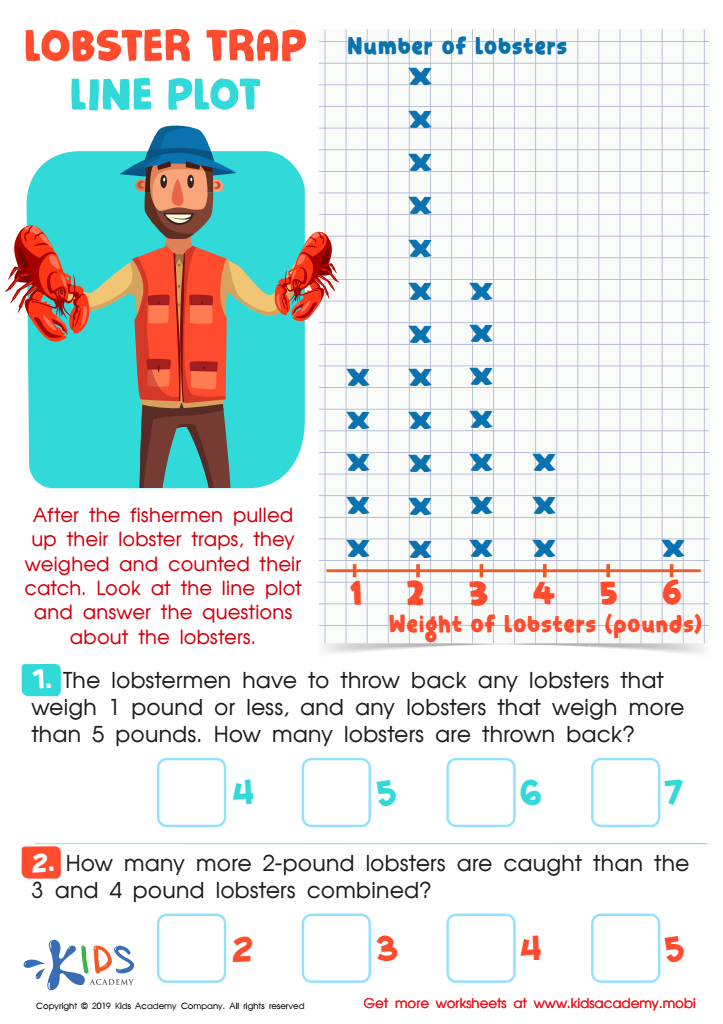
If your kids are working on line plots, this worksheet is perfect for them! Show them the picture and read the instructions. Help them look at the line plot and answer the questions at the bottom. Learning math can be fun, so make it enjoyable together!
Lobster Trap Line Plot Worksheet

Worksheet
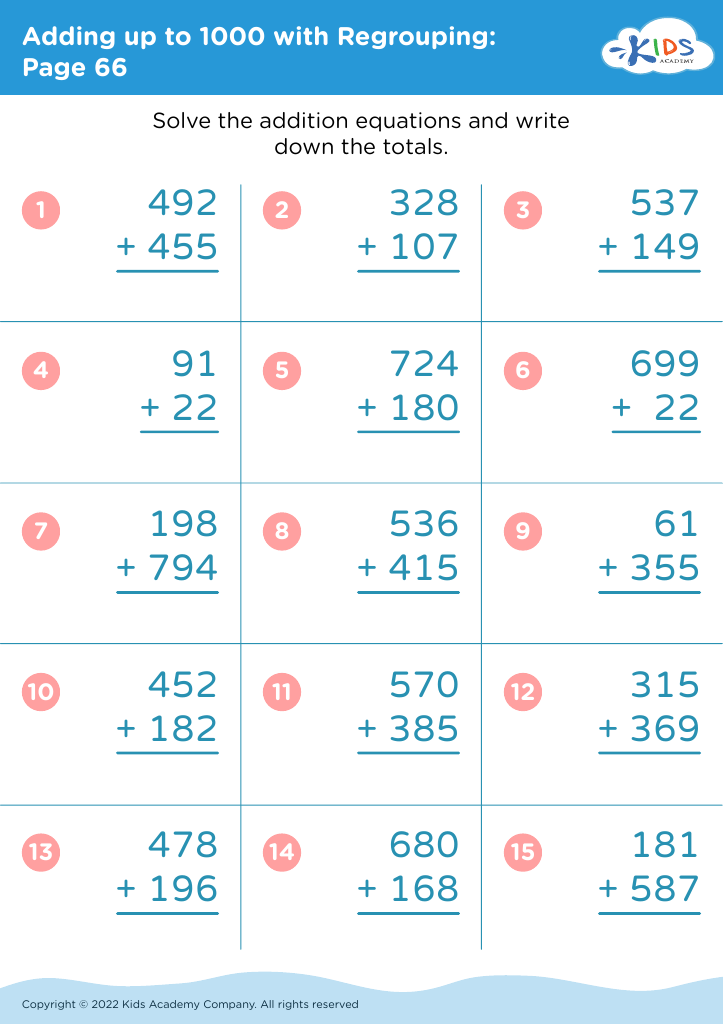
Adding up to 1000 with Regrouping: Page 66
Worksheet
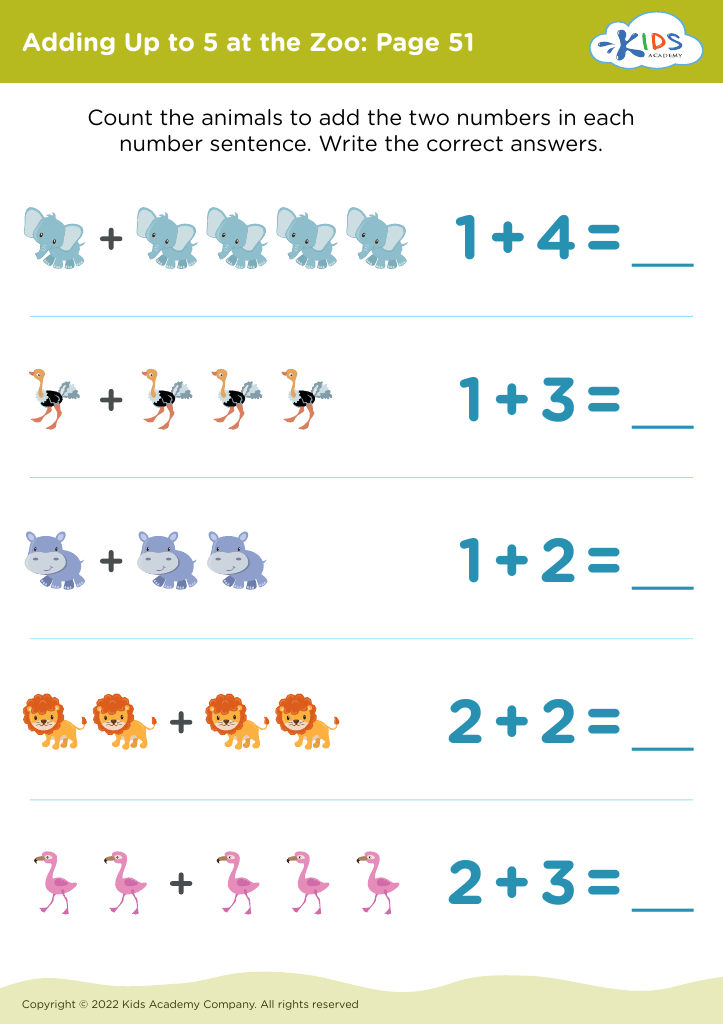
Adding Up to 5 at the Zoo: Page 51
Worksheet
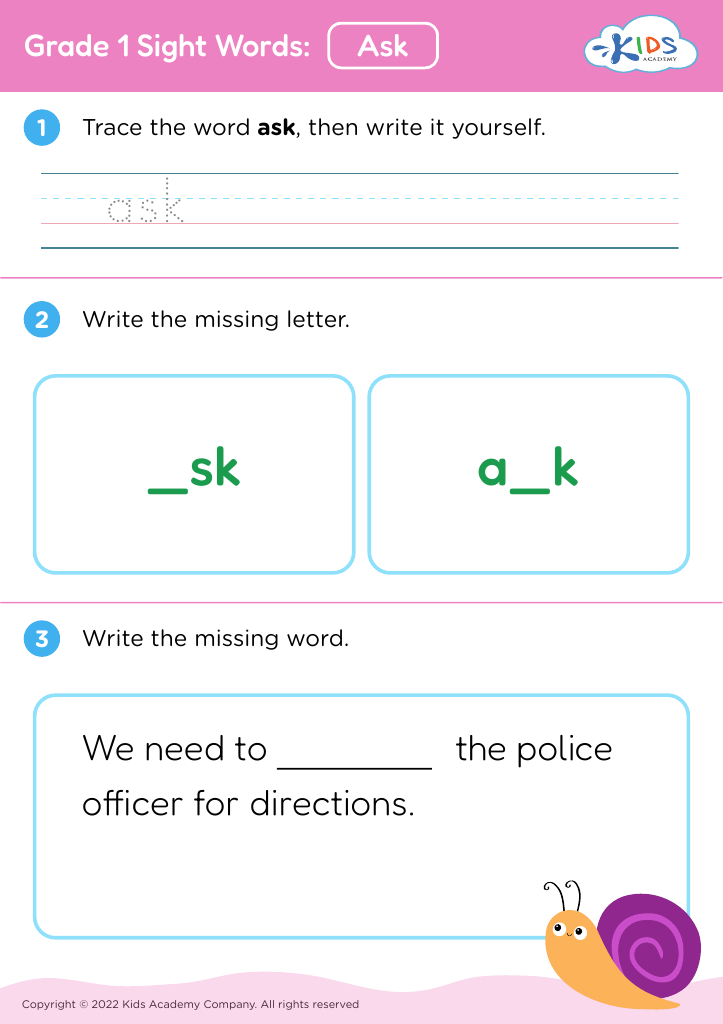
Grade 1 Sight Words: Ask

Grade 1 Sight Words: Ask

Grade 1 Sight Words: Ask
Worksheet


Improving counting skills in children aged 3-9 is crucial for several reasons. First, counting forms the foundation of mathematical understanding, which is essential for success in future math concepts such as addition, subtraction, and beyond. By mastering counting, children develop numerical fluency, which increases their confidence and engagement in mathematics.

Moreover, counting skills are not just limited to academic benefits; they also enhance cognitive development. Engaging in counting activities promotes critical thinking, problem-solving abilities, and memory skills—invaluable tools for lifelong learning. For young children, counting can be integrated into everyday activities, making learning both fun and practical.

Parents and teachers should also consider the social aspects of counting. Collaborative counting games encourage teamwork and improve communication skills among peers. When parents and teachers actively promote counting, they instill a love for learning and demonstrate the practical application of math in daily life.

Ultimately, investing time in developing counting skills can set the stage for a child’s future academic achievements and instill a lasting confidence in their mathematical abilities, making them more equipped to tackle challenges in school and beyond.