Improving grammar skills Worksheets for Ages 3-9
6 filtered results
-
From - To
Enhance your child's grammar skills with our engaging worksheets designed for ages 3-9! Our collection is perfect for little learners, featuring fun activities that help children grasp foundational grammar concepts. From identifying nouns and verbs to constructing simple sentences, each worksheet promotes critical thinking and creativity. Tailored to align with early literacy standards, these resources make learning enjoyable and effective. Parents and educators will appreciate the step-by-step guidance, which supports skill development in a fun, interactive way. Get started today and watch your child gain confidence and joy in mastering grammar! Printable and easy to use, these worksheets are a must-have for early education.
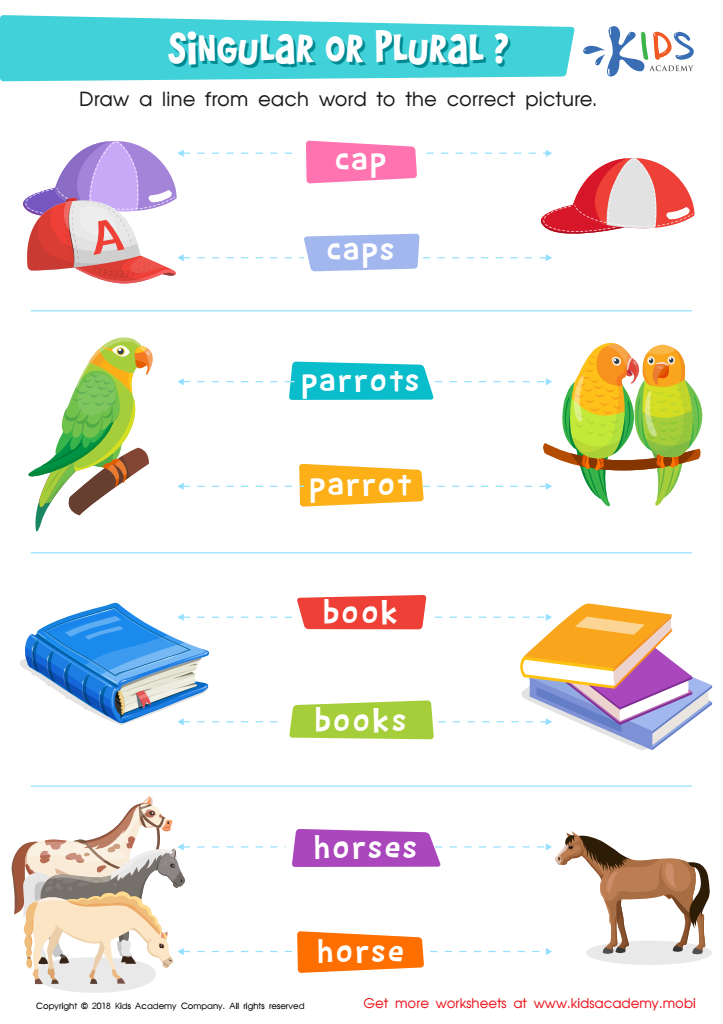
Singular or Plural? Worksheet
 Assign to My Students
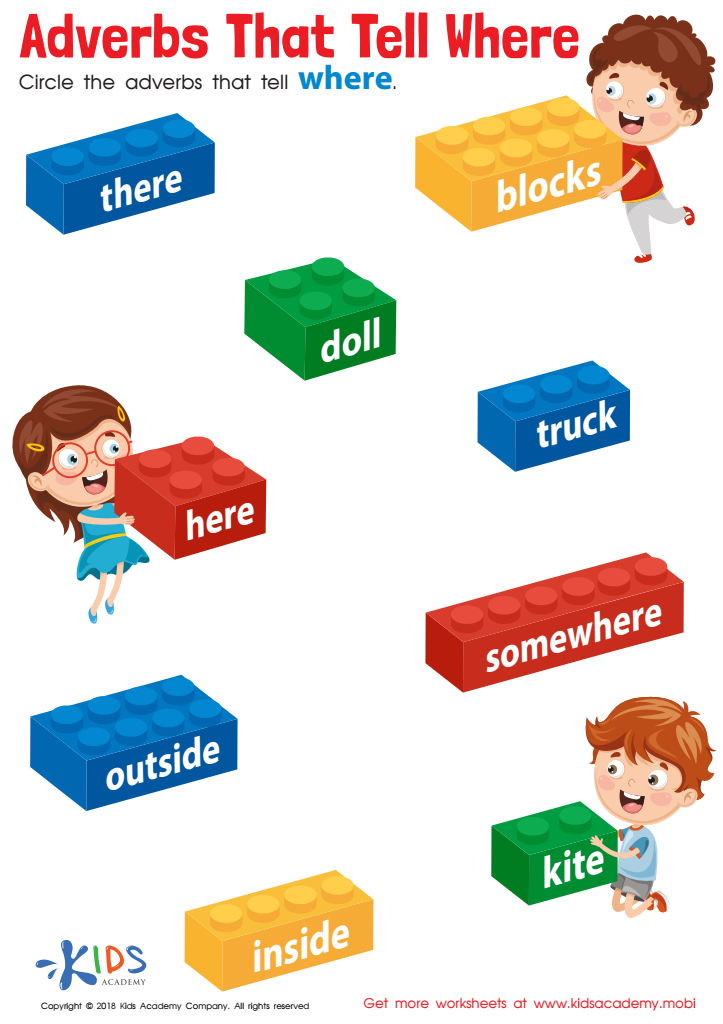
Adverbs That Tell Where Worksheet
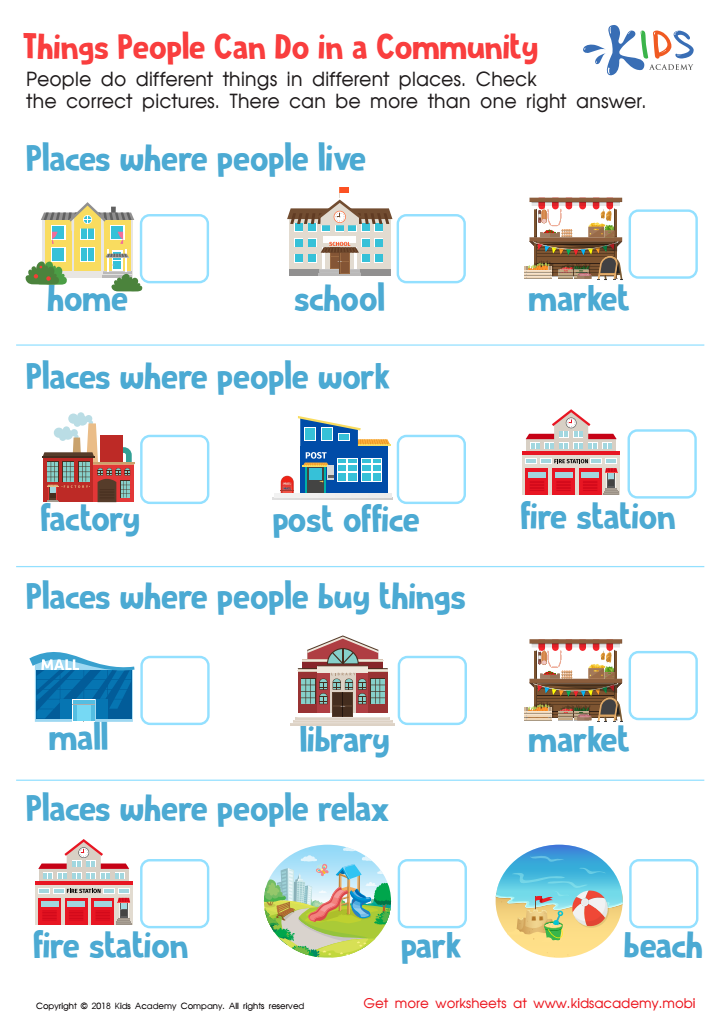
Things People Can Do in a Community Worksheet

Capitalization Rules: Part 2 Worksheet

Irregular Verbs: Baloons Worksheet








Improving grammar skills for children ages 3-9 is crucial for several important reasons. Firstly, grammar forms the foundation of effective communication, enabling children to express their thoughts and ideas clearly. During these formative years, children are learning to formulate sentences and convey meanings; a strong grasp of grammar supports their confidence in both spoken and written communication.
Secondly, good grammar skills directly influence children's literacy development. As they progress in school, understanding grammar helps them read with comprehension and write coherent sentences. This skill will enhance their academic performance across subjects, especially in language arts.
Additionally, teaching grammar in early childhood fosters critical thinking and cognitive growth. By understanding how sentences are structured, children begin to analyze language, make comparisons, and develop reasoning skills—essential tools for learning in any domain.
Moreover, strong grammatical skills can positively impact a child's social interactions. Children who can articulate their feelings and opinions effectively are more likely to engage in discussions and strengthen relationships with peers and adults.
Finally, teaching grammar fosters structured learning environments where parents and teachers collaborate to build language skills, setting the stage for lifelong learning and success. By prioritizing grammar education, adults can empower children to thrive academically and socially.








