Math fluency development Worksheets for Ages 3-9
3 filtered results
-
From - To
Boost your child’s math fluency with our engaging and educational worksheets designed for ages 3-9! Our expertly crafted resources focus on fundamental math skills, enabling young learners to develop strong number sense and problem-solving abilities. From counting and simple arithmetic to more advanced operations, our vibrant, interactive worksheets make learning math fun and effective. Perfect for both classroom and home use, these printable sheets cater to varied learning paces, ensuring each child builds confidence and proficiency. Set your child on a path to math success - explore our Math fluency development worksheets today and see skills flourish!
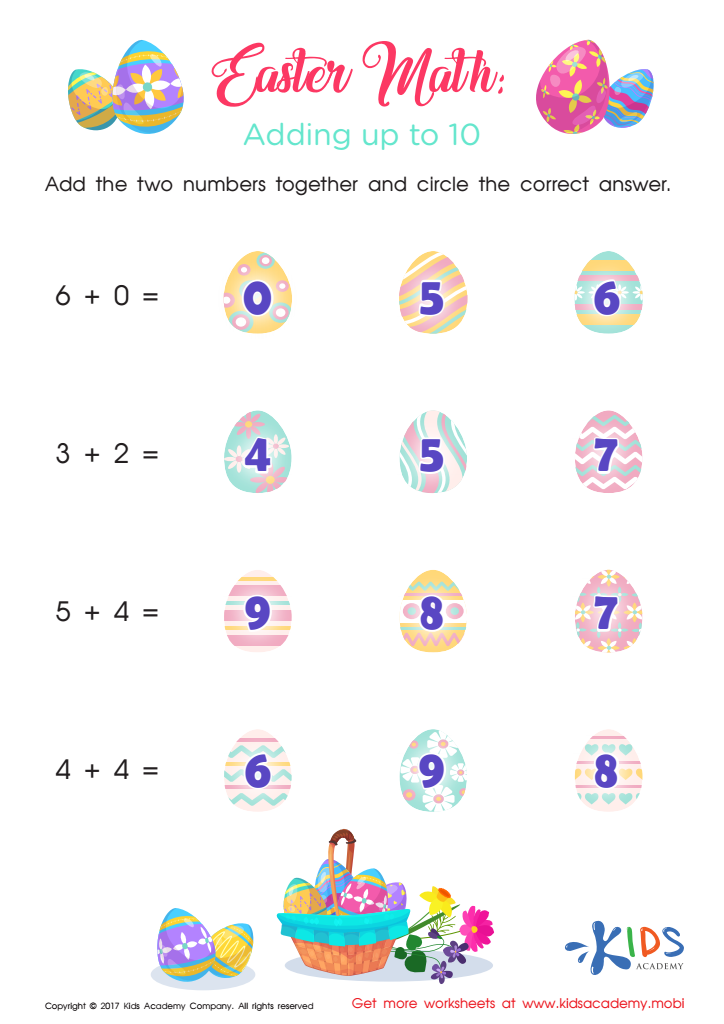
Addition Up To 10 Worksheet
 Assign to My Students
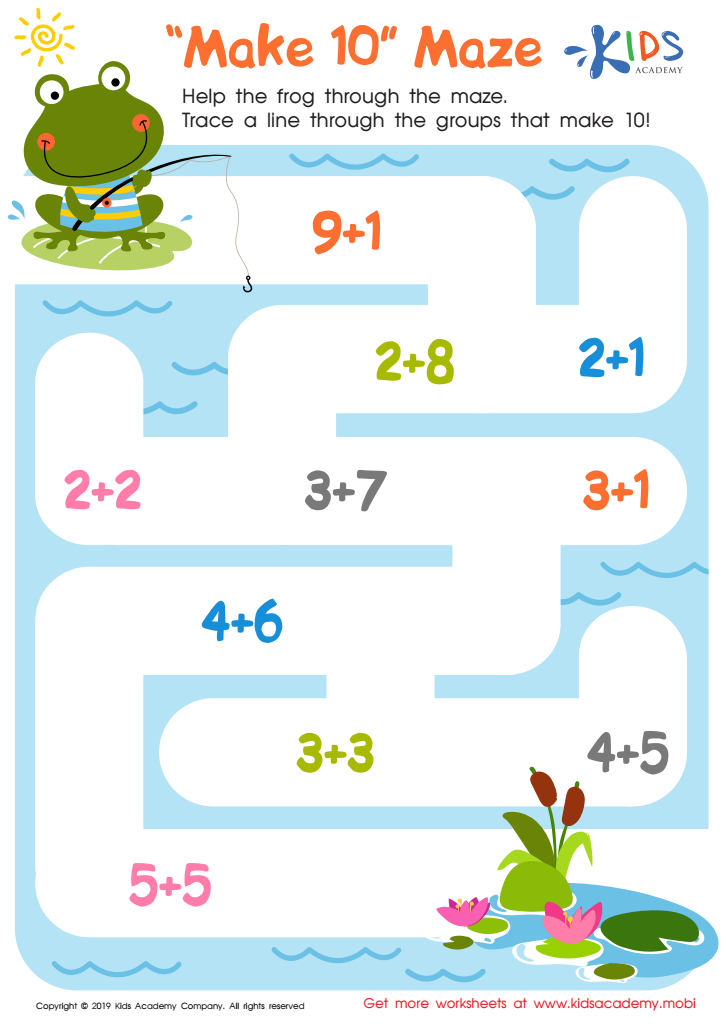
Make 10 Maze Worksheet
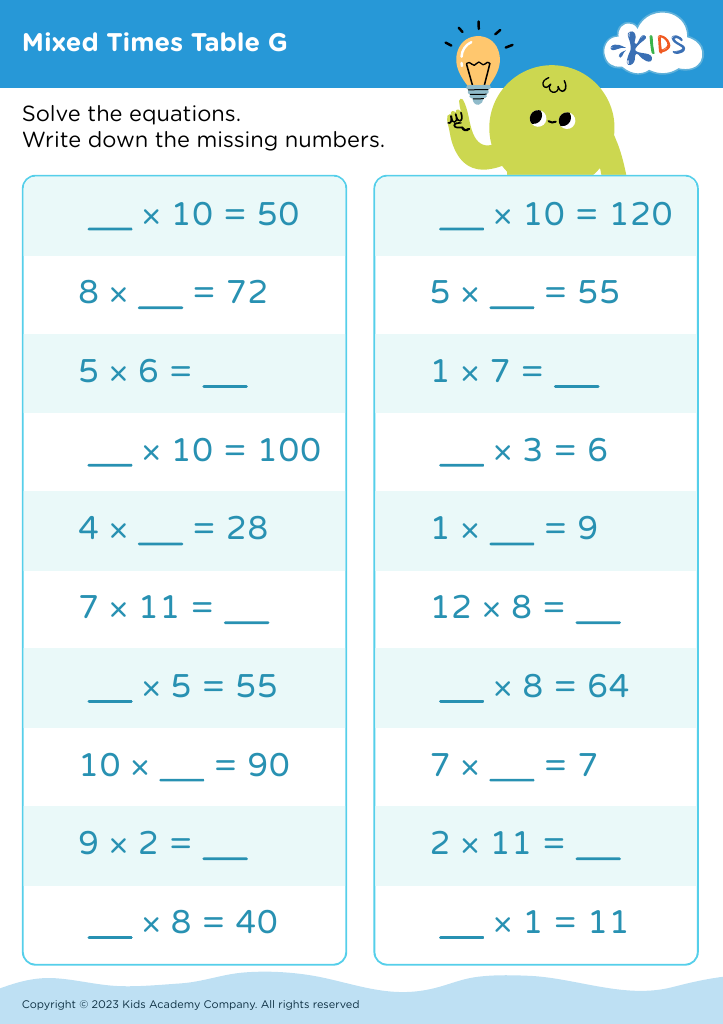








Math fluency development in children aged 3-9 is crucial for several reasons that both parents and teachers should prioritize. Firstly, early math skills are strong predictors of later academic success, even more than early reading skills. The ability to understand basic math concepts builds a foundation for more complex problem-solving in higher grades. For instance, recognizing patterns, counting, and simple operations translate to higher-order skills like algebra and geometry.
Secondly, math fluency helps develop critical thinking and logical reasoning abilities. Engaging young children in math-related activities—such as sorting objects, identifying shapes, and solving basic problems—enhances their cognitive flexibility and analytical skills, which are applicable in everyday life and multiple academic disciplines.
Additionally, math fluency boosts confidence and reduces math anxiety because it allows children to solve problems more quickly and accurately. This leads to a positive attitude toward the subject, fostering a growth mindset and a willingness to tackle new challenges without fear.
Socially, math skills developed at an early age can benefit interactions, as children often encounter situations requiring basic math, such as sharing and playing games that involve counting. Moreover, it lays the groundwork for future career opportunities in a world increasingly dominated by STEM fields.
In summary, developing math fluency in young children sets the stage for academic achievement, enhanced cognitive abilities, increased self-confidence, and preparedness for future educational and career opportunities. It is a critical aspect of comprehensive childhood development that deserves attention and nurturing from both parents and teachers.








