Number Matching Worksheets for Ages 3-9
4 filtered results
-
From - To
Discover our engaging Number Matching Worksheets designed specifically for children ages 3-9! These worksheets provide a fun and interactive way for young learners to build essential math skills. Through colorful illustrations and creative exercises, kids will enhance their number recognition, counting abilities, and cognitive development. Our resources cater to various learning styles, ensuring that every child finds joy in practicing numbers while strengthening their foundational math understanding. Perfect for at-home learning or classroom environments, these printable worksheets promote a love for numbers and mathematics from an early age. Start your child’s journey to mathematical confidence today!
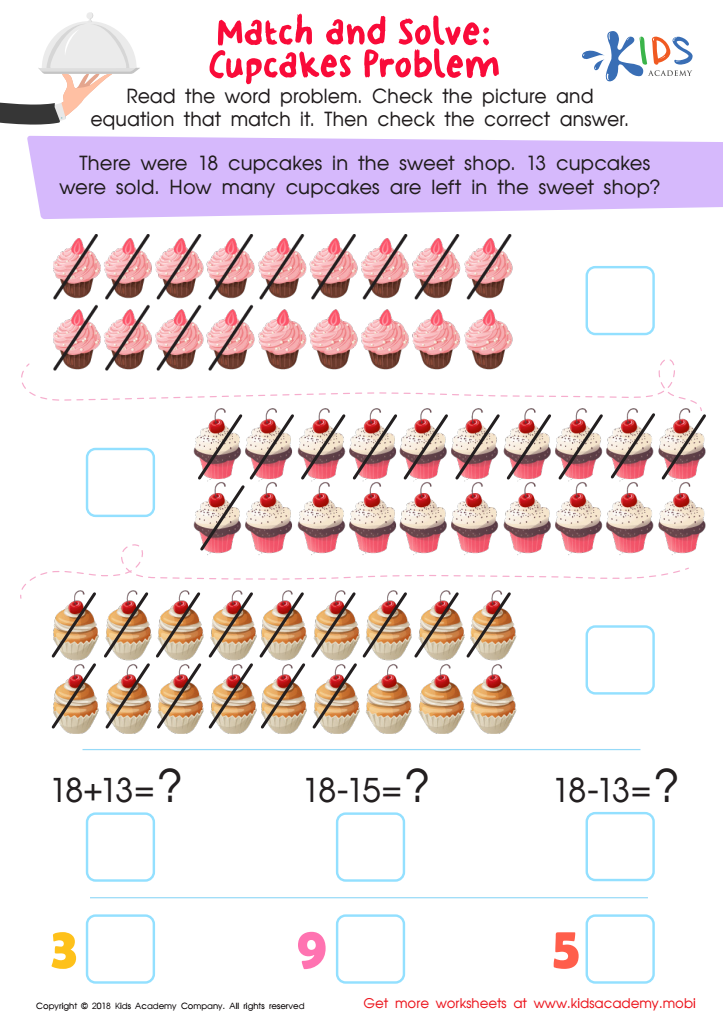
Match and Solve: Cupcakes Problem Worksheet
 Assign to My Students
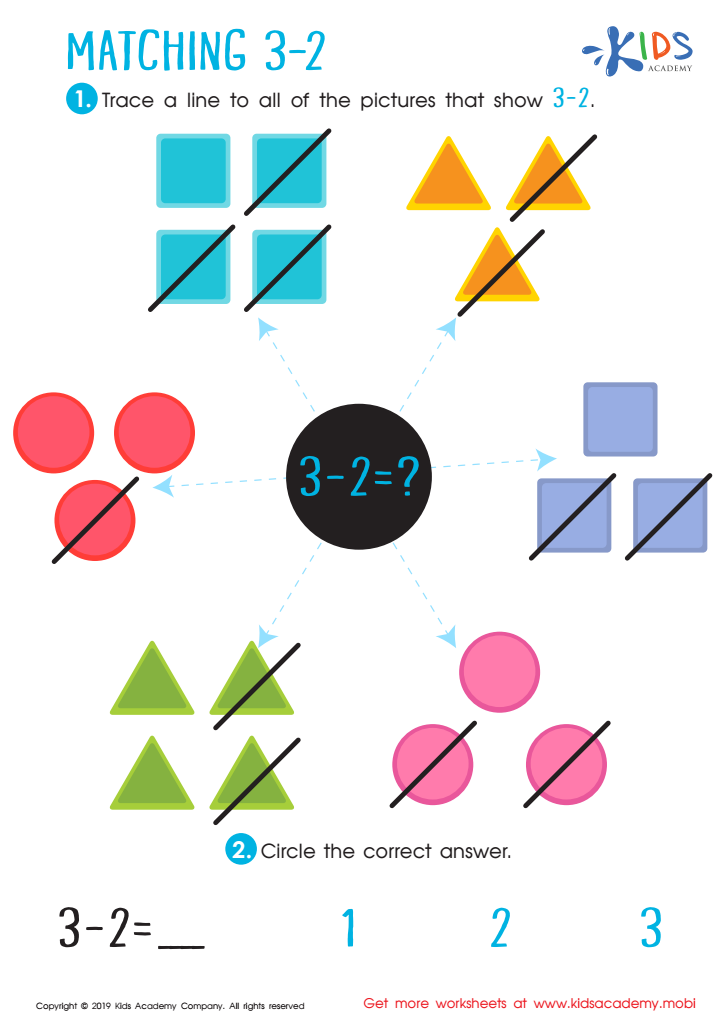
Matching 3-2 Worksheet
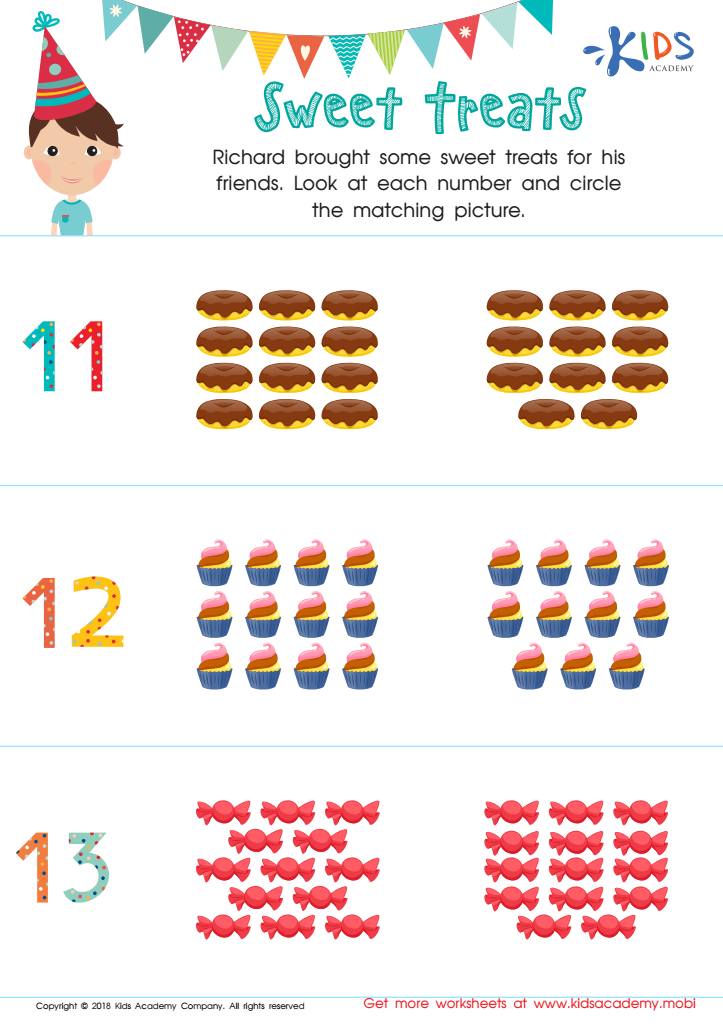
Kindergarten Math Worksheet Matching Numbers
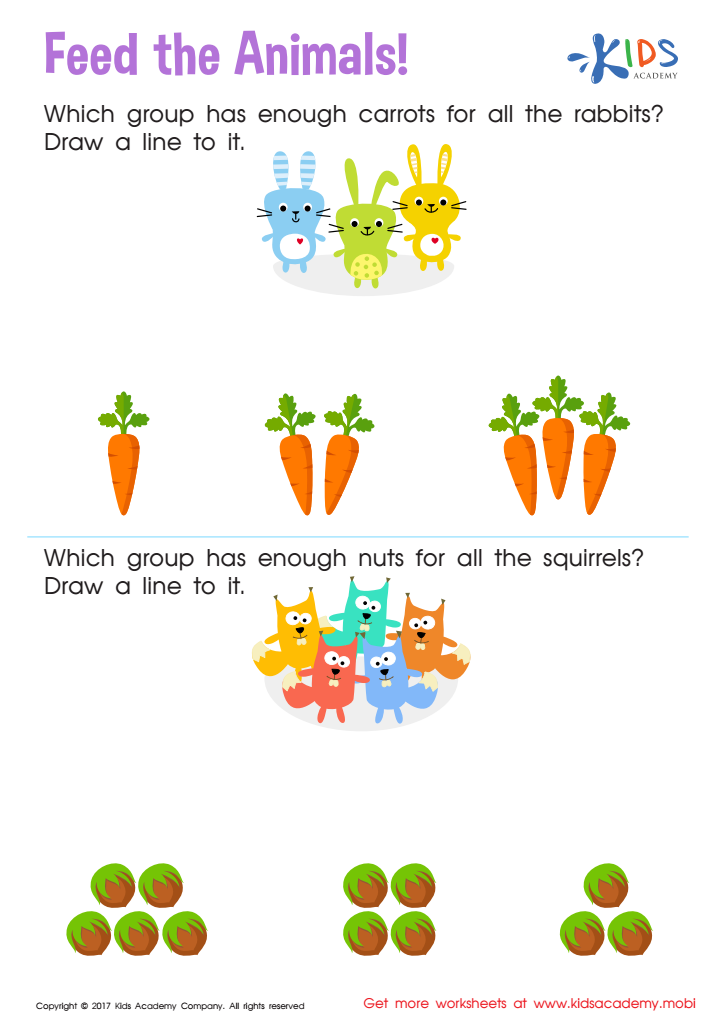
Count and Match: Feed the Animals Worksheet






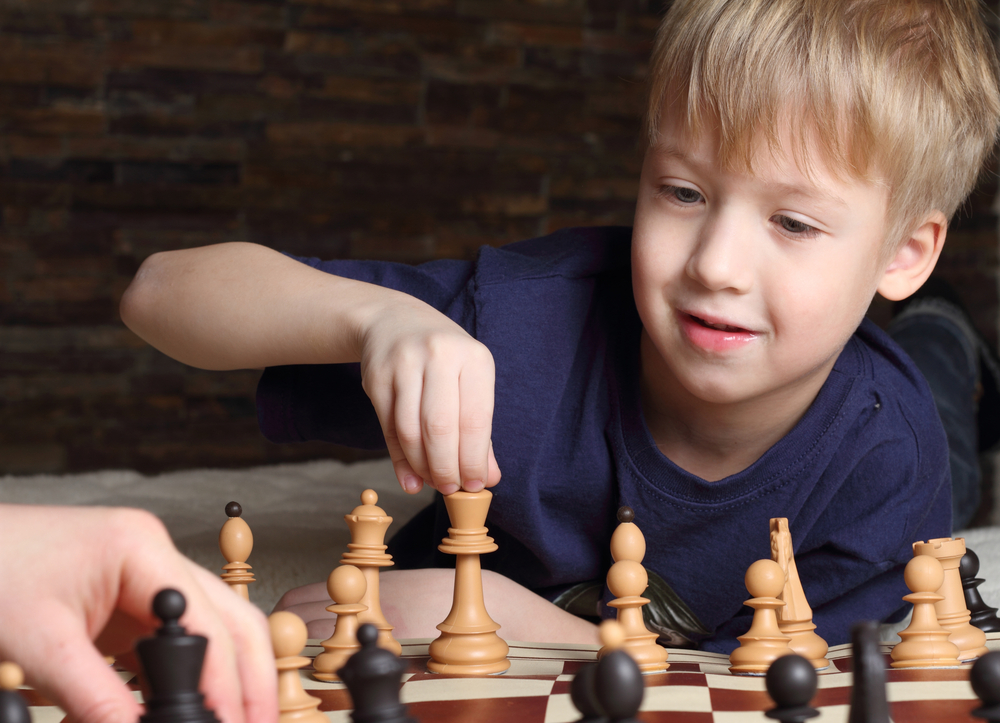
Number matching is a crucial developmental activity for children aged 3-9, laying the foundation for mathematical understanding and cognitive growth. It involves recognizing and comparing numbers, which enhances numerical literacy and fosters essential skills like counting, one-to-one correspondence, and pattern recognition.
For parents and teachers, emphasizing number matching in early childhood education means nurturing children’s problem-solving abilities and critical thinking. Engaging in number matching helps children strengthen their memory and concentration, vital components for academic success in later years.
Furthermore, this activity promotes fine motor skills as children physically manipulate number cards or counters, providing opportunities for kinesthetic learning. As children progress from simple matching to more complex math concepts, they build confidence and self-esteem in their mathematical abilities, reducing anxiety around numbers.
Additionally, incorporating number matching into playtime or classroom activities can create a joy for learning that can last a lifetime. It opens doors to discussions about patterns, sequences, and basic arithmetic, establishing a solid mathematical foundation. Thus, number matching is not just a game; it’s an integral part of developing numeracy skills, emotional intelligence, and a positive attitude toward mathematics, ensuring children are well-prepared for future academic challenges.








