
Number sequence recognition Worksheets for Ages 3-9
3 filtered results
Difficulty Level
Grade
Age
-
From - To
Subject
Activity
Standards
Discover our engaging Number Sequence Recognition Worksheets designed for children ages 3 to 9! These interactive resources help young learners develop essential mathematical skills by practicing counting, recognizing number patterns, and completing sequences. Featuring colorful illustrations and age-appropriate activities, our worksheets captivate students' attention while fostering a love for math. Perfect for home, classrooms, or tutoring sessions, these printables ensure children build a strong foundation in number recognition and sequencing. Watch your child gain confidence as they explore numbers in an enjoyable and supportive environment. Download our worksheets today to spark a lifelong appreciation for mathematics!
Favorites
With answer key
Interactive
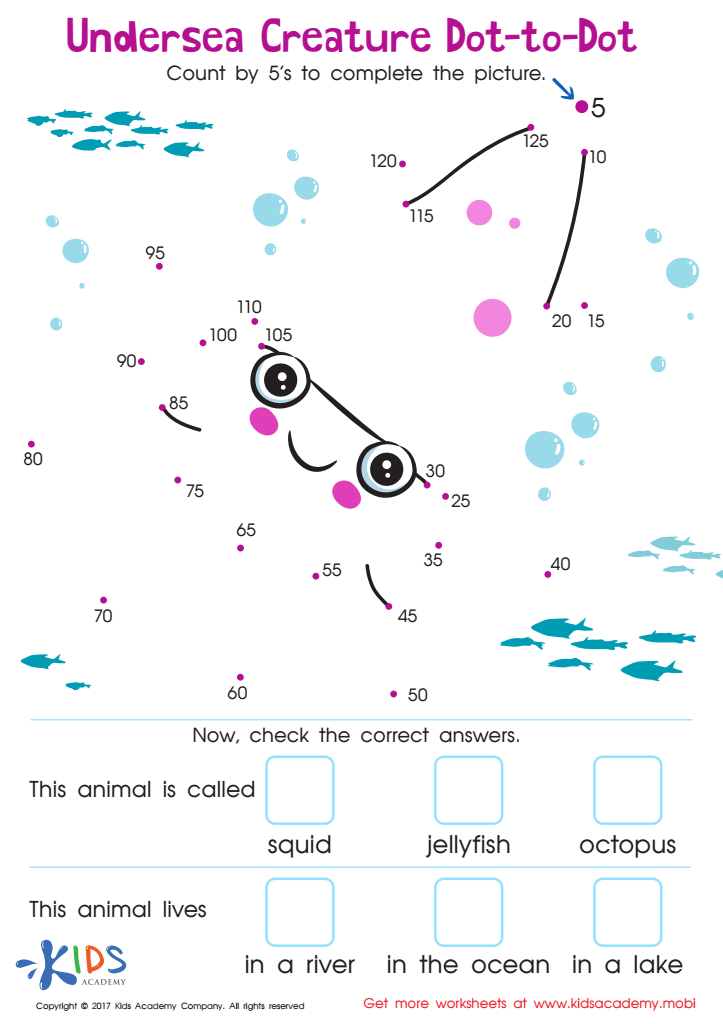
Undersea: Dot To Dot Worksheet
This dot-to-dot worksheet is a great way to teach kids about the undersea world while having fun. Kids will love connecting the dots and counting in 5s. Then they can check their answers.
 Assign to My Students
Undersea: Dot To Dot Worksheet
Worksheet
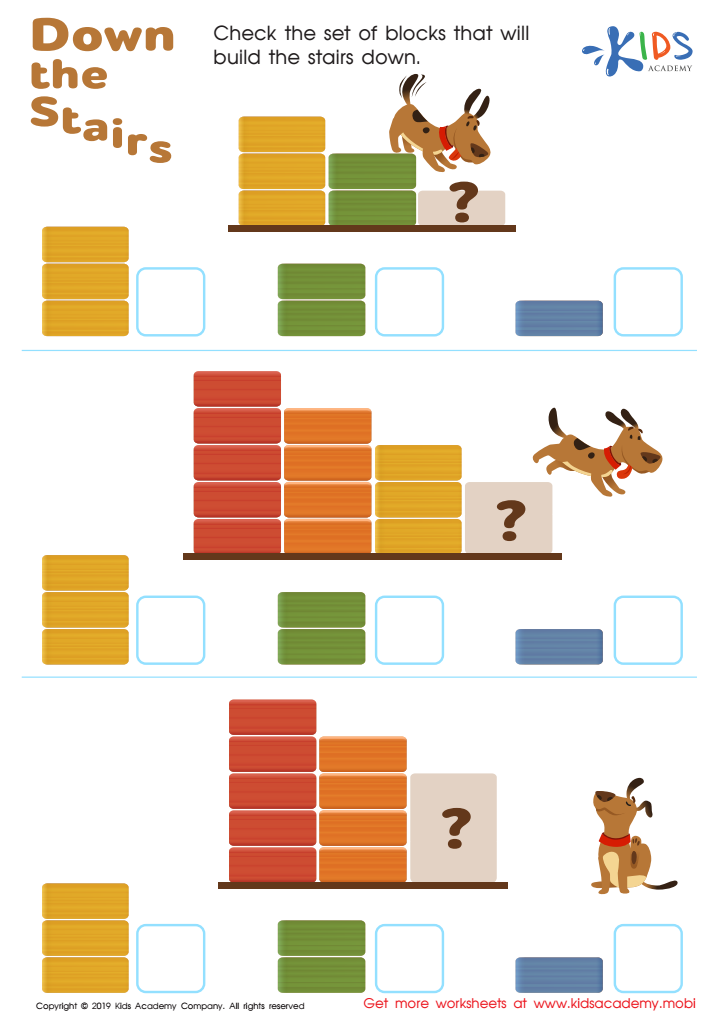
Down the Stairs Worksheet
Let your kids' imaginations run wild with this worksheet featuring a cute and friendly dog! Ask them to point out the dog in the printout, then help count the blocks in each set. Aim to stack them in descending order and build stairs for the pup to get down. Count each block and check the set - it's that easy!
Down the Stairs Worksheet
Worksheet
Join Kids Academy for Free
Who is primarily going to use this learning content?







Number sequence recognition is a fundamental skill that forms the bedrock of a child's mathematical understanding and cognitive development. For children aged 3-9, recognizing and understanding number sequences—such as counting, skip counting, and identifying patterns—plays a crucial role in their academic growth.
Firstly, number sequence recognition enhances children's ability to perform basic arithmetic operations. As they learn to identify patterns in numbers, they develop skills in addition and subtraction, preparing them for more complex mathematical concepts. This foundational knowledge fosters confidence and ease with numbers as they progress in their education.
Secondly, recognizing sequences helps children develop critical thinking and problem-solving abilities. Understanding how numbers relate to one another cultivates a mindset oriented towards logical reasoning, which is valuable across all subjects and in daily life.
Moreover, number sequence recognition can aid in improving children's memory through rhythmic counting and repetition, which are often engaged through fun games and songs.
Finally, as parents and teachers nurture this skill, they contribute to children's overall emotional and intellectual resilience. Encouraging number sequence recognition not only lays the groundwork for successful mathematical learning but also equips children with versatile tools for lifelong learning and cognitive flexibility.








