Phonemic awareness Worksheets for Ages 3-9
3 filtered results
-
From - To
Improve your child’s reading skills with our engaging Phonemic Awareness Worksheets designed for ages 3-9! Phonemic awareness is essential for early literacy development, helping kids recognize and manipulate sounds in words. Our collection offers a variety of fun, interactive activities that make learning enjoyable. From identifying sounds to blending and segmenting words, these worksheets cater to different skill levels and learning styles. Perfect for teachers and parents alike, they create exciting learning moments at home or in the classroom. Spark a love for reading while building foundational skills with our phonemic awareness worksheets today! Printable, easy-to-use, and filled with delightful illustrations!
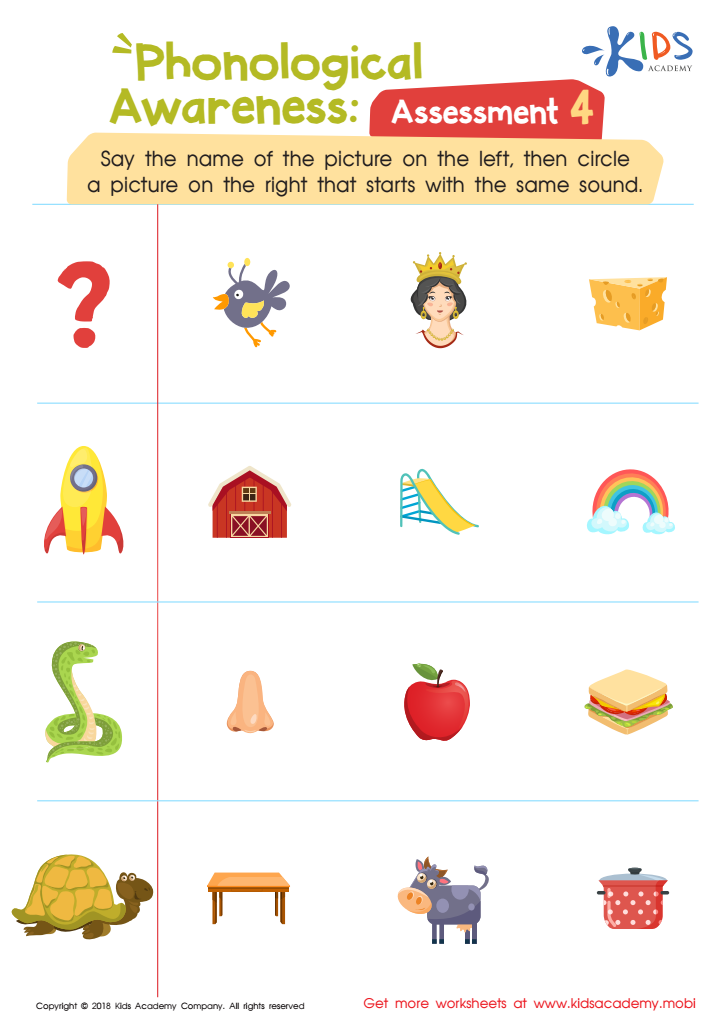
Phonological Awareness: Assessment 4 Worksheet
 Assign to My Students
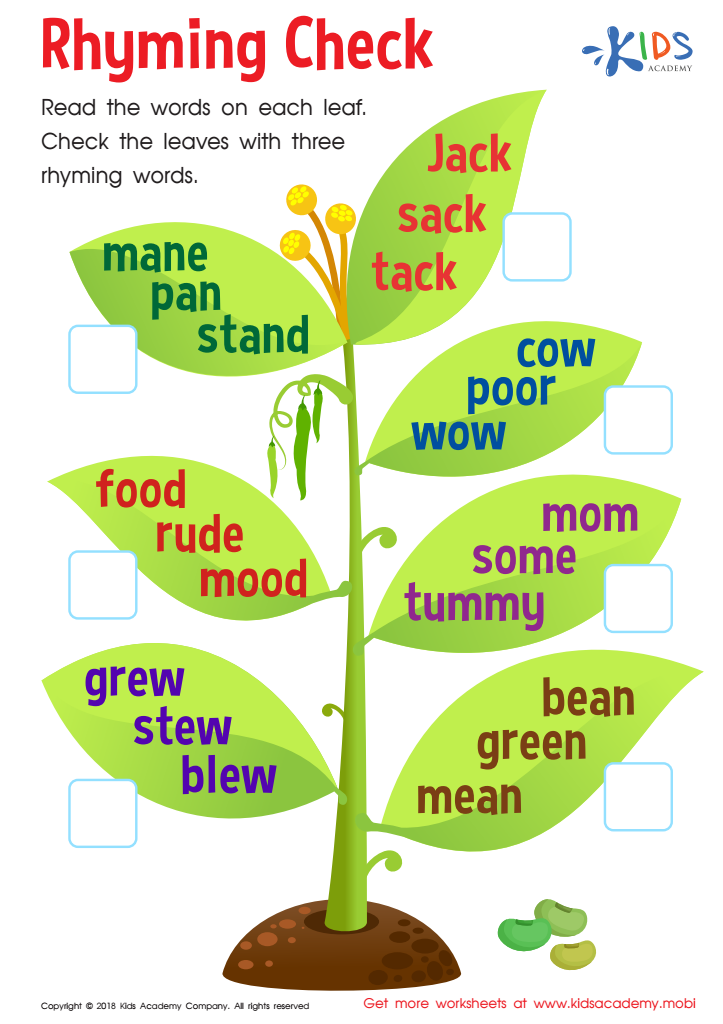
Rhyming Check Worksheet
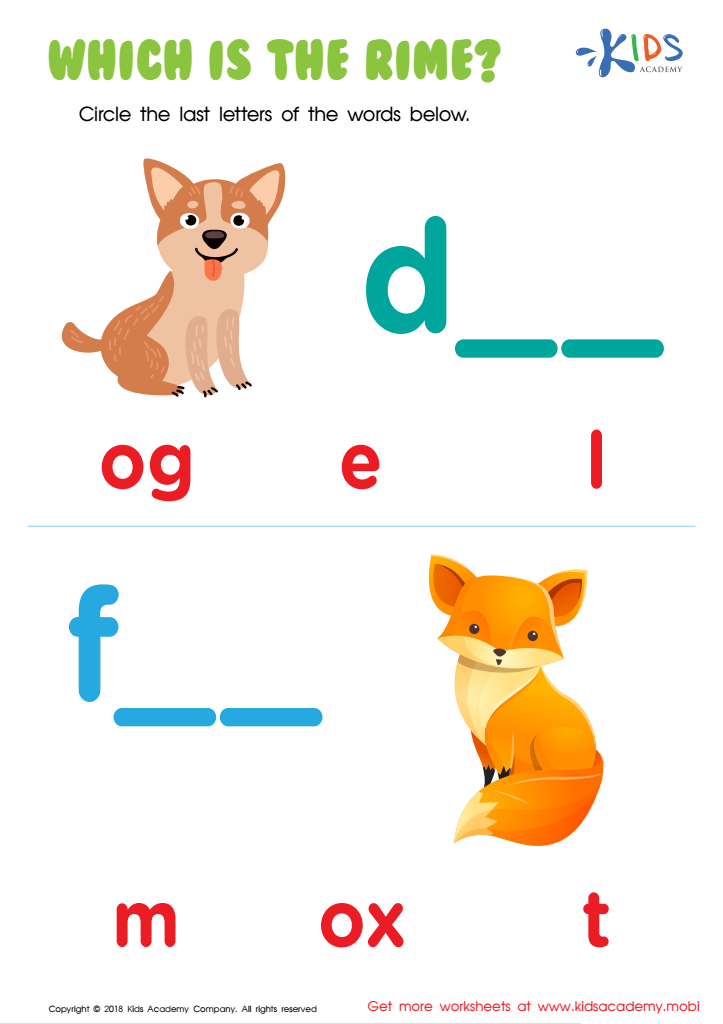
Which Is the Rime? Worksheet







Phonemic awareness is a critical skill that forms the foundation for successful reading and writing. For children aged 3 to 9, developing this skill is paramount as it involves the ability to hear, identify, and manipulate individual sounds, or phonemes, within words. Parents and teachers should care about phonemic awareness because it directly impacts literacy development.
Children who grasp phonemic awareness can decode words more effectively, which enhances their reading fluency and comprehension. Research shows that these skills lead to higher achievement in reading, ultimately influencing academic success later in life. Furthermore, early intervention to foster phonemic awareness ensures that struggling readers build the confidence they need to engage with texts.
Moreover, phonemic awareness aligns closely with auditory skills and can significantly improve overall communication abilities. It helps children with spelling and pronunciation, contributing further to their literacy journey. Encouraging playful activities like rhymes, songs, and sound games can make learning enjoyable and effective.
In essence, by prioritizing phonemic awareness in early education, parents and teachers empower children with essential tools for academic achievement and lifelong learning, making it a crucial aspect of early childhood development.








