Phonics skills enhancement Worksheets for Ages 3-9
3 filtered results
-
From - To
Enhance your child's phonics skills with our engaging worksheets designed for ages 3-9! Our printable resources help young learners master essential phonics concepts through enjoyable activities that promote recognition of sounds, letters, and words. With vibrant illustrations and interactive exercises, these worksheets are perfect for building foundational reading and writing skills in a fun, stimulating way. Each activity is tailored to cater to different learning levels, ensuring that your child stays motivated and excited about learning. Support their literacy journey and watch them thrive with our phonics skills enhancement worksheets, ideal for homeschooling and classroom use. Start their adventure today!
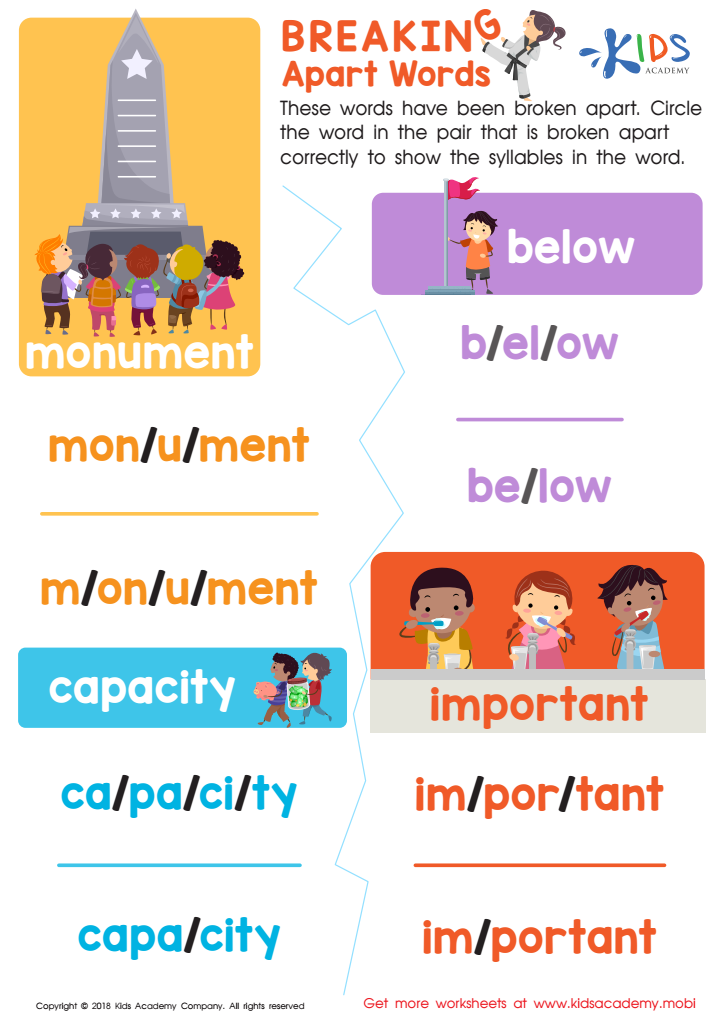
Breaking Apart Words Worksheet
 Assign to My Students
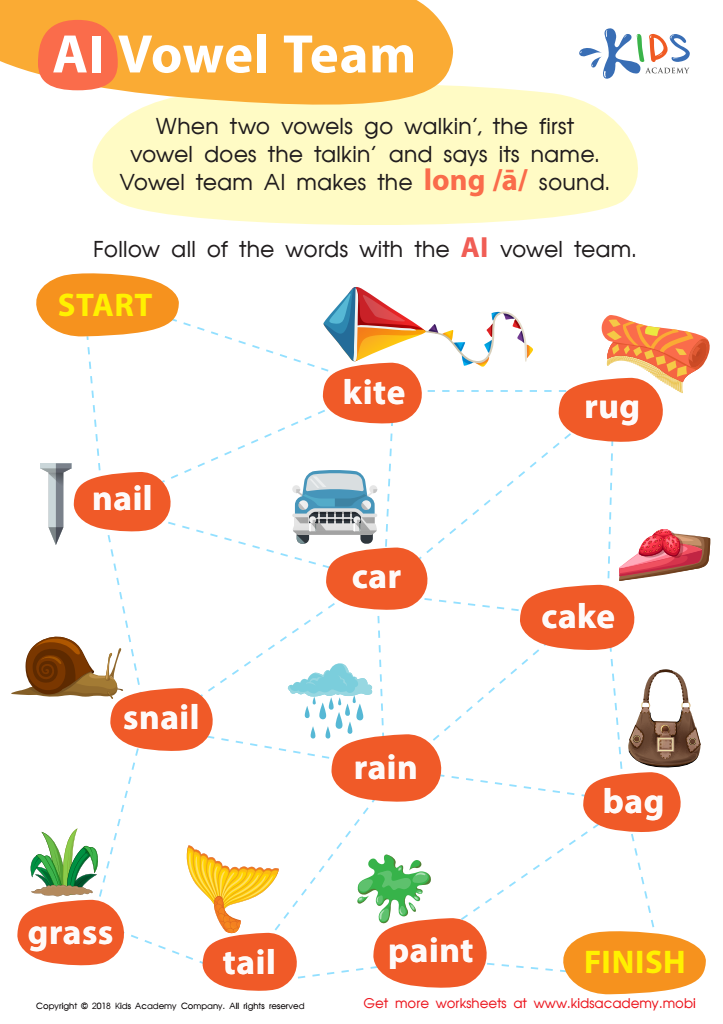
Reading: AI Vowel Team Worksheet
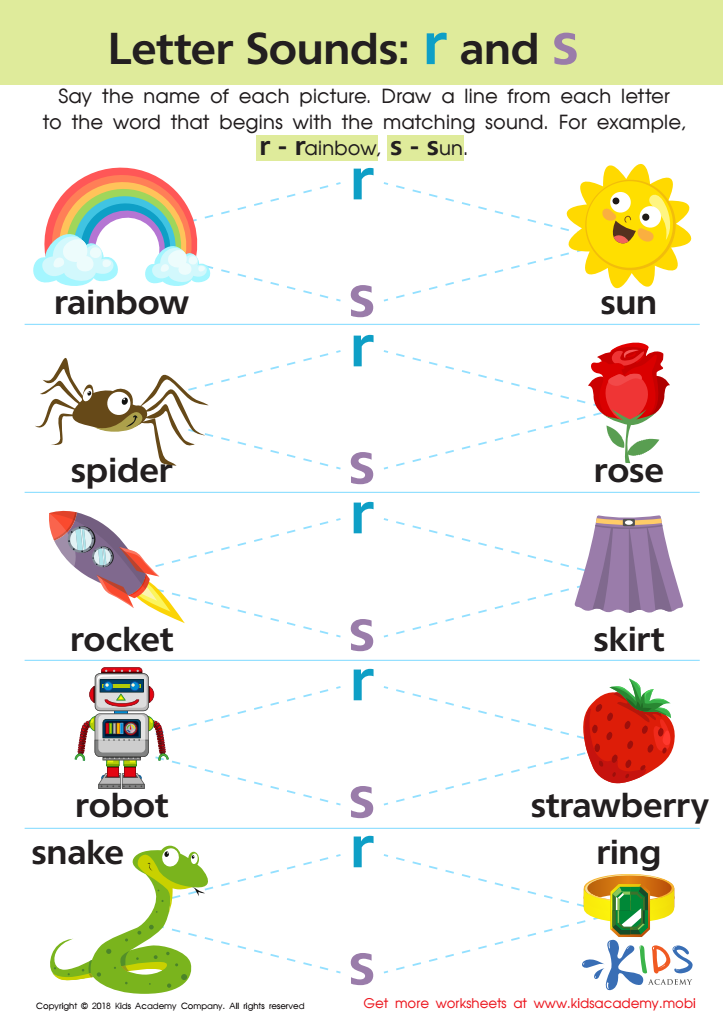
Letter R and S Sounds Worksheet






Phonics skills enhancement is crucial for children aged 3-9 as it lays the foundation for reading, writing, and overall literacy development. Phonics helps young learners connect sounds with their corresponding letters or letter combinations, making it easier for them to decode words. This essential skill directly influences their ability to read fluently, which in turn fosters comprehension and cognitive growth.
Parents and teachers should prioritize phonics instruction because early literacy skills are strongly linked to later academic success. Children who grasp phonics at an early age often develop a love for reading, leading to greater exposure to vocabulary and ideas. Moreover, proficient reading skills are correlated with improved expressive writing abilities, enabling children to communicate their thoughts and stories effectively.
Investing time in phonics can also boost children's confidence in their abilities. When they see progress in reading, their enthusiasm for learning is enhanced, making them more likely to engage in educational activities. For teachers and parents, adopting engaging phonics activities cultivates a supportive learning environment that nurtures skills essential for lifelong learning. Ultimately, strengthening phonics skills during these formative years can significantly impact children’s future academic trajectories and love for learning.








