
Practical application of fractions Worksheets for Ages 3-9
3 filtered results
Difficulty Level
Grade
Age
-
From - To
Subject
Activity
Standards
Explore our engaging “Practical Application of Fractions Worksheets” designed for children ages 3-9! These thoughtfully crafted worksheets help young learners understand fractions through interactive and fun activities. From visual representations of pie charts to hands-on tasks with everyday objects, children will develop a foundational understanding of concepts like halves, quarters, and more. Our resources encourage critical thinking and problem-solving, ensuring that learning fractions is both educational and enjoyable. Perfect for at-home practice or classroom use, these worksheets will foster confidence in math skills while making fractional concepts relatable and easy to grasp. Start your child’s journey into the world of fractions today!
Favorites
With answer key
Interactive
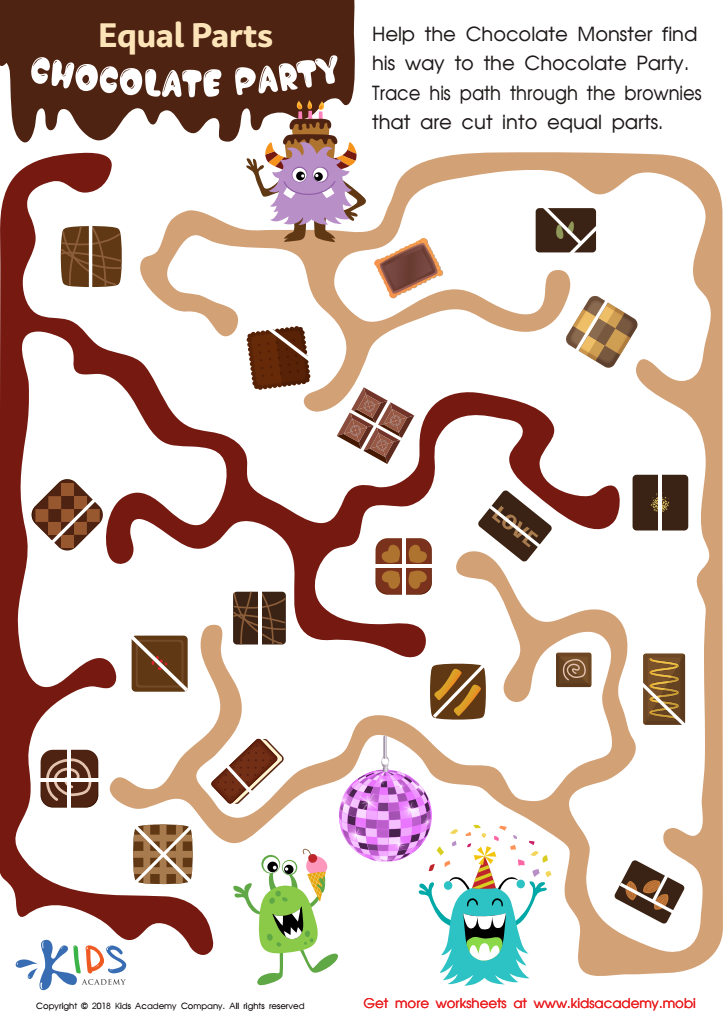
Equal Parts: Chocolate Party Worksheet
Mention "chocolate" and watch your kids' excitement soar! Learning can go hand-in-hand with that sugary treat. This worksheet helps kids guide the Chocolate Monster to the Chocolate Party, following a trail of brownie halves. It's an easy, tasty way to have fun!
 Assign to My Students
Equal Parts: Chocolate Party Worksheet
Worksheet
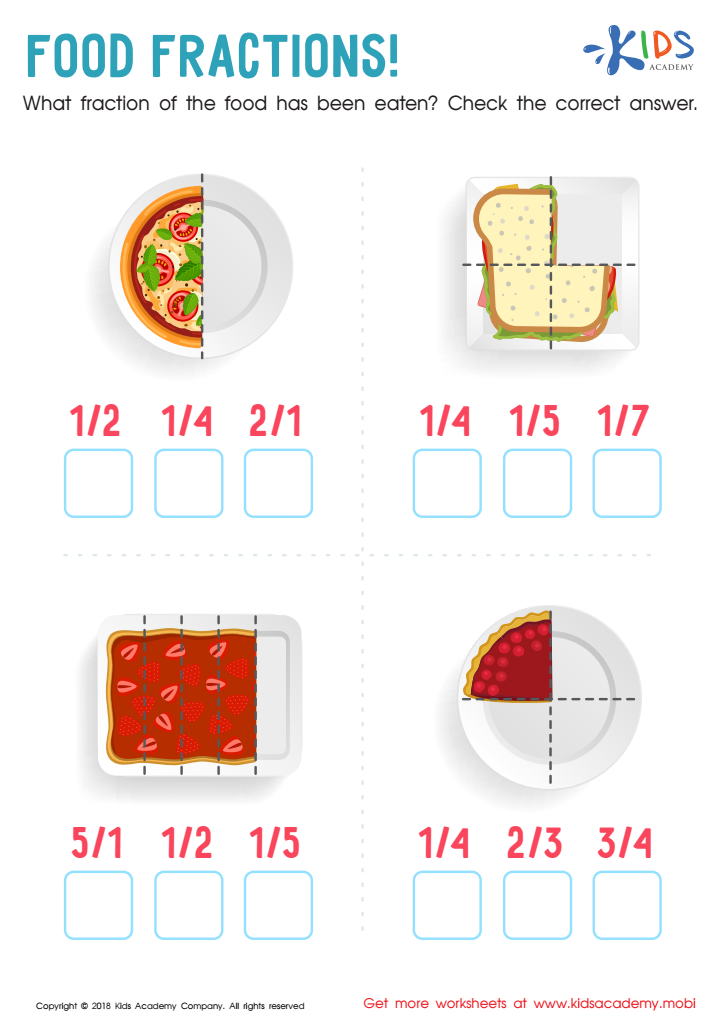
Food Fractions Worksheet
Test your child's understanding of fractions with this Food Fractions worksheet. Ask them to identify what fraction of the food in the four pictures has been eaten and select the correct answer from the options provided. See how well they understand your lessons!
Food Fractions Worksheet
Worksheet
Join Kids Academy for Free
Who is primarily going to use this learning content?







Understanding fractions is fundamental for early learners aged 3-9, as it lays the groundwork for critical mathematical concepts needed later in life. Practical application of fractions helps children see math in action, fostering a love for learning along the way. When parents and teachers incorporate real-life examples, such as sharing food (like pizza or cake slices) or measuring ingredients while baking, children grasp that fractions aren't just abstract concepts; they're part of the world around them.
Moreover, hands-on experiences with fractions enhance cognitive skills and promote problem-solving abilities. Activities like dividing toys or sharing crayons can help children develop their understanding of parts and wholes in a tangible way. This also encourages social skills and teamwork when they engage in group activities.
By nurturing a strong foundational understanding of fractions early on, children not only improve their mathematical abilities but also build confidence. When parents and teachers show enthusiasm for these concepts, it conveys the message that learning can be fun and meaningful. Ultimately, fostering a solid understanding of fractions during these formative years prepares children for advanced mathematics and enhances their critical thinking abilities, setting them up for future success in academics and everyday life.








