Introducing our engaging Reading Analog Clocks Worksheets designed for children ages 3-9! These interactive worksheets offer a fun and effective way for young learners to develop their understanding of time. With colorful illustrations and simple activities, kids will confidently learn to read analog clocks, recognize hour and minute hands, and practice telling time. Perfect for home or classroom use, our worksheets cater to various skill levels, ensuring every child can participate. Enhance your teaching toolkit and inspire a love for learning with our Reading Analog Clocks Worksheets, making time-telling an exciting adventure for your little ones!

Check out this FREE "Reading analog clocks" Trial Lesson for age 3-9!

Tell Time by the Hour and by the Half Hour

Favorites
With answer key
Interactive
  • 3-9
  • Reading analog clocks
What Means "Right Now" Worksheet

What Means "Right Now" Worksheet

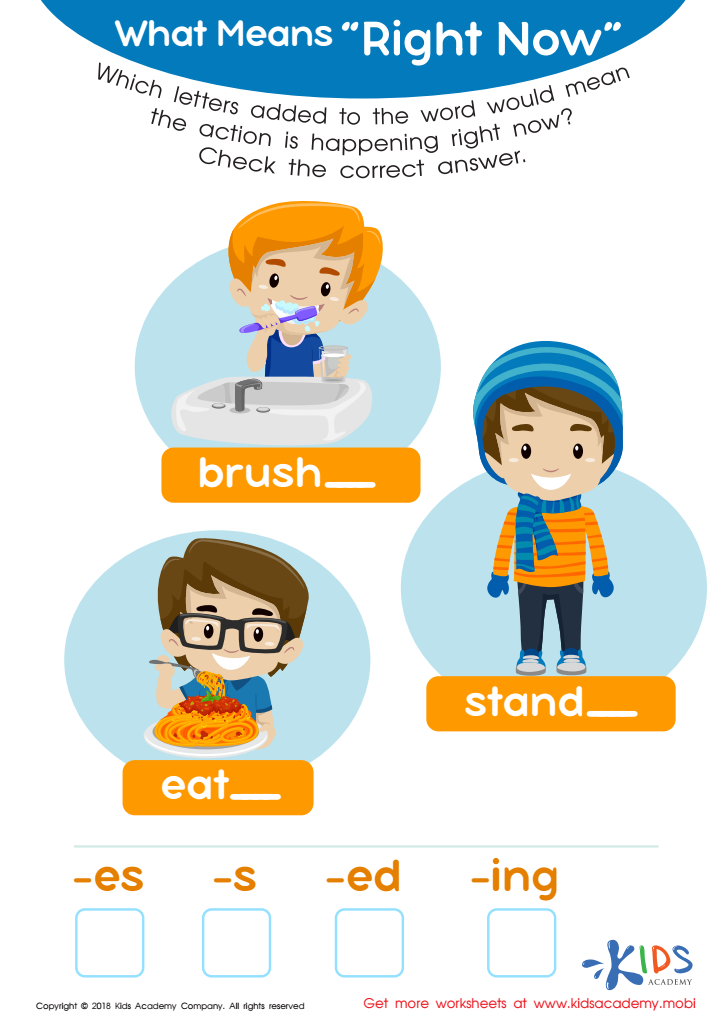
Explain present/past tense verbs to your kids, giving them simple examples. Ask which letters make a verb present tense; read the words aloud and help them check the correct answers.
What Means "Right Now" Worksheet
Worksheet
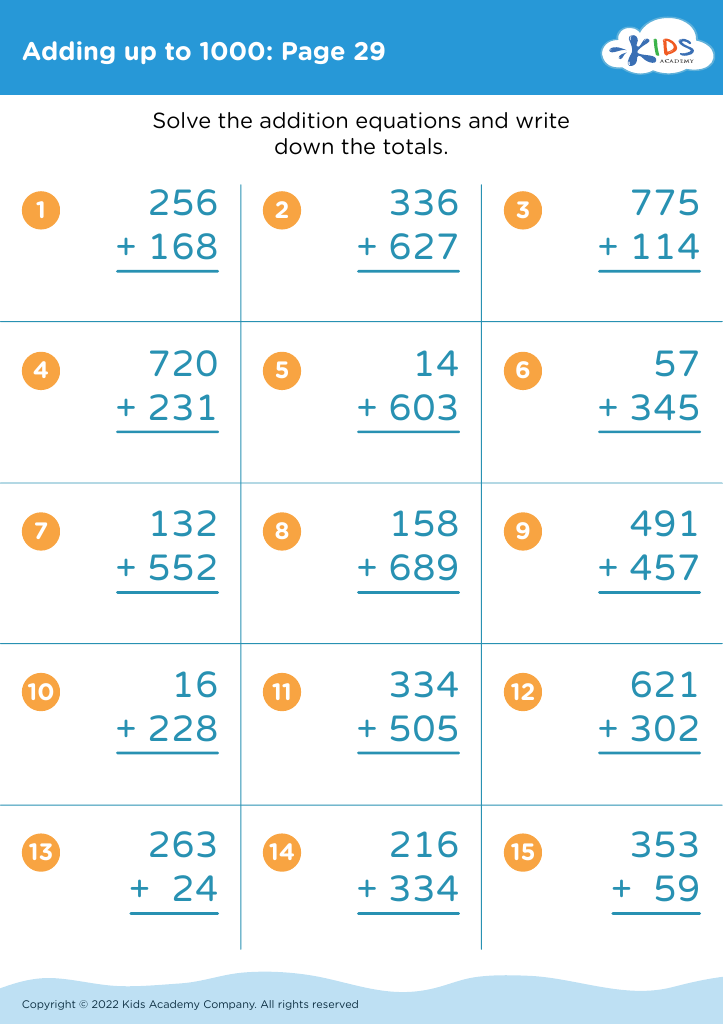
Adding up to 1000: Page 29

Adding up to 1000: Page 29

Adding up to 1000: Page 29
Worksheet
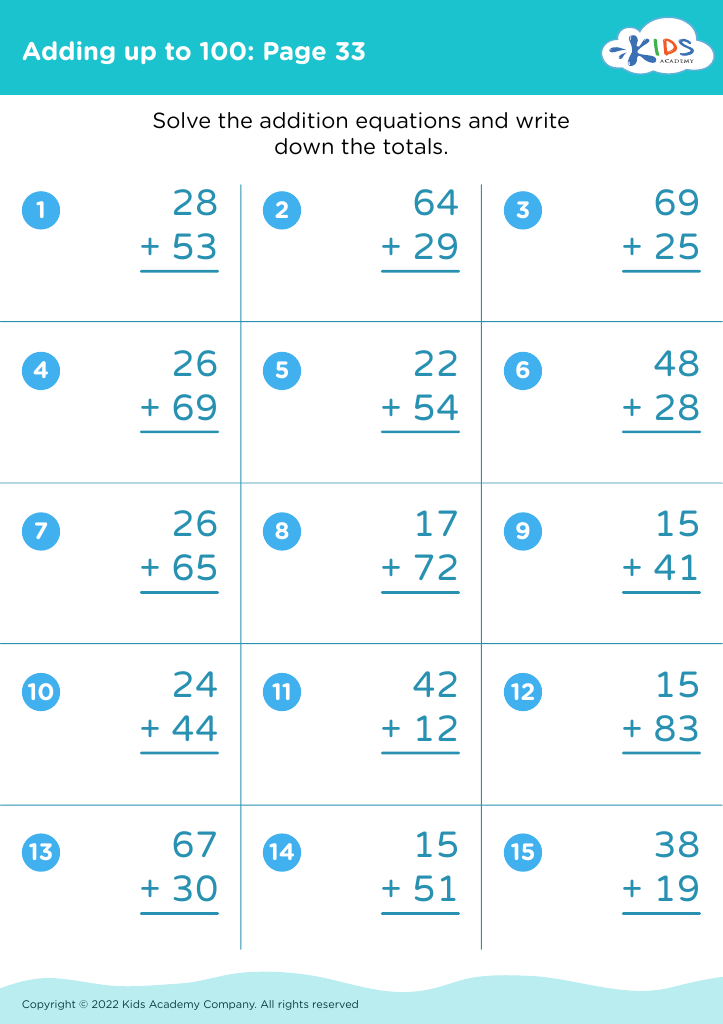
Adding up to 100: Page 33

Adding up to 100: Page 33

Adding up to 100: Page 33
Worksheet
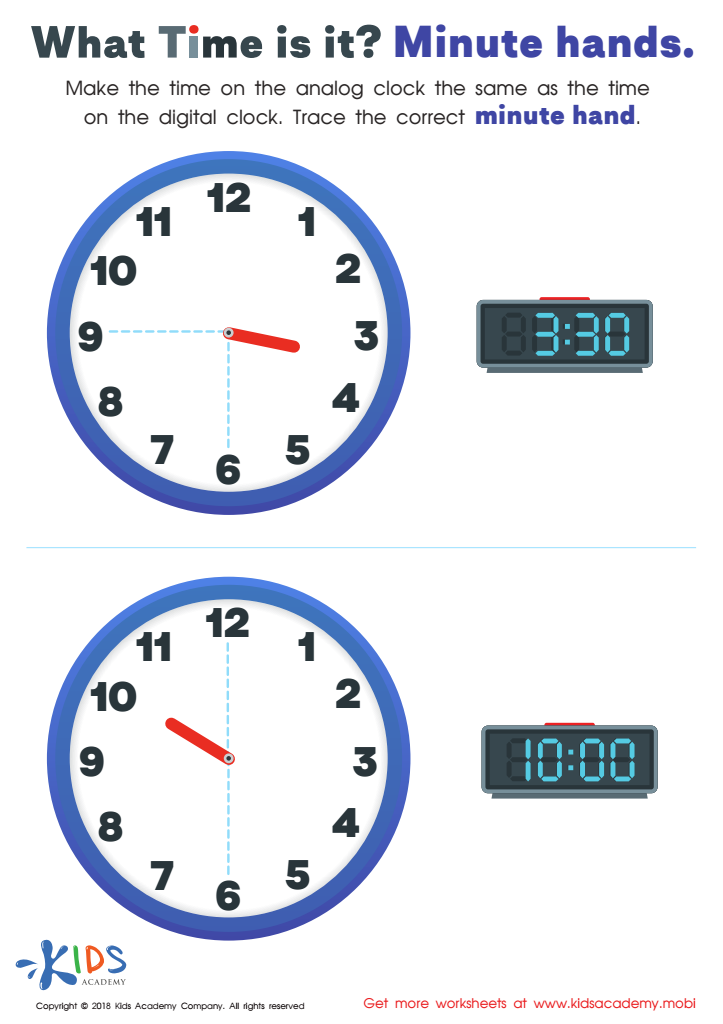
What Time Is it? Minute Hands Worksheet

What Time Is it? Minute Hands Worksheet

Help your kids telling time with the minute hand correctly with this tracing sheet. Trace the correct minute hand to make the time on the analog clock the same as the time on the digital clock. Give them a pictured demonstration of how to do it and you'll be all set!
What Time Is it? Minute Hands Worksheet
Worksheet
Tilling Time by the Hour: a.m. or p.m.? Worksheet
Tilling Time by the Hour: a.m. or p.m.? Worksheet
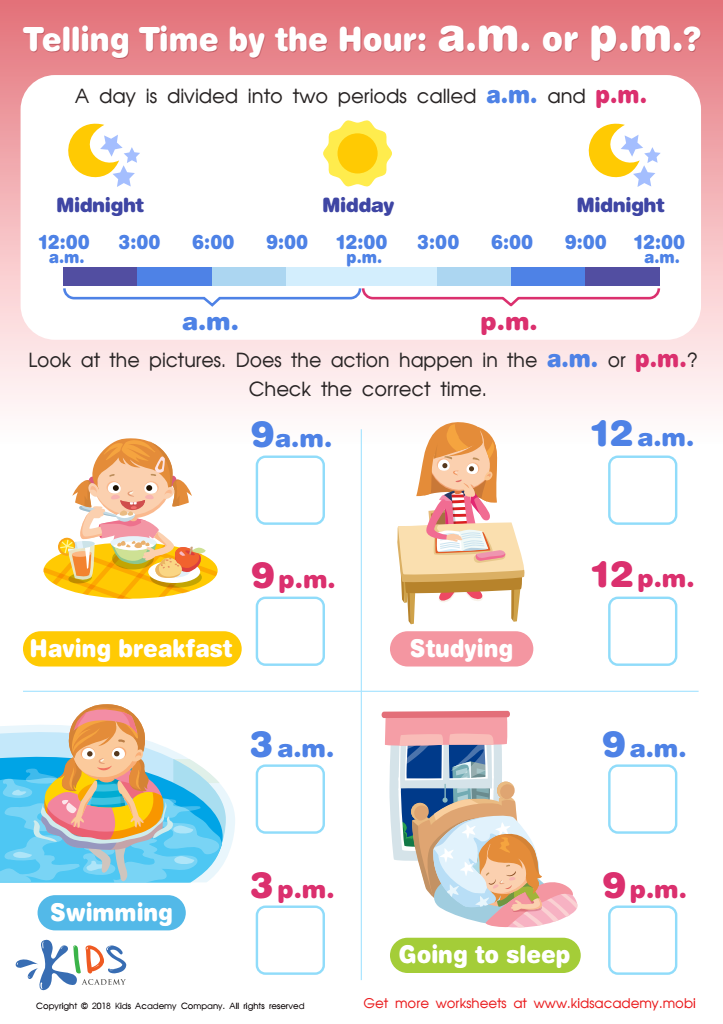
Can your child tell the time? This worksheet will help them learn. Explain a.m and p.m. and look at the pictures together. Ask your child if the activities happen in the a.m or p.m and help them check the correct time.
Tilling Time by the Hour: a.m. or p.m.? Worksheet
Worksheet
Adding up to 1000: Page 23

Adding up to 1000: Page 23

Adding up to 1000: Page 23
Worksheet
Adding up to 1000 with Regrouping: Page 15
Worksheet
Setting Time with Watchmaker Worksheet

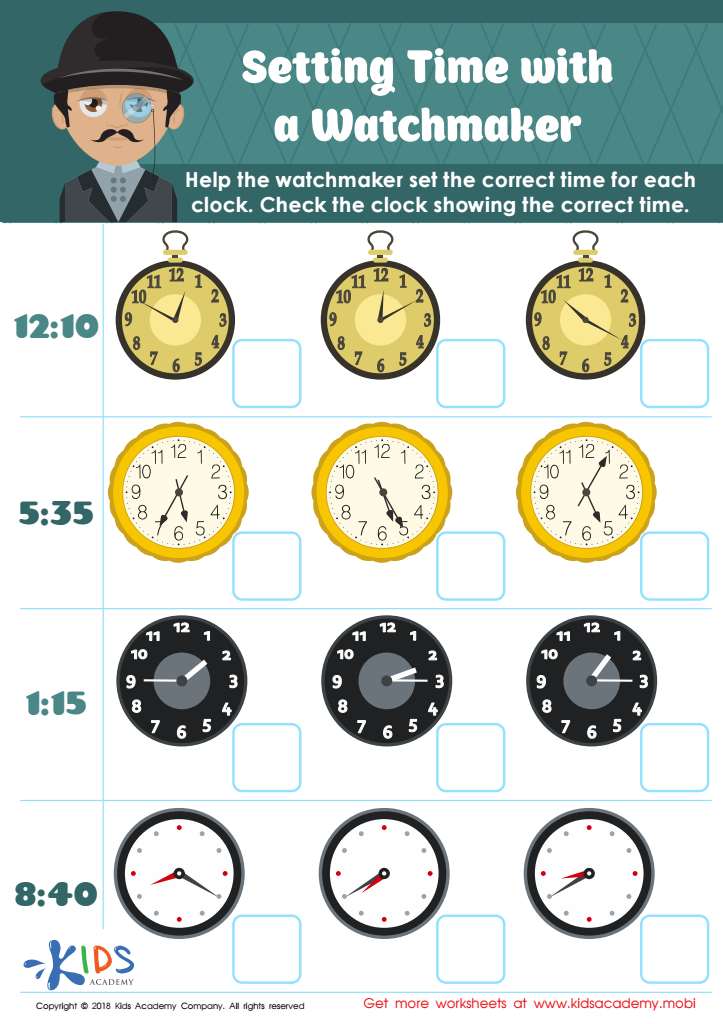
Setting Time with Watchmaker Worksheet

Can your kids tell the time? If so, this worksheet should be easy. Help them set the time for each clock: look at the time written on the left side and find the clock on the right side that matches.
Setting Time with Watchmaker Worksheet
Worksheet
Telling Time by the Half Hour Worksheet


Telling Time by the Half Hour Worksheet
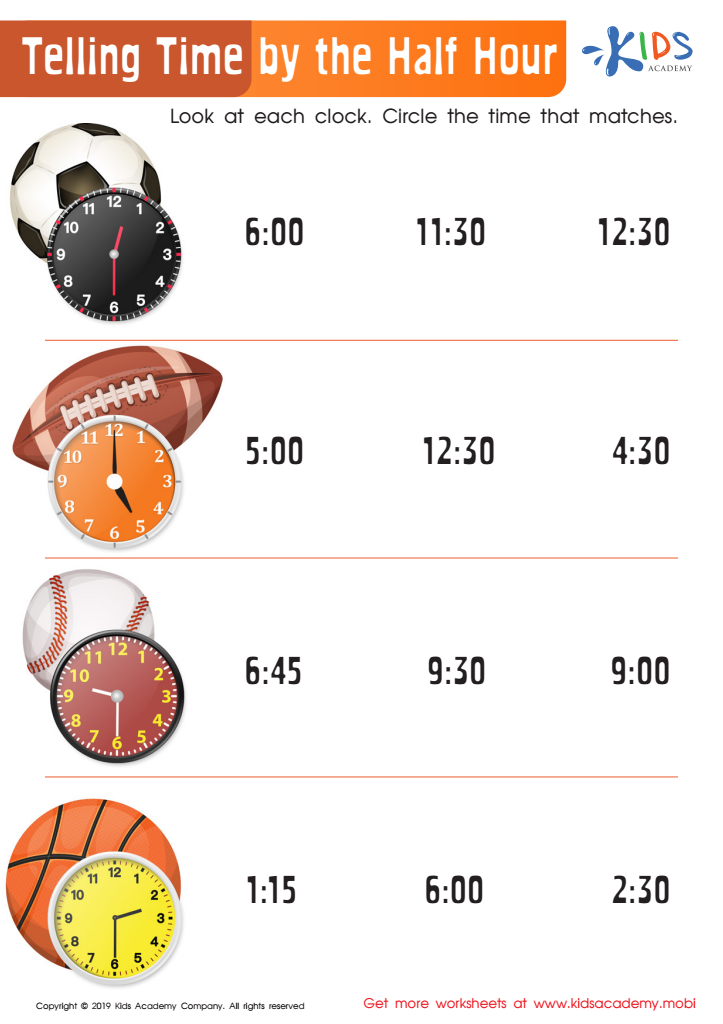
Teach kids to tell time with this worksheet! Four clocks are labeled with different times; help your child circle the right one. It's a great way to teach them to read analog and digital clocks, watches, and written times. Easy and fun learning!
Telling Time by the Half Hour Worksheet

Worksheet


Reading analog clocks is a fundamental skill that lays the groundwork for understanding time, responsibility, and daily routines among children ages 3 to 9. This skill helps young learners develop better comprehension of numbers and fundamentals of mathematics, as they engage in counting by fives and understanding the concept of fractions through the division of the clock face.

Additionally, learning to read an analog clock encourages mindfulness and enhances time management skills. By gauging time through its visual representation rather than digital numbers, children develop patience and stay engaged in activities, nurturing their ability to plan and prioritize effectively.

For parents and teachers, guiding children in this skill also fosters independence and self-regulation; children learn to understand when it's time for specific activities, like transitioning from play to homework. By reinforcing concepts related to routines, parents and teachers empower children to take charge of their schedules.

Moreover, analog clocks are commission-free tools, requiring no batteries or screens, promoting a healthier approach to learning beyond the digital age. Ultimately, mastering this skill enriches children's lives with practical knowledge they will carry into adulthood.