Reading thermometers Worksheets for Ages 3-9
4 filtered results
-
From - To
Help your child master the essential skill of reading thermometers with our engaging and educational worksheets designed for ages 3-9. Our resources offer colorful, age-appropriate exercises that teach children to accurately read and understand temperature scales in both Celsius and Fahrenheit. By incorporating fun activities and relatable scenarios, these worksheets make learning to read thermometers an enjoyable adventure for young learners. Perfect for home or classroom use, our worksheets help build confidence and foundational science knowledge, paving the way for future academic success. Start exploring our reading thermometers worksheets today and watch your child's skills soar.
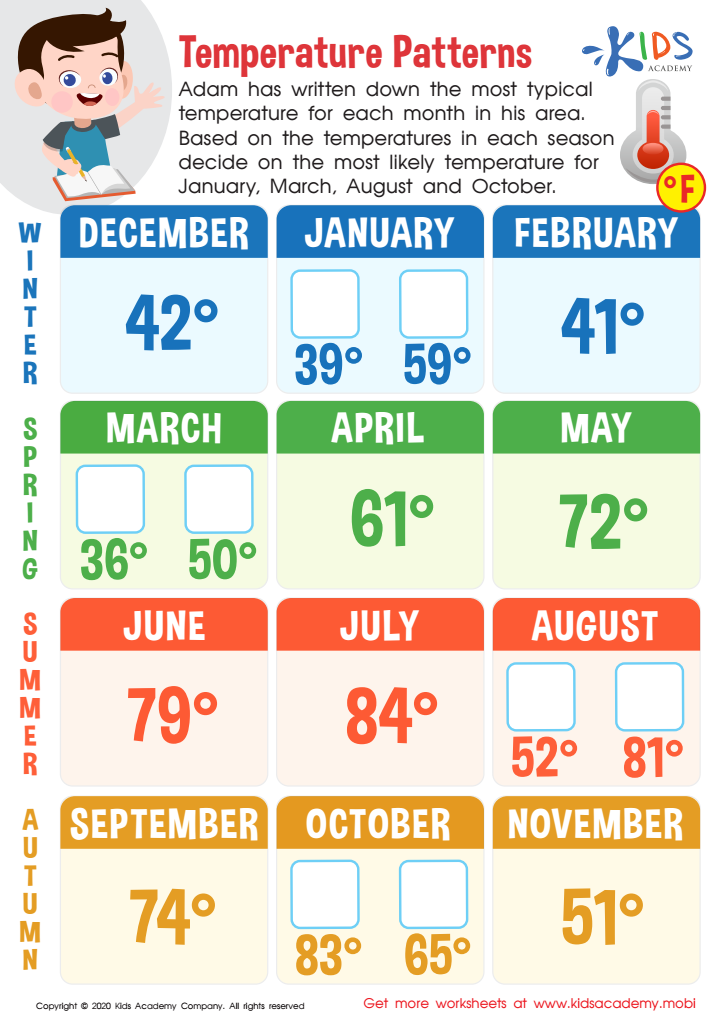
Temperature Patterns Worksheet
 Assign to My Students
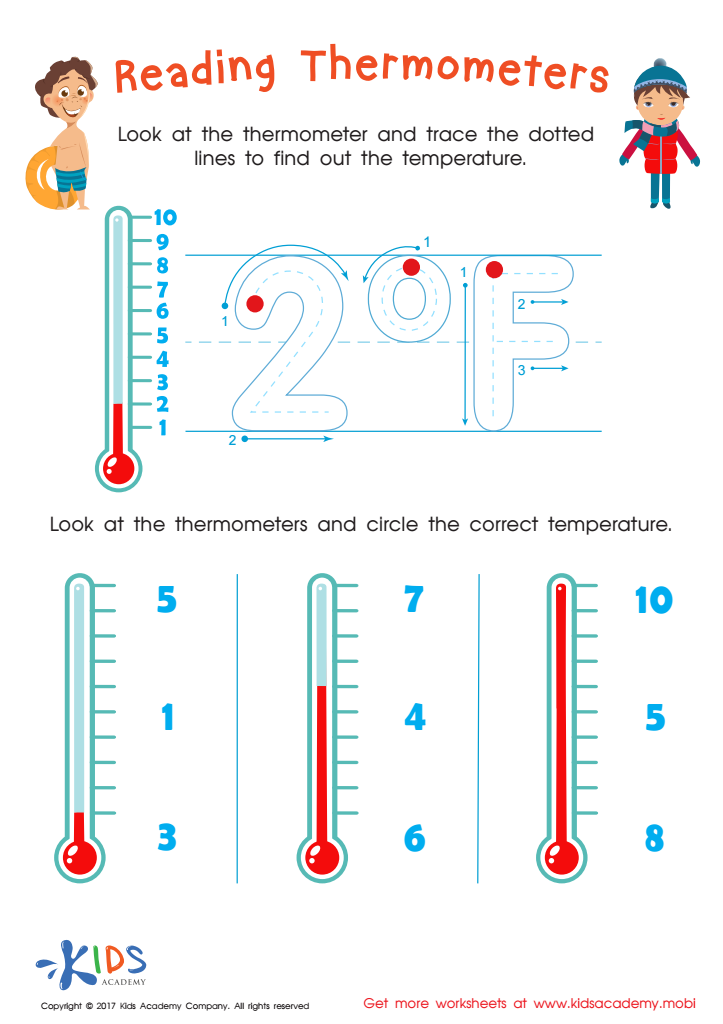
Reading Thermometers Printable
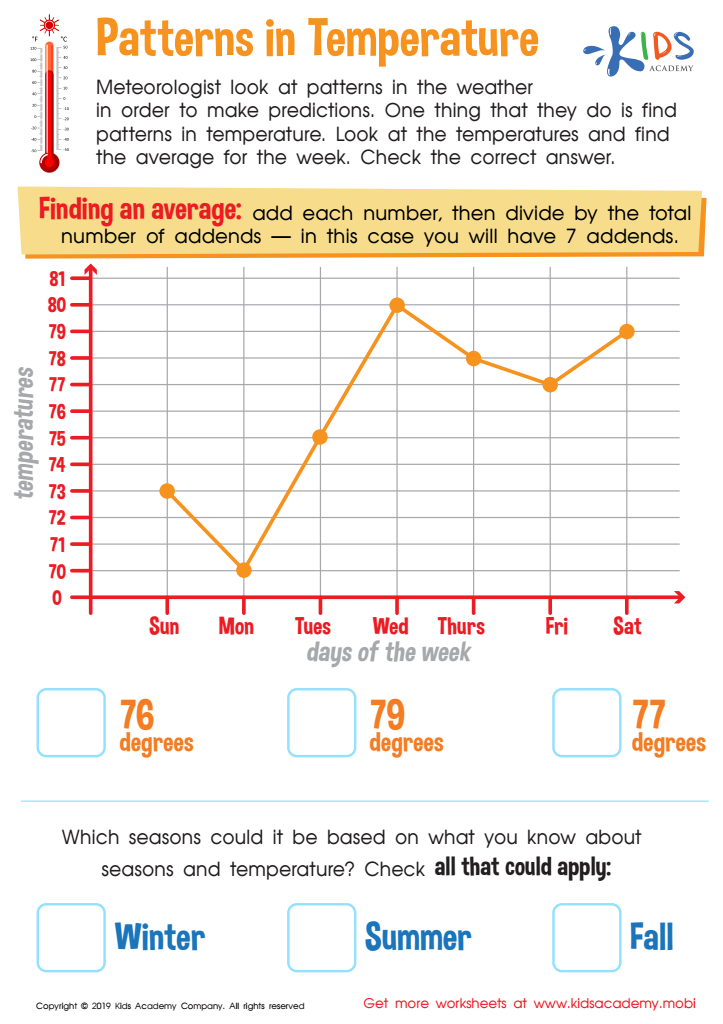
Patterns in Temperature Worksheet
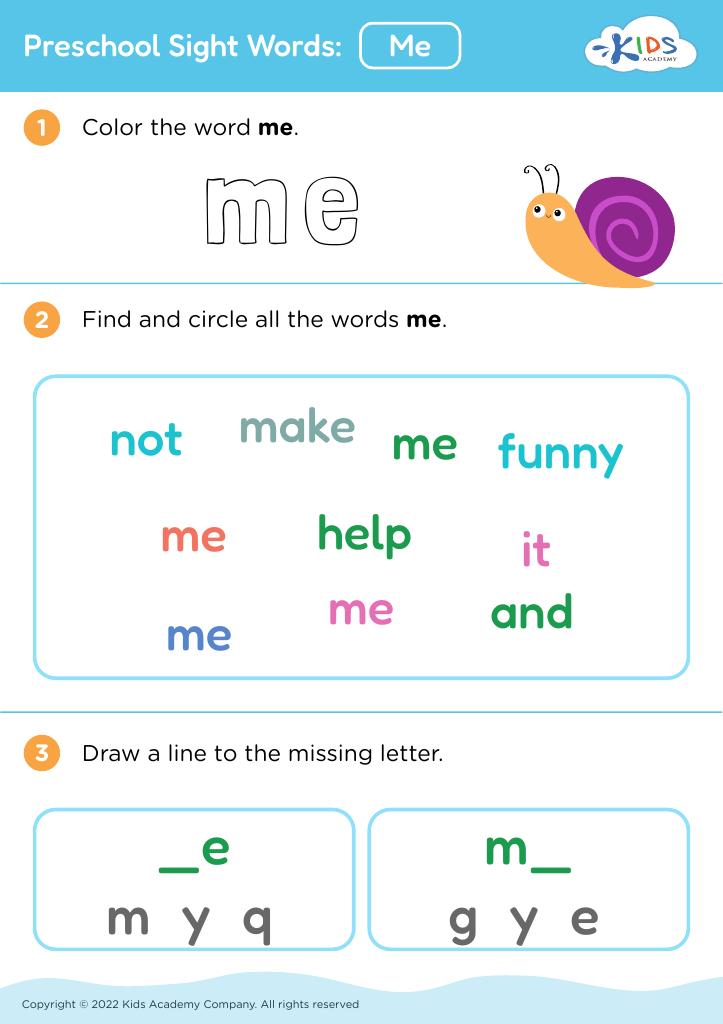







Reading thermometers with young children is crucial for several reasons. For parents and teachers with kids aged 3-9, it presents a fantastic opportunity to build foundational skills in both numeracy and science. By learning to read a thermometer, children not only engage with numbers and basic mathematical concepts (like measurement and comparison) but also begin to understand the world around them in a more concrete way.
Temperature readings can serve as a simple yet effective introduction to scientific inquiry. Children learn to observe patterns, predict outcomes (like what to wear based on the day's forecast), and draw basic conclusions from data. This early engagement with scientific tools can spark curiosity and foster a love for STEM subjects.
Additionally, understanding temperature is practically useful for health and safety. Knowing about healthy body temperatures can help children recognize when they are sick and need rest or medical attention. In an era where parents and teachers strive to foster independence, even simple skills like reading a thermometer contribute to a child's sense of autonomy and confidence.
In summary, caring about reading thermometers equips children with essential life skills, serves as an introduction to numeric and scientific concepts, and provides practical knowledge that can directly affect their well-being and decision-making abilities.








