
Science knowledge Worksheets for Ages 3-9
5 filtered results
Difficulty Level
Grade
Age
-
From - To
Subject
Activity
Standards
Explore our engaging Science Knowledge Worksheets tailored for children ages 3-9! Designed to spark curiosity and foster a love of learning, these worksheets cover fundamental scientific concepts through fun activities and vibrant illustrations. From exploring the natural world to basic physics experiments, our resources encourage hands-on learning and critical thinking skills. Ideal for homeschooling or classroom use, these worksheets provide interactive opportunities for young learners to observe, ask questions, and discover the wonders of science. Let your child embark on an exciting educational journey with our carefully crafted science worksheets that make learning both enjoyable and impactful!
Favorites
With answer key
Interactive
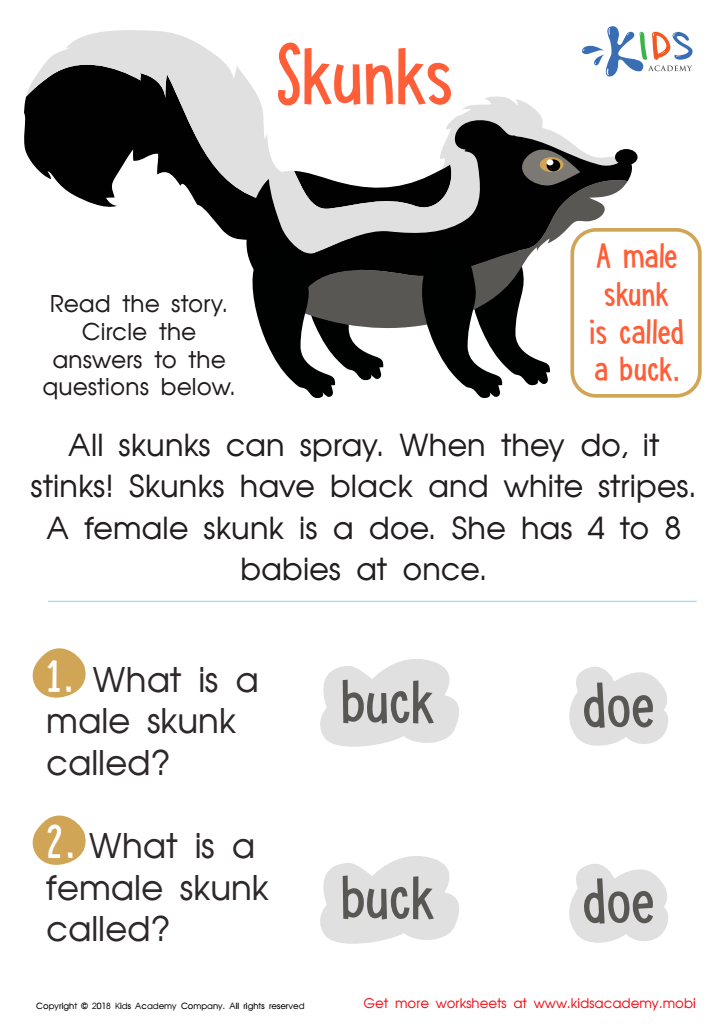
Skunks Worksheet
Kids can learn fascinating information about a beloved and smelly animal with this fun worksheet. They'll read articles, texts, and look at an accompanying picture while reading. Captions and sidebars can give extra details. Finally, answer the given questions by selecting the correct response. Reading is a fun and informative way to gain knowledge!
 Assign to My Students
Skunks Worksheet
Worksheet
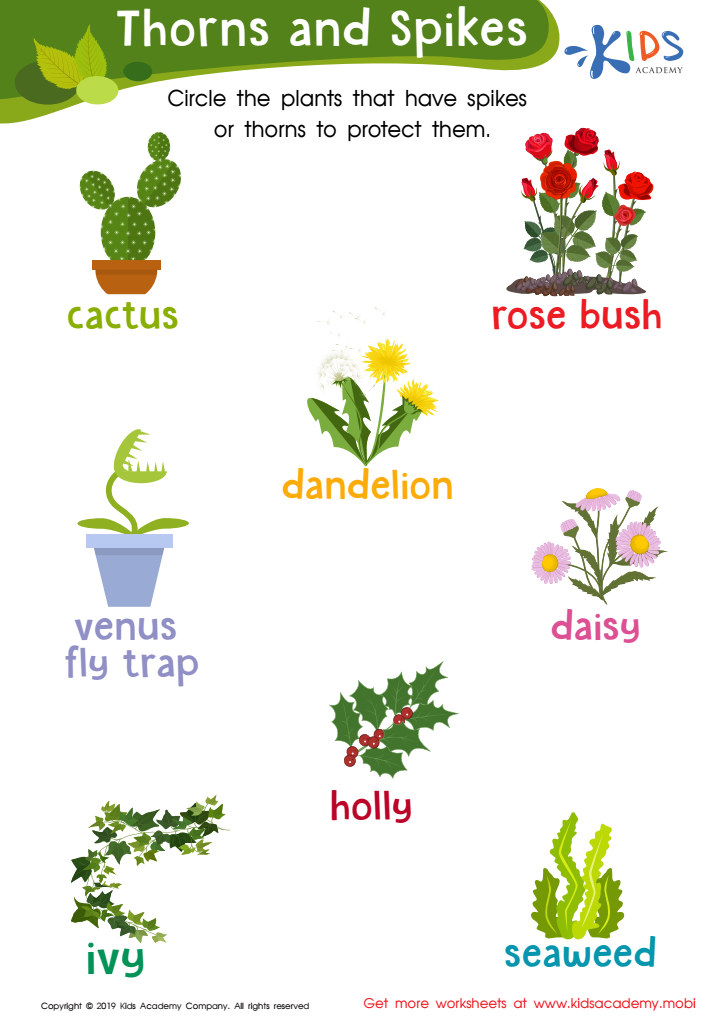
Thorns and Spikes Worksheet
Can your students name and identify the plants and flowers in this worksheet? Ask them to read out the names and circle the ones with spikes or thorns. Help them appreciate nature's beauty and understand how plants protect themselves.
Thorns and Spikes Worksheet
Worksheet
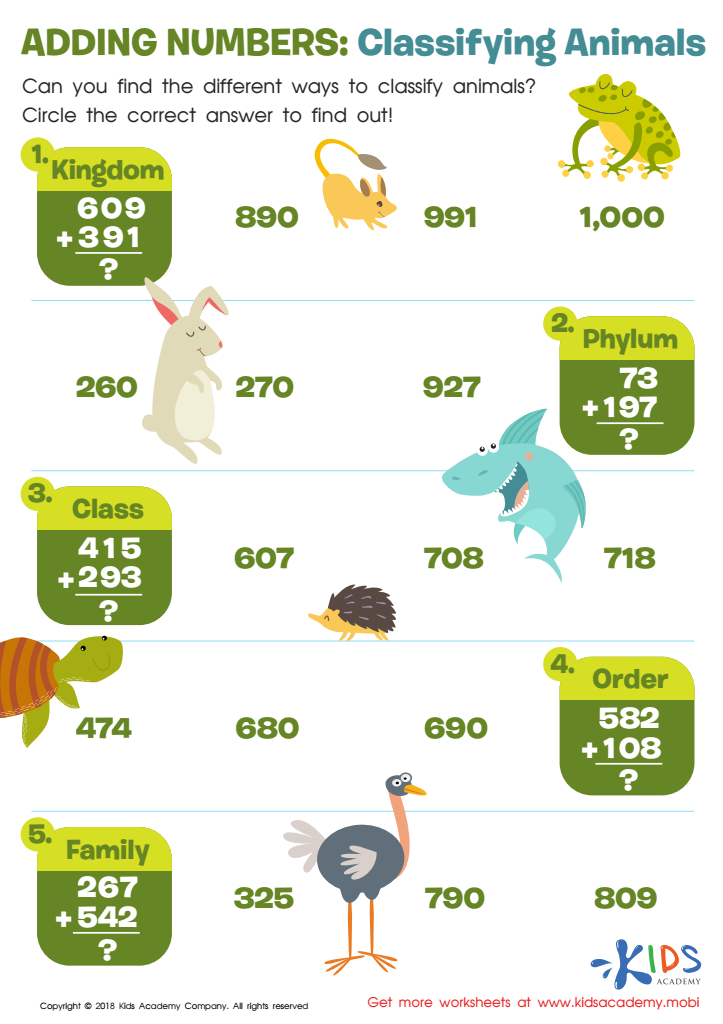
Adding Numbers: Classifying Animals Worksheet
Your kids can learn to classify animals in Biology. This worksheet helps them do this by solving 5 equations. Circle the right answer to complete the task.
Adding Numbers: Classifying Animals Worksheet
Worksheet
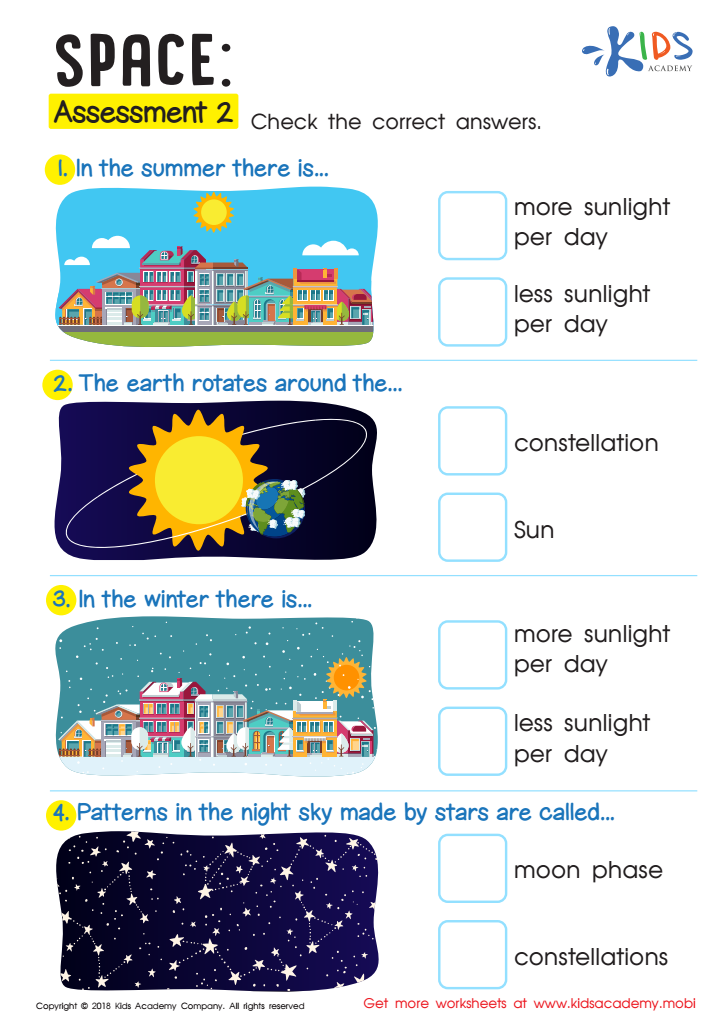
Space: Assessment 2 Worksheet
Test your kids' knowledge of the weather, constellations and Earth with this worksheet. Show them the 4 images and ask what's happening; then read the questions and options and help them pick the right answers. This printout is a helpful and fun way to learn!
Space: Assessment 2 Worksheet
Worksheet
Join Kids Academy for Free
Who is primarily going to use this learning content?







Parents and teachers should prioritize science knowledge for children ages 3-9 because it fosters curiosity and critical thinking, foundational skills for lifelong learning. At this age, children are naturally inquisitive, exploring the world around them. Introducing basic scientific concepts helps channel this curiosity, enabling them to ask questions, investigate, and make observations, which nurtures their analytical skills.
Furthermore, science encourages problem-solving and creativity. Through hands-on experiments and exploration, children learn to hypothesize and test their ideas, bridging the gap between understanding and application. This investigative process builds resilience and perseverance, qualities essential for academic and personal growth.
Engaging with science also promotes understanding of the world and the importance of empathy. Young learners begin to grasp ecological concepts and the interconnections within ecosystems, developing a sense of responsibility toward the environment and society.
Lastly, early exposure to science can spark an interest in STEM (Science, Technology, Engineering, Math) fields, which are critical for future careers and innovation. By nurturing scientific knowledge, parents and teachers not only enhance children's current learning but also prepare them for complex challenges in the future, creating a foundation for informed and engaged citizens.








