Sentence completion Worksheets for Ages 3-9
5 filtered results
-
From - To
Discover our engaging Sentence Completion Worksheets tailored for ages 3-9. Perfect for developing early literacy and language skills, these worksheets encourage children to complete sentences creatively and logically. The carefully designed exercises blend fun activities with educational objectives, helping young learners enhance their vocabulary, comprehension, and critical thinking. Ideal for parents and educators, our printable worksheets are an excellent resource for both classroom and home learning environments. Visit Kids Academy to access a wide variety of age-appropriate sentence completion worksheets that support children's learning journey while sparking their imagination and enthusiasm for reading and writing.
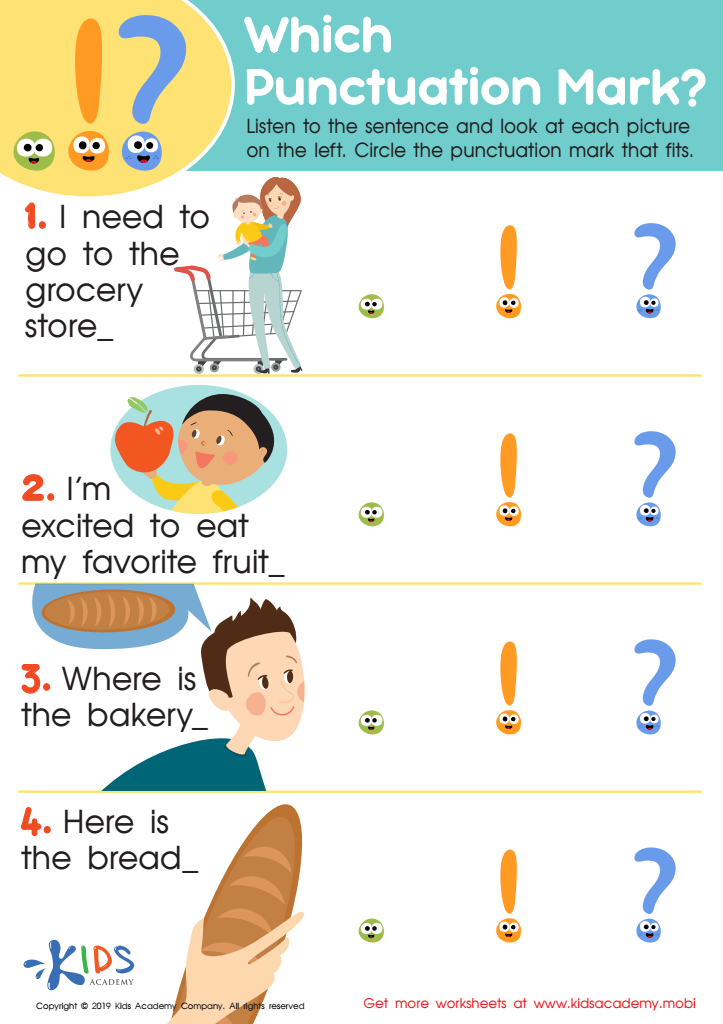
Which Punctuation Mark Worksheet
 Assign to My Students
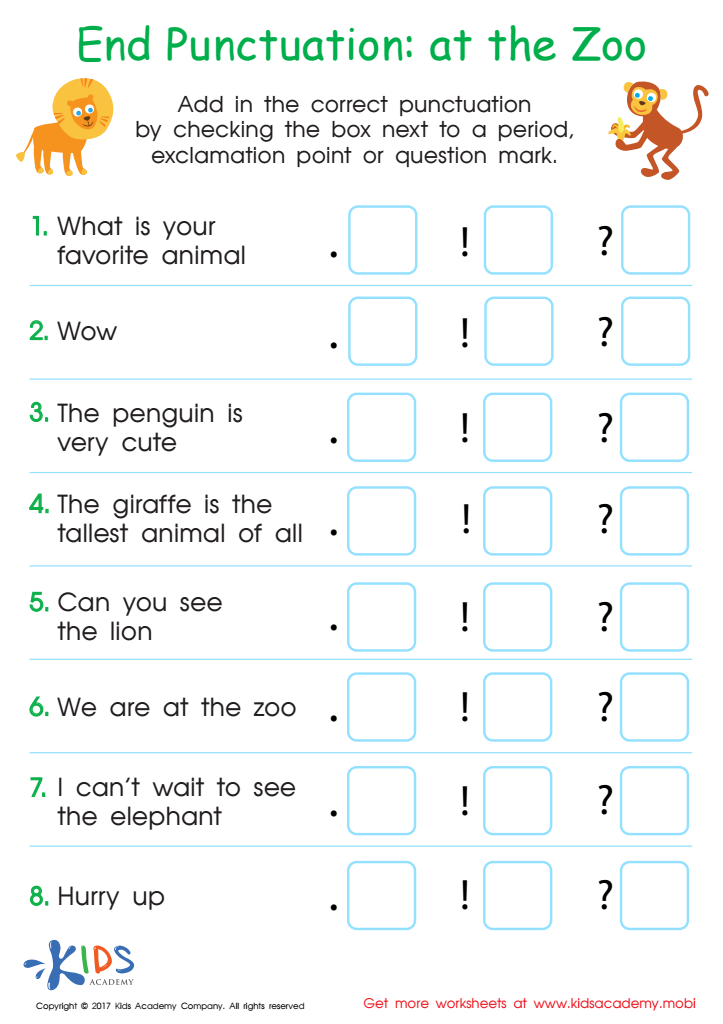
End Punctuation: At the Zoo Worksheet
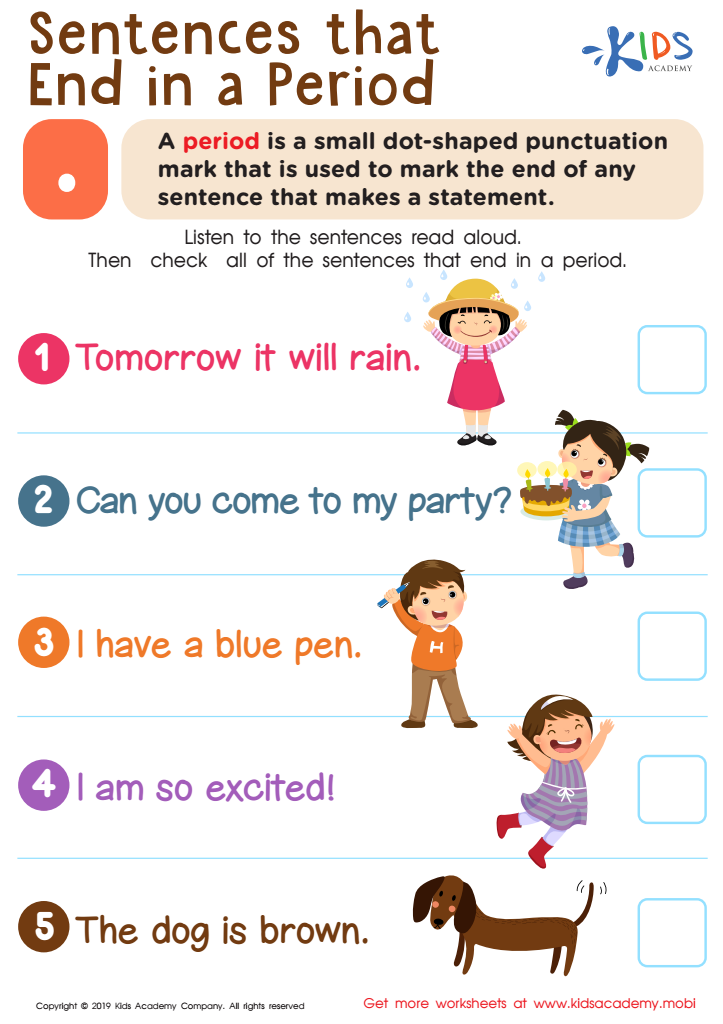
Sentences That End in a Period Worksheet
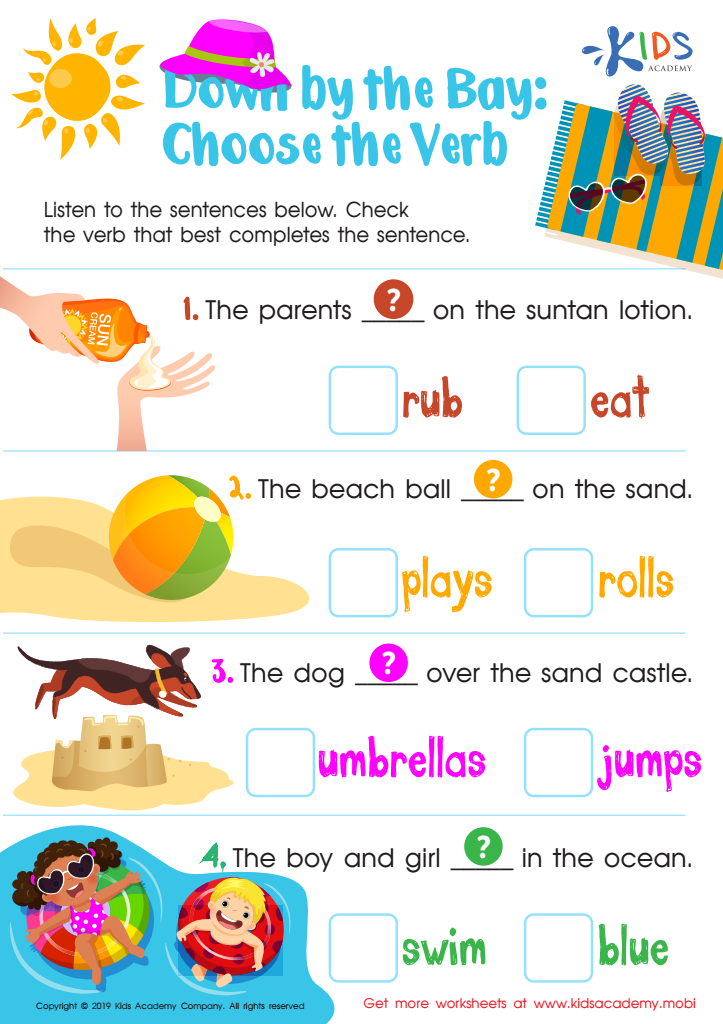
Down by the Bay: Choose the Verb Worksheet
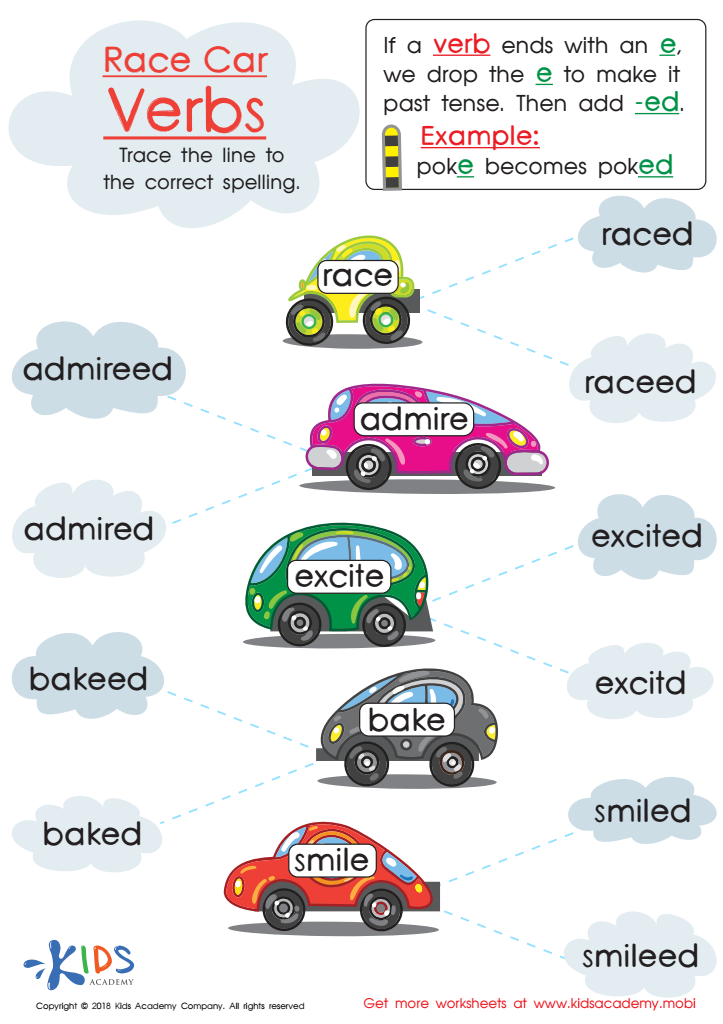
Race Car Verbs Worksheet






Sentence completion exercises are a highly valuable activity for young children between the ages of 3-9, and it’s crucial for both parents and teachers to understand their importance. At these early developmental stages, children's brains are rapidly growing, and language acquisition is a key component of their cognitive development. Sentence completion tasks help enhance several critical skills.
Firstly, they boost vocabulary acquisition. By prompting children to think of words that fit logically to complete sentences, these exercises introduce them to new words in context. Secondly, sentence completion exercises improve grammatical skills. When children suggest ways to complete sentences, they practice proper sentence structure, verb tenses, and correct word order.
Moreover, this activity encourages critical thinking and creativity. Pondering over the best way to finish a sentence pushes children to draw on their own experiences and preferences, fostering personal expression and imagination.
Socially, sentence completion tasks often involve interaction with peers or adults, aiding in developing communication skills and social intelligence. Finally, these exercises can identify areas where a child might need further support, making it easier for parents and teachers to tailored educational strategies.
Overall, sentence completion exercises are not just about language development, but like building blocks, they lay a foundation for academic and social success.








